Geboren
July 10, 1834
Lowell, United States
Verstorben
July 17, 1903
Chelsea, United Kingdom
Bekannt für
American painter
James McNeill Whistler (1834–1903) was United States best known for American painter.
James McNeill Whistler (July 10, 1834 – July 17, 1903) was an American painter, etcher, and printmaker. He was a leading proponent of "art for art's sake," rejecting sentimentality in favor of pure aesthetic value. His influential works continue to be celebrated in major museums globally.
Kapitel
Lebenskapitel
Kapitel 1 · 1834· Kapitel 1 von 6
Early Life and Origins
James McNeill Whistler began his life in Lowell, United States, on July 10, 1834. His American origins formed a foundational chapter, though he would later forge a significant career abroad. This early period contributed to the unique perspective he brought to his art, distinguishing him from many of his European contemporaries.
Kapitel 2· Kapitel 2 von 6
Career Beginnings
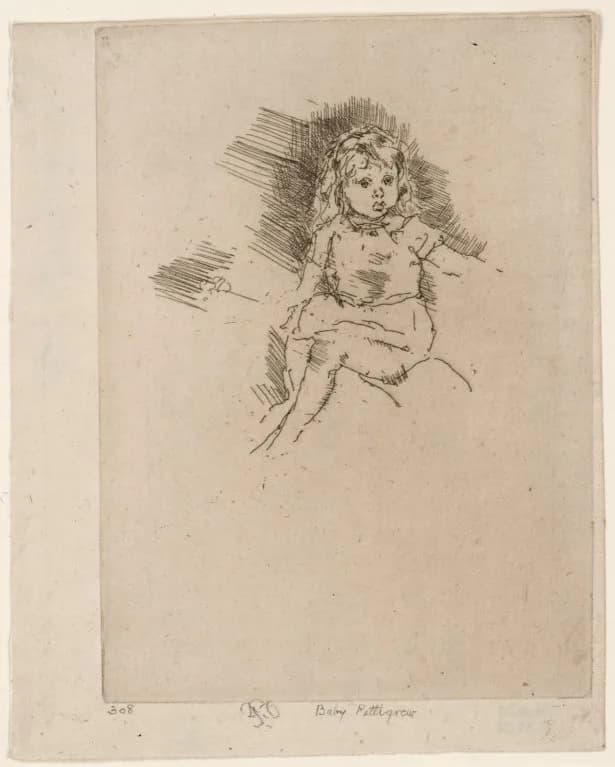
Whistler established his artistic career predominantly in the United Kingdom, evolving into a celebrated American painter based across the Atlantic. He began as a talented printmaker, mastering techniques in etching, printmaking, and lithography. This early proficiency in graphic arts informed his later painting style, contributing to his distinctive compositional sensibilities and attention to line.
Kapitel 3· Kapitel 3 von 6
Major Achievements and Career Highlights
A defining characteristic of Whistler's career was his passionate advocacy for the credo "art for art's sake." This philosophy posited that art should be appreciated purely for its aesthetic qualities, eschewing sentimentality or moral allusion in painting. His artistic practice challenged the prevailing Victorian taste for narrative and didactic art, emphasizing harmonies of color and form instead. Whistler’s commitment to this principle marked him as a visionary, influencing subsequent generations to prioritize visual experience over storytelling.
His distinctive approach to art led to a unique style that often emphasized atmospheric effects and evocative titles, particularly in his famous "Nocturne" series. These works aimed to capture the mood and impression of a scene rather than its literal depiction, showcasing his mastery of oils and watercolor. He often explored subtle tonal variations and simplified forms to achieve a profound sense of atmosphere, making his paintings instantly recognizable.
Kapitel 4 · 1883· Kapitel 4 von 6
Notable Works and Contributions
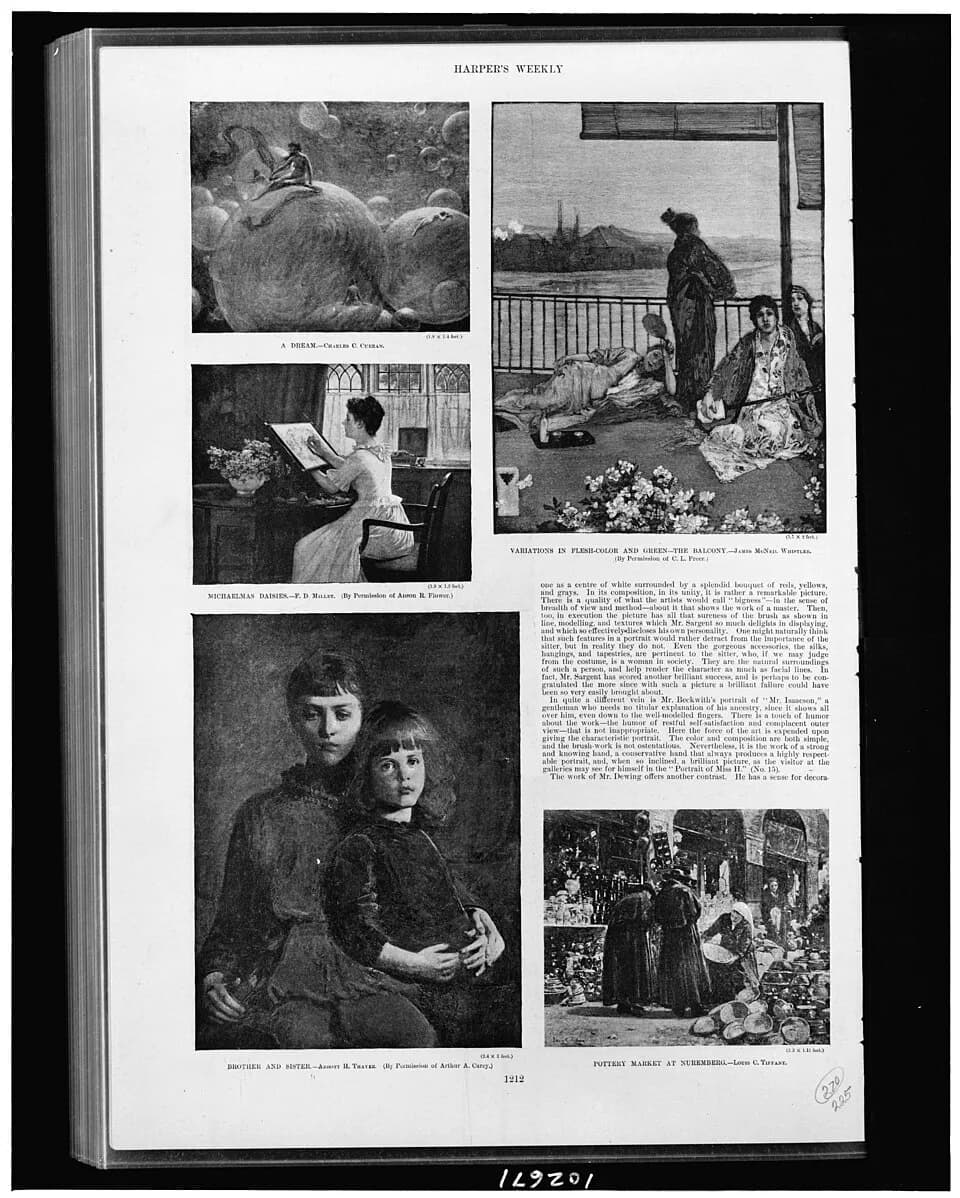
Whistler's prolific output included a diverse range of artworks and significant written contributions that extended his influence beyond the canvas. Among his most celebrated paintings are "The Yellow Room" (ca. 1883–84) and "Arrangement in Flesh Colour and Black: Portrait of Theodore Duret" (1883), both held at the Met Museum, showcasing his skill in portraiture and interior scenes. His iconic "Nocturne" series features works such as "Cremorne Gardens, No. 2" (ca. 1870–80), "Nocturne (Nocturne: The Thames at Battersea)" (1878), and "Nocturne: Palaces" (1879–80), which beautifully illustrate his exploration of twilight landscapes and urban nocturnes.
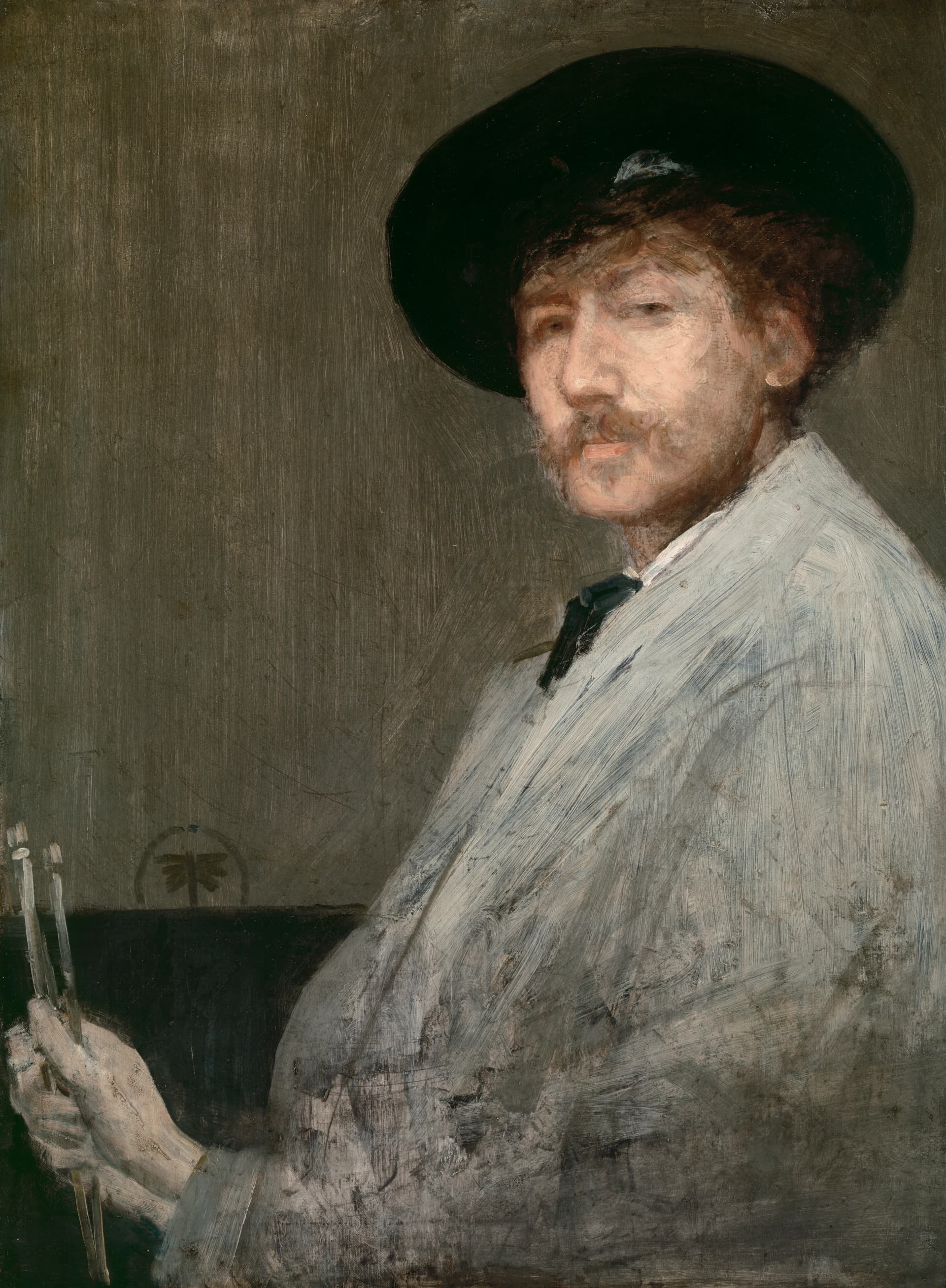
The Art Institute of Chicago also boasts a collection of his significant works, including "Nocturne: Blue and Gold—Southampton Water" (1872), "Coast Scene, Bathers" (1884–85), and "Grey and Silver: Old Battersea Reach" (1863), further demonstrating his versatility in capturing various settings. His keen eye for self-portrayal is evident in "The Artist in His Studio" (1865–66), while "Arrangement in Flesh Color and Brown: Portrait of Arthur Jerome Eddy" (1894) exemplifies his refined approach to commissioned portraits. Whistler's artistic signature, the elegant butterfly motif, subtly appears in works like "Butterfly" (c. 1890) and is associated with his unique persona.
Beyond his visual art, Whistler was also a prolific writer and illustrator, engaging actively in public discourse on art theory and criticism. His bibliography includes "Vers et prose" and "Le 'ten o'clock' de m. Whistler," reflecting his articulate defense of aesthetic principles. He gained notoriety through his involvement in the famous libel suit "Whistler v. Ruskin," where he challenged the conventional critical establishment and asserted artistic autonomy. His "Design cover for West Point Song of the Graduates" (1852) from early in his career and "Violet and Silver—The Deep Sea" (1893) highlight the breadth of his creative output across different mediums and periods.
Kapitel 5 · 1903· Kapitel 5 von 6
Later Years
James McNeill Whistler continued to dedicate himself to his artistic practice throughout his later life, maintaining his base in the United Kingdom. His final years were spent in Chelsea, United Kingdom, where he passed away on July 17, 1903. His passing marked the close of a remarkable career that profoundly influenced the direction of modern art.
Kapitel 6· Kapitel 6 von 6
Legacy and Impact
Whistler's legacy is securely cemented by his pioneering spirit and his unwavering commitment to the concept of "art for art's sake." He fundamentally altered how art was perceived, shifting focus from narrative content to pure aesthetic experience. His innovative use of color, tone, and composition continues to resonate with artists and art enthusiasts globally. The extensive collection of his paintings, etchings, and lithographs housed in prominent museums worldwide stands as a lasting testament to his genius and enduring influence on the art world.
Ein Leben in Momenten
Die Momente, die ein Leben prägten
![James McNeill Whistler - Title: [The Boston Memorial Exhibition, Copley Hall, 1904]
Date Created/Published: 1904.
Medium: 1 photographic print.
Summary: Room with prints on walls.
Repository: Library](/_next/image?url=https%3A%2F%2Fcdn.whowasthisguy.com%2Fgallery_wikimedia_commons_1784821498563_0_30e36ea8f9.webp&w=1920&q=75)
![James McNeill Whistler - Title: [Painting galleries in the Boston Memorial Exhibition, Copley Hall, 1904]
Date Created/Published: 1904.
Medium: 1 photographic print.
Repository: Library of Congress Pr](/_next/image?url=https%3A%2F%2Fcdn.whowasthisguy.com%2Fgallery_wikimedia_commons_1784821499647_1_c4bde6b009.webp&w=1920&q=75)
FAQ
Häufig gefragt
Wann starb James McNeill Whistler?
James McNeill Whistler starb am 17. Juli 1903 in Chelsea, United Kingdom im Alter von 69 Jahren.
Wo wurde James McNeill Whistler geboren?
James McNeill Whistler wurde in Lowell, United States am 10. Juli 1834 geboren.
Wofür ist James McNeill Whistler am bekanntesten?
James McNeill Whistler ist am bekanntesten für American painter.
Wie alt war James McNeill Whistler beim Tod?
James McNeill Whistler war zum Zeitpunkt des Todes 69 Jahre alt.
Welche Nationalität hatte James McNeill Whistler?
James McNeill Whistler stammte aus United States.
Zeitlinie
Leben im Überblick
Fotogalerie
Ein Leben in Bildern
Klicken Sie ein Polaroid an, um es zu vergrößern · 23 Fotos
QR-Code
Diese Biografie teilen
Drucken & Teilen
Scannen Sie, um diese Biografieseite zu besuchen. Drucken Sie sie für Veranstaltungen, Ausstellungen oder Lehrmaterialien.