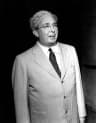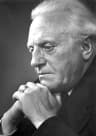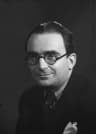
Geboren
February 14, 1898
Varna, Bulgaria
Verstorben
February 8, 1974
Pasadena, United States
Bekannt für
Swiss astronomer who posited dark matter
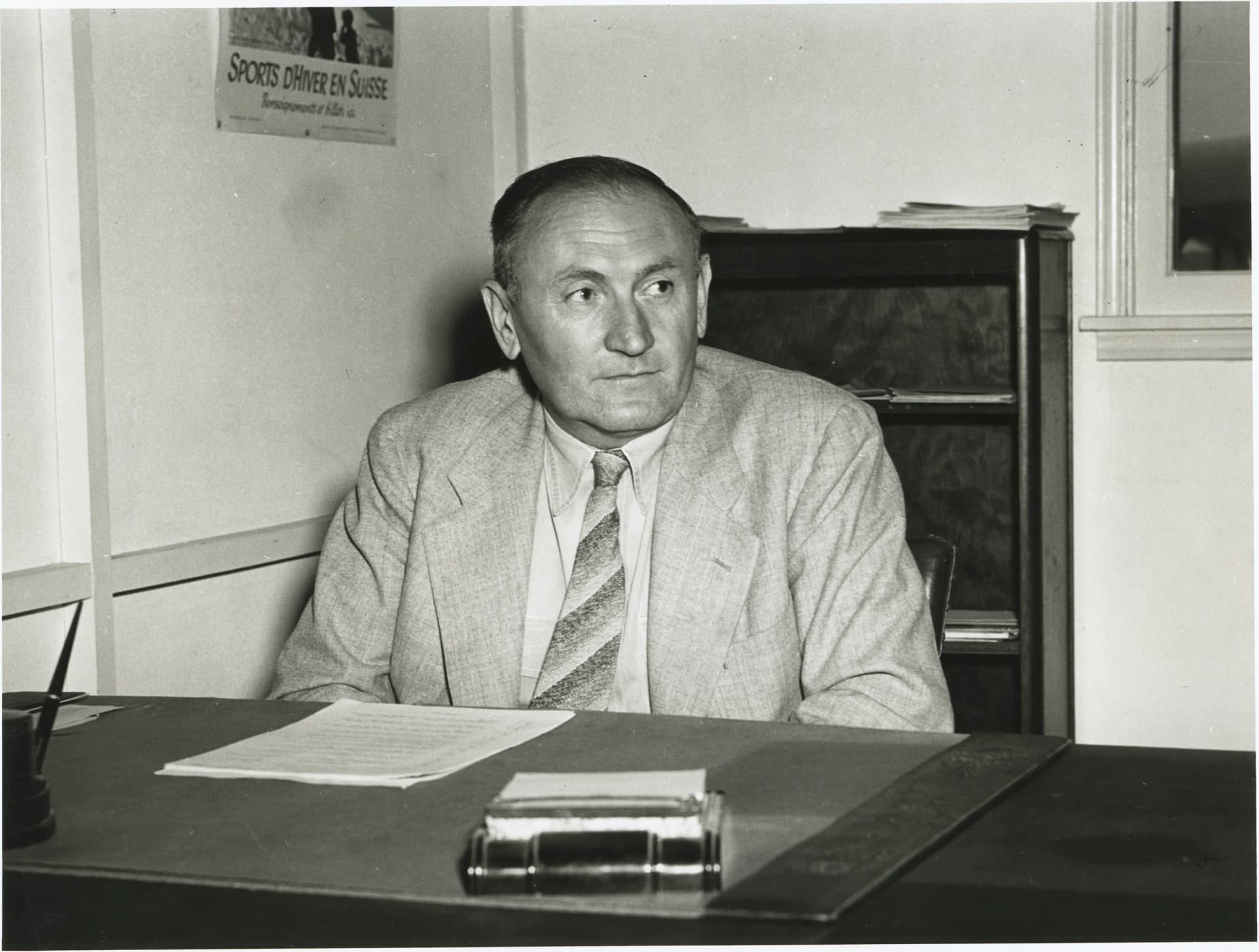
Fritz Zwicky (1898–1974) was Bulgaria best known for Swiss astronomer who posited dark matter.
Fritz Zwicky (February 14, 1898 – February 8, 1974) was a Swiss astronomer, physicist, and astrophysicist. He was the first to propose the existence of dark matter and pioneered the theory of supernovas. Zwicky's visionary work at Caltech shaped modern understanding of the cosmos.
Kapitel
Lebenskapitel
Kapitel 1 · 1898· Kapitel 1 von 7
Early Life and Origins
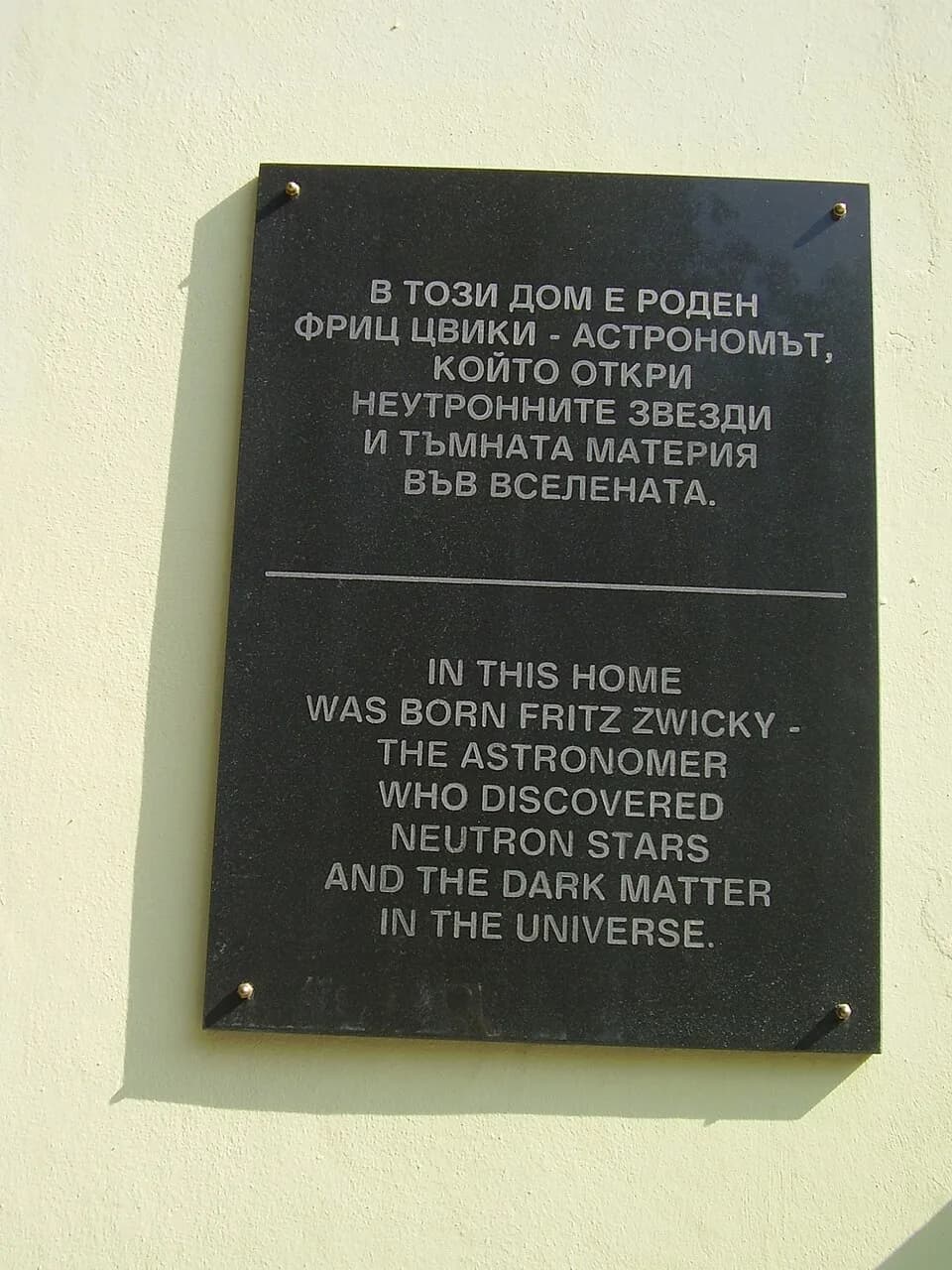
Born in Varna, Bulgaria, on February 14, 1898, Fritz Zwicky spent his early years rooted in a multinational environment. Although born in Bulgaria, Zwicky was of Swiss nationality, a heritage that would follow him throughout his distinguished career. Details about his family and upbringing beyond his birth location are not provided in the available records.
His academic journey began early, though specifics about his initial education are not detailed here. He pursued rigorous studies that prepared him for a lifetime of scientific inquiry and discovery. Zwicky's foundational training equipped him with the multidisciplinary knowledge necessary for his later contributions across physics and astronomy.
Kapitel 2· Kapitel 2 von 7
Career Beginnings
Zwicky commenced much of his professional life at the California Institute of Technology in the United States. It was here that he cultivated a reputation for innovative thinking and made significant contributions to the fields of theoretical and observational astronomy. His arrival at Caltech marked the beginning of a prolific period of scientific exploration.
Early in his career, Zwicky immersed himself in the complex dynamics of celestial bodies and cosmic phenomena. His initial work laid the groundwork for the more prominent theories that would define his legacy. He quickly distinguished himself through his keen observational skills and ability to formulate daring hypotheses.
Kapitel 3 · 1933· Kapitel 3 von 7
Major Achievements and Career Highlights
Fritz Zwicky is perhaps best known for his astonishing foresight in proposing the existence of dark matter. In 1933, he analyzed the Coma Cluster and observed that its galaxies moved much faster than expected based on their visible mass. Zwicky hypothesized that an unseen, dark matter must be present to account for this discrepancy, a concept that would later become a cornerstone of modern cosmology.
Alongside dark matter, Zwicky was instrumental in developing the understanding of supernovas. He was the first scientist to propose that supernovas are colossal explosions occurring at the end of a star's life cycle. Furthermore, he theorized that these stellar explosions leave behind incredibly dense remnants known as neutron stars, predicting their existence decades before observational confirmation.
His work on supernovas and neutron stars fundamentally changed how astronomers viewed stellar evolution and the ultimate fate of massive stars. These ideas, initially met with skepticism by some peers, demonstrated Zwicky's independent spirit and his unwavering commitment to unconventional scientific inquiry. His insights shaped the future trajectory of astrophysics.
Kapitel 4· Kapitel 4 von 7
Personal Life
While Fritz Zwicky's professional accomplishments are extensively documented, specific details regarding his personal life, family, relationships, or non-academic interests are not available in the provided information. His dedication to scientific research appears to have been a central focus of his existence.
His legacy primarily resides in his groundbreaking scientific theories and publications rather than personal anecdotes. The available records highlight his unwavering commitment to his work as an astronomer, physicist, astrophysicist, and university teacher. This singular focus underscores the intensity of his scientific pursuits.
Kapitel 5 · 1933· Kapitel 5 von 7
Notable Works or Contributions
Throughout his career, Fritz Zwicky authored or co-authored numerous academic papers, earning an h-index of 3 from eight published papers. Among his most influential works is the "Republication of: The redshift of extragalactic nebulae," published in 1933, which has garnered an impressive 1620 citations.
Another significant publication was "Entdecken - Erfinden - Forschen im morphologischen Weltbild" from 1971, which received 181 citations. His earlier theoretical work, "Zur Theorie der heteropolaren Kristalle," though cited once, illustrates his breadth of scientific interests. These works, alongside others like "Die Kerne von Galaxien als neue charakteristische Aggregate kosmischer Materie" (1961), showcase his diverse contributions to physics and astronomy.
Kapitel 6 · 1974· Kapitel 6 von 7
Later Years
Fritz Zwicky continued his scientific pursuits and contributions until his passing. He died on February 8, 1974, in Pasadena, United States, the city where he spent a significant portion of his career at the California Institute of Technology. His dedication to unraveling cosmic mysteries remained steadfast throughout his life.
Even in his later years, Zwicky's intellectual curiosity and scientific vigor did not wane. His later publications, such as the 1971 work on morphological worldviews, attest to his continued engagement with complex scientific and philosophical ideas. He left behind a substantial body of work that continued to influence researchers after his death.
Kapitel 7 · 1933· Kapitel 7 von 7
Legacy and Impact
Fritz Zwicky's impact on astrophysics and cosmology is immense and continues to resonate today. His audacious proposal of dark matter in 1933, initially met with skepticism, has since been overwhelmingly supported by observational evidence and forms a crucial component of the standard model of cosmology. This concept transformed our understanding of the universe's composition and structure.
His theories on supernovas and neutron stars also revolutionized stellar astrophysics, providing a framework for understanding the violent deaths of massive stars and the exotic objects they leave behind. Zwicky's visionary scientific imagination and his commitment to challenging conventional wisdom cemented his place as one of the most original and influential astronomers of the 20th century. His contributions paved the way for future generations of scientists to explore the universe's most enigmatic phenomena.
Ein Leben in Momenten
Die Momente, die ein Leben prägten
FAQ
Häufig gefragt
Wann starb Fritz Zwicky?
Fritz Zwicky starb am 8. Februar 1974 in Pasadena, United States im Alter von 75 Jahren.
Wo wurde Fritz Zwicky geboren?
Fritz Zwicky wurde in Varna, Bulgaria am 14. Februar 1898 geboren.
Wofür ist Fritz Zwicky am bekanntesten?
Fritz Zwicky ist am bekanntesten für Swiss astronomer who posited dark matter.
Wie alt war Fritz Zwicky beim Tod?
Fritz Zwicky war zum Zeitpunkt des Todes 75 Jahre alt.
Welche Nationalität hatte Fritz Zwicky?
Fritz Zwicky stammte aus Bulgaria.
Zeitlinie
Leben im Überblick
Fotogalerie
Ein Leben in Bildern
Klicken Sie ein Polaroid an, um es zu vergrößern · 21 Fotos
QR-Code
Diese Biografie teilen
Drucken & Teilen
Scannen Sie, um diese Biografieseite zu besuchen. Drucken Sie sie für Veranstaltungen, Ausstellungen oder Lehrmaterialien.