Geboren
December 12, 1731
Elston, United Kingdom
Verstorben
April 18, 1802
Breadsall, United Kingdom
Bekannt für
English physician
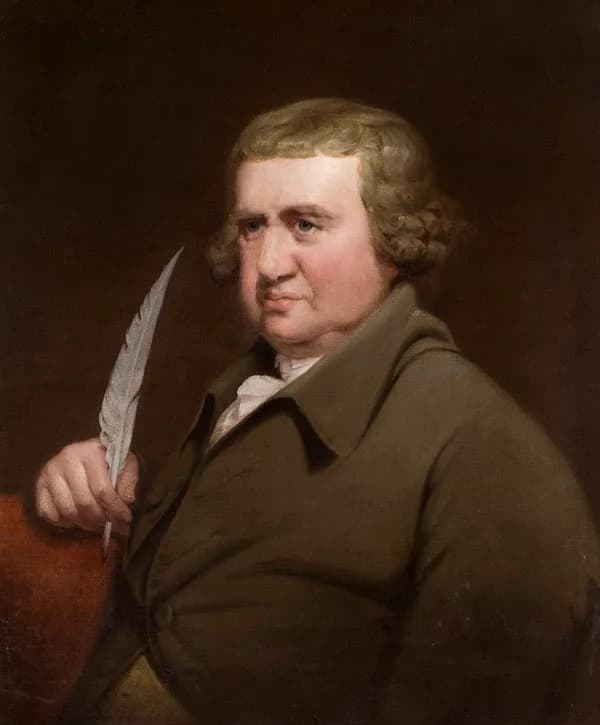
Erasmus Darwin (1731–1802) was United Kingdom best known for English physician.
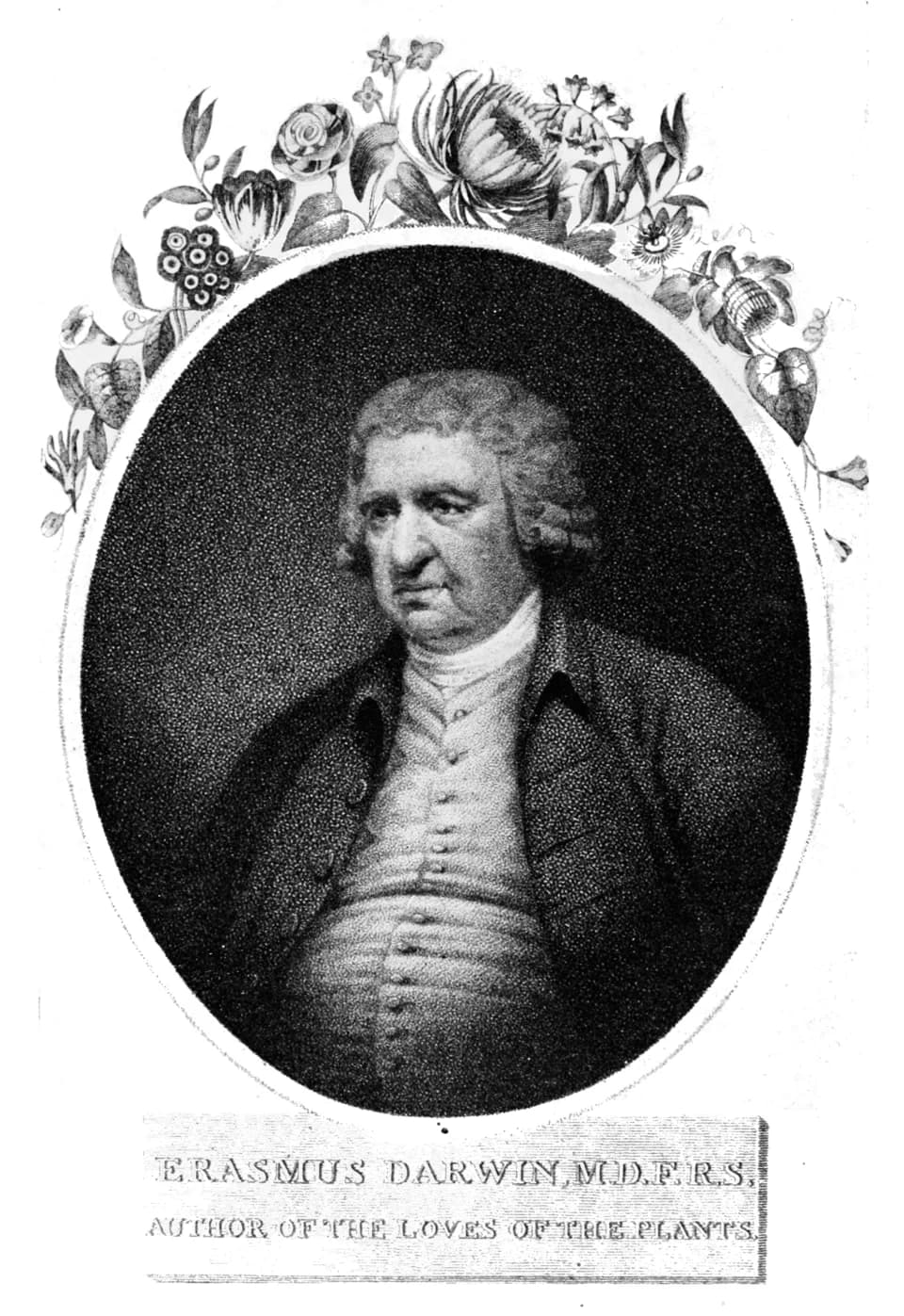
Erasmus Darwin (December 12, 1731 – April 18, 1802) was an English physician, author, and naturalist. A key thinker of the Midlands Enlightenment, he proposed early theories of evolution and was a dedicated abolitionist. His works like 'Zoonomia' and 'The Loves of Plants' showcased his blend of science and poetry.
Kapitel
Lebenskapitel
Kapitel 1 · 1731· Kapitel 1 von 6
Early Life and Origins
Born on December 12, 1731, in Elston, United Kingdom, Erasmus Darwin's early life laid the foundation for his later distinguished career. While specific details about his family and upbringing are not explicitly provided, his subsequent accomplishments suggest a rigorous and well-rounded early education. These formative years in Elston undoubtedly cultivated the profound curiosity that characterized his professional life.
Kapitel 2· Kapitel 2 von 6
Career Beginnings
Erasmus Darwin swiftly established himself as a distinguished physician, building a practice that garnered him considerable reputation. This early success in medicine provided him with the stability and intellectual freedom to explore his wide-ranging interests beyond clinical practice. His initial professional endeavors thus served as a vital springboard for his extensive scientific and literary explorations.
Kapitel 3· Kapitel 3 von 6
Major Achievements and Career Highlights
Erasmus Darwin's career was distinguished by his significant contributions across multiple fields, marking him as a truly versatile thinker. He was widely recognized as a natural philosopher, an inventor, and a freemason, actively engaging with both scientific inquiry and various societal structures. His influence extended deeply into the Midlands Enlightenment, where he was celebrated as one of its key thinkers, helping to shape the era's intellectual discourse.
Beyond his scientific endeavors, Darwin dedicated himself to social justice as a committed abolitionist, actively working against the slave trade. This deep commitment showcased the strong moral dimensions of his intellectual and public life. His dedication to these vital causes underlined his belief in progress and human betterment for all.
Kapitel 4· Kapitel 4 von 6
Notable Works or Contributions
As a prolific author, Erasmus Darwin produced a substantial body of work that reflected his diverse intellectual passions. His significant poetic contributions included "The poetical works of Erasmus Darwin..." and "The loves of plants," which artfully explored botanical themes through elaborate verse. Further showcasing his ability to fuse scientific observation with poetic expression were "Beauties of The botanic garden" and "Botanic Garden - Part I."
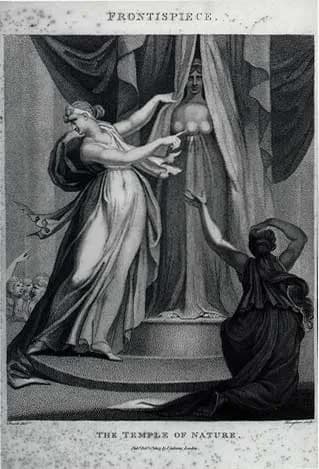
In the scientific realm, his seminal work "Zoonomia, or, The Laws of Organic Life" presented a detailed system of pathology and introduced evolutionary concepts. This included "Zoonomia - Volume I" and "The temple of nature, or, The origin of society," where he delved into theories of organic life and the development of human society. His works "Gli amori delle piante" and "Amori Delle Piante" also demonstrated the international reach and popularity of his botanical poetry, with translations into other languages.
Darwin also wrote "A plan for the conduct of female education, in boarding schools, private families, and public seminaries," highlighting his interest in educational reform and societal improvement. Academically, he achieved an h-index of 11 with 106 published papers, including "THE LOVES OF THE PLANTS" which garnered 14 citations and "Zoonomia; Or, the Laws of Organic Life: In Three Parts" with 6 citations. His clinical observations were also evident in papers like "IV. A new case in squinting," further illustrating his breadth of scientific engagement.
Kapitel 5 · 1802· Kapitel 5 von 6
Later Years
Erasmus Darwin maintained his wide-ranging intellectual pursuits and professional engagement throughout his later years. He passed away on April 18, 1802, in Breadsall, United Kingdom, leaving behind a significant legacy. His final years were undoubtedly characterized by continued contemplation and the refinement of his extensive scientific and literary ideas.
Kapitel 6· Kapitel 6 von 6
Legacy and Impact
The legacy of Erasmus Darwin is enduring, marked by his expansive intellect and his far-reaching influence across numerous fields. As a natural philosopher, physician, and poet, he made significant contributions to the scientific and literary movements of the 18th century. His evolutionary theories, articulately presented in works like "Zoonomia," are frequently regarded as foundational precursors to the later ideas of his renowned grandson, Charles Darwin.
His unwavering commitment to abolitionism and his advocacy for educational reform also highlight his lasting social conscience and progressive ideals. Through his voluminous writings and his active participation in influential intellectual circles, Erasmus Darwin left a distinct and lasting mark on 18th-century thought, ensuring his contributions continue to be studied and appreciated for their depth, originality, and forward-thinking nature.
Ein Leben in Momenten
Die Momente, die ein Leben prägten
FAQ
Häufig gefragt
Wann starb Erasmus Darwin?
Erasmus Darwin starb am 18. April 1802 in Breadsall, United Kingdom im Alter von 70 Jahren.
Wo wurde Erasmus Darwin geboren?
Erasmus Darwin wurde in Elston, United Kingdom am 12. Dezember 1731 geboren.
Wofür ist Erasmus Darwin am bekanntesten?
Erasmus Darwin ist am bekanntesten für English physician.
Wie alt war Erasmus Darwin beim Tod?
Erasmus Darwin war zum Zeitpunkt des Todes 70 Jahre alt.
Welche Nationalität hatte Erasmus Darwin?
Erasmus Darwin stammte aus United Kingdom.
Zeitlinie
Leben im Überblick
Fotogalerie
Ein Leben in Bildern
Klicken Sie ein Polaroid an, um es zu vergrößern · 24 Fotos
QR-Code
Diese Biografie teilen
Drucken & Teilen
Scannen Sie, um diese Biografieseite zu besuchen. Drucken Sie sie für Veranstaltungen, Ausstellungen oder Lehrmaterialien.