Geboren
August 22, 1552
Vyazma, Russia
Verstorben
April 23, 1605
Moscow, Duchy of Moscow
Bekannt für
Russian Tsar
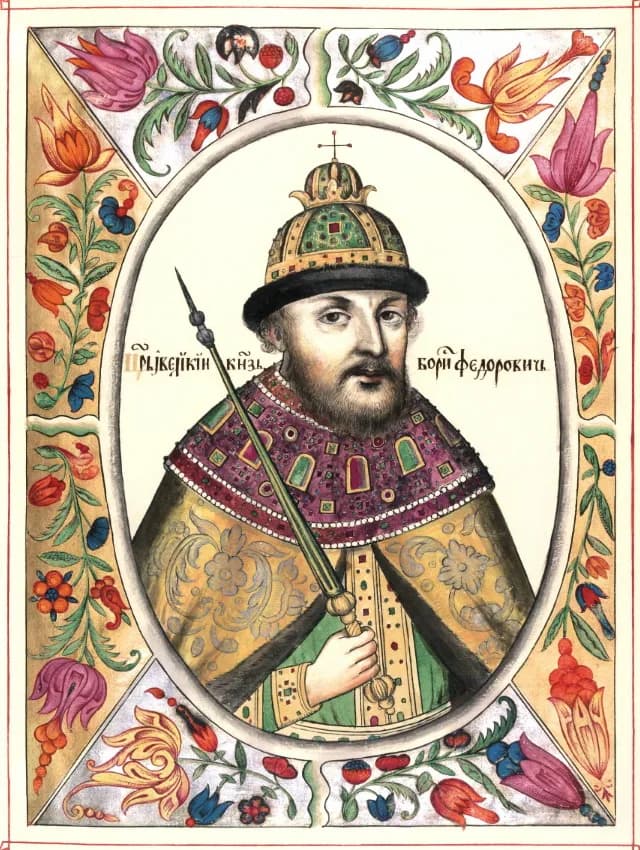
Boris Godunov (1552–1605) was Russia best known for Russian Tsar.
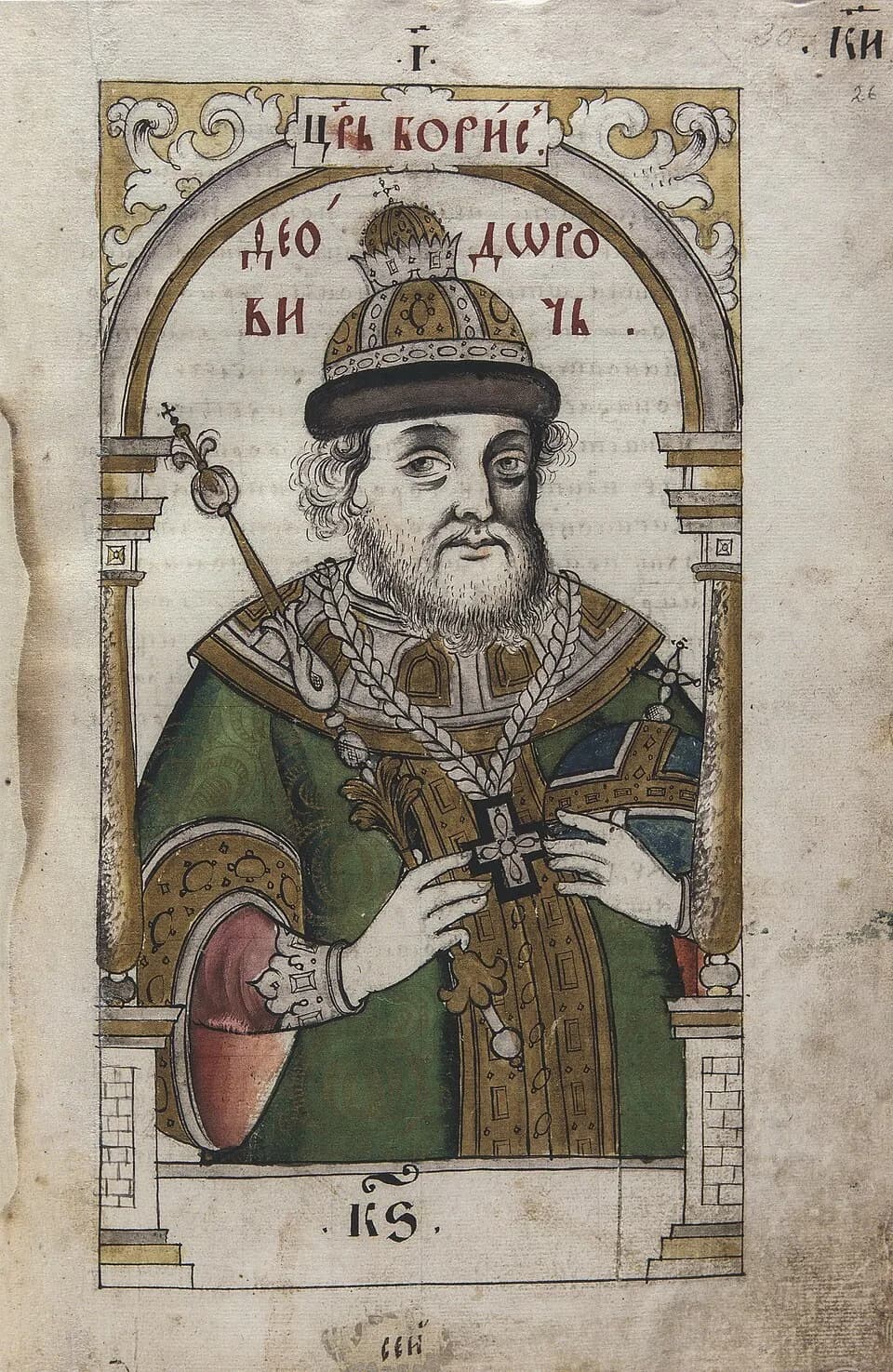
Boris Feodorovich Godunov (August 22, 1552 – April 23, 1605) was a Russian politician and Tsar. He served as de facto regent from 1585 to 1598 before becoming tsar from 1598 to 1605, marking a transition in Russian leadership. His rule followed the end of the Rurik dynasty, preceding a period known as the Time of Troubles.
Kapitel
Lebenskapitel
Kapitel 1 · 1552· Kapitel 1 von 5
Early Life and Origins
Boris Godunov was born on August 22, 1552, in Vyazma, Russia. This city, located in what was then the Duchy of Moscow, marked the beginning of a life that would eventually lead him to the highest echelons of power.
Specific details regarding his family background and early upbringing are not extensively provided in historical records. However, his future rise as a politician and Oprichnik suggests an early immersion or connection to the influential circles of the Russian state during the 16th century.
Kapitel 2· Kapitel 2 von 5
Career Beginnings
Godunov began his professional journey as an Oprichnik. This position was part of a political institution established during the reign of Ivan the Terrible, indicating his early involvement in the core machinery of state power.
Through this role, he established himself as a politician, navigating the complex and often perilous political landscape of the time. This initial experience was foundational, setting the stage for his subsequent ascension to de facto regent and ultimately, Tsar.
Kapitel 3 · 1585· Kapitel 3 von 5
Major Achievements and Career Highlights
A defining period of Godunov's career was his tenure as de facto regent of Russia, a role he held from 1585 to 1598. For thirteen years, he effectively governed the nation, influencing state policy and administration during a crucial interregnum.
Following the death of Feodor I, the last ruler of the Rurik dynasty, Boris Godunov himself ascended to the throne, becoming Tsar from 1598 until his death in 1605. His transition from regent to sovereign marked a unique and significant shift in Russian leadership, moving beyond the established dynastic succession.
Kapitel 4 · 1605· Kapitel 4 von 5
Later Years
As Tsar, Boris Godunov ruled Russia until his death on April 23, 1605. This pivotal event occurred in Moscow, within the very heart of the Duchy of Moscow he had governed.
His reign concluded amidst a period of historical turbulence for Russia. The time directly after Feodor I's reign, which immediately preceded Godunov's tsardom, is noted as when the nation descended into the turbulent era known as the Time of Troubles.
Kapitel 5· Kapitel 5 von 5
Legacy and Impact
Boris Godunov's legacy is significantly defined by his unique path from a skilled politician and Oprichnik to the ultimate position of Russian Tsar. He guided the nation through a critical transitional phase after the long-standing Rurik dynasty's end.
His leadership, both as de facto regent and as Tsar, formed a key chapter in Russian history. Godunov's rule bridged two distinct periods, directly preceding the complex and often chaotic era known as the Time of Troubles, highlighting his vital position in the nation's narrative.
Ein Leben in Momenten
Die Momente, die ein Leben prägten
FAQ
Häufig gefragt
Wann starb Boris Godunov?
Boris Godunov starb am 23. April 1605 in Moscow, Duchy of Moscow im Alter von 52 Jahren.
Wo wurde Boris Godunov geboren?
Boris Godunov wurde in Vyazma, Russia am 22. August 1552 geboren.
Wofür ist Boris Godunov am bekanntesten?
Boris Godunov ist am bekanntesten für Russian Tsar.
Wie alt war Boris Godunov beim Tod?
Boris Godunov war zum Zeitpunkt des Todes 52 Jahre alt.
Welche Nationalität hatte Boris Godunov?
Boris Godunov stammte aus Russia.
Zeitlinie
Leben im Überblick
Fotogalerie
Ein Leben in Bildern
Klicken Sie ein Polaroid an, um es zu vergrößern · 25 Fotos
QR-Code
Diese Biografie teilen
Drucken & Teilen
Scannen Sie, um diese Biografieseite zu besuchen. Drucken Sie sie für Veranstaltungen, Ausstellungen oder Lehrmaterialien.