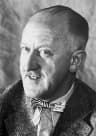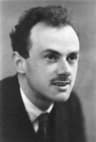
জন্ম
November 17, 1902
Budapest, Hungary
মৃত্যু
January 1, 1995
Princeton, United States
যার জন্য পরিচিত
Hungarian-American physicist and mathematician
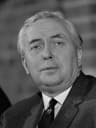
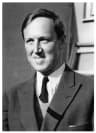
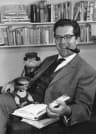
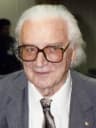
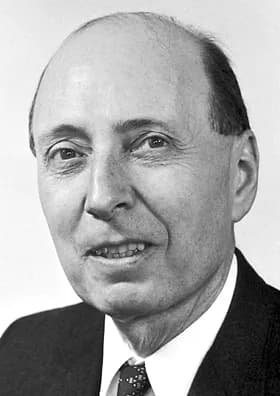
Eugene Wigner (November 17, 1902 – January 1, 1995) was a Hungarian-American theoretical physicist and mathematician. He received the Nobel Prize in Physics in 1963 for his work on the atomic nucleus and elementary particles, especially fundamental symmetry principles. His legacy significantly shaped modern physics and mathematics.
মুহূর্তে এক জীবন
যে মুহূর্তগুলি একটি জীবন গড়েছে
অধ্যায়
জীবনের অধ্যায়
অধ্যায় 1 · 1902· অধ্যায় 1 / 8
Opening Tribute to a Scientific Icon
Eugene Wigner (November 17, 1902 – January 1, 1995) was a Hungarian-American physicist and mathematician whose profound contributions significantly advanced theoretical physics. He was a distinguished university teacher and a leading figure in nuclear physics, whose work explored the fundamental structure of matter. Wigner's influence stretched across various scientific domains, particularly mathematical physics, leaving a lasting and impactful mark on scientific thought and discovery.
অধ্যায় 2 · 1902· অধ্যায় 2 / 8
Early Life and Origins
Eugene Wigner was born on November 17, 1902, in the vibrant city of Budapest, Hungary. His formative years in this European intellectual hub undoubtedly shaped his early interests and academic pursuits. This early environment in Budapest provided the fertile ground from which his extraordinary scientific career would eventually blossom, setting him on a path towards profound discoveries in physics.
Wigner's Hungarian origins provided a unique cultural and academic backdrop for his intellectual development. He carried this heritage throughout his life, ultimately becoming a distinguished Hungarian-American scientist. The foundational experiences of his youth in Budapest were instrumental in cultivating his inquisitive mind and laying the groundwork for his future contributions to global science.
অধ্যায় 3· অধ্যায় 3 / 8
Career Beginnings and Academic Journey
Wigner embarked on a dedicated path of education and intellectual exploration, which saw him develop into a respected mathematician and physicist. His early professional journey was marked by rigorous academic training, culminating in his expertise as a theoretical physicist. This period of intense study and initial research equipped him with the conceptual tools necessary for his subsequent groundbreaking work in nuclear physics and symmetry principles.
His capabilities as a university teacher also began to emerge early in his career, allowing him to share complex ideas with nascent scientists. These initial roles as a professional and educator established the framework for his later celebrated work. Wigner's commitment to both advancing scientific understanding and disseminating knowledge became a hallmark of his long and illustrious career.
অধ্যায় 4 · 1963· অধ্যায় 4 / 8
Major Achievements and Career Highlights
A crowning achievement in Eugene Wigner's esteemed career was the Nobel Prize in Physics, which he was awarded in 1963. This prestigious honor specifically recognized his vital contributions to the theory of the atomic nucleus and elementary particles. The Nobel Committee particularly lauded his discovery and subsequent application of fundamental symmetry principles, which became cornerstones of modern physics.
The 1963 Nobel Prize solidified Wigner's place as one of the twentieth century's most influential physicists. His work provided critical insights into how symmetry dictates the behavior of subatomic particles and nuclear structures. These contributions continue to be foundational to our understanding of the universe's most basic building blocks, underscoring the enduring significance of his research.
অধ্যায় 5· অধ্যায় 5 / 8
Personal Life
The available information primarily focuses on Eugene Wigner's extensive professional and academic accomplishments. Details concerning his personal life, including family, relationships, or specific leisure interests, are not provided. This memorial therefore highlights his extraordinary scientific contributions and the lasting impact he made on the fields of physics and mathematics through his dedicated work.
অধ্যায় 6· অধ্যায় 6 / 8
Notable Works and Enduring Contributions
Eugene Wigner was an exceptionally prolific academic, a fact clearly demonstrated by his impressive h-index of 65, derived from 446 published papers. This extensive body of work reflects a career dedicated to deep theoretical inquiry and problem-solving in physics. His publications range from highly cited foundational papers to more specialized contributions across many decades.
Among his most significant works is the paper titled "80 Years of Professor Wigner's Seminal Work 'On Unitary Representations of the Inhomogeneous Lorentz Group'," which saw publications in both 2021 and 2009, and accumulated an impressive 2009 citations. This work highlights his deep engagement with mathematical physics and its application to fundamental physical theories. It showcases his pioneering insights into the symmetry properties of space-time, critical for understanding elementary particles.
Another important contribution from Wigner was "Aspects of Quantum Theory," published in 2010, which has garnered 38 citations. This publication further illustrates his sustained interest in the foundational principles of quantum mechanics and their implications. His article, "Introducing the," from 2013, received 5 citations, while "The limits of science" (2009) received 1 citation, both indicating his continued engagement with theoretical discussions and philosophical aspects of science.
Even a relatively recent publication titled "Resonance Reactions," from 2024, reflects the lasting influence of Wigner's theoretical frameworks, although it registered 0 citations at the time of data collection. These various works demonstrate the breadth of his intellectual curiosity and his continuous dedication to expanding the boundaries of human knowledge in physics and mathematics. His extensive bibliography serves as a rich resource for current and future generations of scientists.
অধ্যায় 7 · 1995· অধ্যায় 7 / 8
Later Years and Final Residence
Eugene Wigner continued to be an influential presence in the scientific community throughout his later years. After a distinguished career spanning many decades and continents, he passed away on January 1, 1995. His death occurred in Princeton, United States, a city long associated with pioneering scientific research and a fitting location for the end of such a remarkable scientific life.
Even in his senior years, Wigner’s intellectual pursuits remained relevant and actively shaped the direction of theoretical physics. His presence in Princeton served as a continuing source of inspiration and wisdom for his peers and younger scholars. The date of his passing marked the end of an era for many who had witnessed his extraordinary contributions to science firsthand.
অধ্যায় 8· অধ্যায় 8 / 8
Legacy and Lasting Impact
The legacy of Eugene Wigner endures as a cornerstone of modern physics and mathematics. His fundamental insights into the theory of the atomic nucleus and elementary particles, particularly through his discovery and application of fundamental symmetry principles, remain indispensable. These principles continue to guide research in high-energy physics and quantum mechanics, affecting countless scientific investigations.
The Nobel Prize in Physics, awarded in 1963, stands as a testament to his lasting impact and the universal recognition of his groundbreaking work. His dual role as a theoretical physicist and a dedicated university teacher further amplified his influence, guiding and inspiring countless students and fellow researchers. Eugene Wigner's contributions ensure that his name will forever be associated with some of the most profound advancements in twentieth-century science.
টাইমলাইন
এক নজরে জীবন
ছবি গ্যালারি
ছবিতে এক জীবন
প্রসারিত করতে যেকোনো পোলারয়েড ক্লিক করুন · 37টি ছবি
QR কোড
এই জীবনী ভাগ করুন
প্রিন্ট ও ভাগ করুন
এই জীবনী পৃষ্ঠা দেখতে স্ক্যান করুন। ইভেন্ট, প্রদর্শনী বা শিক্ষামূলক উপকরণের জন্য প্রিন্ট করুন।