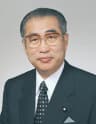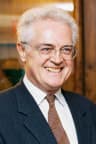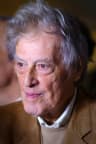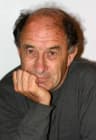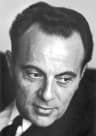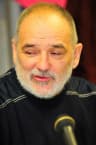
Born
June 26, 1937
Washington, D.C., United States
Died
February 19, 2013
Ithaca, United States
Known for
American physicist
Robert Coleman Richardson (1937–2013) was United States best known for American physicist.
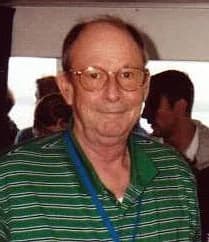
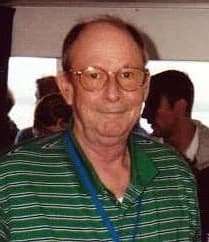
Robert Coleman Richardson (June 26, 1937 – February 19, 2013) was an American physicist from Washington, D.C. He shared the 1996 Nobel Prize in Physics for his 1972 co-discovery of superfluidity in helium-3 atoms, a finding that advanced low-temperature physics. His research contributed significantly to our understanding of matter.
Chapter
Life chapters
Chapter 1 · 1937· Chapter 1 of 8
Remembering Robert Coleman Richardson
Robert Coleman Richardson, an esteemed American physicist, lived from June 26, 1937, until February 19, 2013. His dedicated work advanced the understanding of matter, particularly at extreme temperatures. He was recognized for his key contributions to experimental physics and his influential role as a university teacher.
Chapter 2 · 1937· Chapter 2 of 8
Early Life and Origins
Robert Coleman Richardson was born in Washington, D.C., United States, on June 26, 1937. His early life in the nation's capital nurtured an intellectual curiosity for the sciences. This foundational period prepared him for a distinguished career in physics.
Chapter 3· Chapter 3 of 8
Career Beginnings
Richardson pursued his advanced education with a strong focus on physics, developing into an expert experimental physicist. His academic path consistently led him to explore challenging and complex physical phenomena. This unwavering dedication to rigorous scientific study paved the way for his later scientific breakthroughs.
Chapter 4· Chapter 4 of 8
Major Achievements and Career Highlights
A significant area of Richardson's research involved the study of helium-3, a rare isotopic form of helium. He specialized in conducting sub-millikelvin temperature studies of this unique substance. This demanding field required both cutting-edge experimental techniques and a deep grasp of quantum mechanics.
In 1972, at the renowned Cornell University Laboratory of Atomic and Solid State Physics, Richardson participated in a remarkable discovery. Working alongside senior researcher David Lee and then-graduate student Douglas Osheroff, he co-discovered the property of superfluidity in helium-3 atoms. This landmark finding immediately opened significant new avenues in the burgeoning field of low-temperature physics.
The 1972 co-discovery of superfluidity in helium-3 illustrated the power of collaborative scientific endeavor. This significant work demonstrated that helium-3 could flow without any observable friction at incredibly low temperatures, showcasing a striking quantum phenomenon. Their meticulous experiments provided irrefutable evidence for this unusual, frictionless state of matter.
For their collective efforts and original observation, Richardson, Lee, and Osheroff were jointly awarded the 1996 Nobel Prize in Physics. The Nobel Committee specifically acknowledged their discovery of superfluidity in helium-3. This prestigious international honor highlighted the immense global significance of their collective contribution to condensed matter physics.
Chapter 5· Chapter 5 of 8
Personal Life
While Robert Coleman Richardson's public persona was largely defined by his relentless scientific explorations, his commitment to advancing knowledge was paramount. As a dedicated university teacher, he also inspired and educated successive generations of aspiring physicists. His steadfast passion for deciphering the universe's fundamental laws shaped his remarkable professional and personal life.
Chapter 6· Chapter 6 of 8
Notable Works or Contributions
The co-discovery of superfluidity in helium-3 significantly expanded the scientific community's understanding of quantum fluids. This research offered critical insights into the unique behavior of matter at temperatures just a fraction of a degree above absolute zero. Such work extended the theoretical and practical understanding of quantum mechanics far beyond conventional atomic systems.
Richardson's extensive research helped to meticulously characterize the distinct phases and properties intrinsic to helium-3. His detailed studies further contributed to clarifying its exotic magnetic and complex thermodynamic characteristics. This thorough exploration provided an essential foundation for numerous subsequent experimental and theoretical investigations worldwide.
Chapter 7 · 2013· Chapter 7 of 8
Later Years
Following the deserved recognition of his Nobel Prize, Robert Coleman Richardson continued his valuable work as a highly respected physicist and influential educator. He remained an active and thoughtful presence within the global scientific community, continually contributing his vast expertise to new research challenges. He peacefully passed away in Ithaca, United States, on February 19, 2013, leaving behind an enduring legacy of scientific integrity and discovery.
Chapter 8· Chapter 8 of 8
Legacy and Impact
Robert Coleman Richardson's pioneering work undeniably advanced the entire field of low-temperature physics. His co-discovery of superfluidity in helium-3 remains a foundational cornerstone of modern condensed matter research. It robustly spurred further cutting-edge investigations into quantum fluids and various exotic states of matter.
His scientific contributions continue to guide contemporary scientists studying quantum phenomena and exploring novel materials. The fundamental principles unveiled by his collaborative team have broad applications in understanding other complex quantum systems. Robert Coleman Richardson's name will forever be associated with a truly important discovery in 20th-century physics.
A life in moments
The moments that shaped a life




FAQ
Frequently asked
When did Robert Coleman Richardson die?
Robert Coleman Richardson died on February 19, 2013 in Ithaca, United States, at the age of 75.
Where was Robert Coleman Richardson born?
Robert Coleman Richardson was born in Washington, D.C., United States on June 26, 1937.
What is Robert Coleman Richardson best known for?
Robert Coleman Richardson is best known for American physicist.
How old was Robert Coleman Richardson when they died?
Robert Coleman Richardson was 75 years old at the time of death.
What nationality was Robert Coleman Richardson?
Robert Coleman Richardson was from United States.
Timeline
Life at a glance
Photo gallery
A life in pictures
Click any polaroid to expand · 12 photos
QR Code
Share This Biography
Print & Share
Scan to visit this biography page. Print for events, exhibitions, or educational materials.