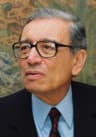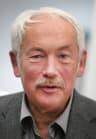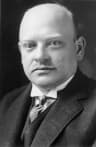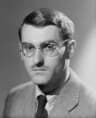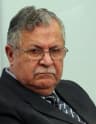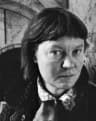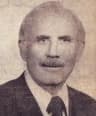
Born
July 15, 1922
Buffalo, United States
Died
October 3, 2018
Rexburg, United States
Known for
American mathematician and physicist
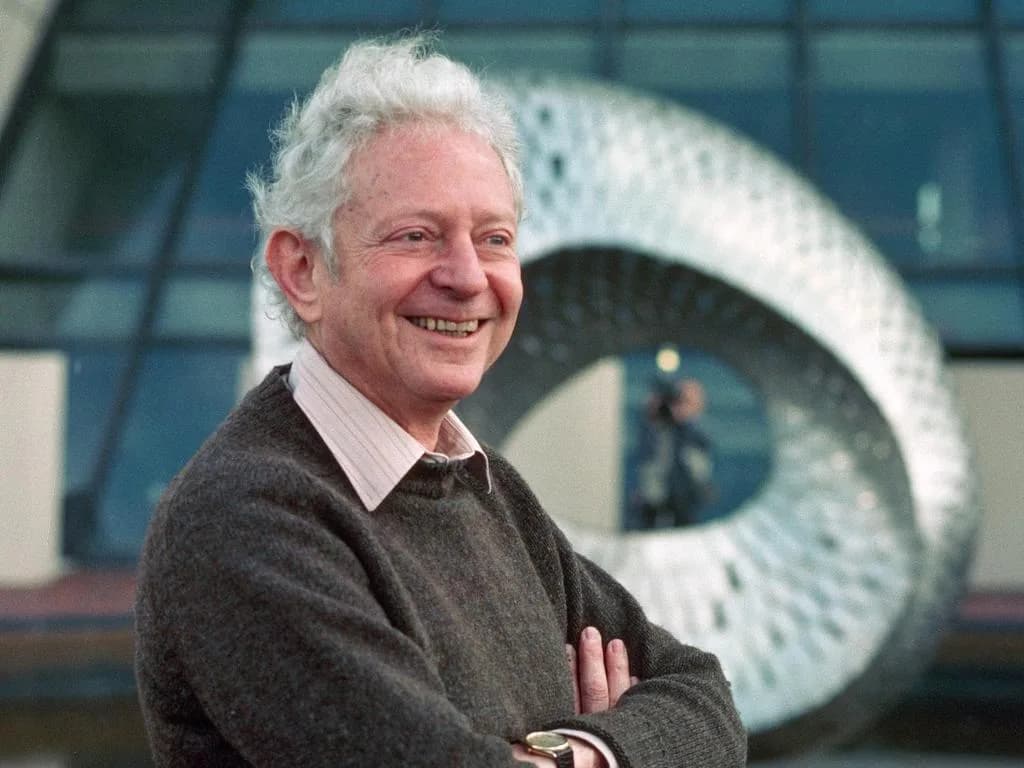
Leon M. Lederman (1922–2018) was United States best known for American mathematician and physicist.
Leon M. Lederman (July 15, 1922 – October 3, 2018) was an American physicist, university teacher, and particle physicist from Buffalo, United States. He received the Nobel Prize in Physics in 1988 for his research on neutrinos, significantly advancing the understanding of fundamental particles. His work left a lasting impact on particle physics.
Chapter
Life chapters
Chapter 1 · 1922· Chapter 1 of 8
Opening Paragraph
Leon M. Lederman (1922–2018) was an American physicist, university teacher, and particle physicist. He was a Nobel laureate celebrated for his experimental contributions to particle physics, particularly his research on neutrinos, which earned him the Nobel Prize in Physics in 1988. His work significantly advanced understanding of the fundamental building blocks of the universe.
Chapter 2 · 1922· Chapter 2 of 8
Early Life and Origins
Leon Max Lederman was born on July 15, 1922, in Buffalo, United States. His early life in Buffalo provided the foundation for his remarkable scientific journey. He pursued his education with a keen interest in the natural sciences, eventually focusing on physics, a field where he would make lasting contributions.
Chapter 3· Chapter 3 of 8
Career Beginnings
Lederman began his distinguished career as an experimental physicist, quickly establishing himself as a talented and dedicated researcher. His early work set the stage for later investigations into the subatomic world. This initial period was crucial for developing the skills and insights that would define his professional life.
Chapter 4 · 1988· Chapter 4 of 8
Major Achievements and Career Highlights
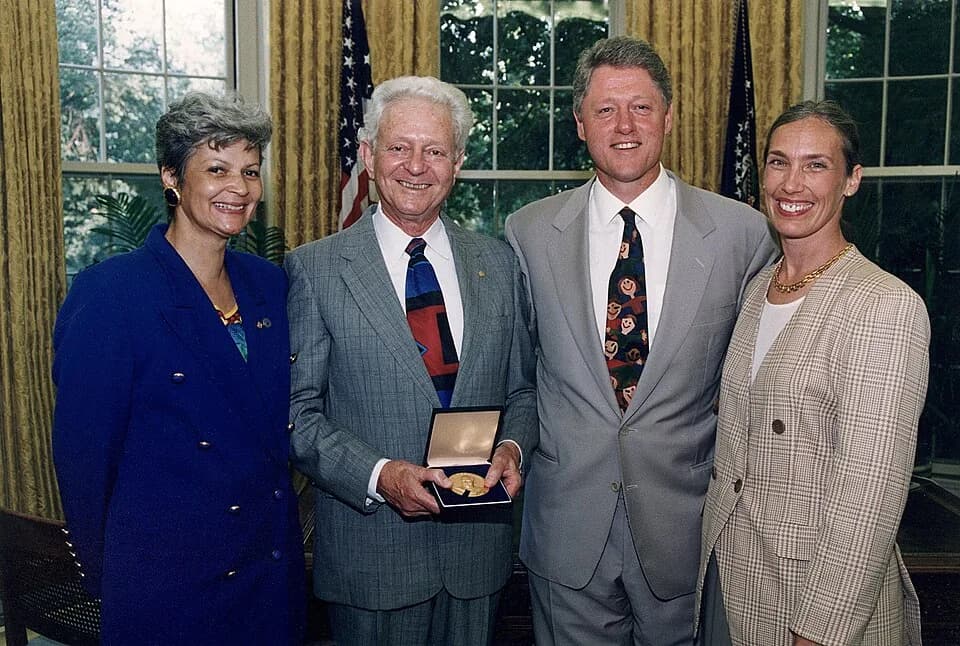
A significant achievement in Lederman's career came in 1988 when he received the Nobel Prize in Physics. He shared this esteemed honor with Melvin Schwartz and Jack Steinberger. Their collaborative efforts were recognized for research on neutrinos, specifically for the neutrino beam method and the demonstration of the doublet structure of the leptons through the discovery of the muon neutrino.
Prior to this, Lederman also received the Wolf Prize in Physics in 1982, an award he shared with Martin Lewis Perl. This recognition was for their separate research efforts focused on quarks and leptons, further highlighting his broad impact in the field of particle physics. These accolades underscore his important contributions to the scientific community.
Chapter 5· Chapter 5 of 8
Personal Life
The provided information primarily details Leon M. Lederman's professional and academic achievements. His public record reflects his extensive scientific endeavors and leadership roles within the physics community.
Chapter 6 · 1999· Chapter 6 of 8
Notable Works or Contributions
Beyond his Nobel-winning research, Lederman contributed to the scientific literature with various publications. While some of his academic papers had limited citations, they covered a range of subjects, reflecting his diverse intellectual engagement. His work includes "Science Over Politics" (1999), which garnered 8 citations, and "Nobel laureates' letter to President Bush." (2001) with 3 citations.
His earlier work, "Air-Supported Anti-Infiltration Barrier." (1966), received 1 citation. Other papers, such as "Dental caries in 5 and 12-year olds: preliminary results of a nationwide study in Israel." (1991) and "The use of degraded core scenarios for an emergency preparedness drill in Brazil" (1984), illustrate his wide-ranging interests even if they received fewer citations.
Chapter 7 · 1986· Chapter 7 of 8
Later Years
In his later career, Leon Lederman served as director emeritus of Fermi National Accelerator Laboratory (Fermilab) in Batavia, Illinois. He was a respected leader at one of the world's foremost particle physics laboratories. In 1986, he founded the Illinois Mathematics and Science Academy in Aurora, Illinois, demonstrating his commitment to educational advancement. He remained a resident scholar emeritus at the academy from 2012 until his passing in Rexburg, United States, on October 3, 2018, continuing to inspire future generations of scientists and mathematicians.
Chapter 8· Chapter 8 of 8
Legacy and Impact
Leon M. Lederman's legacy is defined by his fundamental discoveries in particle physics and his dedication to scientific leadership and education. His work on neutrinos helped shape the Standard Model of particle physics, influencing countless researchers and advancing our understanding of matter. Through his leadership at Fermilab and his founding of the Illinois Mathematics and Science Academy, he left behind institutions that continue to foster scientific inquiry and learning, impacting generations of students and researchers.
A life in moments
The moments that shaped a life

FAQ
Frequently asked
When did Leon M. Lederman die?
Leon M. Lederman died on October 3, 2018 in Rexburg, United States, at the age of 96.
Where was Leon M. Lederman born?
Leon M. Lederman was born in Buffalo, United States on July 15, 1922.
What is Leon M. Lederman best known for?
Leon M. Lederman is best known for American mathematician and physicist.
How old was Leon M. Lederman when they died?
Leon M. Lederman was 96 years old at the time of death.
What nationality was Leon M. Lederman?
Leon M. Lederman was from United States.
Timeline
Life at a glance
Photo gallery
A life in pictures
Click any polaroid to expand · 22 photos
QR Code
Share This Biography
Print & Share
Scan to visit this biography page. Print for events, exhibitions, or educational materials.