Born
January 1, 1288
Naples, Italy
Died
July 24, 1342
Visegrád, Hungary
Known for
King of Hungary
Charles I of Hungary (1288–1342) was Italy best known for King of Hungary.
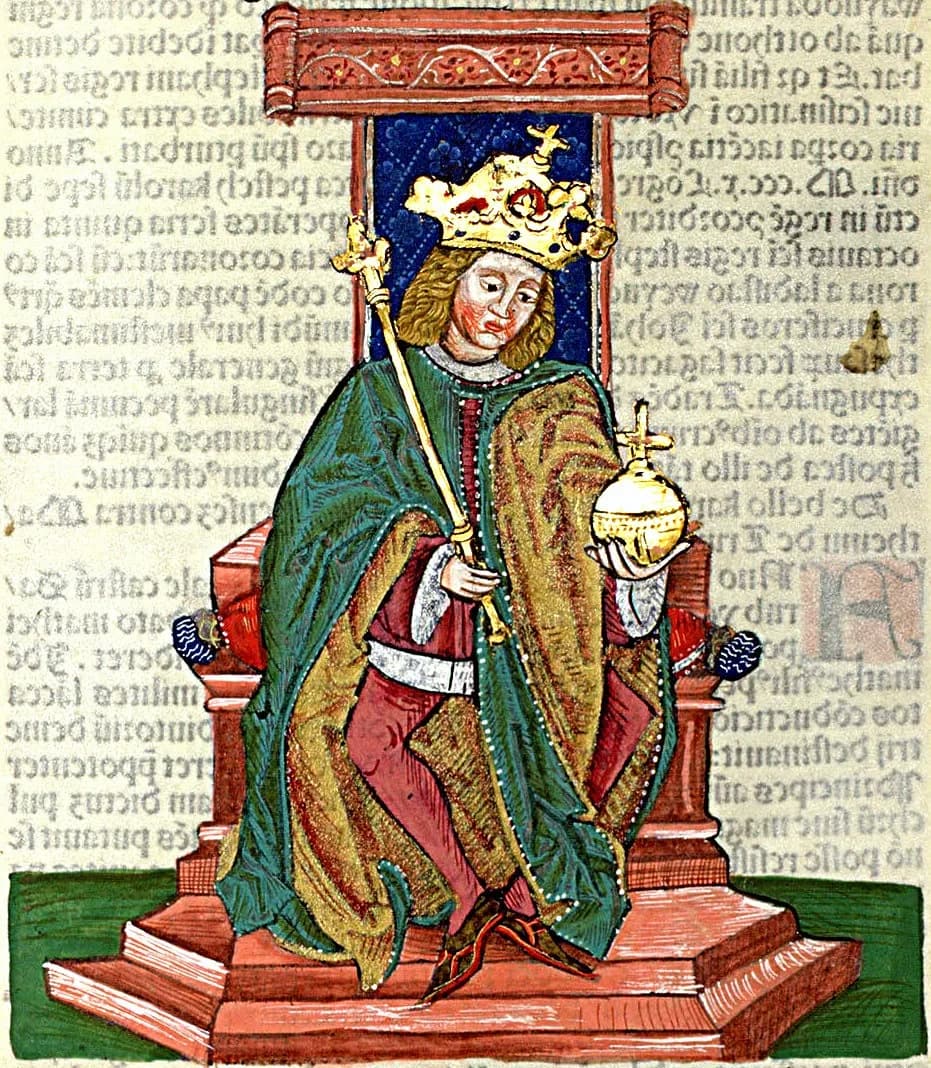
Charles I of Hungary (January 1, 1288 – July 24, 1342) was a monarch who reigned as King of Hungary and Croatia. He established the Capetian House of Anjou in Hungary after a complex succession, securing his family's legacy. His long reign solidified his realm's position in Central Europe.
Chapter
Life chapters
Chapter 1 · 1288· Chapter 1 of 8
Remembering Charles I of Hungary
We respectfully commemorate Charles I of Hungary (January 1, 1288 – July 24, 1342), a pivotal monarch who skillfully reigned as King of Hungary and Croatia for over three decades. His remarkable life, spanning from his birth in Naples, Italy, to his death in Visegrád, Hungary, was dedicated to asserting and solidifying his family's claim to the Hungarian throne. Charles I successfully established the Capetian House of Anjou as a dominant force in the region, thereby playing a crucial role in the political landscape of Central Europe during the 14th century. His tenure on the throne marked a significant period of stability and strategic consolidation for the realm he diligently governed.
Chapter 2 · 1288· Chapter 2 of 8
Early Life and Origins
Charles I was born on January 1, 1288, in the historically rich city of Naples, Italy, a birthplace that immediately connected him to a prominent European royal heritage. From his earliest days, he was recognized as a distinguished member of the Capetian House of Anjou, a venerable noble lineage with extensive connections across the continent. This inherent royal background provided a robust foundation for his future aspirations and the complex claims to power he would later pursue.
His intricate family tree prominently displayed direct ties to several influential European monarchs, highlighting his significant dynastic importance. Charles was the sole son of Charles Martel, who held the esteemed title of Prince of Salerno, further cementing his direct claim to royal bloodlines. His paternal grandparents were the notable Charles II of Naples and Mary of Hungary, which critically linked him through blood to the crowns of both the Kingdom of Naples and the Kingdom of Hungary, a connection that would define much of his life's trajectory and political endeavors.
Chapter 3 · 1290· Chapter 3 of 8
Career Beginnings
The arduous path to the Hungarian throne for Charles I was far from direct, originating instead from a deeply complex succession dispute that involved his formidable grandmother. Mary of Hungary, who was married to Charles II of Naples, first put forward her claim to the Hungarian crown after her brother, Ladislaus IV of Hungary, passed away in 1290. However, the Hungarian prelates and powerful lords of the realm made a decisive and different choice, opting instead to elect her cousin, Andrew III, as their new king, thus initially bypassing Mary's dynastic aspirations.
Despite this initial significant setback and the election of another monarch, Mary of Hungary resolutely refused to relinquish her family's inherent claim to the esteemed throne. In a strategic move, she formally transferred her rights and the associated aspirations directly to her eldest son, Charles Martel, who was Charles I's father, thereby ensuring the continuity of the family's pursuit of the crown. This determined act firmly solidified the Capetian House of Anjou’s intention to eventually secure the Hungarian kingdom, effectively setting a clear stage for subsequent and inevitable dynastic struggles. Tragically, after Charles Martel's untimely death in 1295, the momentous claim to the Hungarian realm was then directly passed to his young son, Charles, placing immense royal responsibility upon the boy's shoulders.
A profoundly impactful decision made by his paternal grandfather, Charles II of Naples, further concentrated young Charles's dynastic ambitions almost entirely upon Hungary. Charles II strategically disinherited Charles from the valuable Kingdom of Naples, choosing instead to name his third son, Robert, as the primary heir to the Neapolitan throne. This calculated move meant that Charles's singular focus and overarching ambition became exclusively concentrated on vigorously asserting and permanently securing his inherited, yet contested, claim to the Hungarian crown, a challenging quest he would pursue with unwavering determination and strategic resolve throughout his early adulthood.
Chapter 4 · 1308· Chapter 4 of 8
Major Achievements and Career Highlights
Following a period of intense political struggle and persistent campaigning, Charles I successfully ascended to the revered Hungarian throne in 1308, marking the official commencement of his long and notably impactful reign as King of both Hungary and Croatia. This hard-won achievement represented a significant triumph in his protracted struggle for legitimate recognition and solidified his claim to power, firmly establishing him as the rightful and supreme ruler of a vast and culturally influential kingdom. His formal coronation ceremoniously symbolized the ultimate culmination of years of intricate political maneuvering, strategic alliances, and the persistent assertion of his familial claims, ushering in a new era for the region.
His extensive and influential rule endured for an impressive 34 years, beginning in 1308 and continuing steadfastly until his death on July 24, 1342. Throughout this remarkable and lengthy period, Charles I dedicated his considerable energies and strategic acumen to diligently governing and methodically strengthening the unified Kingdom of Hungary and Croatia, transforming it into a more cohesive and powerful entity. His sustained and resilient leadership provided an invaluable stable foundation, which critically allowed the Capetian House of Anjou to firmly establish its dynastic presence and significantly expand its influence within the Central European region for many generations to come. This protracted and successful tenure on the throne unequivocally signifies a particularly enduring, stable, and prosperous reign for his kingdom.
As the reigning King of both Hungary and Croatia, Charles I presided over a substantially significant territorial domain situated strategically within Central Europe, effectively expanding his royal reach. His distinguished dual kingship powerfully underscored his considerable personal authority and meticulously demonstrated the expansive geographical reach of his consolidated crown. The intricate and effective administration of these combined and diverse territories represented a major and lasting achievement of his reign, demanding not only careful managerial oversight but also profound strategic insight and diplomatic skill throughout his extensive and busy period as monarch, solidifying his stature as a formidable ruler.
Chapter 5· Chapter 5 of 8
Personal Life
While the broader historical records provide a clear account of Charles I’s dynastic struggles and political achievements, detailed insights into his more personal interests, specific hobbies, or private relationships beyond his immediate royal family and inherent duties are not extensively documented. His entire life, however, was inextricably and deeply linked to his distinguished lineage and the immense, weighty responsibilities that came with the burden of kingship from a notably early age. His inherent identity was, therefore, profoundly intertwined with the powerful royal families of both Anjou and Hungary, a connection that fundamentally shaped his very existence and determined his future path.
The pivotal events surrounding his unexpected disinheritance from the opulent Kingdom of Naples and the subsequent, crucial passing of the Hungarian claim through his determined grandmother and his father, directly influenced the entire trajectory and direction of his life. These significant dynastic developments were far more than merely abstract political facts; they were central and defining aspects of his deeply personal journey and royal destiny. They unequivocally dictated his core ambitions, shaped his strategic decisions, and ultimately determined his enduring place in the vast annals of history, vividly showcasing just how profoundly his family's complex history impacted every facet of his personal and public life.
Chapter 6· Chapter 6 of 8
Notable Works or Contributions
Charles I's most substantial and enduring contribution to the historical record was unquestionably his long and effective reign as monarch, coupled with the successful establishment of the resilient Capetian House of Anjou within the Kingdom of Hungary. Through his persistent efforts and strategic governance, he meticulously secured and diligently consolidated his family's authoritative hold on the Hungarian throne, thereby initiating a new and robust dynastic era for the entire kingdom. His strong leadership provided a comprehensive framework for effective governance and fostered significant development that successfully endured and continued to shape the region well beyond his own lifetime, leaving an undeniable and positive imprint.
Throughout his extensive tenure as the reigning king, Charles I systematically laid the crucial groundwork for future political stability and strengthened royal authority across his lands. While specific "works" in the traditional artistic, architectural, or scientific sense are not typically attributed to him, his unwavering dedication to the vital affairs of state and the effective, diligent administration of his extensive realm represented his primary and most significant professional endeavors. He was primarily a pragmatic ruler who concentrated intently on the practicalities of kingship, the enduring strength of his dynastic line, and the overall prosperity of his subjects, ensuring a lasting and functional legacy.
Chapter 7 · 1342· Chapter 7 of 8
Later Years
Charles I's remarkable and influential reign ultimately concluded with his death on July 24, 1342, in the royal seat of Visegrád, Hungary, bringing to an end a significant chapter in the nation's history. This somber event marked the close of an era during which he had, with great perseverance and skill, firmly planted the Anjou dynasty within the very heart of the Hungarian kingdom, establishing a powerful new lineage. His passing brought to a definitive close a period characterized by significant political and crucial dynastic consolidation in the complex landscape of Central Europe, leaving behind a well-established and enduring monarchy for his successors.
His final years were spent actively as the reigning monarch, having successfully navigated the numerous complexities of inheriting, asserting, and diligently maintaining his considerable power and influence throughout the region. The robust legacy he had meticulously built over his impressive 34-year reign stood as a clear testament to his profound perseverance, strategic acumen, and unwavering commitment to his royal duties. He died as a successful King, having thoroughly fulfilled his dynastic destiny as the respected and authoritative leader of both Hungary and Croatia, an undeniable testament to his lifelong dedication and political triumphs.
Chapter 8· Chapter 8 of 8
Legacy and Impact
Charles I of Hungary is enduringly remembered as the foundational and central figure of the Hungarian Anjou dynasty, a powerful lineage that profoundly shaped the political and social landscape of the kingdom for many subsequent generations. He masterfully transformed what began as a highly contested claim into a securely established and remarkably enduring royal house, ensuring his family's long-term prominence. His persistent and strategic efforts ultimately secured his family's rightful place on the throne, thereby leaving an undeniable and lasting mark on the intricate course of Hungarian history for centuries to come.
His significant impact extended far beyond mere dynastic succession, crucially influencing the broader political dynamics and power balances of Central Europe. As the astute King of Hungary and Croatia, he effectively solidified his realm's crucial position as a formidable regional power, expanding its influence and securing its borders. His long and effective rule established important precedents and initiated durable patterns of governance that would continue to define the Hungarian kingdom long after his passing, cementing his status as a figure of considerable and lasting historical importance and influence.
A life in moments
The moments that shaped a life
FAQ
Frequently asked
When did Charles I of Hungary die?
Charles I of Hungary died on July 24, 1342 in Visegrád, Hungary, at the age of 54.
Where was Charles I of Hungary born?
Charles I of Hungary was born in Naples, Italy on January 1, 1288.
What is Charles I of Hungary best known for?
Charles I of Hungary is best known for King of Hungary.
How old was Charles I of Hungary when they died?
Charles I of Hungary was 54 years old at the time of death.
What nationality was Charles I of Hungary?
Charles I of Hungary was from Italy.
Timeline
Life at a glance
Photo gallery
A life in pictures
Click any polaroid to expand · 24 photos
QR Code
Share This Biography
Print & Share
Scan to visit this biography page. Print for events, exhibitions, or educational materials.