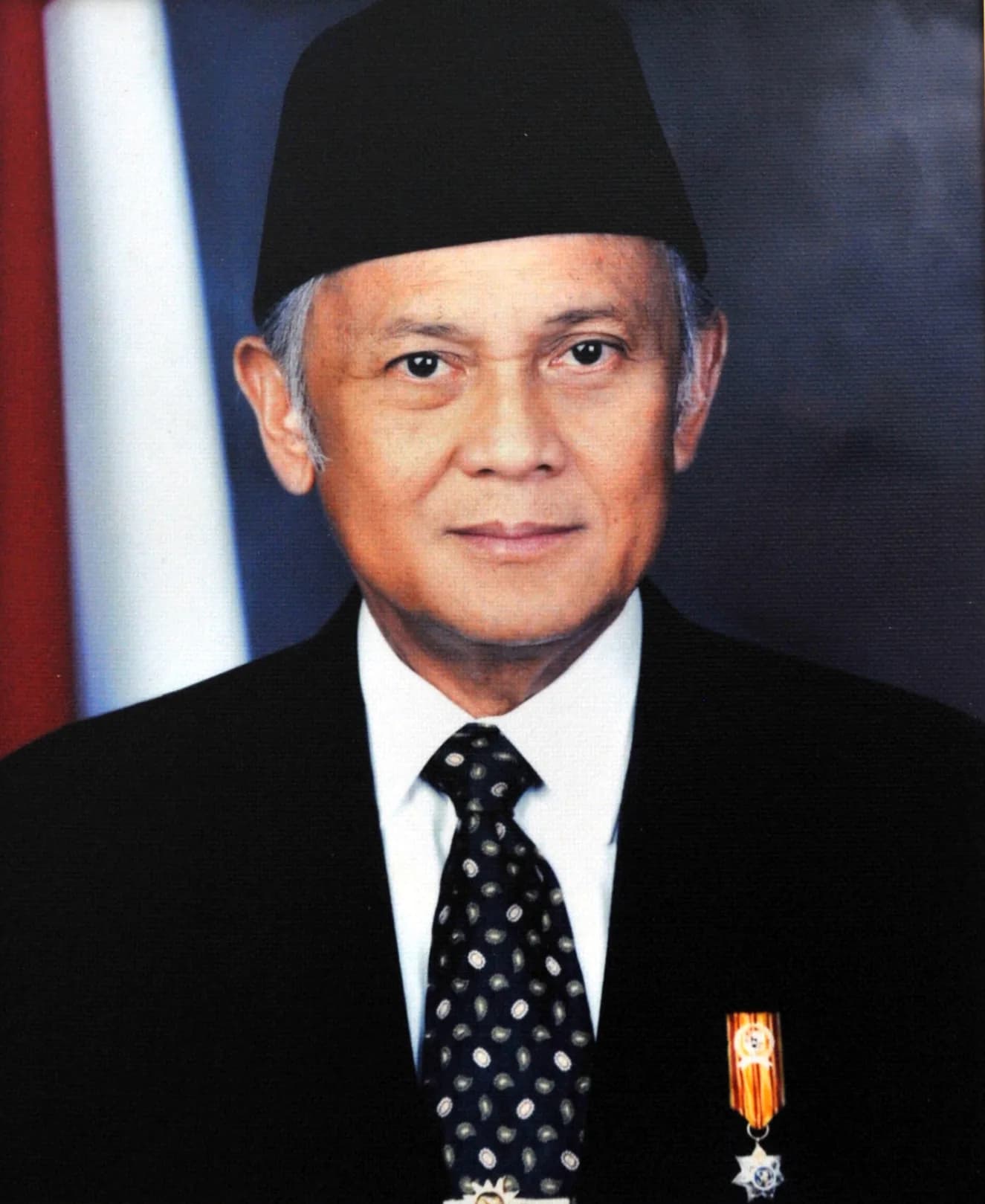
Born
June 25, 1936
Parepare, Indonesia
Died
September 11, 2019
Gatot Soebroto Army Hospital, Indonesia
Known for
3rd President of Indonesia (1998—1999) and 7th Vice President of Indonesia (1998)
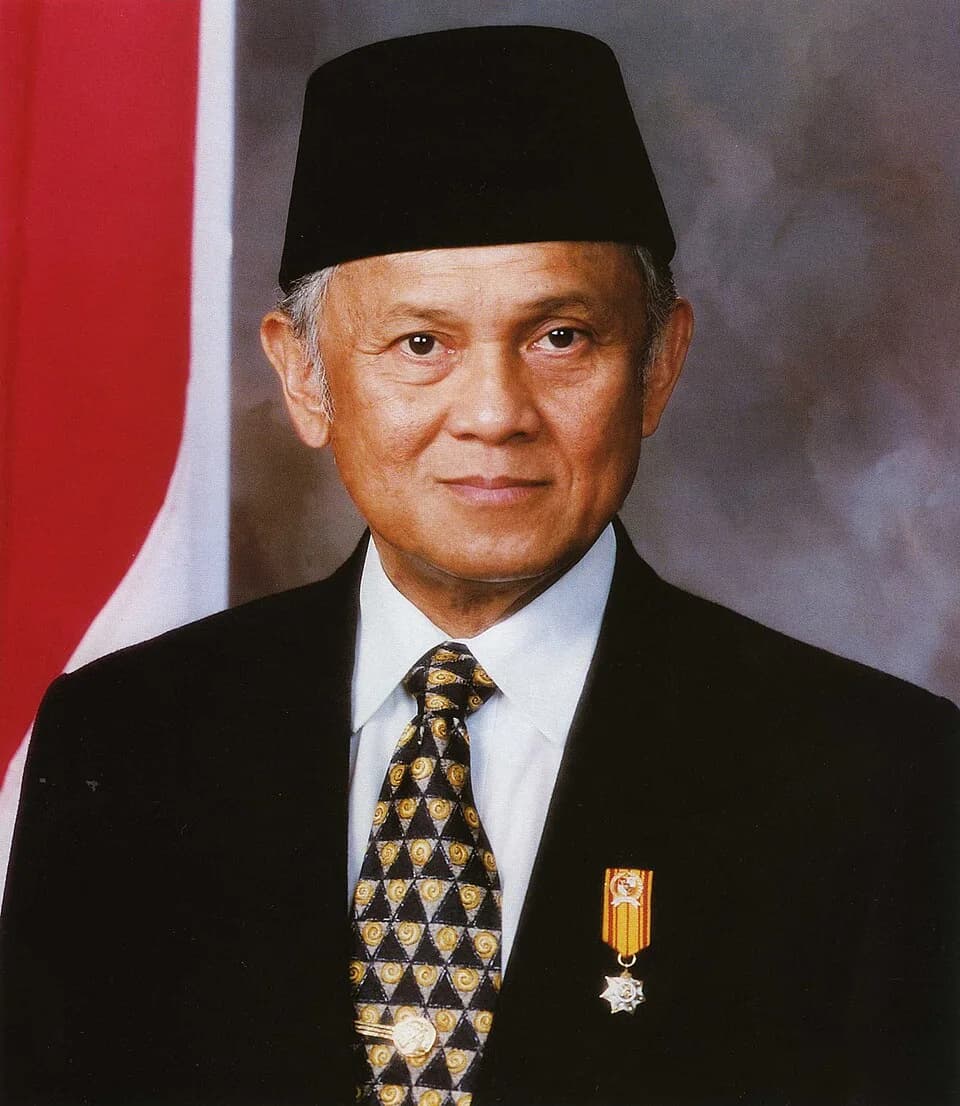
B. J. Habibie (1936–2019) was Indonesia best known for 3rd President of Indonesia (1998—1999) and 7th Vice President of Indonesia (1998).
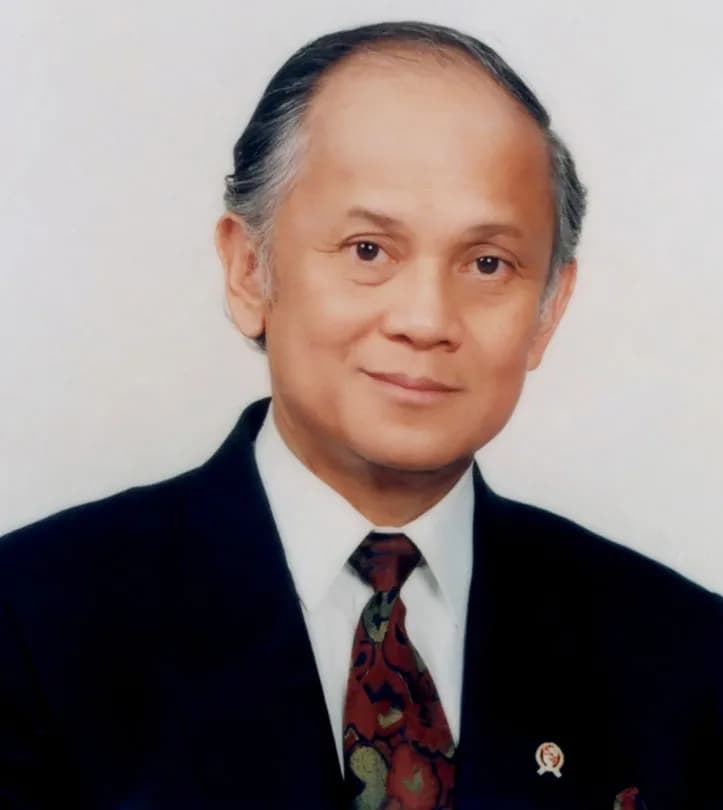
Bacharuddin Jusuf Habibie (June 25, 1936 – September 11, 2019) was an Indonesian engineer and politician. He served as the 3rd President of Indonesia, guiding the nation through its Reform era. His leadership marked a significant transition for the country.
Chapter
Life chapters
Chapter 1 · 1936· Chapter 1 of 6
Early Life and Origins
Born in Parepare, Indonesia, on June 25, 1936, B. J. Habibie’s roots ran deep within the Indonesian archipelago. He hailed from Sulawesi, embracing a rich heritage that included Bugis-Gorontalese and Javanese ancestry. This diverse background shaped his understanding of the nation he would later lead.
Chapter 2· Chapter 2 of 6
Career Beginnings
Prior to his political ascent, B. J. Habibie established himself as a respected engineer, scientist, and inventor. His early professional life was dedicated to technical innovation and scientific exploration. This background in engineering provided him with a unique perspective that he later brought to his public service roles.
Chapter 3 · 1998· Chapter 3 of 6
Major Achievements and Career Highlights
B. J. Habibie's political career saw him ascend to the highest offices in Indonesia. He became the 7th Vice President of Indonesia in March 1998, a position he held for a little over two months. This rapid ascent placed him at the forefront of national leadership during a challenging period.
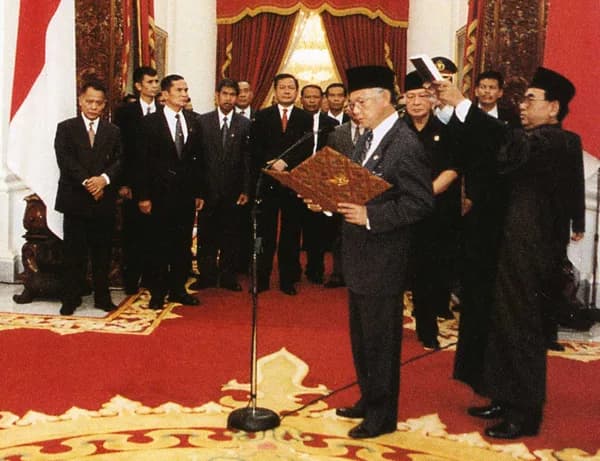
Following the resignation of President Suharto after 32 years in office, Habibie succeeded him as the 3rd President of Indonesia in 1998. He holds the distinction of being the country's first vice president to assume the presidency intra-term. His presidency, though brief, was regarded as a key period, marking the nation's transition into the Reform era.
Chapter 4· Chapter 4 of 6
Notable Works or Contributions
As an engineer, scientist, and inventor, B. J. Habibie contributed significantly to various fields of technology. While specific individual inventions are not detailed in his summarized profile, his reputation in these professions highlights a career dedicated to scientific and engineering advancement. His expertise in these technical areas informed much of his approach to national development and policy.
Chapter 5 · 1999· Chapter 5 of 6
Later Years
After concluding his presidency in 1999, B. J. Habibie continued to be a respected figure in Indonesia. He passed away on September 11, 2019, at the Gatot Soebroto Army Hospital in Indonesia. His passing marked the end of an era for many who remembered his leadership during a difficult time for the nation.
Chapter 6· Chapter 6 of 6
Legacy and Impact
B. J. Habibie's presidency, though short, holds a significant place in Indonesian history. It is recognized as a landmark period that initiated Indonesia's transition to the Reform era. He oversaw a period of democratic opening and economic stabilization after decades of authoritarian rule.
His steady hand during a challenging time helped lay the groundwork for future development and democratic changes. Habibie is remembered for his dedication to both technological advancement and national progress, ensuring his lasting influence as a statesman who navigated his country through a difficult juncture.
A life in moments
The moments that shaped a life
FAQ
Frequently asked
When did B. J. Habibie die?
B. J. Habibie died on September 11, 2019 in Gatot Soebroto Army Hospital, Indonesia, at the age of 83.
Where was B. J. Habibie born?
B. J. Habibie was born in Parepare, Indonesia on June 25, 1936.
What is B. J. Habibie best known for?
B. J. Habibie is best known for 3rd President of Indonesia (1998—1999) and 7th Vice President of Indonesia (1998).
How old was B. J. Habibie when they died?
B. J. Habibie was 83 years old at the time of death.
What nationality was B. J. Habibie?
B. J. Habibie was from Indonesia.
Timeline
Life at a glance
Photo gallery
A life in pictures
Click any polaroid to expand · 48 photos
QR Code
Share This Biography
Print & Share
Scan to visit this biography page. Print for events, exhibitions, or educational materials.