Wasifu · German computer scientist and engineer

3 min read · 694 words

Konrad Zuse

1910 · 1995

Miaka ya kuishi
85
Picha
50
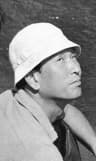
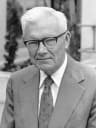
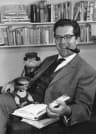
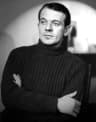
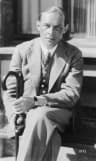
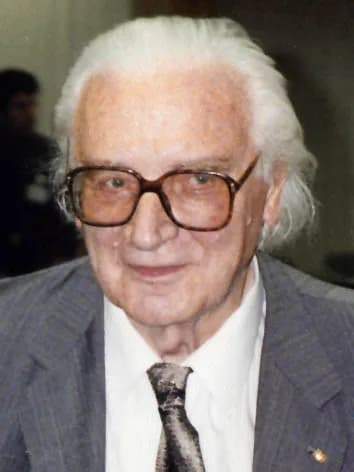
Konrad Zuse portrait

Alizaliwa

June 22, 1910

Wilmersdorf, Germany

Alifariki

December 18, 1995

Hünfeld, Germany

Anajulikana kwa

German computer scientist and engineer

Konrad Zuse (June 22, 1910 – December 18, 1995) was a German computer scientist and engineer from Wilmersdorf, Germany. He is renowned for inventing the Z3, the world's first programmable computer, which became operational in May 1941. Zuse is widely regarded as the father of the modern computer, forever changing technology.

Maisha katika nyakati

Nyakati zilizoyaunda maisha

Imeandikwa kwa English

Sura

Sura za maisha

Sura 1 · 1910· Sura 1 ya 7

Early Life and Origins

Konrad Ernst Otto Zuse was born in Wilmersdorf, Germany, on June 22, 1910. While extensive details about his early family life are not widely known, his formative years undoubtedly nurtured an inquisitive mind. He pursued studies that culminated in his training as a civil engineer, a profession that would initially shape his career path and expose him to complex calculations.

Sura 2· Sura 2 ya 7

Career Beginnings

Zuse commenced his professional journey as a civil engineer, a field that demanded rigorous problem-solving and a meticulous approach to design. It was during this period that he became acutely aware of the tedious and error-prone nature of manual calculations required for engineering tasks. This personal frustration with manual computation became a driving force, inspiring him to seek automated solutions and ultimately shifting his focus towards mechanical computation.

Sura 3 · 1941· Sura 3 ya 7

Major Achievements and Career Highlights

Konrad Zuse's most significant achievement was the development of the world's first functional, program-controlled, Turing-complete computer, the Z3. This groundbreaking machine became operational in May 1941, marking a monumental milestone in technological history. The Z3 not only performed automatic calculations but also demonstrated the practical application of binary floating-point numbers and program control, which are fundamental principles underlying all modern digital computers.

Before the Z3, Zuse developed predecessor machines, including the Z1 in 1938, which was a mechanical computer, and the Z2. These earlier models, though not fully operational or complete in the same way as the Z3, were crucial steps in his iterative design process. His persistent work during wartime, often with limited resources, showcased his profound understanding of logical systems and his mechanical ingenuity in the face of immense challenges.

Sura 4· Sura 4 ya 7

Personal Life

While much of Konrad Zuse's public legacy centers on his scientific and engineering achievements, specific details regarding his personal life and family relationships are not widely highlighted in the provided information. He dedicated a significant portion of his life to his professional pursuits as an entrepreneur, computer scientist, engineer, and inventor. His passion for innovation certainly shaped his daily existence.

Sura 5· Sura 5 ya 7

Notable Works or Contributions

The Z3 stands as Zuse's defining contribution, revolutionizing what was possible with automated calculation and laying the groundwork for general-purpose computing. It was the first machine capable of being controlled by a program, executing a sequence of instructions automatically, distinguishing it from mere calculators. This innovation provided a blueprint for how complex tasks could be broken down and processed systematically by a machine.

Beyond the hardware, Zuse also conceptualized Plankalkül, considered one of the earliest high-level programming languages. Although it was not published until 1972 and saw limited practical use initially, its design demonstrated his forward-thinking approach to software development long before the field was widely recognized. His entrepreneurial spirit also led him to establish Zuse KG in 1949, making him a pioneer in the commercialization of computer technology.

Sura 6 · 1995· Sura 6 ya 7

Later Years

Konrad Zuse continued to be an active and respected figure in the burgeoning field of computing for decades. Through his company, Zuse KG, he oversaw the production of numerous subsequent computer models, contributing further to Germany's early computer industry. He lived to witness his early, solitary inventions blossom into a global industry that utterly transformed society. He passed away peacefully in Hünfeld, Germany, on December 18, 1995, his legacy as a foundational figure in computer science firmly established.

Sura 7· Sura 7 ya 7

Legacy and Impact

Konrad Zuse's lasting influence on the world is immense; his work laid the essential foundations for the computer age we inhabit today. His Z3 computer fundamentally changed how we approach complex problems, paving the way for everything from advanced scientific research to the digital devices woven into our daily lives. He proved that programmable, automated calculation was not only possible but also immensely practical, setting humanity on a path towards unprecedented technological advancement and information processing capabilities.

He is rightfully regarded by many as the inventor and father of the modern computer, a testament to his inventive genius, perseverance, and foresight. The principles of program control and binary arithmetic that he pioneered are still at the very heart of computing technology today. Zuse's life serves as a powerful illustration of how the vision and determination of a single individual can reshape the future of humanity.

Matunzio ya picha

Maisha katika picha

Bofya polaroid yoyote kupanua · picha 47

Msimbo wa QR

Shiriki Wasifu Huu

Chapisha na Shiriki

Skani kutembelea ukurasa huu wa wasifu. Chapisha kwa hafla, maonyesho, au nyenzo za kielimu.

Nani alikuwa Konrad Zuse? (1910-1995) | WhoWasThisGuy.com