Alizaliwa
August 8, 1901
Canton, United States
Alifariki
August 27, 1958
Palo Alto, United States
Anajulikana kwa
American nuclear physicist
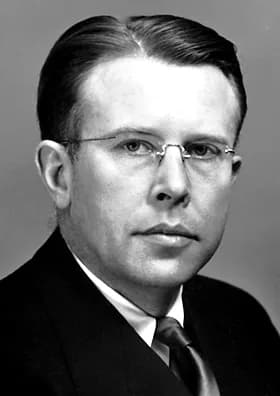
Ernest Lawrence (1901–1958) was United States best known for American nuclear physicist.
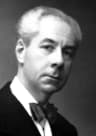
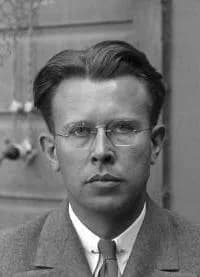
Ernest Lawrence (August 8, 1901 – August 27, 1958) was an American nuclear physicist from Canton, United States. He received the Nobel Prize in Physics for his invention of the cyclotron and played a key role in the Manhattan Project. His legacy includes founding two national laboratories.
Sura
Sura za maisha
Sura 1 · 1901· Sura 1 ya 7
Early Life and Origins
Ernest Orlando Lawrence was born in Canton, United States, on August 8, 1901. His early years in Canton set the foundation for a life dedicated to scientific inquiry. He later passed away in Palo Alto, United States, on August 27, 1958, marking the end of a prolific career.
Sura 2· Sura 2 ya 7
Career Beginnings
Lawrence pursued a career as a physicist and university teacher, specializing in nuclear physics. His early professional path quickly led him toward innovative research in atomic science. This foundation of rigorous study and teaching would soon culminate in a discovery that reshaped the scientific world.
Sura 3 · 1939· Sura 3 ya 7
Major Achievements and Career Highlights
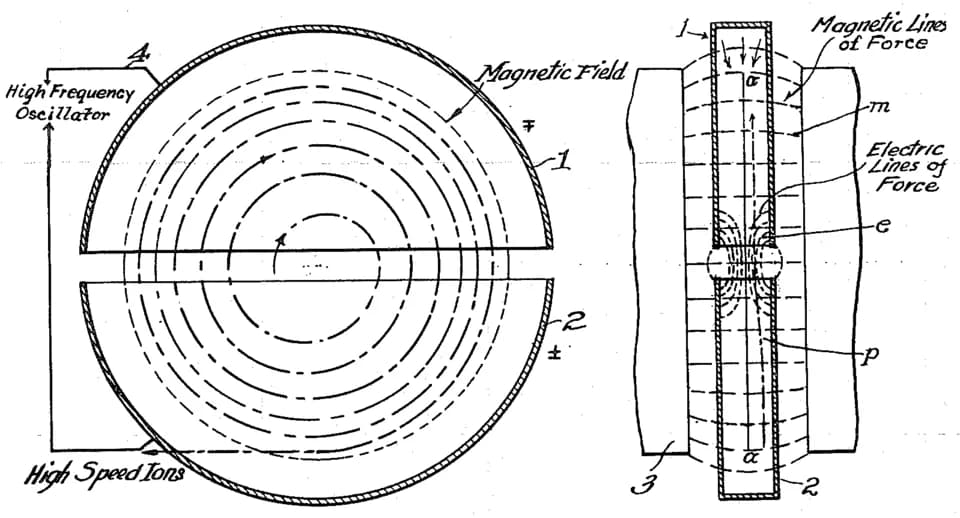
A defining moment in Lawrence's career was his invention of the cyclotron, an achievement for which he was awarded the Nobel Prize in Physics in 1939. This particle accelerator enabled new avenues of research into the atomic nucleus. His inventive spirit continued to manifest through his significant work on uranium-isotope separation, a critical component of the Manhattan Project during World War II.
Beyond his direct scientific inventions and contributions, Lawrence was also a visionary institution builder. He is credited with founding two highly influential research centers: the Lawrence Berkeley National Laboratory and the Lawrence Livermore National Laboratory. These institutions continue to advance scientific knowledge and bear his name, reflecting his lasting impact on organized research.
Sura 4· Sura 4 ya 7
Personal Life
While the detailed aspects of Ernest Lawrence's personal life, such as family relationships or specific hobbies, are not extensively provided in available records, his commitment to science was evident throughout his life. His professional journey often involved intense collaboration and leadership within the scientific community.
Sura 5· Sura 5 ya 7
Notable Works or Contributions
Lawrence's primary invention, the cyclotron, stands as a monumental contribution to physics. This device opened the door to new experiments in particle physics and isotope production. His involvement in the Manhattan Project underscored his ability to apply theoretical knowledge to pressing national challenges.
His academic record is noted to include an h-index of 24, encompassing 125 papers. Among the works associated with his influence or the ongoing research at institutions he founded, are publications such as the "2012 Wind Technologies Market Report" (2013, 23 citations), "Evaluating China's pilot low-carbon city initiative: national goals and local plans" (2013, 10 citations), and "An Insight into Actual Energy Use and Its Drivers in High-Performance Buildings" (2015, 4 citations). Further works include "Quantifying the potential impact of energy efficiency and low carbon policies for China" (2014, 2 citations) and "Advanced Light Source April 1997" (2017, 0 citations).
Sura 6 · 1958· Sura 6 ya 7
Later Years
Ernest Lawrence continued his vital work until his passing in Palo Alto, United States, on August 27, 1958, at the age of 57. His dedication to advancing scientific frontiers remained steadfast throughout his career. Even in his later years, his influence on national scientific endeavors and the direction of physics research was profound.
Sura 7· Sura 7 ya 7
Legacy and Impact
Ernest Lawrence's legacy is deeply etched into the annals of modern physics and institutional science. The cyclotron fundamentally transformed research into nuclear structure and particle physics, paving the way for countless discoveries. His leadership during the Manhattan Project highlighted his ability to marshal scientific talent for critical national objectives.
The national laboratories he established, Lawrence Berkeley and Lawrence Livermore, serve as enduring monuments to his vision. They continue to be leading centers for scientific research and innovation, perpetuating the spirit of inquiry he championed. Lawrence's pioneering work continues to inspire new generations of physicists and engineers.
Maisha katika nyakati
Nyakati zilizoyaunda maisha
Maswali
Yanayoulizwa mara kwa mara
Ernest Lawrence alikufa lini?
Ernest Lawrence alikufa tarehe 27 Agosti 1958 huko Palo Alto, United States, akiwa na umri wa miaka 57.
Ernest Lawrence alizaliwa wapi?
Ernest Lawrence alizaliwa Canton, United States tarehe 8 Agosti 1901.
Ernest Lawrence anajulikana zaidi kwa nini?
Ernest Lawrence anajulikana zaidi kwa American nuclear physicist.
Ernest Lawrence alikuwa na umri gani alipokufa?
Ernest Lawrence alikuwa na umri wa miaka 57 alipokufa.
Ernest Lawrence alikuwa wa utaifa gani?
Ernest Lawrence alitoka United States.
Ratiba
Maisha kwa muhtasari
Matunzio ya picha
Maisha katika picha
Bofya polaroid yoyote kupanua · picha 20
Msimbo wa QR
Shiriki Wasifu Huu
Chapisha na Shiriki
Skani kutembelea ukurasa huu wa wasifu. Chapisha kwa hafla, maonyesho, au nyenzo za kielimu.