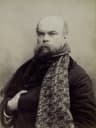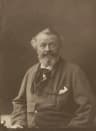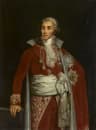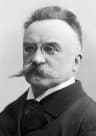
Narodený(á)
May 21, 1844
Laval, France
Zomrel(a)
September 2, 1910
Paris, France
Známy(a) ako
French painter
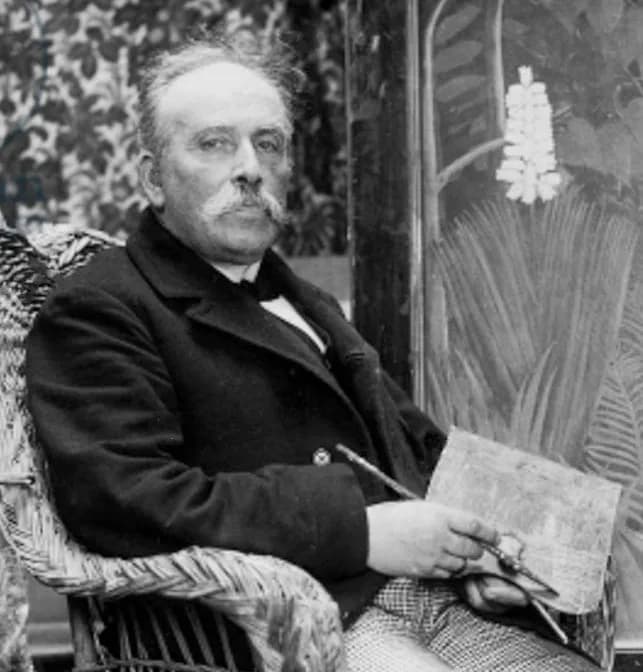
Henri Rousseau (1844–1910) was France best known for French painter.
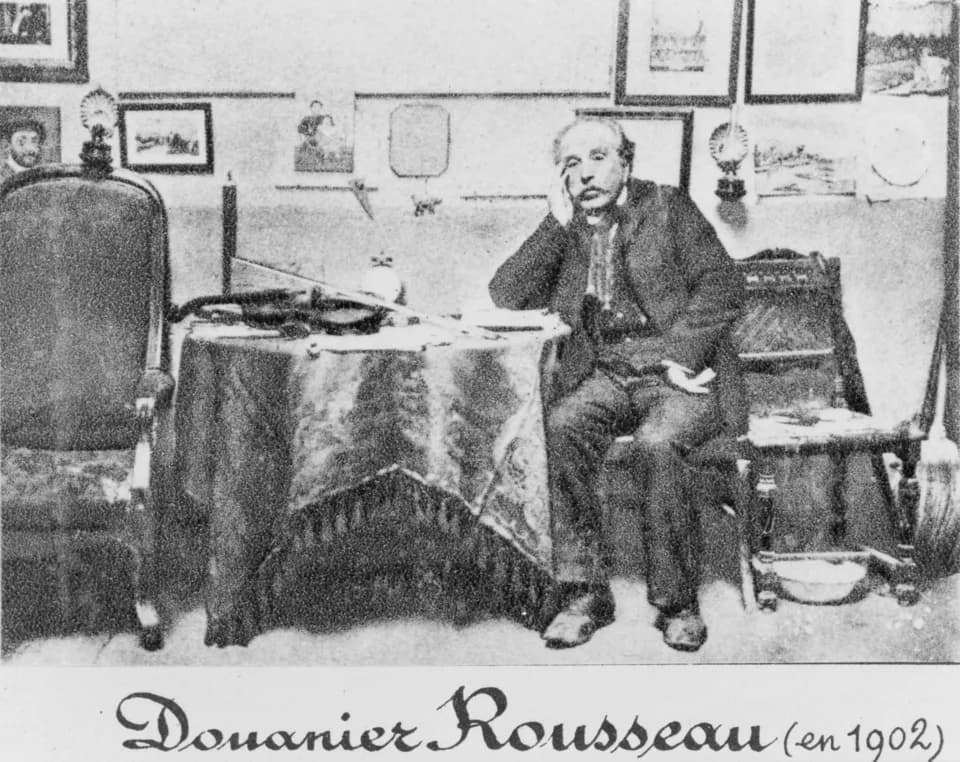
Henri Julien Félix Rousseau (May 21, 1844 – September 2, 1910) was a French painter, artist, and printmaker. Known as "Le Douanier," he began painting seriously in his early forties and developed a distinctive Naïve or Primitive style. His imaginative works continue to influence artists and captivate audiences globally.
Kapitola
Životné kapitoly
Kapitola 1 · 1844· Kapitola 1 z 7
Early Life and Origins
Born Henri Julien Félix Rousseau on May 21, 1844, in Laval, France, his initial years were not spent within the art world. Details about his family background and upbringing are not extensively documented, suggesting a relatively unassuming start to life. His origins in the provincial town of Laval provided a grounding that would later contrast with the Parisian art scene he eventually joined.
While his early formal education or artistic training is not highlighted in his biographical accounts, his subsequent career as a toll collector points to a life of civil service rather than immediate artistic pursuit. This background further emphasizes the unconventional trajectory of his eventual artistic calling. The quiet life away from the artistic hubs allowed his unique vision to develop independently.
Kapitola 2· Kapitola 2 z 7
Career Beginnings
Rousseau's professional life began far removed from paint and canvas, as he served as a toll and tax collector for the city of Paris. This occupation led to his well-known nickname, "Le Douanier," a humorous description of his role as a customs officer. It was within this seemingly ordinary existence that his artistic inclinations began to surface.
He did not begin painting seriously until his early forties, a decision that speaks to an undeniable inner passion. This late start meant that his artistic development was largely self-directed, free from the constraints of academic conventions. His commitment to learning and practicing art independently laid the groundwork for the distinctive, unrefined style that would later define his oeuvre.
Kapitola 3· Kapitola 3 z 7
Major Achievements and Career Highlights
A significant turning point in Rousseau's life and career arrived when he reached the age of 49. At this juncture, he made the courageous decision to retire from his steady job as a toll and tax collector. This allowed him to fully dedicate his time and energy to his burgeoning art career, marking his complete transition into a full-time artist.
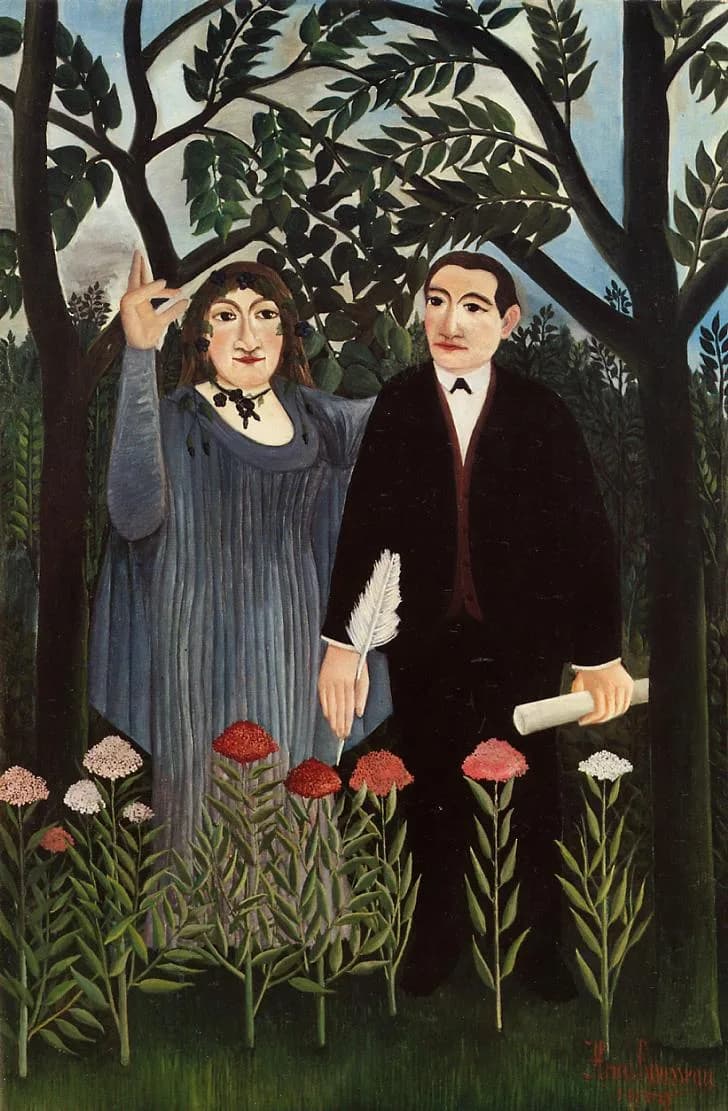
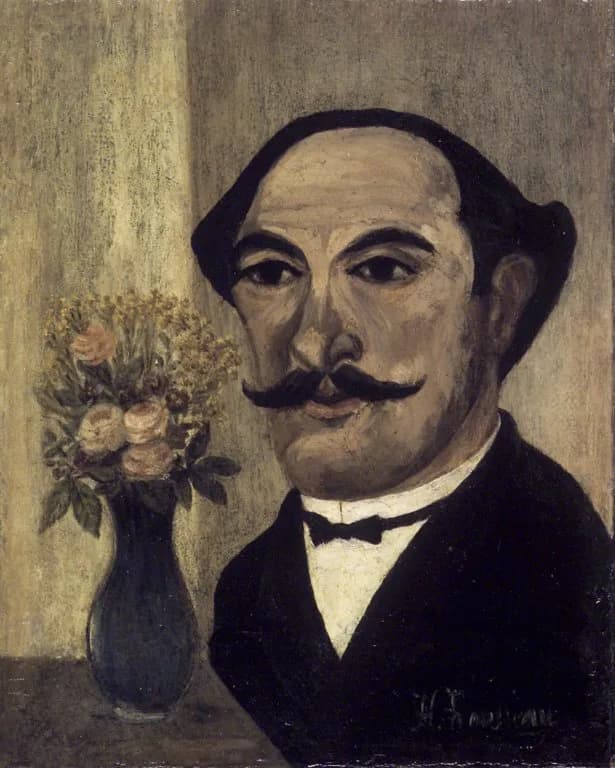
His unique Naïve or Primitive style, characterized by its flattened perspective, bold outlines, and vibrant, often fantastical, imagery, began to gain attention. Despite his lack of formal training, his work attracted the appreciation of prominent avant-garde artists and intellectuals in Paris. They recognized the originality and sincerity in his paintings, celebrating his imaginative and unconventional approach to art.
Kapitola 4· Kapitola 4 z 7
Personal Life
While specific biographical details about Henri Rousseau's personal relationships or a wide array of leisure interests are not extensively provided, his dedication to his artistic pursuit is clearly a defining aspect of his personal character. His decision to leave a stable, lifelong profession to devote himself to painting signifies a profound personal commitment to his creative vision. This act alone speaks volumes about his individual focus and passion.
Known affectionately as "Le Douanier" due to his former profession, this moniker highlights a connection between his everyday life and the artistic identity he cultivated. His life demonstrated a consistent pursuit of art against conventional expectations, emphasizing his intrinsic motivation and artistic spirit over societal norms or formal recognition early in his career.
Kapitola 5 · 1907· Kapitola 5 z 7
Notable Works or Contributions
Henri Rousseau left behind an enduring collection of artworks that continue to captivate audiences worldwide. His distinctive style, blending meticulous detail with dreamlike compositions, is evident across his portfolio. Among his celebrated pieces is "The Repast of the Lion," created around 1907, a compelling example of his exotic jungle scenes, held at the Met Museum.
Further showcasing his imaginative vision is "The Banks of the Bièvre near Bicêtre," dating from approximately 1908–09, also housed at the Met Museum. His broader artistic interests are reflected in works like "Modèles de decoration moderne. L'Enluminaire appliquée aux objets usuels" from 1892. These works illustrate his versatility and consistent artistic approach.
The Art Institute of Chicago holds a significant number of Rousseau's paintings, providing a glimpse into the breadth of his creative period. These include "The Waterfall" (1910), a powerful depiction created in his final year, and the delicate still life "Dahlia and Daisies in a Vase" (c. 1904). His historical and allegorical interests are represented by "War" (1894), a striking and memorable canvas.
Other notable works at the Art Institute of Chicago further illustrate his unique perspective on everyday scenes and imaginary worlds. These include "Sawmill, Outskirts of Paris" (c. 1893/95), capturing a slice of industrial life, and tranquil views like "River and Park Landscape" (1885/90). His narrative capabilities are evident in "Hikers climbing up to a Mountain Chalet" (c. 1888), while "Mess Downstream, the Auteuil Quai" (1885) presents a more urban vista. Later works such as "Oak Branch" (1907/08) and earlier pieces like "Landscape" (c. 1850) and "Springtime" (c. 1860) demonstrate the evolution and consistency of his unique Naïve style across his artistic career.
Kapitola 6· Kapitola 6 z 7
Later Years
Henri Rousseau continued to paint and develop his unique style throughout his later years, remaining in Paris, France, until his passing. His dedication to his craft never diminished, even as he navigated the Parisian art world as a self-taught artist. Works from this period, such as "The Waterfall," completed in the year of his death, signify his sustained creativity and engagement with his art.
Despite the initial unconventional reception of his work, Rousseau steadily garnered a dedicated following. His final years saw his art recognized and admired by a growing circle of artists and critics who championed his original voice. He continued to create with the same imaginative spirit that defined his earlier career, cementing his enduring legacy.
Kapitola 7· Kapitola 7 z 7
Legacy and Impact
Henri Rousseau's legacy as a French post-Impressionist painter in the Naïve or Primitive manner is profoundly felt in the history of art. He challenged the academic art establishments of his time by demonstrating that profound artistic expression could emerge from outside traditional formal training. His self-taught methods and distinctive vision offered a compelling alternative to prevailing artistic norms.
Rousseau's influence extended to subsequent generations of artists, who admired his sincerity, directness, and imaginative approach. He helped to broaden the definition of art, affirming the value of individualistic, intuitive creation. His unique style, characterized by its vibrant colors, flattened perspectives, and fantastical elements, continues to be celebrated globally, confirming his lasting status as a truly original and influential figure in modern art.
Život v okamihoch
Okamihy, ktoré formovali život
Časté otázky
Často sa pýtajú
Kedy zomrel(a) Henri Rousseau?
Henri Rousseau zomrel(a) 2. septembra 1910 v Paris, France vo veku 66 rokov.
Kde sa narodil(a) Henri Rousseau?
Henri Rousseau sa narodil(a) v Laval, France 21. mája 1844.
Čím je Henri Rousseau najznámejší(ia)?
Henri Rousseau je najznámejší(ia) vďaka French painter.
Koľko mal(a) Henri Rousseau v čase smrti?
Henri Rousseau mal(a) v čase smrti 66 rokov.
Akú národnosť mal(a) Henri Rousseau?
Henri Rousseau pochádzal(a) z France.
Časová os
Život v skratke
Fotogaléria
Život v obrazoch
Kliknite na ľubovoľný polaroid pre zväčšenie · 49 fotografií
QR kód
Zdieľať tento životopis
Vytlačiť a zdieľať
Naskenujte pre návštevu tejto stránky životopisu. Vytlačte si pre podujatia, výstavy alebo vzdelávacie materiály.