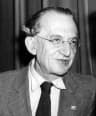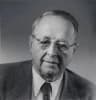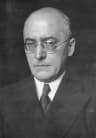
Narodený(á)
August 1, 1885
Budapest, Hungary
Zomrel(a)
July 5, 1966
Freiburg im Breisgau, Germany
Známy(a) ako
Hungarian chemist
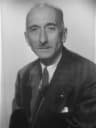
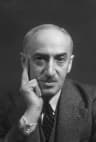
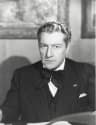
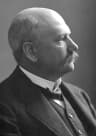
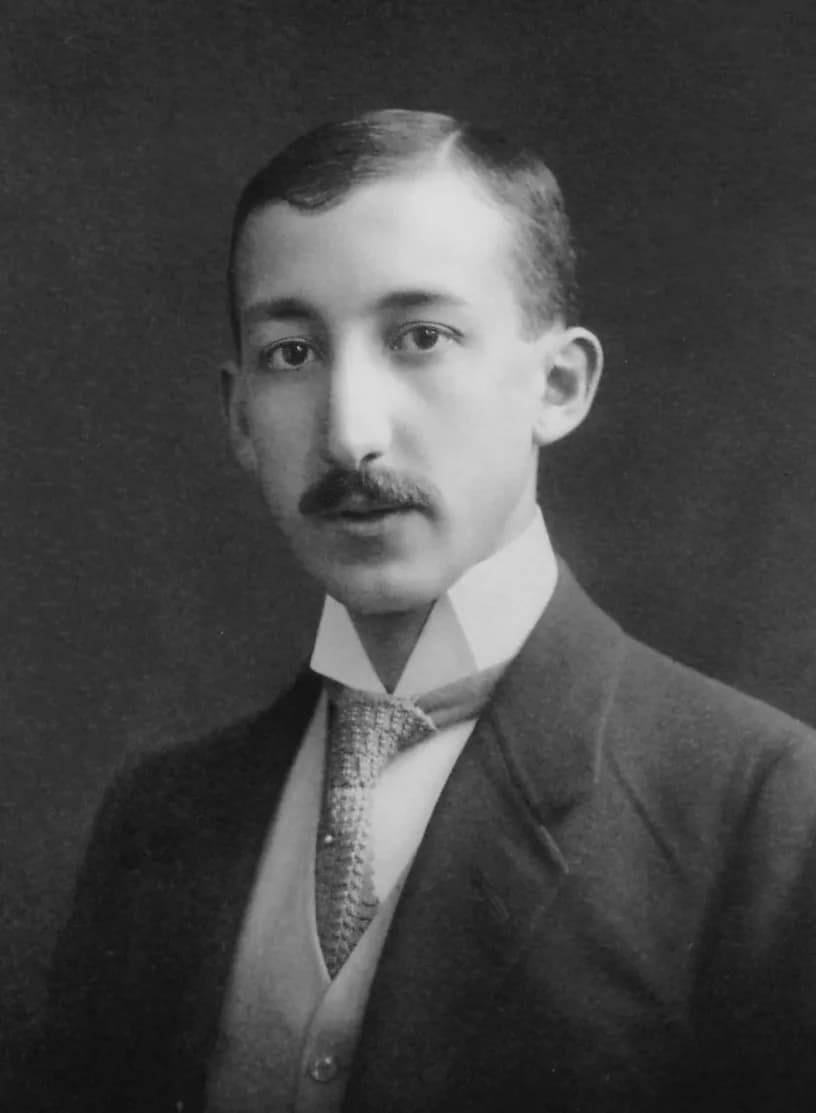
George de Hevesy (1885–1966) was Hungary best known for Hungarian chemist.
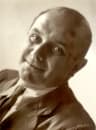
George Charles de Hevesy (August 1, 1885 – July 5, 1966) was a Hungarian radiochemist and university teacher. He was awarded the Nobel Prize in Chemistry for his development of radioactive tracers to study chemical processes. De Hevesy also notably co-discovered the element hafnium.
Kapitola
Životné kapitoly
Kapitola 1 · 1885· Kapitola 1 z 6
Early Life and Origins
George de Hevesy was born on August 1, 1885, in Budapest, Hungary. His early life in the vibrant city of Budapest laid the foundation for a distinguished scientific career. This formative period undoubtedly influenced his path toward becoming a chemist, a profession where he would achieve international acclaim.
Kapitola 2· Kapitola 2 z 6
Career Beginnings
As a budding scientist, George de Hevesy embarked on a career that quickly distinguished him in the field of chemistry. He also served as a university teacher, a role that allowed him to share his expertise and foster future generations of scientists. His early investigations set the stage for the significant discoveries that would later define his legacy in radiochemistry.
Kapitola 3· Kapitola 3 z 6
Major Achievements and Career Highlights
Among George de Hevesy's most significant achievements was the co-discovery of the element hafnium, a fundamental contribution to the periodic table. This discovery alone marked him as a chemist of considerable skill and insight. His work with isotopes also led to a method that revolutionized scientific study.
De Hevesy's pioneering efforts earned him the Nobel Prize in Chemistry in 1943. He was honored for his profound work on the use of isotopes as tracers in the study of chemical processes, particularly highlighting their application in understanding the metabolism of animals. This innovation provided scientists with an unprecedented tool for observing biological reactions.
Kapitola 4 · 1960· Kapitola 4 z 6
Notable Works or Contributions
George de Hevesy maintained a prolific academic career, reflected by an h-index of 18 across 80 published papers. His diverse research interests are evident in works such as "Life span of myoglobin," published in 1960 and cited 41 times, showcasing his contributions to biochemistry. Another influential paper, "Enzymatic Hydrolysis of Organophosphorus Compounds. VII. The Stereospecificity of Phosphorylphosphatases," from 1957, garnered 26 citations, illustrating his detailed work in enzymology.
Further demonstrating his breadth of research, de Hevesy authored "Turnover of Plasma Iron in Cancer Patients Prior to and After Treatment" (1960), which received 12 citations, and "Confirmation of the Structure of 2-Benzyl-2-hydroxycoumaran-3-ones" (1957), with 9 citations. Notably, his work on "The red corpuscle content of the circulating blood determined by labelling the erythrocytes with radio‐phosphorus" from 2009, although published posthumously, underscores the lasting relevance of his research, accumulating 4 citations.
Kapitola 5 · 1960· Kapitola 5 z 6
Later Years
George de Hevesy continued to contribute significantly to his field throughout his later years, with important publications appearing as late as 1960. He passed away on July 5, 1966, in Freiburg im Breisgau, Germany. His long and impactful career concluded in Germany, leaving behind a wealth of scientific knowledge and discovery.
Kapitola 6· Kapitola 6 z 6
Legacy and Impact
The legacy of George de Hevesy is built on his pioneering development of radioactive tracers, a technique that transformed biological and chemical research. This method provided a unique way to track substances through complex systems, proving invaluable in medicine and biochemistry. His co-discovery of hafnium also cemented his place as a significant figure in inorganic chemistry, forever altering the periodic table and our understanding of elements. George de Hevesy’s work continues to influence scientific inquiry, affirming his status as a true pioneer in his field.
Život v okamihoch
Okamihy, ktoré formovali život




Časté otázky
Často sa pýtajú
Kedy zomrel(a) George de Hevesy?
George de Hevesy zomrel(a) 5. júla 1966 v Freiburg im Breisgau, Germany vo veku 80 rokov.
Kde sa narodil(a) George de Hevesy?
George de Hevesy sa narodil(a) v Budapest, Hungary 1. augusta 1885.
Čím je George de Hevesy najznámejší(ia)?
George de Hevesy je najznámejší(ia) vďaka Hungarian chemist.
Koľko mal(a) George de Hevesy v čase smrti?
George de Hevesy mal(a) v čase smrti 80 rokov.
Akú národnosť mal(a) George de Hevesy?
George de Hevesy pochádzal(a) z Hungary.
Časová os
Život v skratke
Fotogaléria
Život v obrazoch
Kliknite na ľubovoľný polaroid pre zväčšenie · 5 fotografií
QR kód
Zdieľať tento životopis
Vytlačiť a zdieľať
Naskenujte pre návštevu tejto stránky životopisu. Vytlačte si pre podujatia, výstavy alebo vzdelávacie materiály.