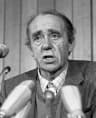
Gimęs
October 8, 1917
Newton-le-Willows, United Kingdom
Miręs
September 6, 1985
Winchester, United Kingdom
Žinomas dėl
English biochemist and Nobel laureate
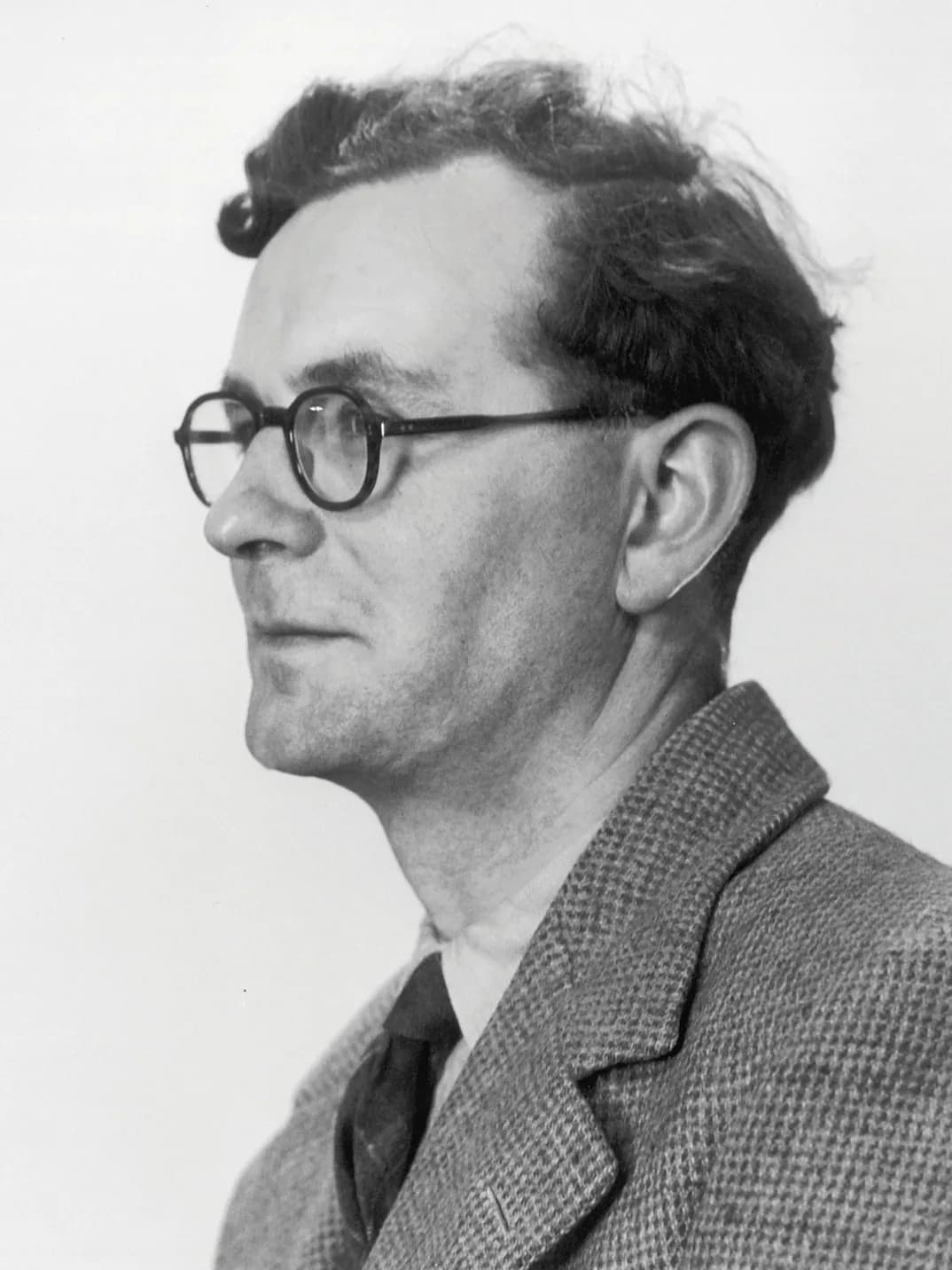
Rodney Robert Porter (1917–1985) was United Kingdom best known for English biochemist and Nobel laureate.
Rodney Robert Porter (October 8, 1917 – September 6, 1985) was an English biochemist and Nobel laureate. He was renowned for his structural studies of immunoglobulins, which fundamentally advanced our understanding of antibodies and the immune system. His scientific contributions continue to be foundational in biochemistry.
Skyrius
Gyvenimo skyriai
Skyrius 1 · 1917· Skyrius 1 iš 6
Early Life and Origins
Born on October 8, 1917, Rodney Robert Porter began his journey in Newton-le-Willows, United Kingdom. His early life in England laid the foundation for his later scientific pursuits. While specific details of his upbringing are not provided, it is clear his environment fostered a keen intellect and dedication to learning, characteristics that would define his future endeavors.
Skyrius 2· Skyrius 2 iš 6
Career Beginnings
Porter embarked on a professional path that included roles as a physician and chemist, building a robust scientific foundation. These early experiences provided him with a practical understanding of biological systems and chemical reactions. His foundational training prepared him for the complex research questions he would later address in the rapidly evolving fields of biochemistry and immunology.
Skyrius 3 · 1972· Skyrius 3 iš 6
Major Achievements and Career Highlights
Rodney Robert Porter's career was marked by extraordinary scientific achievement, culminating in the Nobel Prize in Physiology or Medicine in 1972. This prestigious award recognized his seminal "Structural studies of immunoglobulins," a discovery that reshaped the entire field of immunology. His prolific research career also resulted in an impressive h-index of 48 across 133 published papers, demonstrating his consistent and impactful contributions to scientific knowledge. Such extensive output underscores his sustained dedication to understanding complex biological mechanisms.
Skyrius 4 · 1972· Skyrius 4 iš 6
Notable Works or Contributions
Among Porter's most significant contributions was his detailed investigation into antibody structure, which was the focus of his 1972 Nobel Prize lecture. This foundational work elucidated how antibodies are built, offering crucial insights into how they recognize and neutralize foreign substances. His contributions extended to the intricate components of the human complement system. He conducted structural studies on the Rodgers and Chido antigenic determinants, correlating them with human complement component C4A/C4B isotypes.
Porter's research also explored the polymorphism of human complement component C4, further detailing its variations within the population. He engaged in the purification and characterization of less common allotypes of the fourth component of human complement. These works, although some were cited or republished posthumously in 2004, originated from his essential research into the body's immune defenses. His earlier involvement in discussions such as "Antibody Structure and the Antibody Workshop 1958-1965" illustrates his consistent engagement with the evolving understanding of antibodies and immune responses.
Skyrius 5 · 1985· Skyrius 5 iš 6
Later Years
Rodney Robert Porter continued to contribute to science throughout his life, influencing generations of researchers and medical professionals. He passed away on September 6, 1985, in Winchester, United Kingdom. His passing marked the end of a distinguished life dedicated to scientific discovery and education, leaving behind a rich legacy of knowledge.
Skyrius 6· Skyrius 6 iš 6
Legacy and Impact
The legacy of Rodney Robert Porter continues to influence immunology and biochemistry profoundly. His elucidation of antibody structure remains a cornerstone of modern immunological understanding and a fundamental concept taught globally. His work has provided subsequent generations of scientists with essential tools to explore disease mechanisms and develop new therapies. He left an enduring mark on scientific thought and significantly advanced our knowledge of how the human body defends itself against pathogens.
Gyvenimas akimirkomis
Akimirkos, formavusios gyvenimą



DUK
Dažnai užduodami
Kada mirė Rodney Robert Porter?
Rodney Robert Porter mirė 1985 m. rugsėjo 6 d. Winchester, United Kingdom sulaukęs 67 metų.
Kur gimė Rodney Robert Porter?
Rodney Robert Porter gimė Newton-le-Willows, United Kingdom 1917 m. spalio 8 d..
Kuo labiausiai žinomas(a) Rodney Robert Porter?
Rodney Robert Porter labiausiai žinomas(a) dėl English biochemist and Nobel laureate.
Kiek metų buvo Rodney Robert Porter mirties metu?
Rodney Robert Porter mirties metu buvo 67 metų.
Kokios tautybės buvo Rodney Robert Porter?
Rodney Robert Porter buvo kilęs iš United Kingdom.
Laiko juosta
Gyvenimas iš pirmo žvilgsnio
Nuotraukų galerija
Gyvenimas paveiksluose
Spustelėkite bet kurią poliaroidą, kad išplėstumėte · 15 nuotraukų
QR kodas
Dalintis šia biografija
Spausdinti ir dalintis
Nuskaitykite, kad apsilankytumėte šiame biografijos puslapyje. Spausdinkite renginiams, parodoms ar mokomajai medžiagai.