Gimęs
December 25, 1906
Heidelberg, Germany
Miręs
May 27, 1988
West Berlin, Allied-occupied Germany
Žinomas dėl
German physicist
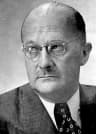
Ernst Ruska (1906–1988) was Germany best known for German physicist.
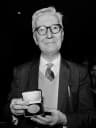
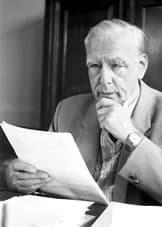
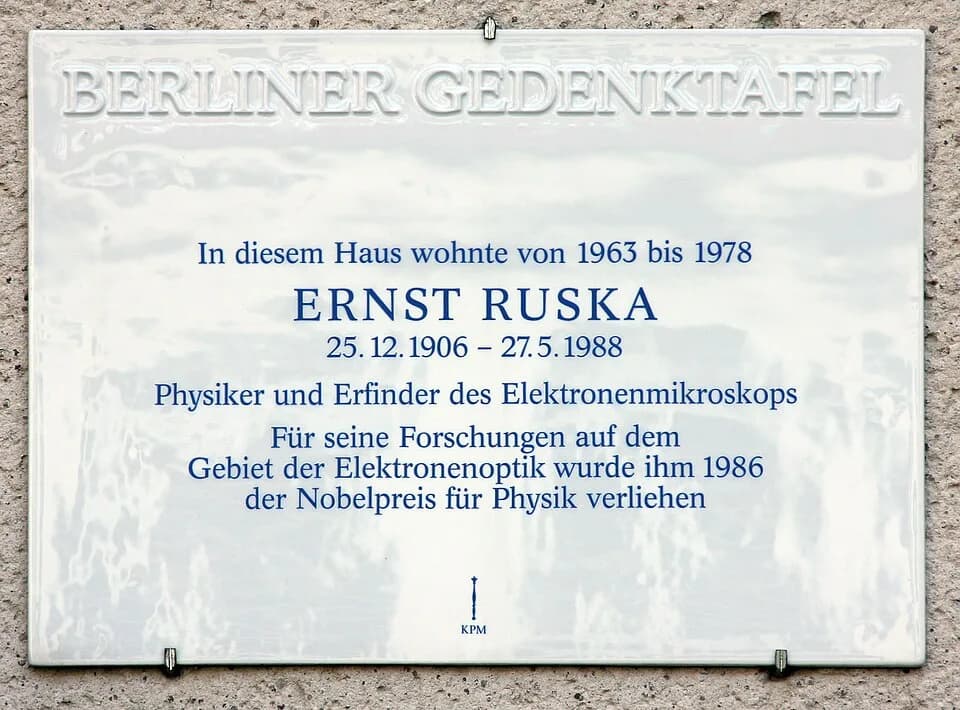
Ernst August Friedrich Ruska (December 25, 1906 – May 27, 1988) was a German physicist from Heidelberg. He won the Nobel Prize in Physics in 1986 for his fundamental work in electron optics and his design of the first electron microscope. His invention revolutionized the study of the microscopic world.
Skyrius
Gyvenimo skyriai
Skyrius 1 · 1906· Skyrius 1 iš 7
Opening Paragraph
Ernst August Friedrich Ruska (December 25, 1906 – May 27, 1988) was an eminent German physicist whose pioneering work profoundly shaped modern science. His legacy is largely defined by his groundbreaking contributions to electron optics, culminating in the revolutionary design of the first electron microscope. This monumental achievement earned him the prestigious Nobel Prize in Physics in 1986, solidifying his place as a visionary inventor and dedicated university teacher.
Skyrius 2 · 1906· Skyrius 2 iš 7
Early Life and Origins
Born on Christmas Day, December 25, 1906, in the historic city of Heidelberg, Germany, Ernst Ruska's early environment likely fostered an intellectual curiosity. Heidelberg, known for its venerable university and rich academic tradition, provided a fertile ground for the formative years of a future scientific pioneer. His upbringing in early 20th-century Germany undoubtedly played a role in guiding his focus towards the burgeoning field of physics.
Skyrius 3· Skyrius 3 iš 7
Career Beginnings
Ernst Ruska embarked on his professional journey as a physicist, dedicating his early efforts to the complex and then-emerging field of electron optics. This specialized area of physics involves the precise control and manipulation of electron beams, much like traditional optics deals with visible light. His fundamental investigations into focusing and magnifying electron beams were crucial first steps towards overcoming the limitations of conventional microscopy, reflecting his innovative spirit as an inventor and his dedication as a university teacher.
Skyrius 4 · 1986· Skyrius 4 iš 7
Major Achievements and Career Highlights
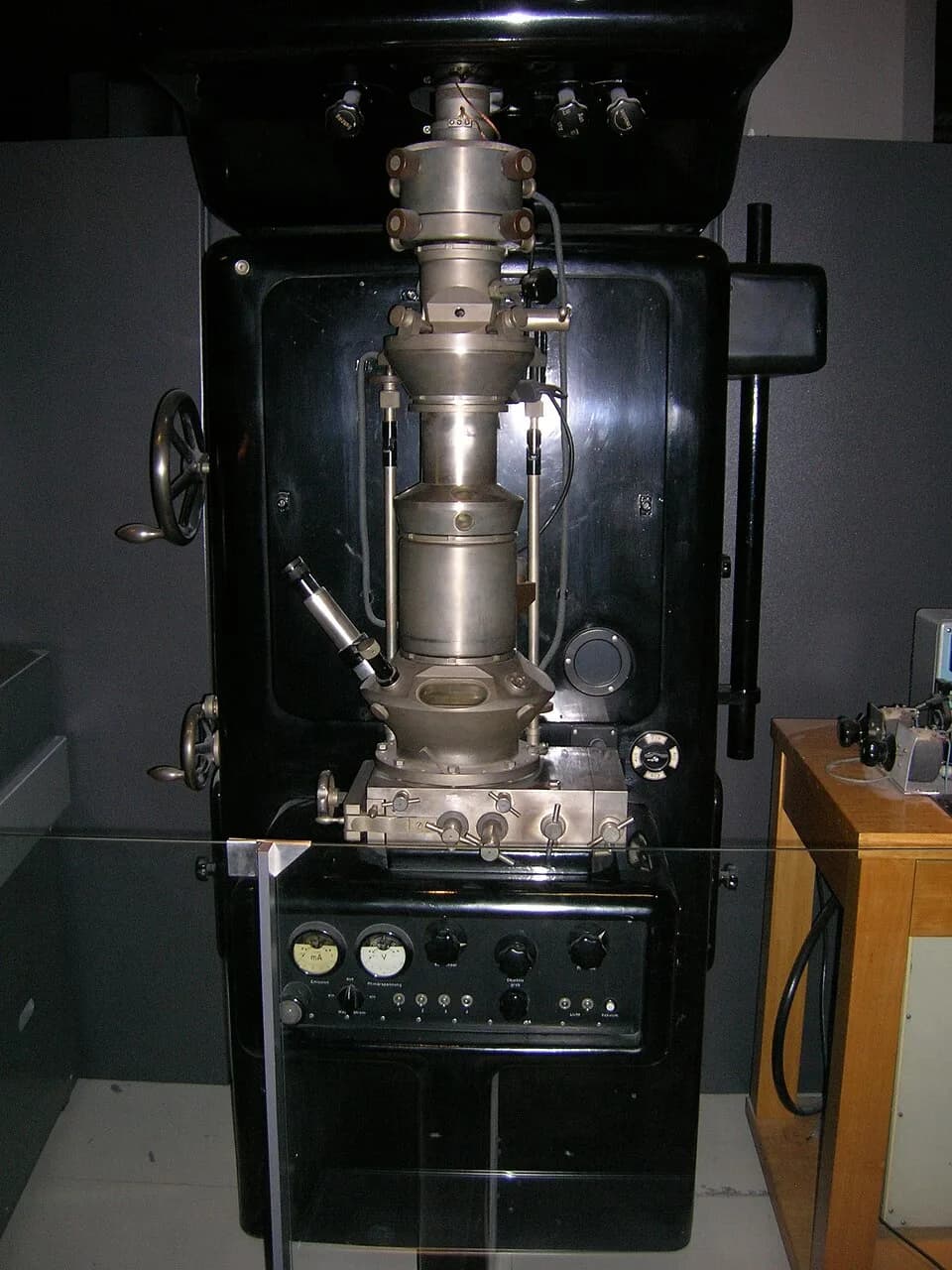
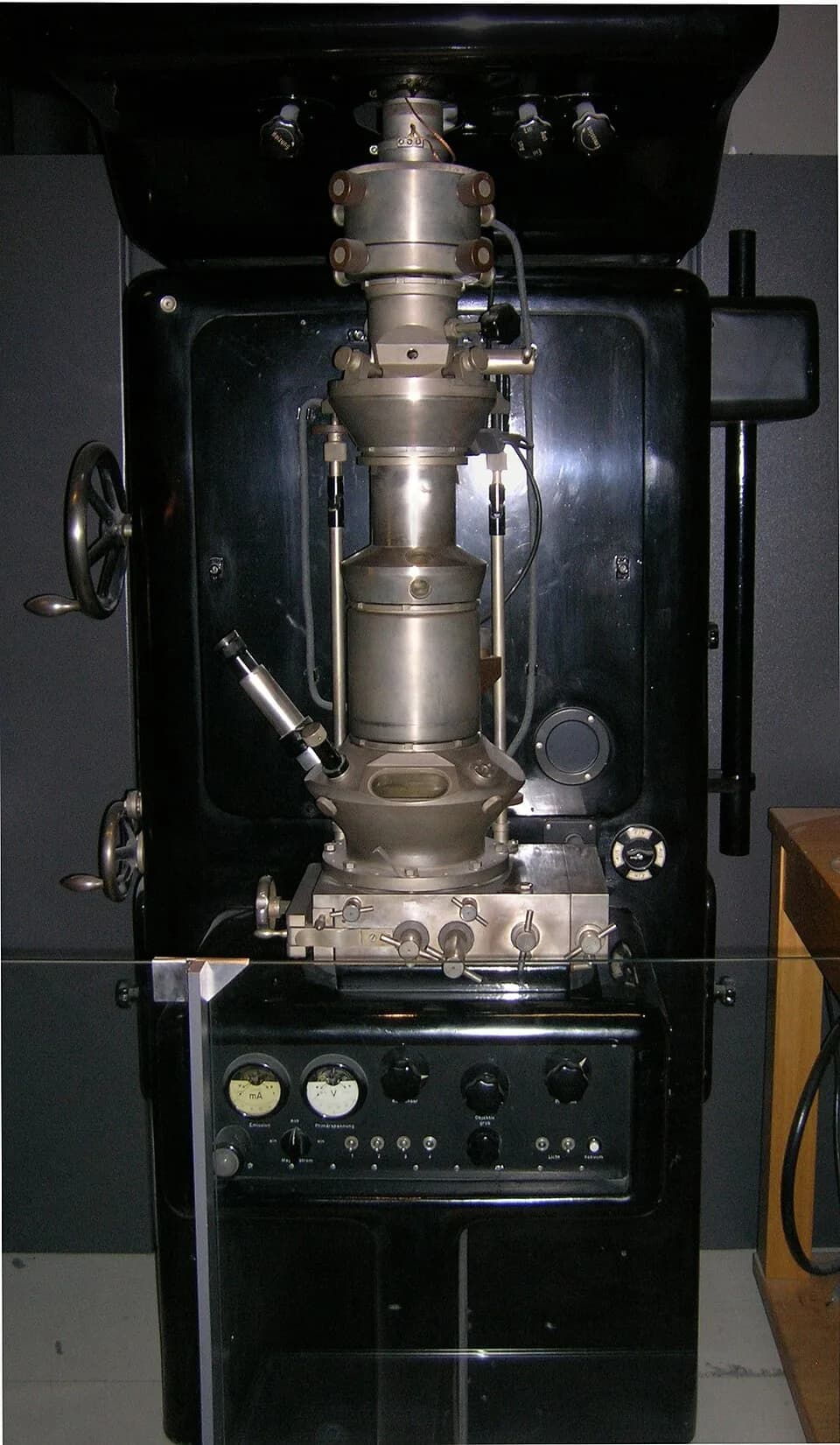
Ruska's most significant achievement was the design of the first electron microscope, an invention that dramatically expanded humanity's ability to observe the microscopic world. This innovative instrument utilized electrons, rather than light, to achieve unprecedented resolution and magnification, revealing structures previously invisible to science. In recognition of this fundamental work and the creation of such a transformative tool, Ernst Ruska was awarded the Nobel Prize in Physics in 1986.
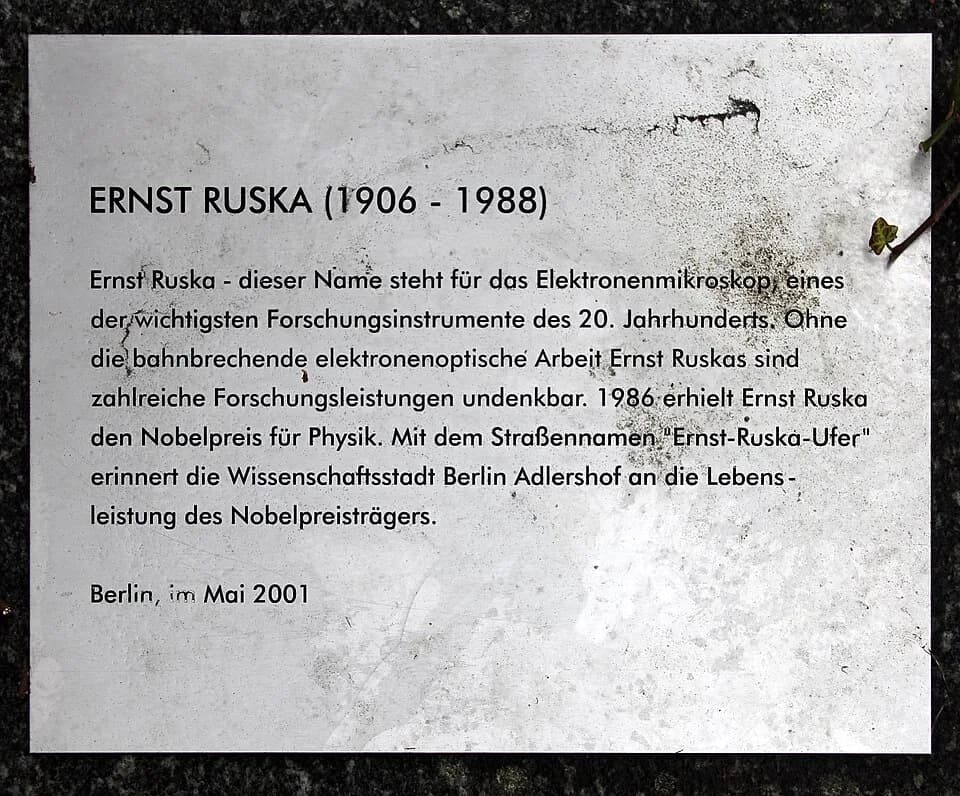
The Nobel committee specifically cited his "fundamental work in electron optics" and his pivotal role in the "design of the first electron microscope." This prestigious award underscored the lasting impact of his early pioneering efforts on the global scientific community. His relentless pursuit of knowledge and technological advancement established him as a leading figure in the scientific world, a testament to his inventive genius and his sustained contributions as a physicist.
Skyrius 5· Skyrius 5 iš 7
Notable Works or Contributions
Throughout his distinguished career, Ernst Ruska was a prolific academic, contributing significantly to the scientific literature. His h-index of 15, derived from 44 published papers, speaks to the consistent quality and influence of his research across several decades. These publications reflect a sustained engagement with electron microscopy and related fields, showcasing his intellectual depth.
Among his most notable works is "Das Entstehen des Elektronenmikroskops und der Elektronenmikroskopie (Nobel-Vortrag)," published in 1987, which garnered 4 citations. This seminal work, stemming directly from his Nobel lecture, provided a detailed historical account of his invention and the evolution of electron microscopy. A companion piece with the identical title also appeared in 1987, further elaborating on these critical developments.
Further exemplifying his commitment to both theoretical understanding and practical application, his 1960 paper, "Hochauflösende Leuchtschirme für die Elektronenmikroskopie," focused on improving imaging components for electron microscopes. Another important publication from 1979, titled "Die Erweiterung des Sichtbaren durch vergroSSernde Lichtlinsen und durch Rontgenstrahlen. in Die frühe Entwicklung der Elektronenlinsen und der Elektronenmikroskopic. (L'extension du visible grâce aux lentilles grossissantes et aux rayons X)," explored the broader context of extending visibility through various optical and radiation techniques. These scholarly contributions collectively highlight his expertise and his dedicated role as a university teacher.
Skyrius 6 · 1986· Skyrius 6 iš 7
Later Years
Even in his later years, Ernst Ruska remained an esteemed figure in physics, culminating in the much-deserved Nobel Prize recognition in 1986. This global affirmation of his profound scientific contributions came just two years before his passing, underscoring the enduring significance of his life's work. He continued his role as a university teacher, imparting his knowledge to aspiring scientists, a testament to his commitment to education.
Ernst Ruska passed away on May 27, 1988, in West Berlin, Allied-occupied Germany. His passing marked the end of an era for a physicist who had fundamentally redefined the limits of human observation and understanding of the microscopic world. His contributions, however, continued to resonate deeply within the scientific community.
Skyrius 7· Skyrius 7 iš 7
Legacy and Impact
The electron microscope, conceived and designed by Ernst Ruska, forever altered the course of scientific research across numerous disciplines. This instrument, born from his inventive genius, allowed biologists, materials scientists, and physicists to visualize structures at an unprecedented resolution, far beyond the capabilities of traditional light microscopes. It opened new avenues for discovery in fields from virology to nanotechnology.
His pioneering work in electron optics and his creation of the electron microscope laid the theoretical and practical foundation for countless scientific advancements and technological innovations. Ernst Ruska’s enduring legacy as a German physicist, inventor, and university teacher is enshrined in every laboratory where his revolutionary instrument continues to push the boundaries of knowledge, affirming his indelible mark on scientific history.
Gyvenimas akimirkomis
Akimirkos, formavusios gyvenimą
DUK
Dažnai užduodami
Kada mirė Ernst Ruska?
Ernst Ruska mirė 1988 m. gegužės 27 d. West Berlin, Allied-occupied Germany sulaukęs 81 metų.
Kur gimė Ernst Ruska?
Ernst Ruska gimė Heidelberg, Germany 1906 m. gruodžio 25 d..
Kuo labiausiai žinomas(a) Ernst Ruska?
Ernst Ruska labiausiai žinomas(a) dėl German physicist.
Kiek metų buvo Ernst Ruska mirties metu?
Ernst Ruska mirties metu buvo 81 metų.
Kokios tautybės buvo Ernst Ruska?
Ernst Ruska buvo kilęs iš Germany.
Laiko juosta
Gyvenimas iš pirmo žvilgsnio
Nuotraukų galerija
Gyvenimas paveiksluose
Spustelėkite bet kurią poliaroidą, kad išplėstumėte · 23 nuotraukų
QR kodas
Dalintis šia biografija
Spausdinti ir dalintis
Nuskaitykite, kad apsilankytumėte šiame biografijos puslapyje. Spausdinkite renginiams, parodoms ar mokomajai medžiagai.