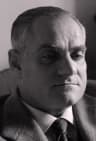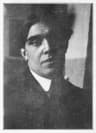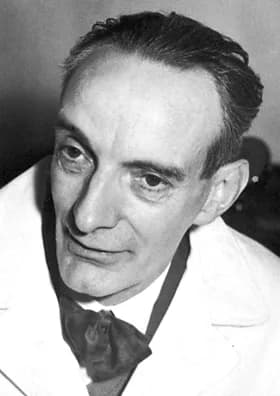
출생
March 23, 1907
Fleurier, Switzerland
별세
April 8, 1992
Rome, Italy
알려진 업적
Nobel Prize-winning pharmacologist
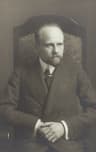
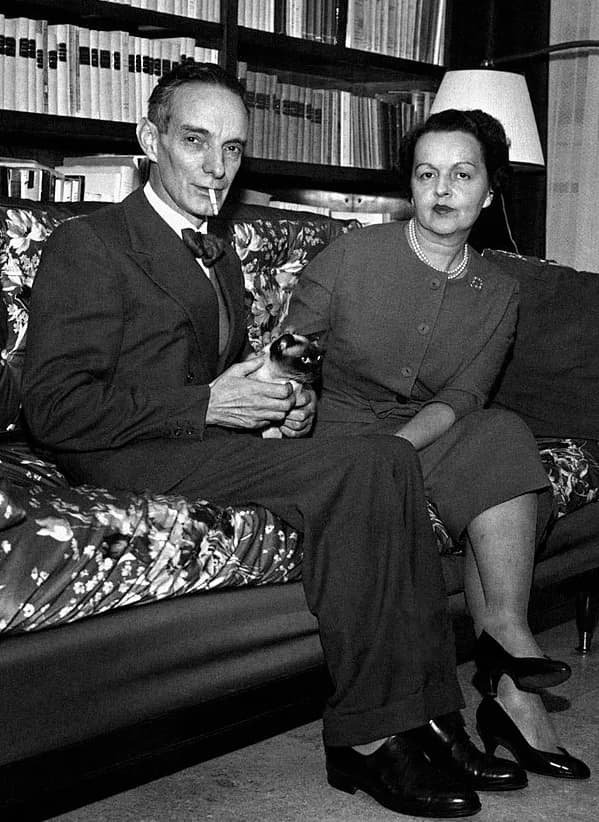
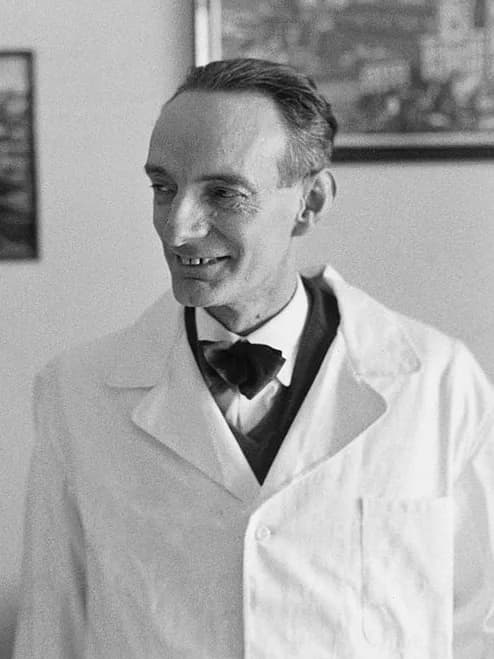
Daniel Bovet (1907–1992) was Switzerland best known for Nobel Prize-winning pharmacologist.
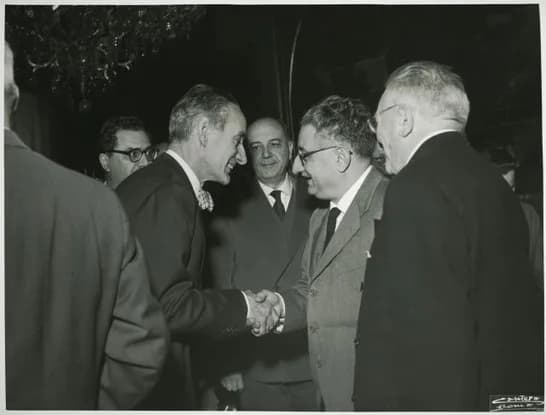
Daniel Bovet (March 23, 1907 – April 8, 1992) was a Swiss-born Italian pharmacologist. He received the 1957 Nobel Prize in Physiology or Medicine for his discovery of antihistamines and other neuropharmacological compounds. His work profoundly influenced allergy treatment and pharmacology.
챕터
삶의 챕터
챕터 1 · 1907· 7장 중 1장
Remembering Daniel Bovet
We remember Daniel Bovet, a distinguished Swiss-born Italian pharmacologist whose pioneering work significantly advanced our understanding of how drugs interact with the human body. Born on March 23, 1907, and passing away on April 8, 1992, Bovet’s multidisciplinary contributions as a physician, pharmacist, biologist, and neuroscientist ultimately earned him the Nobel Prize in Physiology or Medicine in 1957. His research laid foundational knowledge for treatments that continue to benefit millions worldwide, most notably his discovery of antihistamines.
챕터 2 · 1907· 7장 중 2장
Early Life and Origins
Daniel Bovet's intellectual journey began in Fleurier, Switzerland, where he was born on March 23, 1907. His formative years in Switzerland likely cultivated an environment fostering scientific inquiry, setting the stage for his extensive future in biology, medicine, and pharmacology. He pursued a rigorous education, developing expertise across various scientific fields that would later converge in his groundbreaking discoveries and diverse professional roles.
챕터 3· 7장 중 3장
Career Beginnings
Bovet's career trajectory was marked by a wide array of professional titles, including physician, pharmacist, biologist, and university teacher, underscoring his broad scientific engagement. He emerged as a pivotal figure in pharmacology, dedicating his early investigations to understanding synthetic compounds and their biological interactions. This foundational work paved the way for his later Nobel-winning contributions, specifically concerning substances that inhibit the action of certain body substances within physiological systems.
챕터 4 · 1957· 7장 중 4장
Major Achievements and Career Highlights
His most celebrated achievement culminated in the 1957 Nobel Prize in Physiology or Medicine, awarded for his discoveries relating to synthetic compounds that inhibit the action of certain body substances, with a particular focus on their effects on the vascular system and skeletal muscles. Bovet’s most widely recognized and impactful discovery occurred in 1937, identifying antihistamines. These innovative compounds effectively block the neurotransmitter histamine, providing crucial symptomatic relief in allergy medications that remain cornerstones of treatment today.
Beyond the revolutionary advent of antihistamines, Daniel Bovet’s extensive research explored a wide spectrum of neuropharmacological interests. His significant contributions included pioneering work on chemotherapy and the development of sulfa drugs, marking substantial advancements in antimicrobial and therapeutic strategies. He meticulously investigated the complexities of the sympathetic nervous system and contributed deeply to the understanding of the pharmacology of curare, a substance with historical and continued relevance in medicine and physiological research.
챕터 5 · 2005· 7장 중 5장
Notable Works and Contributions
Daniel Bovet was a remarkably prolific researcher, evidenced by his h-index of 2 and a publication record encompassing 62 papers across various scientific and academic domains. Among his highly cited works, "Recherches sur les dérivés de la 1,2,3,4-tétra-hydro-2-naphtylamine présentant les propriétés sympatholytiques et ocytociques des alcaloïdes de l'ergot," published in 2005, garnered 1 citation, demonstrating the lasting relevance of his findings even posthumously. His intellectual curiosity extended beyond traditional pharmacology, as shown by works like "La topologie algébrique comme théorie microscopique du calcul différentiel extérieur" (1977, 1 citation) and "La discrétisation des problèmes de la Physique mathématique au moyen de complexes topologiques" (1977, 1 citation), highlighting his engagement with interdisciplinary scientific thought.
Bovet’s academic output also included contributions to historical and biographical subjects, reflecting a broader scholarly perspective, such as "Centenaire de la naissance d'Edouard Claparède (1873-1940) : pédagogue et psychologue genevois fondateur de l'Institut J.-J. Rousseau" (1976, 1 citation). Even posthumous entries like "[Domenico Marotta. 1975].", published in 1993, continued to associate his name with ongoing scientific discourse, even with 0 citations, indicating his enduring presence. Alongside his scientific research, Bovet was also a dedicated Esperantist and a respected university teacher, shaping and inspiring many aspiring scientists and scholars throughout his distinguished career.
챕터 6 · 1992· 7장 중 6장
Later Years and Passing
Daniel Bovet continued his impactful scientific and academic work for many years after receiving his Nobel recognition, remaining an active contributor to the scientific community as a neuroscientist and biochemist. His dedication to research and education persisted, influencing generations of students and colleagues. He passed away on April 8, 1992, in Rome, Italy, at the age of 85, bringing to a close a life rich with scientific discovery and intellectual pursuit.
챕터 7· 7장 중 7장
Legacy and Impact
Daniel Bovet's legacy is most profoundly anchored in his discovery of antihistamines, which fundamentally transformed the treatment of allergies and provided relief for countless individuals globally. His broader contributions to understanding how synthetic compounds can precisely inhibit specific body substances established new frontiers in drug development and pharmacological research. The specificity of his Nobel citation, recognizing his detailed work on the vascular system and skeletal muscles, underscores the meticulous precision and scientific depth that characterized his inquiries.
As a pharmacologist, physician, biologist, and neuroscientist, Bovet's remarkably multidisciplinary approach not only yielded significant discoveries but also helped establish new paradigms in drug development and medical understanding. The enduring impact of his research continues to be felt in contemporary therapeutic practices, significantly improving quality of life by enabling the precise modulation of various physiological responses. His pioneering spirit and relentless pursuit of scientific knowledge serve as an enduring inspiration for future generations in medical science.
순간 속의 삶
한 삶을 빚어낸 순간들

FAQ
자주 묻는 질문
Daniel Bovet은(는) 언제 사망했습니까?
Daniel Bovet은(는) 1992년 4월 8일 Rome, Italy에서 사망했습니다 (향년 85세).
Daniel Bovet은(는) 어디에서 태어났습니까?
Daniel Bovet은(는) Fleurier, Switzerland에서 1907년 3월 23일에 태어났습니다.
Daniel Bovet은(는) 무엇으로 가장 잘 알려져 있습니까?
Daniel Bovet은(는) Nobel Prize-winning pharmacologist(으)로 가장 잘 알려져 있습니다.
Daniel Bovet은(는) 사망 당시 몇 살이었습니까?
Daniel Bovet은(는) 사망 당시 85세였습니다.
Daniel Bovet의 국적은 무엇이었습니까?
Daniel Bovet은(는) Switzerland 출신이었습니다.
사진 갤러리
사진으로 보는 삶
폴라로이드를 클릭하여 확대 · 사진 22장
QR 코드
이 전기 공유
인쇄 및 공유
스캔하여 이 전기 페이지를 방문하세요. 행사, 전시회, 교육 자료에 인쇄해 사용하실 수 있습니다.