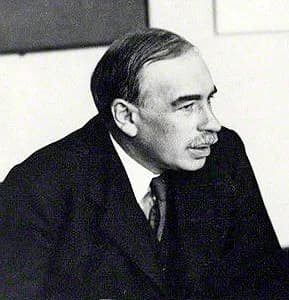
Született
October 23, 1875
Weymouth, United States
Elhunyt
March 23, 1946
University of California, Berkeley, United States
Ismert mint
American physical chemist
Gilbert N. Lewis (1875–1946) was United States best known for American physical chemist.
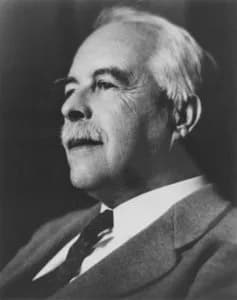
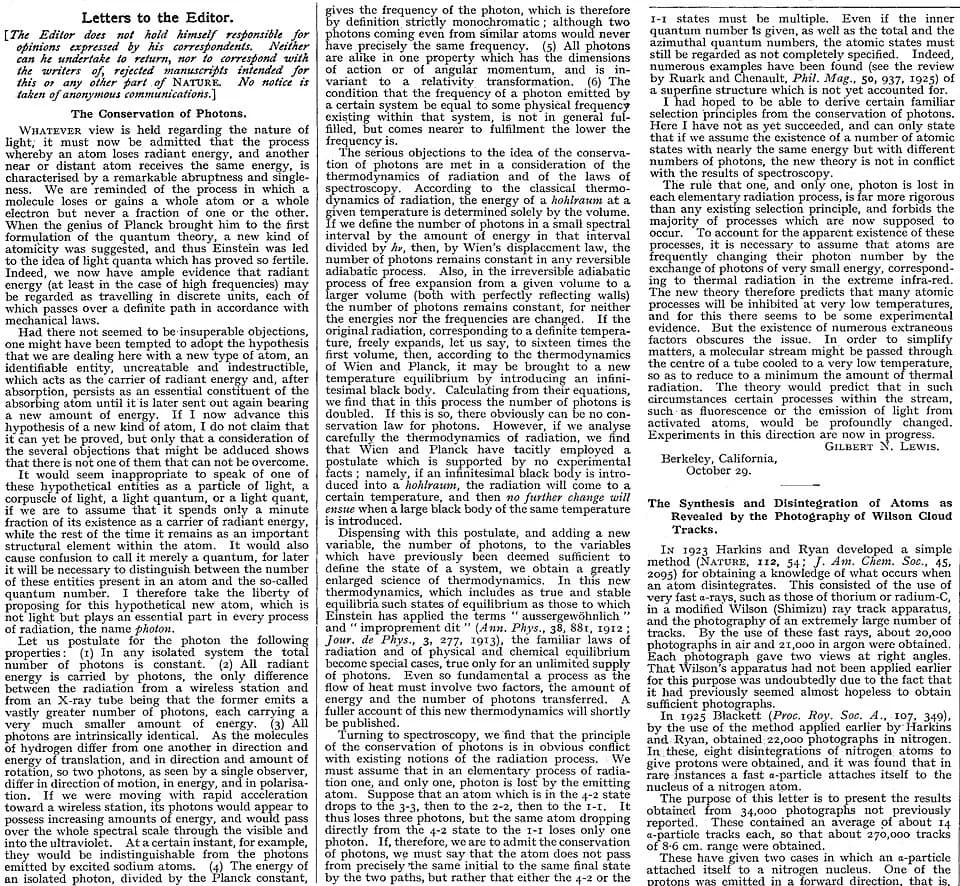
Gilbert N. Lewis (October 23, 1875 – March 23, 1946) was an American physical chemist. He discovered the covalent bond, introduced electron pairs, and coined the term 'photon.' His theories shaped modern chemical bonding.
Egy élet pillanatokban
A pillanatok, amelyek egy életet alakítottak
0. fejezet
Élet fejezetei
1. fejezet · 1875· 1. fejezet a(z) 6-ből
Early Life and Origins
Gilbert Newton Lewis began his journey in Weymouth, United States, where he was born on October 23, 1875. While specific details of his early family life and upbringing are not extensively documented, his intellectual development clearly pointed toward a future in scientific inquiry. These formative years laid the essential groundwork for a career that would ultimately position him as a leading figure in the field of physical chemistry. His initial exposure to education and scientific thought prepared him for the rigorous academic pursuits that followed.
2. fejezet· 2. fejezet a(z) 6-ből
Career Beginnings
Lewis's professional trajectory led him to the esteemed University of California, Berkeley, where he eventually rose to become the dean of the college of chemistry. This significant leadership position allowed him to profoundly influence not only his personal research agenda but also the broader direction and academic culture of an entire department. His early work established a foundation of rigorous scientific methodology and a commitment to understanding fundamental chemical processes. It was during these foundational periods that Lewis began to formulate the revolutionary ideas that would define his legacy.
3. fejezet· 3. fejezet a(z) 6-ből
Major Achievements and Career Highlights
Lewis is most widely recognized for his crucial discovery of the covalent bond and his innovative concept of electron pairs, which clarified how atoms share electrons to form stable molecules. These theories, introduced early in his career, were instrumental in shaping modern valence bond theory and provided a clear framework for understanding chemical structures. He developed the now-ubiquitous Lewis dot structures, a simple yet powerful visual representation that depicts the valence electrons of an atom and illustrates their role in bonding. Beyond bonding, Lewis made substantial contributions to chemical thermodynamics, systematically exploring energy changes in chemical reactions. His research also extended into photochemistry, investigating the chemical effects of light, and he contributed to the complex field of isotope separation, a critical area in nuclear science.
Another significant contribution came with his advanced concept of acids and bases, expanding beyond traditional definitions to include substances that accept or donate electron pairs. This broader framework provided chemists with a more versatile tool for analyzing a wide range of chemical reactions. Furthermore, Lewis dedicated time to researching the complexities of relativity and quantum physics, demonstrating his breadth of scientific interest. In 1926, his work in radiant energy led him to coin the term "photon," which has since become the standard descriptor for the smallest unit of light, a term now used universally in physics. Each of these achievements individually marked significant progress, but collectively they showcased Lewis's extraordinary versatility and deep comprehension across various scientific disciplines.
4. fejezet· 4. fejezet a(z) 6-ből
Notable Works or Contributions
As a dedicated non-fiction writer, Gilbert N. Lewis meticulously documented and disseminated his scientific insights through several important publications. Among his revered contributions to scientific literature is "The Anatomy of Science," a work that likely explored the philosophical underpinnings and methodologies of scientific inquiry. Another notable publication is "L'Àtom i la molècula," a foundational text that delved into the structure and interactions of atoms and molecules. This particular work was made accessible to a broader audience through its translation and introduction by Josep Castells i Guardiola, highlighting its international relevance.
These texts served as vital conduits for sharing his complex theories, such as those concerning the covalent bond and electron pairs, making them digestible and impactful for both fellow scientists and aspiring students. Lewis’s research on relativity and quantum physics also manifested in his writings, culminating in the crucial moment in 1926 when he formally introduced the term "photon." This term, coined to describe the smallest unit of radiant energy, quickly gained acceptance and is now an indispensable part of the scientific lexicon, forever linking his name to the fundamental particle of light. His written contributions ensured that his innovative ideas would transcend his lifetime and continue to educate and inspire.
5. fejezet · 1946· 5. fejezet a(z) 6-ből
Later Years
Gilbert N. Lewis maintained his rigorous commitment to scientific exploration and institutional leadership through his later years at the University of California, Berkeley. He continued to serve as the dean of the college of chemistry, actively guiding the department and influencing generations of emerging chemists and physicists. His presence at the university until his passing on March 23, 1946, underscores a career spent in dedicated service to scientific advancement and education. Even as his career progressed, Lewis continued to push the boundaries of knowledge, seeking new understandings in areas like isotope separation and quantum phenomena, demonstrating an unwavering intellectual curiosity.
6. fejezet· 6. fejezet a(z) 6-ből
Legacy and Impact
The conceptual frameworks introduced by Gilbert N. Lewis, particularly his revolutionary ideas about the covalent bond and electron pairs, fundamentally reshaped the fabric of modern chemical bonding theory. His iconic Lewis dot structures remain an essential pedagogical tool, providing students worldwide with a clear visual model for understanding molecular configurations and reactivity. Lewis's expansive acid-base theory, which moved beyond aqueous solutions to electron pair interactions, broadened the scope of chemical understanding and classification. His meticulous research and dedicated teaching fostered a climate of scientific excellence that continues to resonate within the academic community.
Lewis's coining of "photon" in 1926 illustrates his deep engagement with emergent physics, further cementing his place as a scientist whose contributions spanned across disciplines. His deep intellectual curiosity and his ability to synthesize complex ideas into coherent, actionable theories solidified his standing as a leading figure in physical chemistry. Gilbert N. Lewis's contributions provide a timeless foundation for understanding the very nature of matter and energy, assuring his lasting influence and continuing to inspire new discoveries in chemistry and physics.
GYIK
Gyakran kérdezett
Mikor halt meg Gilbert N. Lewis?
Gilbert N. Lewis 1946. március 23. University of California, Berkeley, United States-ban halt meg, 70 éves korában.
Hol született Gilbert N. Lewis?
Gilbert N. Lewis Weymouth, United States-ban született, 1875. október 23..
Miről ismert leginkább Gilbert N. Lewis?
Gilbert N. Lewis leginkább arról ismert, hogy American physical chemist.
Hány éves volt Gilbert N. Lewis, amikor meghalt?
Gilbert N. Lewis 70 éves volt halálakor.
Milyen nemzetiségű volt Gilbert N. Lewis?
Gilbert N. Lewis United States származású volt.
Idővonal
Élet egy pillantásra
Fotógaléria
Egy élet képekben
Kattintson bármely polaroidra a kibontáshoz · 23 fénykép
QR-kód
Életrajz megosztása
Nyomtatás és megosztás
Olvassa be az életrajz oldalának megnyitásához. Nyomtassa ki rendezvényekre, kiállításokra vagy oktatási anyagokhoz.