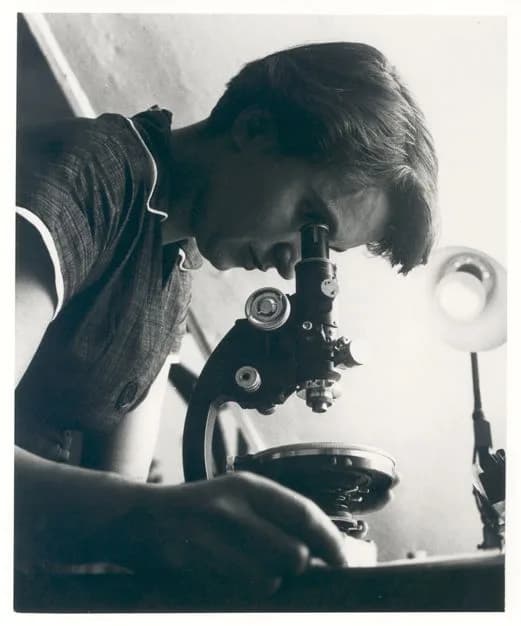
जन्म
July 25, 1920
Notting Hill, United Kingdom
मृत्यु
April 16, 1958
Chelsea, United Kingdom
किसके लिए जाने जाते हैं
British chemist, biophysicist, and X-ray crystallographer
Rosalind Franklin (1920–1958) was United Kingdom best known for British chemist, biophysicist, and X-ray crystallographer.
Rosalind Franklin (July 25, 1920 – April 16, 1958) was a British chemist and X-ray crystallographer. Her work was central to understanding DNA's molecular structure. Unrecognised in her lifetime for this contribution, she is now remembered for shaping molecular biology.
अध्याय
जीवन के अध्याय
अध्याय 1 · 1920· अध्याय 1 में से 7
Opening Paragraph
Rosalind Elsie Franklin (July 25, 1920 – April 16, 1958) was a distinguished British chemist, biophysicist, and X-ray crystallographer, whose precise work fundamentally advanced our understanding of molecular structures. Her investigations into DNA, RNA, viruses, coal, and graphite laid essential groundwork in their respective fields. Though much of her contribution, especially concerning DNA, went unrecognized during her short lifetime, her scientific legacy is now widely celebrated. She continues to inspire future generations in science, particularly for women in STEM.
अध्याय 2 · 1920· अध्याय 2 में से 7
Early Life and Origins
Born on July 25, 1920, in Notting Hill, United Kingdom, Rosalind Elsie Franklin grew up in a prominent and intellectually engaged British Jewish family. From an early age, she displayed exceptional academic abilities and a keen scientific curiosity. Her family encouraged her education, fostering an environment where intellectual pursuits were highly valued. These early experiences shaped her rigorous approach to scientific inquiry and her dedication to research.
अध्याय 3· अध्याय 3 में से 7
Career Beginnings
Franklin pursued her higher education with great determination, ultimately earning a Ph.D. in Physical Chemistry from Cambridge University. Her initial research focused on the physical chemistry of coal and graphite, a critical area during wartime. This early work yielded important insights into the molecular structure of these materials, establishing her reputation as a meticulous and capable experimentalist. These contributions were well-regarded and appreciated by her peers during her lifetime.
अध्याय 4· अध्याय 4 में से 7
Major Achievements and Career Highlights
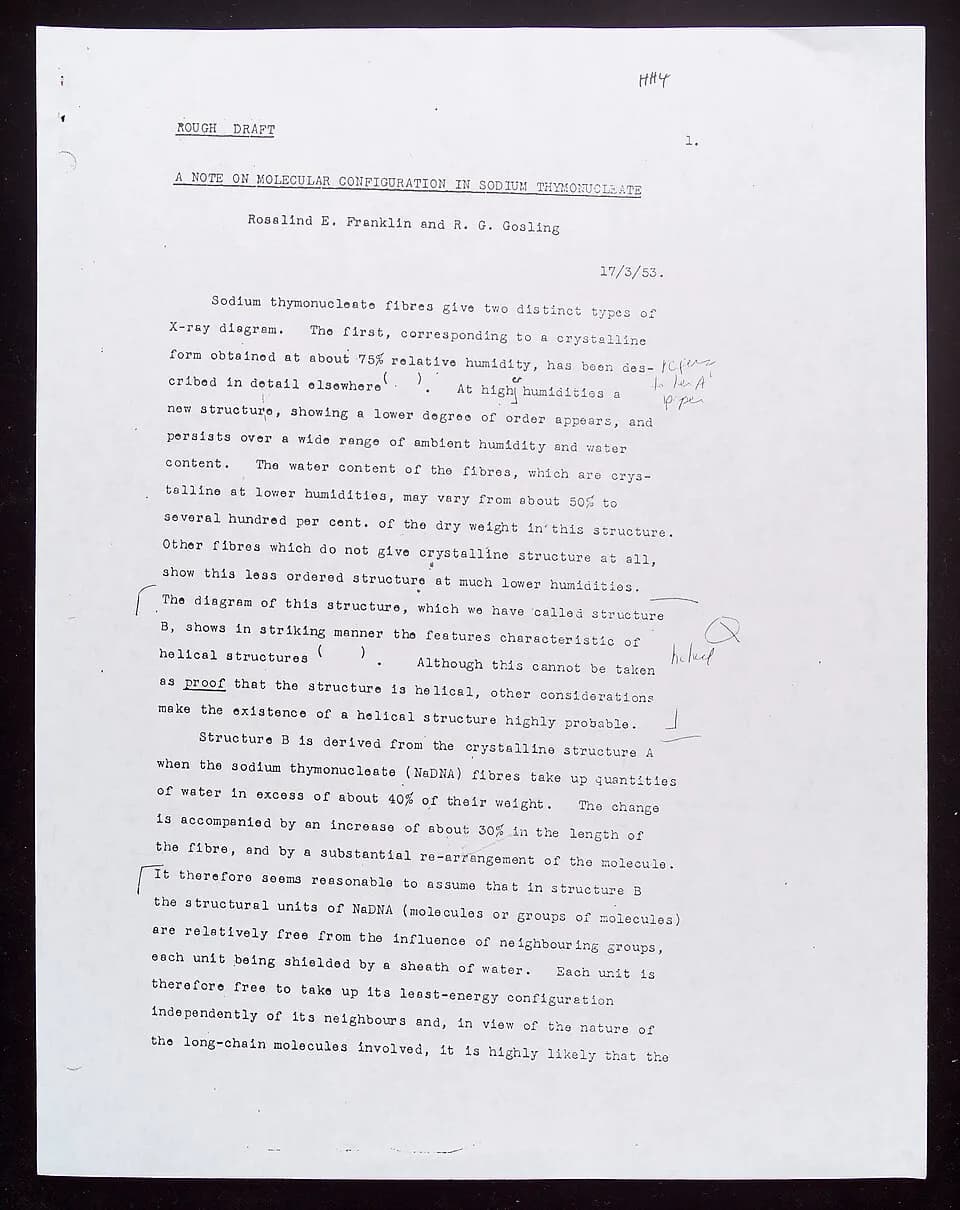
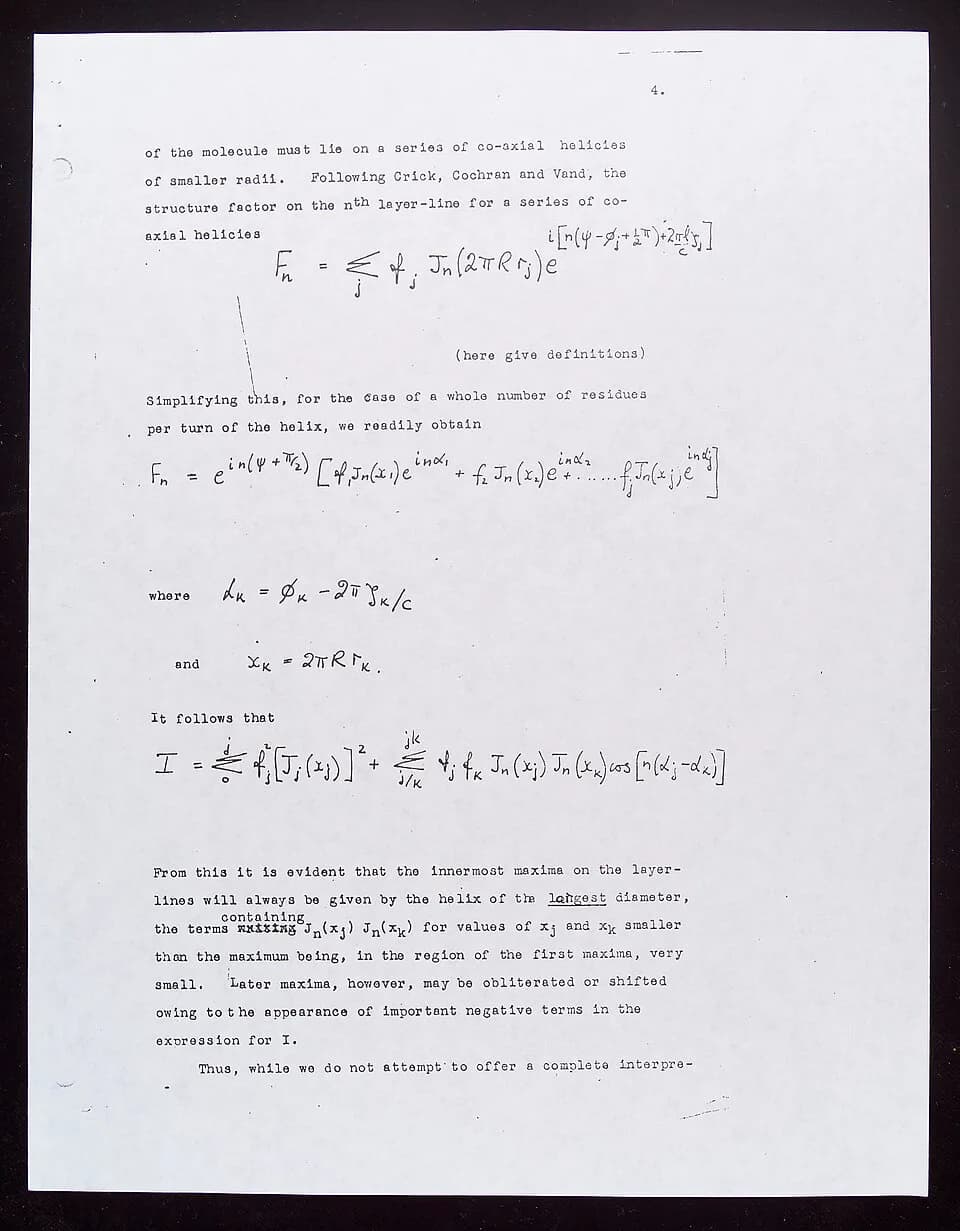
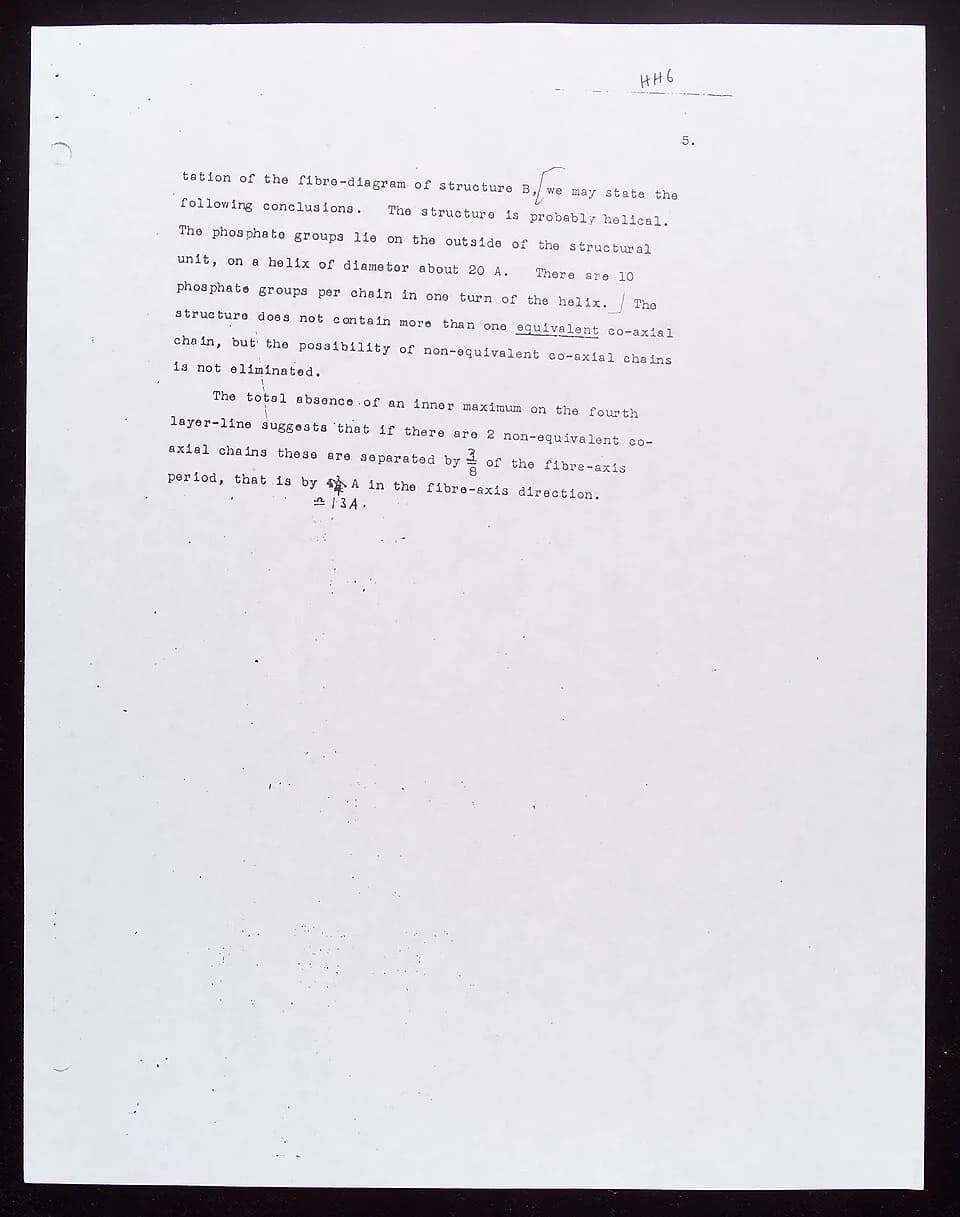
Rosalind Franklin's career was marked by several significant contributions to molecular biology and crystallography. Her most prominent work involved the use of X-ray diffraction to study the structure of complex organic molecules. This technique allowed her to produce remarkably clear images of DNA fibers, which were essential for deducing its double helix structure. Her detailed observations and analyses of these X-ray diffraction patterns provided crucial evidence that other scientists later used to formulate their models.
अध्याय 5· अध्याय 5 में से 7
Notable Works or Contributions
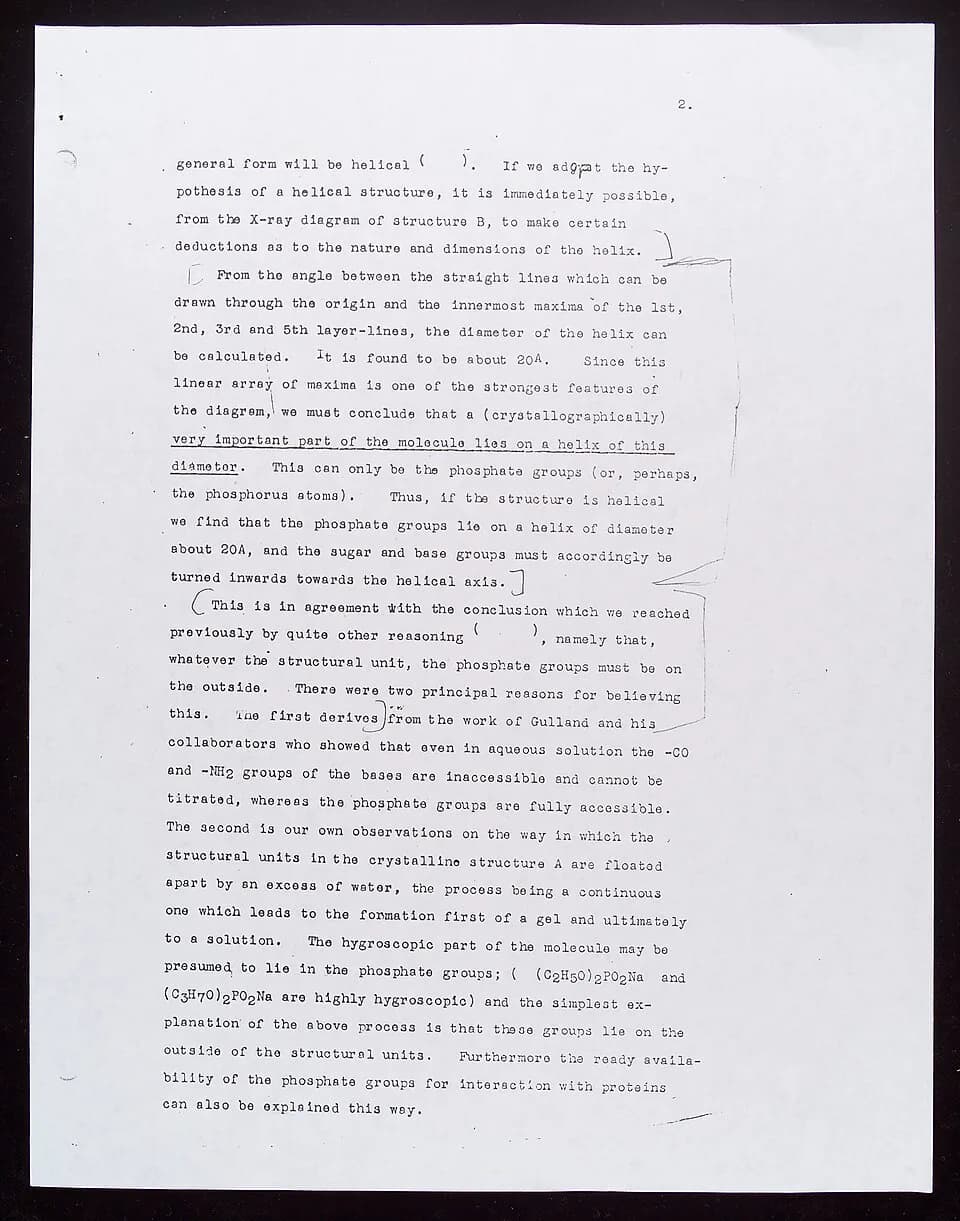
Her photographic work on DNA, particularly the image known as "Photo 51," provided unambiguous evidence of DNA's helical nature and its key dimensions. This photograph, along with her careful analysis of the A and B forms of DNA, was instrumental in understanding the molecule's double-stranded structure. Beyond DNA, Franklin also made significant strides in deciphering the structures of RNA and various viruses, including the tobacco mosaic virus. Her analytical rigor and experimental precision were central to these findings, influencing subsequent research in virology and genetics.
अध्याय 6 · 1958· अध्याय 6 में से 7
Later Years
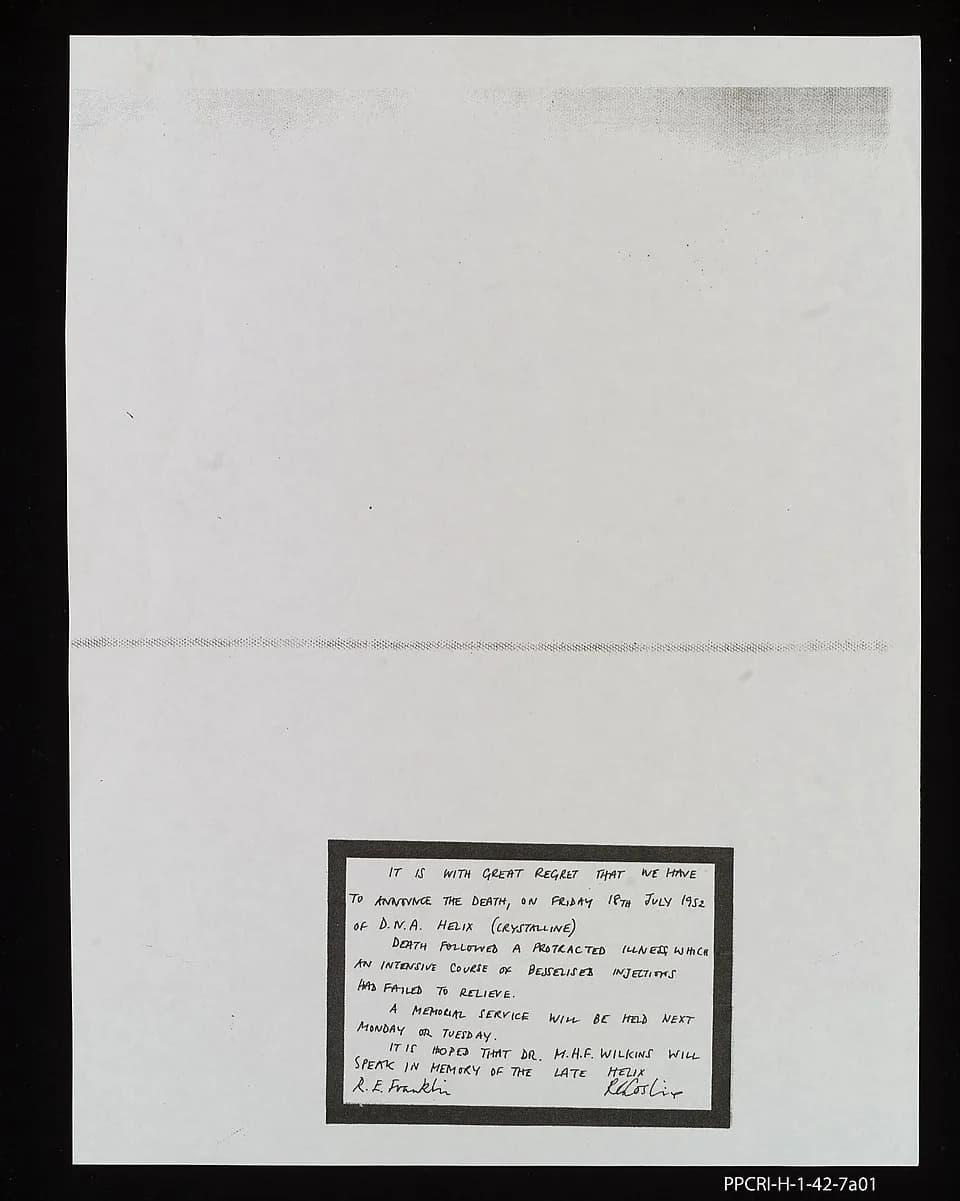
Franklin's life was cut short when she passed away on April 16, 1958, in Chelsea, United Kingdom, at the age of 37. Despite her relatively brief career, her scientific output was substantial and of immense quality. Her untimely death meant she could not share in the Nobel Prize awarded for the discovery of DNA's structure in 1962, as the prize is not awarded posthumously. James Watson, one of the Nobel laureates, later expressed his belief that Franklin would ideally have been awarded a Nobel Prize in Chemistry had she lived.
अध्याय 7· अध्याय 7 में से 7
Legacy and Impact
Rosalind Franklin's legacy is complex, marked by both scientific triumph and historical under-recognition. Her crucial contributions to the discovery of DNA's structure were largely overlooked in her lifetime, prompting various posthumous tributes. She has been described as the "wronged heroine" and a "feminist icon," highlighting the challenges she faced and the importance of recognizing all contributions to scientific progress. Today, Franklin is celebrated for her brilliant mind and her enduring impact on our understanding of life itself. Her dedication to science continues to inspire.
पलों में एक जीवन
वे पल जिन्होंने एक जीवन को आकार दिया
अक्सर पूछे जाने वाले प्रश्न
अक्सर पूछे जाने वाले
Rosalind Franklin की मृत्यु कब हुई?
Rosalind Franklin की मृत्यु 16 अप्रैल 1958 Chelsea, United Kingdom में हुई, 37 वर्ष की आयु में।
Rosalind Franklin का जन्म कहाँ हुआ था?
Rosalind Franklin का जन्म Notting Hill, United Kingdom में 25 जुलाई 1920 को हुआ था।
Rosalind Franklin किसके लिए सबसे अधिक प्रसिद्ध हैं?
Rosalind Franklin British chemist, biophysicist, and X-ray crystallographer के लिए सबसे अधिक प्रसिद्ध हैं।
मृत्यु के समय Rosalind Franklin की आयु कितनी थी?
मृत्यु के समय Rosalind Franklin की आयु 37 वर्ष थी।
Rosalind Franklin की राष्ट्रीयता क्या थी?
Rosalind Franklin United Kingdom के थे।
समयरेखा
एक नज़र में जीवन
फोटो गैलरी
तस्वीरों में एक जीवन
किसी भी पोलरॉइड पर क्लिक करें · 45 तस्वीरें
QR कोड
इस जीवनी को साझा करें
प्रिंट करें और साझा करें
इस जीवनी पृष्ठ पर जाने के लिए स्कैन करें। आयोजनों, प्रदर्शनियों, या शैक्षिक सामग्रियों के लिए प्रिंट करें।