Jaioa
August 10, 1902
Stockholm, Sweden
Hila
October 29, 1971
Uppsala, Sweden
Ezaugarriak
Swedish biochemist and Nobel Prize laureate in Chemistry
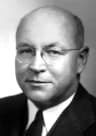
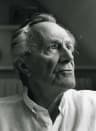
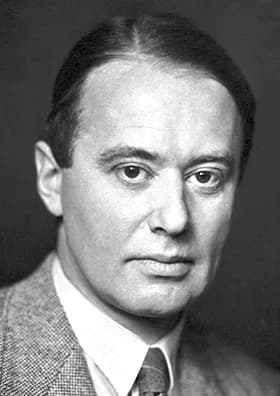
Arne Tiselius (1902–1971) was Sweden best known for Swedish biochemist and Nobel Prize laureate in Chemistry.
Arne Tiselius (August 10, 1902 – October 29, 1971) was a Swedish biochemist and university teacher. He was awarded the Nobel Prize in Chemistry in 1948 for his research on electrophoresis and adsorption analysis. His work significantly advanced understanding of serum proteins, leaving a lasting impact on biochemistry.
0 kapitulua
Bizitzako kapituluak
1 kapitulua · 1902· 1. kapitulua 6tik
Early Life and Origins
Arne Wilhelm Kaurin Tiselius was born on August 10, 1902, in Stockholm, Sweden, the nation's vibrant capital. His early environment in Stockholm likely fostered an intellectual curiosity that guided his academic trajectory. While specific family details and anecdotes from his upbringing are not provided in the available information, his eventual path clearly demonstrated a dedication to rigorous scientific pursuit from a young age.
2 kapitulua· 2. kapitulua 6tik
Career Beginnings
Tiselius embarked on his professional journey in the field of chemistry, subsequently specializing in biochemistry. He dedicated a significant portion of his career to academia, serving as a respected university teacher who shaped aspiring scientists. His initial research efforts concentrated on the development and refinement of analytical methodologies, particularly those vital for deciphering complex biological substances. This foundational period was instrumental in paving the way for his later, groundbreaking discoveries that would redefine his field.
3 kapitulua · 1948· 3. kapitulua 6tik
Major Achievements and Career Highlights
A crowning achievement in Arne Tiselius's illustrious career was the conferment of the Nobel Prize in Chemistry in 1948. This prestigious award recognized his extensive and pioneering research on electrophoresis and adsorption analysis. The Nobel Committee specifically lauded his profound discoveries concerning the complex nature of serum proteins, which represented a monumental leap in biochemical understanding. This international honor not only celebrated his scientific brilliance but also brought global recognition to his innovative techniques, solidifying his status as a leading figure in his field.
4 kapitulua · 1965· 4. kapitulua 6tik
Notable Works or Contributions
Arne Tiselius's prolific academic output is reflected in his impressive h-index of 26, compiled from a total of 73 published papers. His enduring influence is clearly showcased by significant works like "Some aspects of the use of 'continuous' and 'discontinuous' buffer systems in polyacrylamide gel electrophoresis," published in 1965, which garnered an remarkable 234 citations. This particular paper highlights his continuous innovation in laboratory methodology, providing indispensable tools for researchers worldwide. Another impactful contribution, "Particle-sieve' electrophoresis of viruses in polyacrylamide gels, exemplified by purification of turnip yellow mosaic virus," from 2005, further demonstrates the timeless applicability of his foundational concepts, even decades after his passing. He also played a role in broader scientific discourse, as evidenced by his involvement in "The Place of Value in a World of Facts. Proceedings of the Fourteenth Nobel Symposium, Stockholm, September 15-20, 1969," which was published in 1970. Furthermore, his thoughtful retrospective, "Electrophoresis, Past, Present and Future," also published in 1970, offered valuable insights into the historical evolution and future potential of his specialized field, influencing subsequent generations of biochemists. His work on "PHYWE supplies more than 30 Nobel Prize awarded experiments" in 2011, though having no citations listed, reflects an ongoing connection to educational and practical applications of scientific principles. These diverse publications collectively underscore his continuous intellectual engagement and unwavering commitment to advancing and disseminating scientific knowledge across various platforms.
5 kapitulua · 1969· 5. kapitulua 6tik
Later Years
Throughout his later career, Arne Tiselius remained an active and highly influential figure within the global scientific community. He continued to contribute to scholarly literature and actively participated in significant academic forums, such as the Fourteenth Nobel Symposium held in Stockholm in 1969. His life, profoundly dedicated to scientific exploration and discovery, concluded with his peaceful passing on October 29, 1971, in Uppsala, Sweden. Even after his death, the profound impact of his scientific legacy continued to unfold, with ongoing citations of his earlier works demonstrating their sustained relevance and importance to the scientific world.
6 kapitulua· 6. kapitulua 6tik
Legacy and Impact
Arne Tiselius's legacy is indelibly marked by his revolutionary advancements in the techniques of electrophoresis and adsorption analysis. His pioneering discoveries, particularly concerning the intricate and complex nature of serum proteins, fundamentally reshaped the entire field of biochemistry. He provided scientists with indispensable analytical tools and foundational insights necessary for the precise separation and characterization of complex biological mixtures, which remains a cornerstone of modern molecular biology and medical diagnostics. His work cemented his reputation as a visionary scientist whose methodologies and profound understandings continue to resonate deeply within contemporary scientific research and essential laboratory practices worldwide, inspiring countless future innovators.
Bizitza uneetan
Bizitza moldatu zuten uneak
Ohiko galderak
Maiz egindako galderak
Noiz hil zen Arne Tiselius?
Arne Tiselius 1971(e)ko urriaren 29(a) hil zen Uppsala, Sweden-n, 69 urte zituela.
Non jaio zen Arne Tiselius?
Arne Tiselius Stockholm, Sweden-n jaio zen 1902(e)ko abuztuaren 10(a).
Zertarako da ezagunena Arne Tiselius?
Arne Tiselius ezagunena da Swedish biochemist and Nobel Prize laureate in Chemistry-rengatik.
Zenbat urte zituen Arne Tiselius-k hil zenean?
Arne Tiselius-k 69 urte zituen hil zenean.
Zer nazionalitatekoa zen Arne Tiselius?
Arne Tiselius Sweden-koa zen.
Denbora-lerroa
Bizitza begirada batean
Argazki galeria
Bizitza iruditan
Egin klik edozein polaroidetan handitzeko · 50 argazki
QR kodea
Partekatu Biografia Hau
Inprimatu eta partekatu
Eskaneatu biografia orri hau bisitatzeko. Inprimatu ekitaldi, erakusketa edo hezkuntza materialetarako.