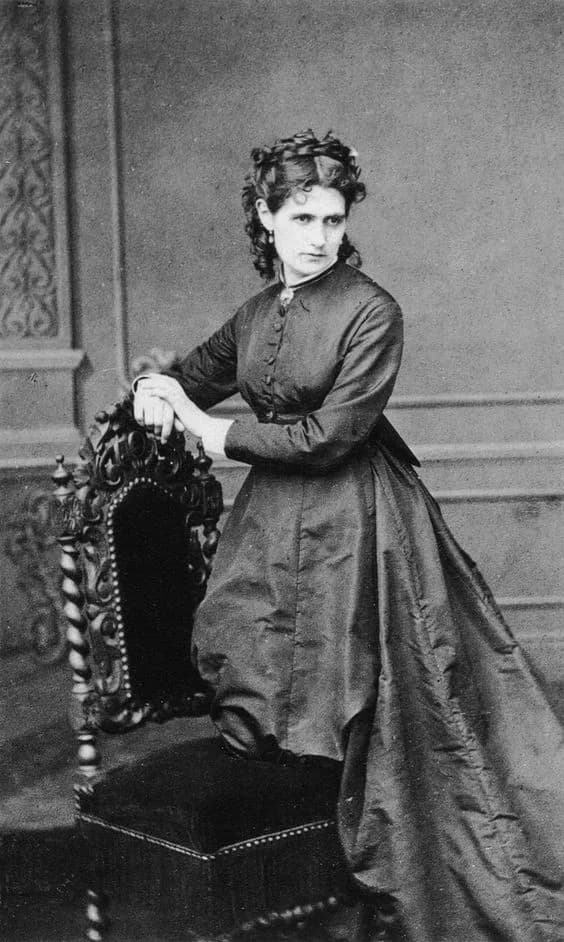
Sündinud
January 14, 1841
Bourges, France
Surnud
March 2, 1895
Paris, France
Tuntud kui
French painter
Berthe Morisot (1841–1895) was France best known for French painter.
Berthe Morisot (January 14, 1841 – March 2, 1895) was a French painter. She was a prominent member of the Impressionist circle in Paris, recognized for her unique artistic contributions. Her legacy continues to inspire artists and art enthusiasts worldwide.
Peatükk
Elu peatükid
Peatükk 1 · 1841· Peatükk 1 / 7
Early Life and Origins
Berthe Marie Pauline Morisot was born in Bourges, France, on January 14, 1841. Her family recognized and supported her early inclination towards art, providing an environment conducive to her creative development. This early encouragement was crucial in shaping her dedication to painting and other artistic endeavors.
Growing up in a period of artistic change, Morisot's foundations were laid for a career that would challenge conventional norms. Her education equipped her with the technical skills necessary to pursue various artistic professions, including that of a painter and a printmaker. The cultural milieu of 19th-century France provided a rich backdrop for her artistic awakening.
Peatükk 2· Peatükk 2 / 7
Career Beginnings
Morisot embarked on her professional artistic journey at a time when the art establishment was firmly rooted in academic traditions. She began to develop her distinctive style, characterized by a luminous palette and an intimate approach to her subjects. This early phase was critical in her evolution as a painter, as she explored new ways of representing light and form.
Her talents were not limited to painting; she also established herself as an accomplished engraver, draftsperson, and lithographer. These diverse skills broadened her artistic scope and allowed her to experiment with various printmaking techniques. Her early commitment to art set the stage for her eventual involvement with the avant-garde Impressionist circle in Paris.
Peatükk 3· Peatükk 3 / 7
Major Achievements and Career Highlights
Berthe Morisot became a pivotal member of the circle of painters in Paris who defined the Impressionist movement. She was one of the few women consistently included in the Impressionist exhibitions, asserting her significant presence in a male-dominated artistic sphere. Her participation was crucial to the group's collective identity and public recognition.
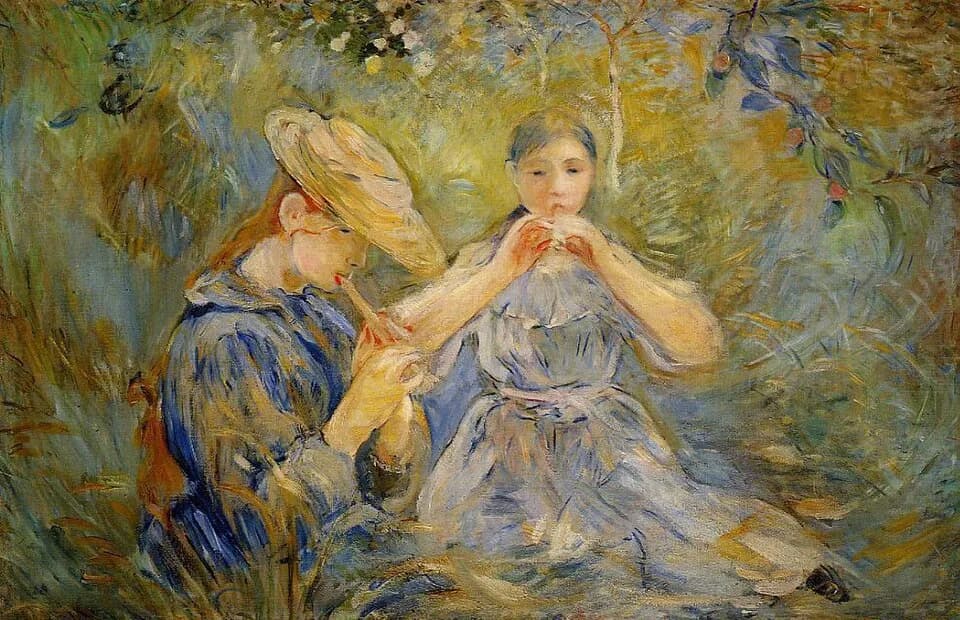
Her distinctive approach to Impressionism, often characterized by delicate brushwork and a focus on domestic scenes and female subjects, distinguished her from her contemporaries. As an artist and painter, she consistently pushed boundaries, contributing to the movement's evolution. Her ability to capture fleeting moments and atmospheric effects became a hallmark of her acclaimed work.
Beyond painting, Morisot was also known for her skills as a printmaker, encompassing her roles as an engraver and lithographer. This versatility showcased her comprehensive understanding of visual arts. Her regular exhibition of works cemented her reputation and allowed her to reach a wide audience, establishing her as a celebrated figure in French art.
Peatükk 4· Peatükk 4 / 7
Personal Life
While explicit details of Berthe Morisot’s personal relationships beyond her artistic circle are not extensively documented in the provided information, her paintings often offer glimpses into an intimate world. Many of her most well-known works depict women and children in private domestic settings, suggesting a deep connection to her home and family life. These portrayals offer a unique perspective on the lives of women in 19th-century society.
As a key figure within the Impressionist circle in Paris, her interactions with fellow artists were undoubtedly significant to her personal and professional growth. This intellectual and artistic camaraderie likely fueled her creative output and provided a supportive community. Her life, although not detailed in personal anecdotes here, was clearly interwoven with her dedication to her art.
Peatükk 5 · 1854· Peatükk 5 / 7
Notable Works or Contributions
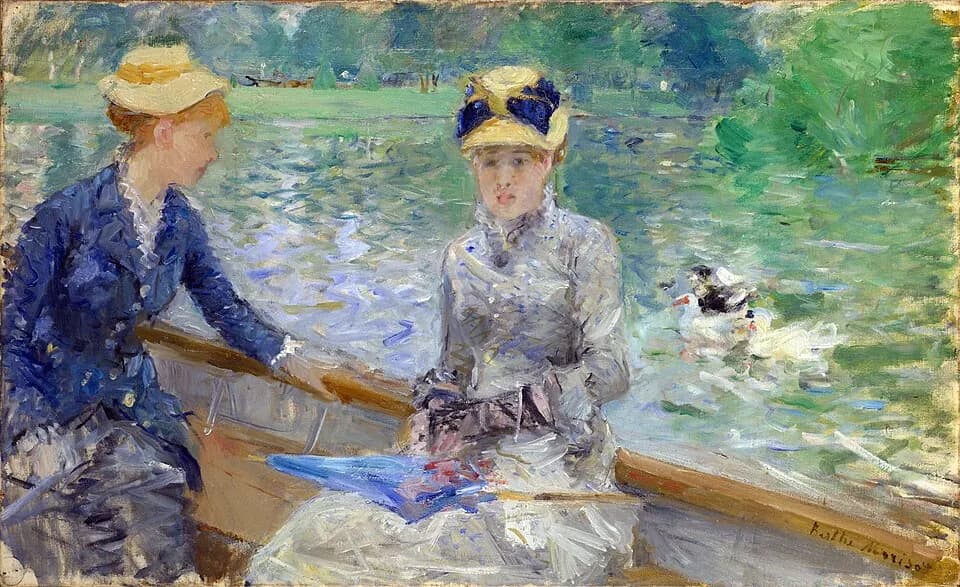
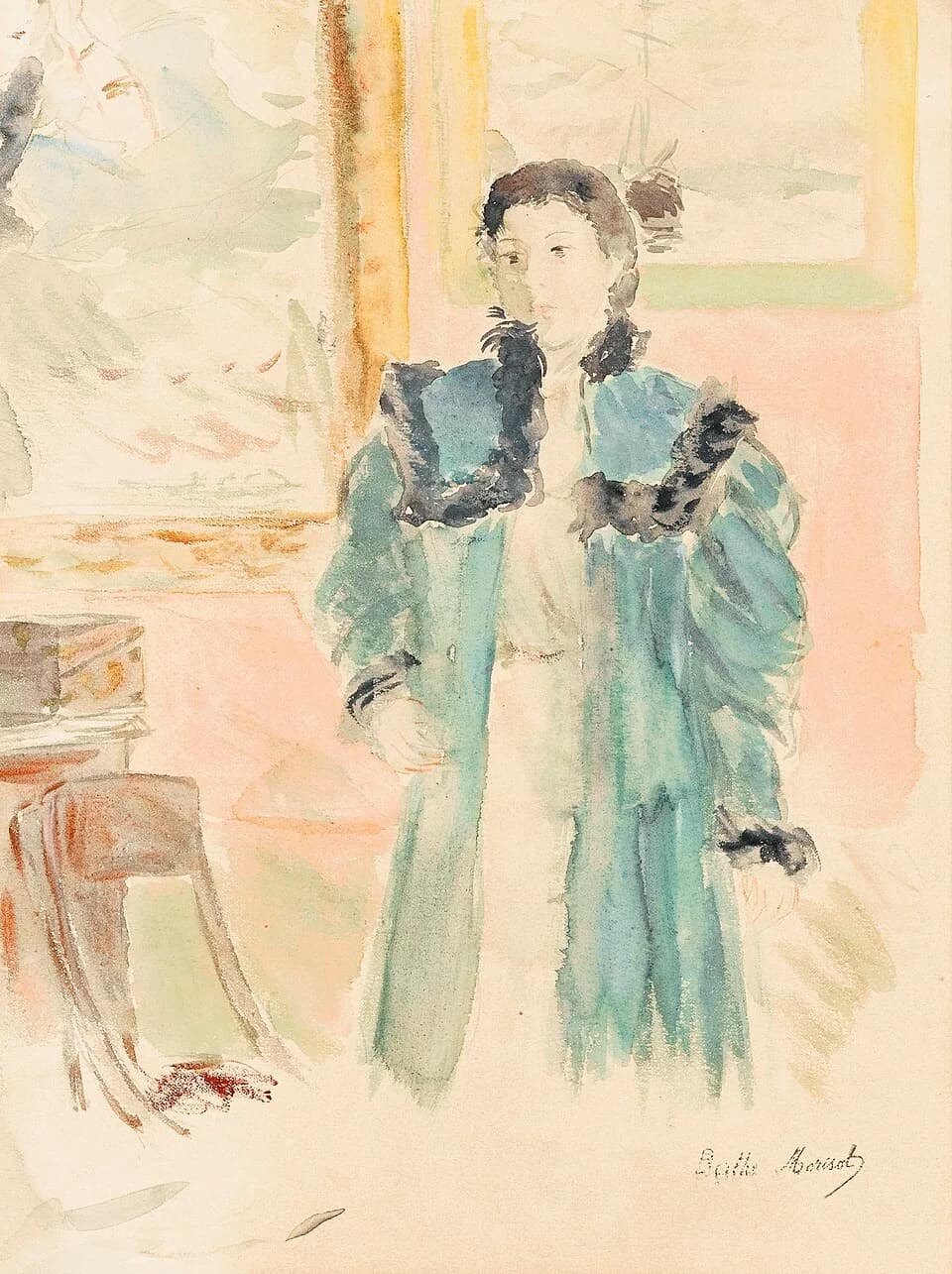
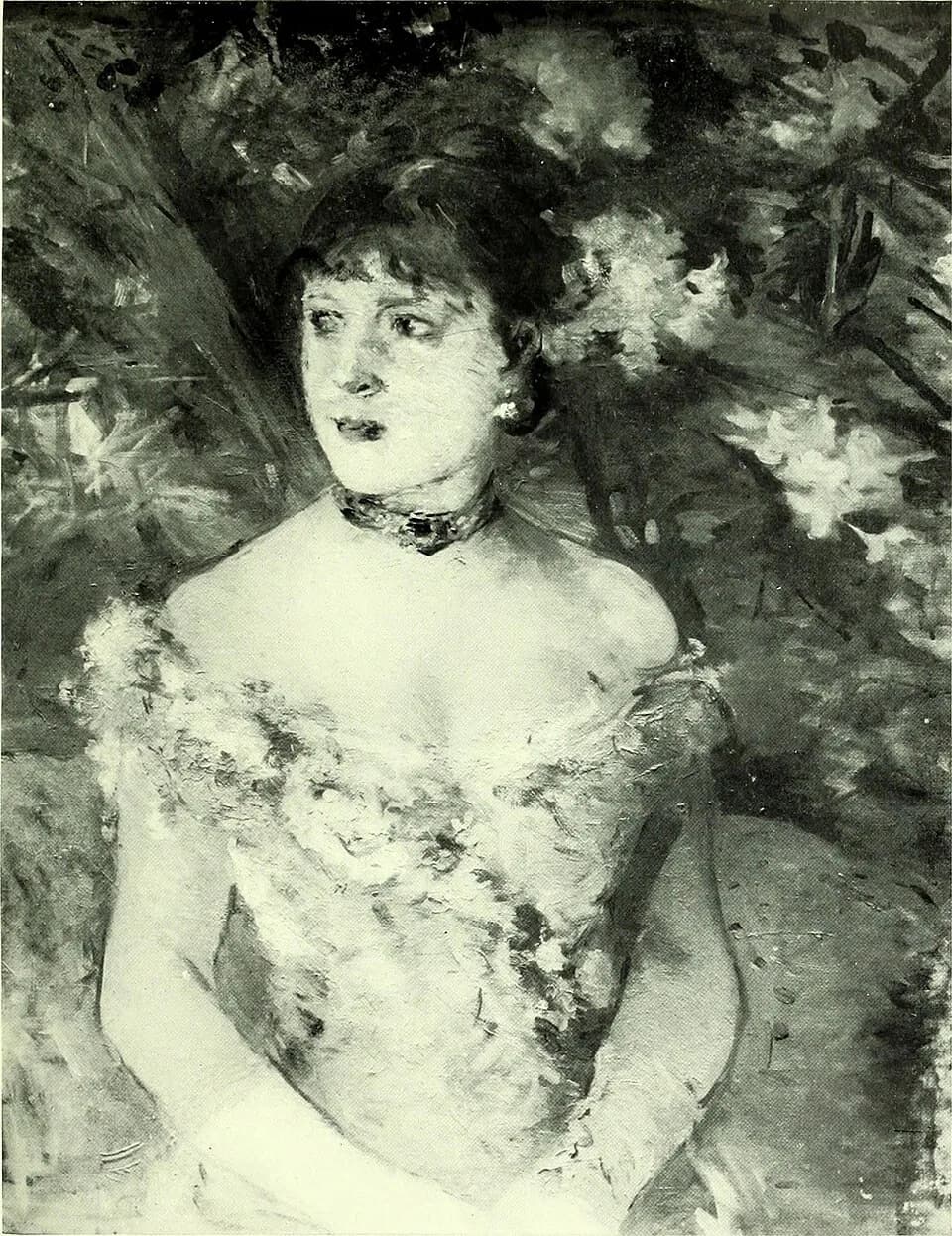
Berthe Morisot created a rich collection of artworks that continue to be celebrated today, many housed in prestigious museums. The Metropolitan Museum of Art in New York proudly displays several of her masterpieces, including "The Pink Dress (Albertie-Marguerite Carré, later Madame Ferdinand-Henri Himmes, 1854–1935)," painted around 1870, capturing a moment of quiet elegance. Other notable works there are "Young Woman Seated on a Sofa," created approximately in 1879, and "A Woman Seated at a Bench on the Avenue du Bois," dating from 1885, both showcasing her talent for intimate portraiture and outdoor scenes. The Met’s collection further includes her "Study for 'Young Girl in a Green Coat'," from around 1894, demonstrating her preparatory processes and skill in rendering figures.
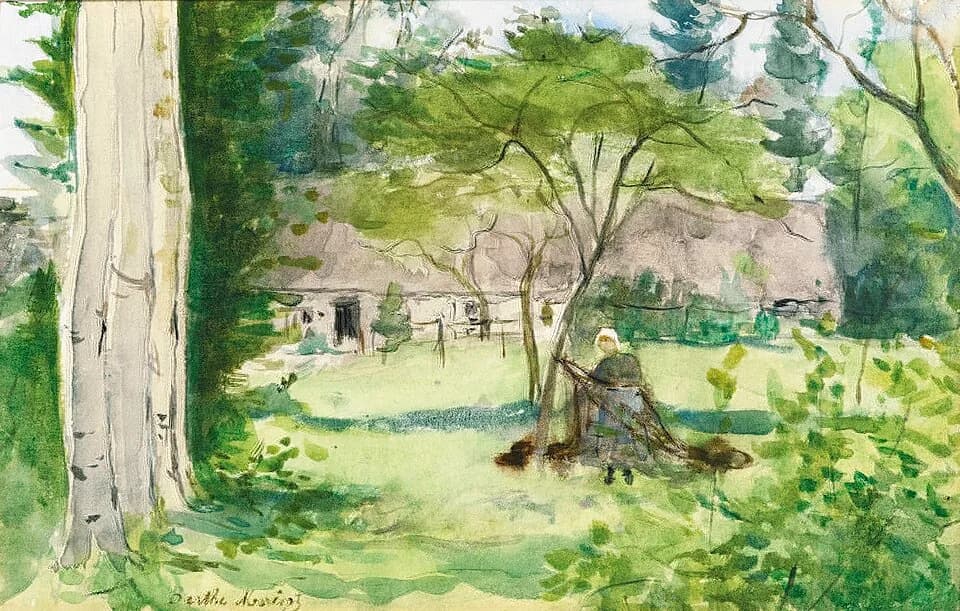
Her artistic output was prolific and varied, consistently earning her acclaim, with each piece offering insight into her unique vision and mastery of Impressionist techniques. The Art Institute of Chicago also holds a substantial collection of Morisot's work, providing a comprehensive view of her career. Among these is "Woman at Her Toilette," created between 1875 and 1880, a classic example of her focus on everyday female life, alongside "On the Balcony" from 1871/72 and "Woman in a Garden" from 1882–83, which highlight her skill in depicting figures within landscapes.
Further enriching the Art Institute of Chicago's collection are "Young Girl with Hat" from 1892, "Forêt de Compiègne" from 1885, and "Jeanne Pontillon" from circa 1893. Additional works include "Girl Plaiting her Hair (La Natte)" from 1894, her poignant "Self-Portrait" from circa 1885, "Nude Seen from Behind" from 1889, and "Young Girl with a Cat," also from 1889. These artworks collectively highlight her consistent output and dedication to her craft throughout her career, making her an enduring figure in French painting and an essential contributor to the Impressionist legacy.
Peatükk 6· Peatükk 6 / 7
Later Years
In her later years, Berthe Morisot continued to dedicate herself fully to her art, maintaining her innovative spirit and engagement with contemporary artistic trends. Her work from this period further solidified her stylistic identity and continued to draw admiration. She remained an active and influential figure within the Parisian art scene until her passing.
Morisot passed away in Paris, France, on March 2, 1895, at the age of 54. Her death marked the end of a prolific career that saw her contribute significantly to the development of modern art. Even in her final years, she continued to explore new themes and refine her unique artistic perspective, leaving behind a rich legacy of work.
Peatükk 7· Peatükk 7 / 7
Legacy and Impact
Berthe Morisot's legacy is profound, rooted in her foundational role within the Impressionist movement and her distinctive artistic contributions. She is remembered not only as a gifted painter but also as a printmaker and an essential member of a revolutionary artistic circle. Her innovative approach to color, light, and subject matter reshaped perceptions of art during her time.
Her works continue to be studied and admired worldwide, influencing countless artists and art enthusiasts. Morisot's ability to capture the subtle nuances of domestic life and natural light established her as a master of her craft. She demonstrated remarkable dedication and talent, securing her place as one of France's most important painters and an enduring symbol of artistic innovation.
Elu hetkedes
Hetked, mis elu kujundasid
KKK
Korduma kippuvad küsimused
Millal Berthe Morisot suri?
Berthe Morisot suri 2. märts 1895 Paris, France-s, 54-aastasena.
Kus Berthe Morisot sündis?
Berthe Morisot sündis Bourges, France-s 14. jaanuar 1841.
Mille poolest on Berthe Morisot kõige tuntum?
Berthe Morisot on kõige tuntum French painter poolest.
Kui vana oli Berthe Morisot surres?
Berthe Morisot oli surres 54-aastane.
Mis rahvusest oli Berthe Morisot?
Berthe Morisot oli pärit France-st.
Ajajoon
Elu lühidalt
Fotogalerii
Elu piltides
Klõpsake mis tahes polaroidil laiendamiseks · 50 fotot
QR-kood
Jaga seda biograafiat
Prindi ja jaga
Skannige selle biograafialehe külastamiseks. Printige üritusteks, näitusteks või õppematerjalideks.