Γεννήθηκε
August 17, 1887
Persenbeug Castle, Austria
Πέθανε
April 1, 1922
Funchal, Portugal
Γνωστός/ή για
Last monarch of Austria-Hungary (r. 1916–1918)
Charles I of Austria (1887–1922) was Austria best known for Last monarch of Austria-Hungary (r. 1916–1918).
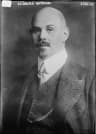
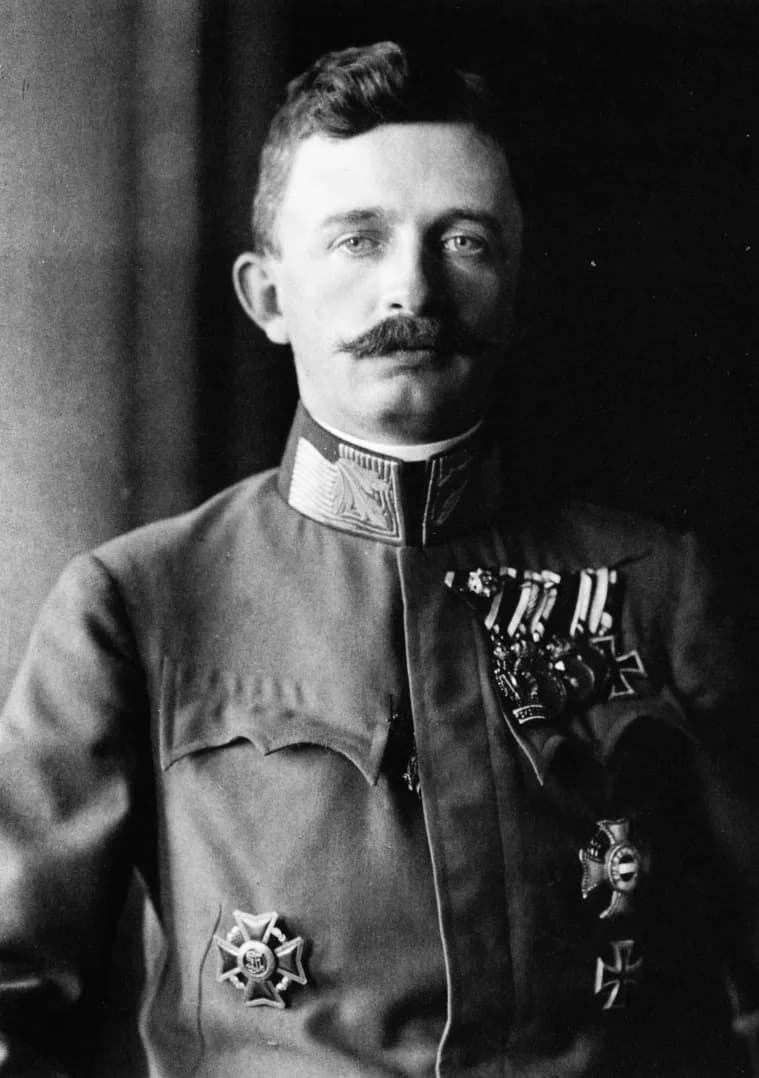
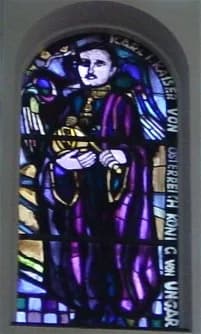
Charles I of Austria (August 17, 1887 – April 1, 1922) was a monarch, politician, and military officer. He served as the last Emperor of Austria and King of Hungary, ruling from 1916 until the monarchy's dissolution in 1918. His reign marked the end of the centuries-old Habsburg dynasty.
Κεφάλαιο
Κεφάλαια ζωής
Κεφάλαιο 1 · 1887· Κεφάλαιο 1 από 7
Early Life and Origins
Charles I of Austria entered the world on August 17, 1887, at the majestic Persenbeug Castle, nestled amidst the picturesque landscapes of Austria. This auspicious birth took place within the heartland of the sprawling Habsburg Empire, a cradle of European power and tradition for centuries. His lineage was deeply entrenched in European royalty, as he was the son of Archduke Otto of Austria and Princess Maria Josepha of Saxony, firmly placing him within the storied House of Habsburg-Lorraine.
From his earliest days, Charles was immersed in the rich traditions and inherent expectations befitting a member of one of Europe's most venerable ruling dynasties, whose influence spanned across diverse lands and peoples. His upbringing would have been meticulously crafted to prepare him for the substantial responsibilities inherent to his station. Though not initially destined for the direct succession, his formative years were still characterized by a profound sense of duty and a grounding in the principles that upheld the Habsburg monarchy.
Κεφάλαιο 2 · 1914· Κεφάλαιο 2 από 7
Career Beginnings
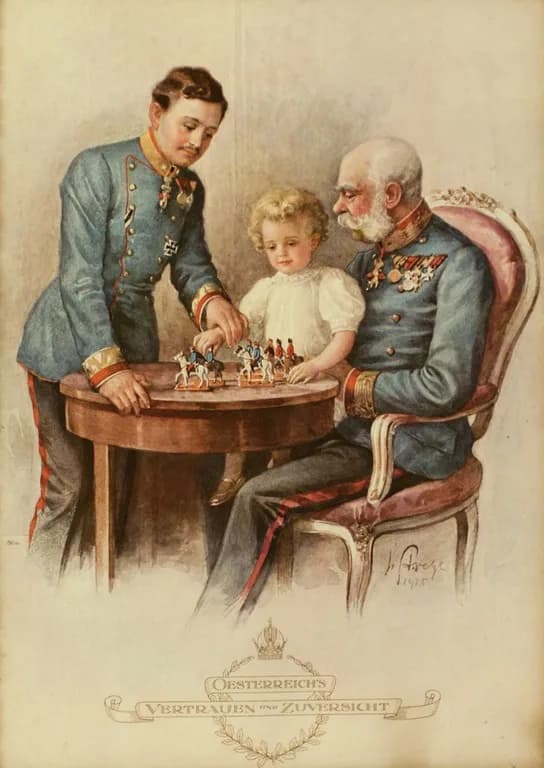
Charles's path to the throne was significantly altered by unforeseen tragedy and the dramatic unfolding of global events. He became the heir presumptive to Emperor Franz Joseph in 1914, following the shocking assassination of his uncle, Archduke Franz Ferdinand of Austria. This pivotal event in Sarajevo not only ignited the flames of World War I but also irrevocably shifted Charles's personal destiny, thrusting him closer to the ultimate imperial responsibility as the fate of an empire hung in the balance. The immense weight of succession fell upon his shoulders at a moment of unparalleled global instability and existential crisis for the continent.
Prior to this dramatic turn of events, Charles had diligently pursued a career as a military officer, gaining practical experience and a crucial understanding of armed forces operations within the empire. This background undoubtedly provided him with indispensable knowledge of military strategy and leadership, qualities that would become absolutely essential during his brief but intensely challenging reign. His early professional life, dedicated to active military service, prepared him for the formidable tasks that awaited him as the future monarch of a war-torn empire.
Κεφάλαιο 3 · 1916· Κεφάλαιο 3 από 7
Major Achievements and Career Highlights
Charles ascended to the imperial and royal thrones in November 1916, solemnly taking on the weighty mantle of Emperor of Austria and King of Hungary. In this capacity, he became the sovereign ruler of all the diverse states comprising the sprawling Habsburg monarchy, inheriting a realm under immense duress. His accession occurred during the grim midpoint of World War I, placing him at the helm of an empire grappling with immense internal and external pressures, further complicated by widespread conflict.
As monarch, Charles was immediately confronted with the monumental challenges of leading a multi-ethnic empire embroiled in a devastating global conflict that threatened its very existence. His rule, spanning from November 1916 until the monarchy's abolition in November 1918, coincided with the final and most brutal phase of the Great War. He actively worked to stabilize the empire amidst wartime hardships and escalating nationalist tensions, striving tirelessly to maintain the integrity of his diverse realm during an unparalleled existential crisis.
His time as Emperor and King was largely defined by the relentless demands of wartime leadership and his earnest, albeit ultimately unsuccessful, efforts towards securing a lasting peace, even as the tides of conflict turned decisively against the Central Powers. Despite his sincere endeavors, the insurmountable forces of global war and intensifying internal dissent ultimately led to the dramatic dissolution of the monarchy. The official abolition of the monarchy in November 1918 brought an end to centuries of Habsburg rule and definitively concluded Charles's reign, marking a seismic and irreversible shift in European history and the birth of new national identities.
Κεφάλαιο 4 · 1911· Κεφάλαιο 4 από 7
Personal Life
In 1911, Charles entered into a significant matrimony with Princess Zita of Bourbon-Parma, forging a powerful personal union. This marriage brought a strong and supportive partner into his life, one who would stand steadfastly by him through the extraordinary challenges of his impending imperial duties and the subsequent trials of exile. Their union provided a vital foundation of emotional and personal support amidst the profoundly turbulent political landscape of the early 20th century, which would soon engulf their world.
Princess Zita became Empress and Queen alongside him, sharing both the immense burdens and the ceremonial responsibilities of the throne during a period of unprecedented uncertainty and historical upheaval. Their partnership was a constant source of strength during his unexpected ascension to power and his subsequent struggles to preserve the integrity and future of the vast, aging empire he had inherited.
Κεφάλαιο 5· Κεφάλαιο 5 από 7
Notable Works or Contributions
As a monarch, Charles's primary 'work' was undeniably the complex governance and leadership of one of Europe's largest and most historically significant empires during its most critical and tumultuous period. His 'contributions' were inherently tied to his imperial roles as the Emperor of Austria and the King of Hungary, alongside his essential command as a military officer and his overarching political responsibilities. He served as the living embodiment of the state, tasked with guiding its destiny through a period of immense peril and transformation.
His efforts, though ultimately unsuccessful in preventing the monarchy's collapse, reflected a profound personal commitment to his imperial duties, which he performed under nearly impossible circumstances. He navigated complex political currents and military strategies in his capacity as supreme commander during the brutal years of World War I, striving earnestly to secure a viable future for his diverse and deeply challenged realm. His entire adult life was a continuous contribution to the state and the people he was born to lead.
Κεφάλαιο 6 · 1918· Κεφάλαιο 6 από 7
Later Years
The abolition of the monarchy in November 1918 signaled the definitive end of Charles's imperial rule and ushered in a new, profoundly more somber chapter of his life. Stripped of his titles and ultimately forced into exile, his final years were marked by a dramatic and often disheartening transition from sovereign power to a life away from the throne he once held. The former Emperor had to adapt to a vastly changed political reality, one that had been unimaginable just a few years prior.
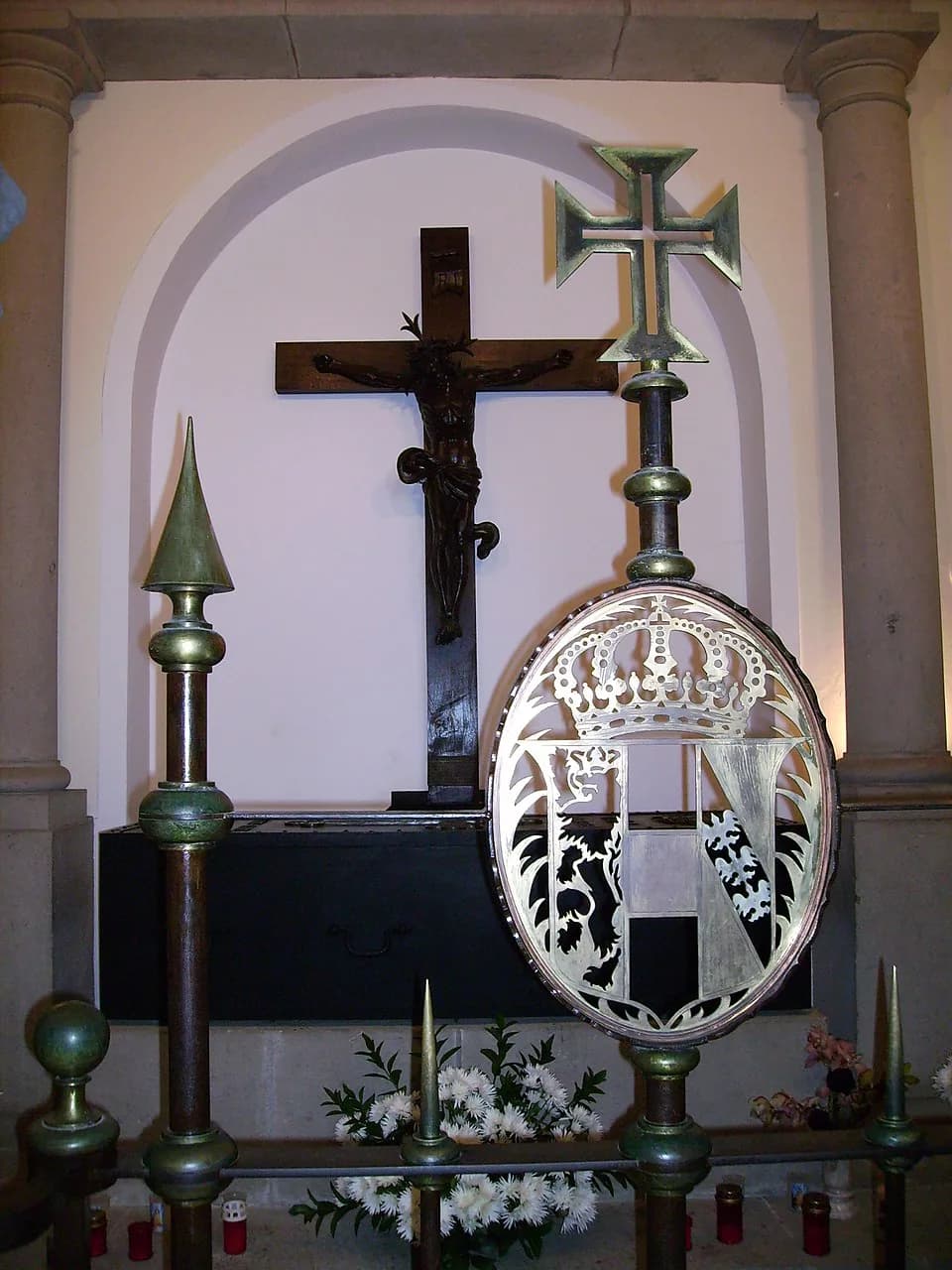
Charles I of Austria passed away relatively young on April 1, 1922, in Funchal, Portugal, far from the ancestral lands and palaces of his birth. His death occurred just a few short years after the catastrophic collapse of the empire he had inherited, under tragic circumstances of exile and ill health. His final resting place in Funchal stands as a poignant symbol of the dramatic and unfortunate circumstances that concluded his eventful life and reign, far from the heart of Europe.
Κεφάλαιο 7· Κεφάλαιο 7 από 7
Legacy and Impact
Charles I of Austria holds a unique and indelible place in history as the very last monarch of the illustrious House of Habsburg-Lorraine and the final ruler of the expansive Austria-Hungary. His brief but intensely impactful reign symbolizes the absolute end of a centuries-old imperial era, directly preceding the emergence of numerous new nation-states from the former empire's territories. His life story is intrinsically linked to the definitive dissolution of a major European power, reshaping the continent's map.
His legacy is intricately intertwined with the dramatic geopolitical shifts of the early 20th century, particularly the conclusion of World War I and the subsequent radical redrawing of the European map. Charles represents the final chapter of a dynasty that once commanded vast territories and profoundly influenced the course of European history for over six centuries. His memory endures as a poignant reminder of an empire's twilight and the dawn of a fundamentally new political and national order in Europe.
Μια ζωή σε στιγμές
Οι στιγμές που διαμόρφωσαν μια ζωή

Συχνές Ερωτήσεις
Συχνές ερωτήσεις
Πότε πέθανε ο/η Charles I of Austria;
Ο/Η Charles I of Austria πέθανε στις 1 Απριλίου 1922 στο Funchal, Portugal, σε ηλικία 34 ετών.
Πού γεννήθηκε ο/η Charles I of Austria;
Ο/Η Charles I of Austria γεννήθηκε στο Persenbeug Castle, Austria στις 17 Αυγούστου 1887.
Για τι είναι περισσότερο γνωστός/ή ο/η Charles I of Austria;
Ο/Η Charles I of Austria είναι περισσότερο γνωστός/ή για Last monarch of Austria-Hungary (r. 1916–1918).
Πόσων ετών ήταν ο/η Charles I of Austria όταν πέθανε;
Ο/Η Charles I of Austria ήταν 34 ετών τη στιγμή του θανάτου του/της.
Ποια ήταν η εθνικότητα του/της Charles I of Austria;
Ο/Η Charles I of Austria καταγόταν από Austria.
Χρονοδιάγραμμα
Η ζωή με μια ματιά
Συλλογή φωτογραφιών
Μια ζωή σε εικόνες
Κάντε κλικ σε οποιοδήποτε polaroid για μεγέθυνση · 50 φωτογραφίες
Κωδικός QR
Μοιραστείτε Αυτή τη Βιογραφία
Εκτύπωση & Κοινή Χρήση
Σκανάρετε για να επισκεφτείτε αυτή τη βιογραφική σελίδα. Εκτυπώστε για εκδηλώσεις, εκθέσεις ή εκπαιδευτικό υλικό.