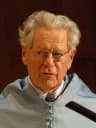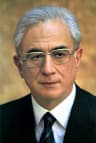
Født
June 25, 1928
Moscow, Duchy of Moscow
Død
March 29, 2017
Palo Alto, United States
Kendt for
Soviet, Russian and American theoretical physicist
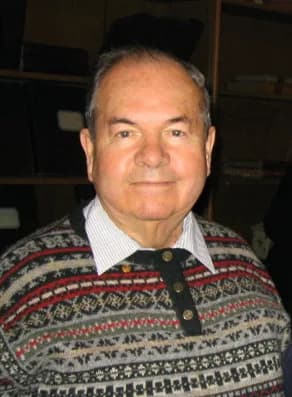
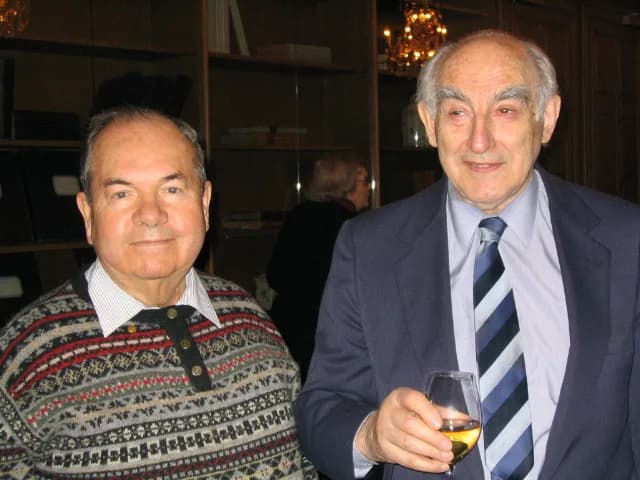
Alexei Abrikosov (1928–2017) was Duchy of Moscow best known for Soviet, Russian and American theoretical physicist.
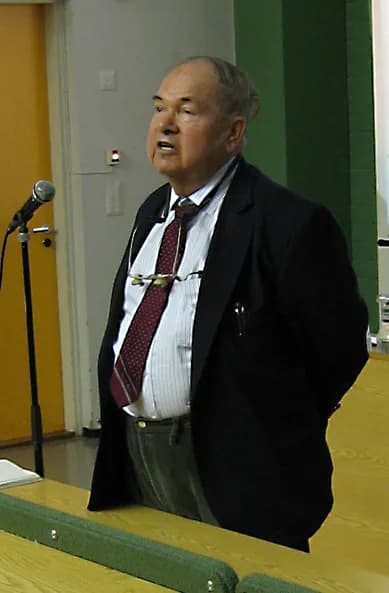
Alexei Abrikosov (June 25, 1928 – March 29, 2017) was a Soviet, Russian, and American theoretical physicist. He was awarded the 2003 Nobel Prize in Physics for his theories on how matter behaves at extremely low temperatures, specifically regarding superconductors and superfluids. His work significantly advanced condensed matter physics.
Kapitel
Livskapitler
Kapitel 1 · 2017· Kapitel 1 af 8
Opening
Alexei Abrikosov, a distinguished Soviet, Russian, and American theoretical physicist, whose brilliant mind explored the mysteries of condensed matter, passed away on March 29, 2017. Born on June 25, 1928, his extensive career in physics left a lasting mark on scientific understanding. He was most celebrated as a co-recipient of the 2003 Nobel Prize in Physics, an honor that recognized his pioneering theories on how matter behaves at extremely low temperatures.
Kapitel 2 · 1928· Kapitel 2 af 8
Early Life and Origins
Alexei Abrikosov's life began on June 25, 1928, in the historic city of Moscow, which at the time was within the Duchy of Moscow. His early years in this culturally rich environment likely set the stage for a future devoted to deep intellectual pursuit. The academic foundations laid during his upbringing in Moscow undoubtedly influenced his later trajectory into the demanding field of theoretical physics.
Kapitel 3· Kapitel 3 af 8
Career Beginnings
Abrikosov embarked on a career that would span continents and make significant contributions to the understanding of physics. As a theoretical physicist, his primary area of expertise lay in condensed matter physics, a field focused on the physical properties of matter, particularly its macroscopic and microscopic characteristics. His early work would establish the basis for a career dedicated to unraveling complex scientific phenomena.
Kapitel 4 · 2003· Kapitel 4 af 8
Major Achievements and Career Highlights
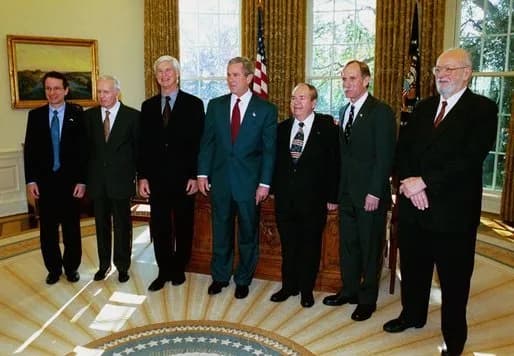
A towering achievement in Alexei Abrikosov's career was the co-reception of the 2003 Nobel Prize in Physics. He shared this prestigious award with Vitaly Ginzburg and Anthony James Leggett, a testament to the collaborative and cumulative nature of scientific progress. The Nobel Committee specifically recognized their "pioneering contributions to the theory of superconductors and superfluids." This acknowledgment highlighted his essential role in developing theories that describe how matter can behave in extraordinary ways when subjected to extremely low temperatures.
His theories provided critical insights into quantum phenomena observable in materials at temperatures approaching absolute zero. These contributions fundamentally advanced the understanding of superconductivity and superfluidity, which are states of matter characterized by the complete absence of electrical resistance and frictionless flow, respectively. This significant work considerably expanded the scientific community's grasp of quantum mechanics in macroscopic systems.
Kapitel 5· Kapitel 5 af 8
Personal Life
While Alexei Abrikosov's professional achievements are widely celebrated, details regarding his personal life, family, and individual interests are not extensively documented in the public information provided. His dedication to physics undoubtedly consumed a significant portion of his life, characteristic of many brilliant researchers.
Kapitel 6· Kapitel 6 af 8
Notable Works or Contributions
Alexei Abrikosov's defining scientific contributions were his pioneering theories concerning superconductors and superfluids. These theoretical frameworks explained behaviors that were previously not fully understood in materials at extremely low temperatures. His work gave scientists a deeper insight into the fundamental properties of these exotic states of matter.
The concepts he developed, particularly related to the behavior of Type-II superconductors, provided a theoretical explanation for how magnetic fields penetrate these materials, a phenomenon now known as the Abrikosov vortex lattice. This specific contribution was a crucial step in the development of modern condensed matter physics. His insights continue to be foundational for researchers exploring advanced materials and quantum technologies.
Kapitel 7 · 2017· Kapitel 7 af 8
Later Years
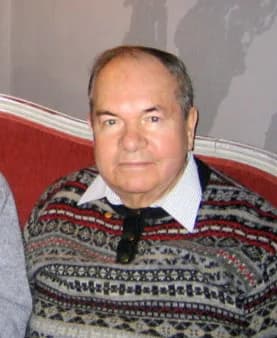
In his later years, Alexei Abrikosov continued his distinguished career as an American theoretical physicist. His life journey saw him transition from a Soviet and Russian physicist to contributing within the American scientific community. He passed away on March 29, 2017, in Palo Alto, United States, concluding a life rich with scientific discovery and intellectual pursuit.
Kapitel 8· Kapitel 8 af 8
Legacy and Impact
Alexei Abrikosov's legacy is etched into the very foundations of condensed matter physics. His Nobel Prize-winning theories on superconductors and superfluids did not just explain observed phenomena; they opened new avenues for research and technological development. The understanding derived from his work remains critical for advancements in fields ranging from quantum computing to high-efficiency energy transmission.
He is remembered as a brilliant theoretical physicist whose relentless pursuit of knowledge transformed our understanding of matter at its most fundamental and exotic states. His contributions continue to inspire new generations of scientists, ensuring his influence persists far beyond his lifetime.
Et liv i øjeblikke
De øjeblikke, der formede et liv
Ofte stillede spørgsmål
Ofte spurgt
Hvornår døde Alexei Abrikosov?
Alexei Abrikosov døde den 29. marts 2017 i Palo Alto, United States i en alder af 88 år.
Hvor blev Alexei Abrikosov født?
Alexei Abrikosov blev født i Moscow, Duchy of Moscow den 25. juni 1928.
Hvad er Alexei Abrikosov mest kendt for?
Alexei Abrikosov er mest kendt for Soviet, Russian and American theoretical physicist.
Hvor gammel var Alexei Abrikosov ved dødsfaldet?
Alexei Abrikosov var 88 år gammel ved dødsfaldet.
Hvilken nationalitet havde Alexei Abrikosov?
Alexei Abrikosov kom fra Duchy of Moscow.
Tidslinje
Et liv ved et hurtigt blik
Billedgalleri
Et liv i billeder
Klik på en polaroid for at forstørre · 23 billeder
QR-kode
Del denne biografi
Udskriv og del
Scan for at besøge denne biografiside. Udskriv til arrangementer, udstillinger eller undervisningsmateriale.