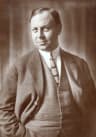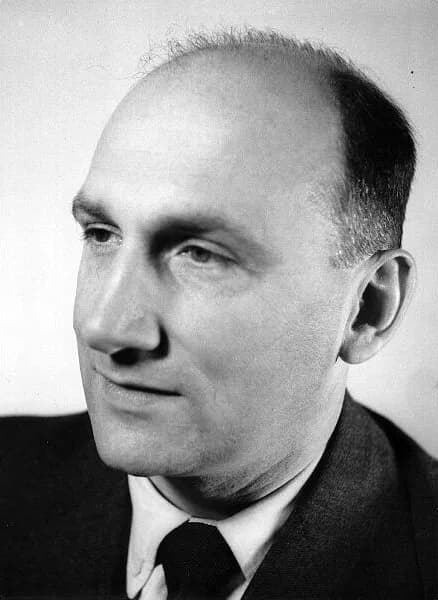
Ganwyd
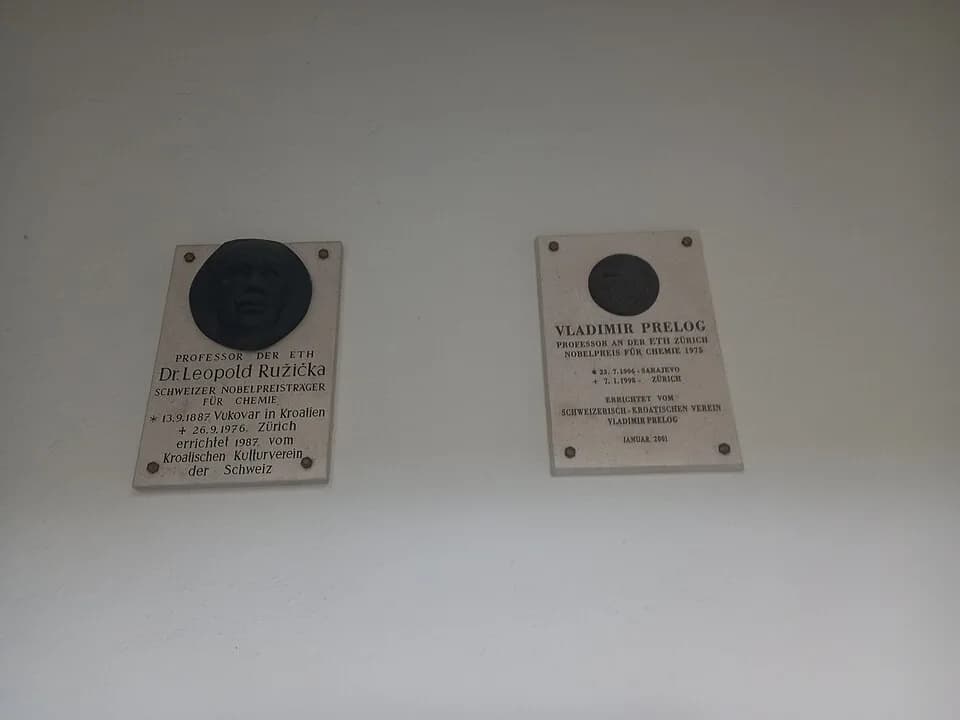
July 23, 1906
Sarajevo, Bosnia and Herzegovina
Bu farw
January 7, 1998
Zurich, Switzerland
Yn adnabyddus am
Bosnian-Swiss chemist
Vladimir Prelog (1906–1998) was Bosnia and Herzegovina best known for Bosnian-Swiss chemist.
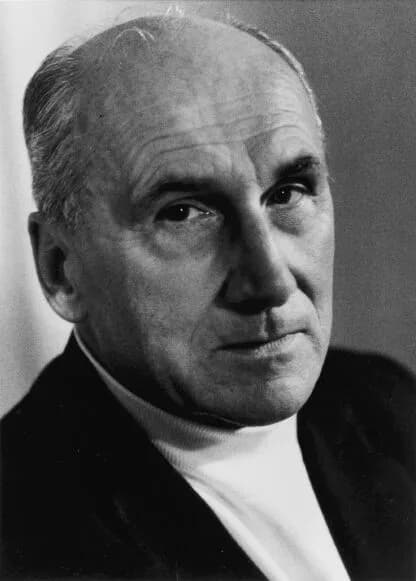
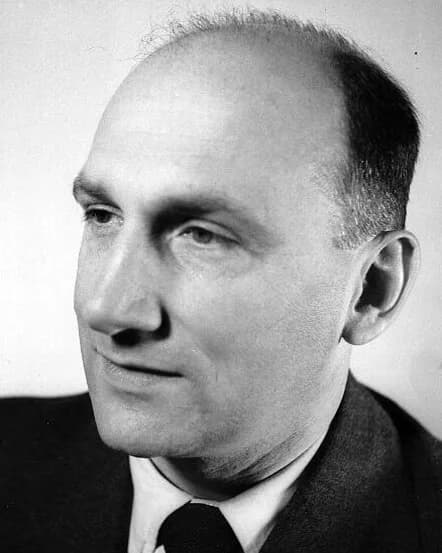
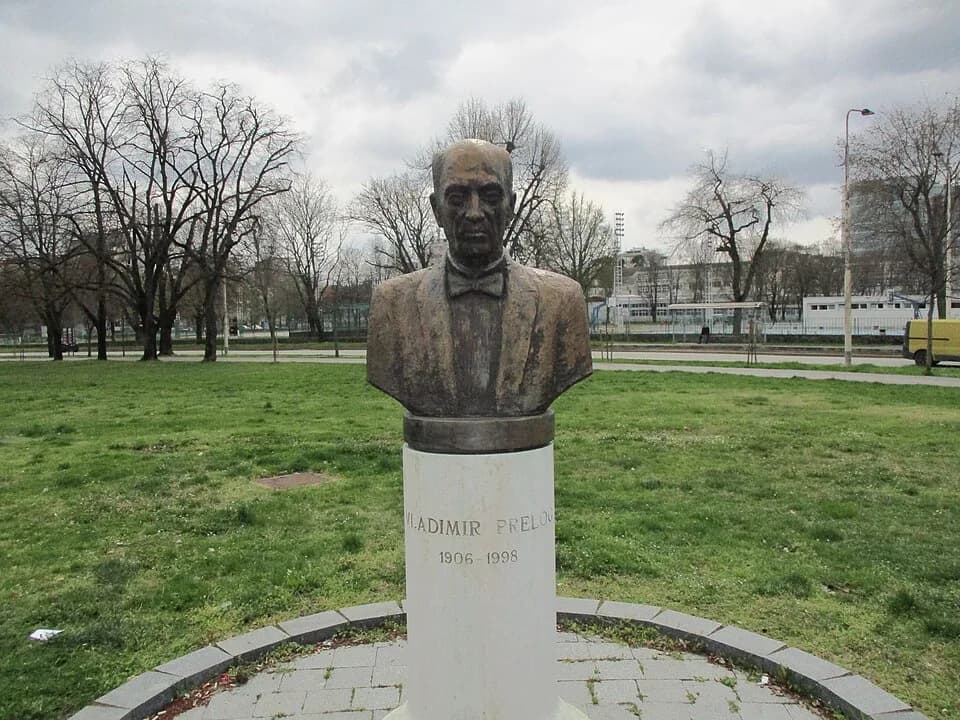
Vladimir Prelog (July 23, 1906 – January 7, 1998) was a Bosnian-Swiss chemist, engineer, and university teacher. He received the 1975 Nobel Prize in Chemistry for his significant research into the stereochemistry of organic molecules. His work continues to influence chemical understanding and applications.
Pennod
Penodau bywyd
Pennod 1 · 1906· Pennod 1 o 7
Early Life and Origins
Vladimir Prelog was born on July 23, 1906, in Sarajevo, a vibrant city then part of Bosnia and Herzegovina. His early childhood unfolded amidst the rich cultural tapestry of this region. The experiences of his infancy in Sarajevo laid the foundation for a life characterized by intellectual curiosity and adaptation to diverse environments.
His formative years saw him relocate, spending his youth across several significant European cities. Prelog resided in Zagreb and Osijek, both in what is now Croatia, before moving to Prague. These periods of his youth in various locations undoubtedly exposed him to different educational approaches and cultural perspectives, shaping his worldview and intellectual development. The intellectual currents and academic traditions of these places likely influenced his eventual path into the rigorous fields of engineering and chemistry.
Pennod 2· Pennod 2 o 7
Career Beginnings
Prelog's professional journey began in the dynamic academic and industrial environments of Central Europe. After completing his education, he first lived and worked in Prague, a city renowned for its scientific institutions. Here, he honed his skills as an engineer and chemist, applying his theoretical knowledge to practical challenges.
His early career then led him to Zagreb, where he continued to develop his expertise and reputation within the scientific community. The experience gained in these early roles was crucial, providing him with a strong foundation in organic chemistry and the methodologies of scientific inquiry. These initial professional years were instrumental in shaping his research focus and preparing him for the significant contributions he would later make to the field.
Pennod 3 · 1975· Pennod 3 o 7
Major Achievements and Career Highlights
The pinnacle of Vladimir Prelog's illustrious career arrived in 1975 when he was awarded the Nobel Prize in Chemistry. This immense honor recognized his profound and extensive research into the stereochemistry of organic molecules and reactions. Stereochemistry, a vital branch of chemistry, explores the three-dimensional arrangement of atoms within molecules and how this spatial orientation influences their properties and reactivity.
Prelog's work in this area was instrumental in advancing the understanding of how molecules interact, particularly in biological systems. His investigations provided critical insights into the precise spatial configurations of organic compounds, which is fundamental to fields such as drug design and synthetic chemistry. The Nobel Committee's recognition underscored the far-reaching implications of his pioneering contributions to this complex and essential scientific discipline.
Pennod 4· Pennod 4 o 7
Personal Life
While the detailed personal aspects of Vladimir Prelog's life are not extensively documented in the provided information, his trajectory reveals a life lived across national and cultural boundaries. Born in Bosnia and Herzegovina, spending his youth in Croatian cities and Prague, and later working in Switzerland, he embodied a truly European scientific identity. His designation as a 'Croatian-Swiss organic chemist' reflects this unique multinational background and the diverse influences that shaped his character and career.
The movement between Sarajevo, Zagreb, Osijek, Prague, and Zürich was not merely a professional progression but also a personal journey. Each city offered a unique environment, contributing to the richness of his experiences and potentially fostering a broad, adaptable perspective. These geographical shifts underscore a life of continuous learning and integration within different scientific and social contexts.
Pennod 5 · 1945· Pennod 5 o 7
Notable Works or Contributions
Vladimir Prelog's scientific output included numerous publications that advanced the understanding of organic chemistry. His h-index of 5, derived from 34 papers, indicates a consistent contribution to his field over many years. Among his key early works, "Cycloalkeno‐pyridine. (2. Mitteilung). Cyclopentadeceno‐2,3‐pyridin," published in 1945, garnered 11 citations, demonstrating its impact on the scientific community at the time.
Another significant publication was "Recherches sur des extraits d'organes. 14me communication. Sur la présence de dérivés de l'ionone dans le castoréum," released in 1948, which received 2 citations. These specific works exemplify the type of detailed chemical investigation that characterized his research career. The listing of additional works from 1948 and 1949, though their titles are not available, points to a period of active research and dissemination of his findings.
Pennod 6 · 1998· Pennod 6 o 7
Later Years
As his career matured, Vladimir Prelog settled in Zürich, Switzerland, where he continued his profound work and teaching. Zürich became his home and primary scientific base, a center from which his influential research radiated. He passed away in this city on January 7, 1998, bringing to a close a life distinguished by scientific pursuit and academic dedication.
Even after receiving the Nobel Prize, Prelog remained an active presence in the scientific community, continuing to contribute as a university teacher. His later years were marked by a sustained commitment to both advancing knowledge through research and imparting wisdom to future generations of chemists. His lengthy career in Zürich underscores his deep connection to the Swiss scientific establishment.
Pennod 7· Pennod 7 o 7
Legacy and Impact
Vladimir Prelog's legacy is most profoundly etched in the field of stereochemistry, a domain he helped to define and elevate. His fundamental contributions provided essential tools for understanding the three-dimensional architecture of organic molecules, which is critical for countless applications in chemistry, biology, and medicine. The insights from his work continue to inform how scientists design new drugs, synthesize complex natural products, and develop novel materials with specific properties.
Beyond his scientific achievements, Prelog's life story is a testament to the international nature of scientific endeavor. As a Bosnian-Swiss chemist who worked across multiple European countries, he embodied a spirit of intellectual exchange and collaboration. His role as a university teacher further extended his influence, mentoring and inspiring countless students to pursue excellence in chemistry. Vladimir Prelog's work laid essential groundwork that remains foundational to modern organic chemistry, ensuring his impact endures far beyond his lifetime.
Bywyd mewn eiliadau
Yr eiliadau a luniodd fywyd
Cwestiynau Cyffredin
Cwestiynau a ofynnir yn aml
Pryd y bu farw Vladimir Prelog?
Bu farw Vladimir Prelog ar 7 Ionawr 1998 yn Zurich, Switzerland yn 91 oed.
Ble cafodd Vladimir Prelog ei eni?
Cafodd Vladimir Prelog ei eni yn Sarajevo, Bosnia and Herzegovina ar 23 Gorffennaf 1906.
Am beth y mae Vladimir Prelog fwyaf adnabyddus?
Mae Vladimir Prelog fwyaf adnabyddus am Bosnian-Swiss chemist.
Faint oedd oed Vladimir Prelog pan fu farw?
Roedd Vladimir Prelog yn 91 oed pan fu farw.
Pa genedligrwydd oedd Vladimir Prelog?
Roedd Vladimir Prelog o Bosnia and Herzegovina.
Llinell amser
Bywyd ar olwg
Oriel luniau
Bywyd mewn lluniau
Cliciwch unrhyw polaroid i'w ehangu · 44 llun
Cod QR
Rhannu'r Cofiant Hwn
Argraffu a Rhannu
Sganio i ymweld â'r dudalen cofiant hon. Argraffu ar gyfer digwyddiadau, arddangosfeydd, neu ddeunyddiau addysgol.