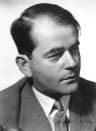
Ganwyd
March 19, 1888
Bottrop, Germany
Bu farw
March 25, 1976
New Haven, United States
Yn adnabyddus am
German-American designer, painter, educator and typographer
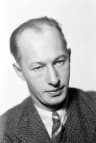
Josef Albers (1888–1976) was Germany best known for German-American designer, painter, educator and typographer.
Josef Albers (March 19, 1888 – March 25, 1976) was a German-American designer, painter, and educator. He is widely recognized as one of the most influential 20th-century art teachers in the United States, celebrated for his systematic exploration of color. His "Homage to the Square" series exemplifies his enduring legacy in abstract art.
Pennod
Penodau bywyd
Pennod 1 · 1888· Pennod 1 o 6
Early Life and Origins
Born in Bottrop, Westphalia, Germany, in 1888, Josef Albers grew up in a Roman Catholic family with a strong background in craftsmanship. This upbringing instilled in him a foundational appreciation for material and construction, shaping his practical approach to art and design. From a young age, Albers received hands-on training in a variety of traditional skills, including engraving glass, plumbing, and wiring, which provided him with a unique versatility.
These early experiences in craftsmanship were not merely technical lessons; they laid the groundwork for his later experimental and material-conscious artistic practice. The practical knowledge gained during his formative years in Bottrop proved invaluable as he transitioned from traditional trades to formal art education and eventually to a career dedicated to artistic exploration and pedagogy.
Pennod 2 · 1908· Pennod 2 o 6
Career Beginnings and Educational Path
Before dedicating himself fully to art, Albers pursued a career in education, working as a schoolteacher from 1908 to 1913. This initial experience in teaching undoubtedly refined his pedagogical skills and his ability to articulate complex ideas clearly. His transition to the art world became more formal with his first public commission in 1918, signaling a growing recognition of his artistic talent.
In 1919, Albers made a significant move to Munich, a vibrant center for art and culture, further immersing himself in the burgeoning modern art movements of the time. This period marked a pivotal shift in his professional trajectory, moving him closer to the avant-garde circles where he would soon become a key figure. His diverse background, combining craft, teaching, and burgeoning artistic practice, provided him with a unique perspective.
Pennod 3· Pennod 3 o 6
Major Achievements and Career Highlights
Josef Albers' career was defined by his pioneering spirit, particularly his contributions to abstract art and art education. He is widely considered one of the most influential 20th-century art teachers in the United States, a reputation earned through his innovative curriculum at institutions like the Bauhaus in Germany and Black Mountain College and Yale University in the United States. His pedagogical methods emphasized direct experience, material exploration, and a systematic understanding of visual phenomena.
His enduring legacy stems from his systematic studies of color, form, and perception, which he explored through various mediums including painting, glass, and printmaking. Albers challenged conventional notions of artistic creation, advocating for a disciplined yet experimental approach. His work as a designer and typographer also showcased his commitment to the fundamental principles of visual organization.
Pennod 4 · 1963· Pennod 4 o 6
Notable Works and Contributions
Albers' body of work is extensive, marked by its intellectual rigor and visual clarity. Among his most celebrated contributions is the seminal book, "Interaction of Color," published in 1963. This work, held at institutions such as the Met Museum, remains a fundamental text in art education, offering a profound exploration of how colors behave and influence each other.
His most iconic series, "Homage to the Square," commenced in 1949 and continued until his death. This series, featuring nested squares in varying colors, allowed Albers to conduct extensive experiments in color relativity and spatial illusion. Notable pieces from this series include "Homage to the Square: Frontal Backing" (1970), "Homage to the Square: On Near Sky" (1963), and "Homage to the Square: Light Passage" (1956), all found in prestigious collections like the Metropolitan Museum of Art and the Art Institute of Chicago.
Beyond his paintings, Albers also made significant contributions to design. Pieces such as the "Armchair" (c. 1927), "Corner Table" (c. 1927), and "Hanging Shelf" (1927), housed at the Art Institute of Chicago, demonstrate his functional yet aesthetically refined approach to furniture. Other significant works include "Never Before" (1971) and "Variant: Six Greens" (1948–57) at the Met Museum, and various plates from "Homage to the Square: Ten Works by Josef Albers" (1962), including "Wide Light," "Joy," and "Full," at the Art Institute of Chicago, further illustrating his diverse artistic output.
Pennod 5 · 1976· Pennod 5 o 6
Later Years and Enduring Influence
Josef Albers continued to create and influence artists and educators well into his later years. He passed away on March 25, 1976, in New Haven, United States, leaving behind a rich collection of artworks and an influential pedagogical framework. His later works continued to refine the principles he had established throughout his career, maintaining a commitment to exploring the nuances of color and form.
Even after his passing, his ideas and artistic methods remained highly relevant. The Josef Albers Foundation, established in 1971, continues to preserve and promote his work, ensuring that his artistic and educational contributions are accessible to future generations. His teachings, particularly those on the subjective experience of color, continue to be central to art curricula worldwide.
Pennod 6· Pennod 6 o 6
Legacy and Impact
Josef Albers' legacy is primarily defined by his dual role as a German-born American artist and an educator whose impact reshaped art instruction in the United States. He challenged students and fellow artists to see, observe, and understand the inherent properties of visual elements, rather than merely imitating. This approach fostered critical thinking and independent artistic expression.
His comprehensive theories on color interaction, exemplified by "Interaction of Color" and the "Homage to the Square" series, fundamentally altered how artists and designers think about and employ color. Albers demonstrated that color is relative and constantly changing, depending on its context. Through his rigorous and experimental spirit, Josef Albers solidified his position as a central figure in 20th-century modern art, with his influence reverberating across various disciplines, from painting and design to typography and architecture, long after his lifetime.
Bywyd mewn eiliadau
Yr eiliadau a luniodd fywyd



Cwestiynau Cyffredin
Cwestiynau a ofynnir yn aml
Pryd y bu farw Josef Albers?
Bu farw Josef Albers ar 25 Mawrth 1976 yn New Haven, United States yn 88 oed.
Ble cafodd Josef Albers ei eni?
Cafodd Josef Albers ei eni yn Bottrop, Germany ar 19 Mawrth 1888.
Am beth y mae Josef Albers fwyaf adnabyddus?
Mae Josef Albers fwyaf adnabyddus am German-American designer, painter, educator and typographer.
Faint oedd oed Josef Albers pan fu farw?
Roedd Josef Albers yn 88 oed pan fu farw.
Pa genedligrwydd oedd Josef Albers?
Roedd Josef Albers o Germany.
Llinell amser
Bywyd ar olwg
Oriel luniau
Bywyd mewn lluniau
Cliciwch unrhyw polaroid i'w ehangu · 22 llun
Cod QR
Rhannu'r Cofiant Hwn
Argraffu a Rhannu
Sganio i ymweld â'r dudalen cofiant hon. Argraffu ar gyfer digwyddiadau, arddangosfeydd, neu ddeunyddiau addysgol.