Ganwyd
June 28, 1712
Geneva, Switzerland
Bu farw
July 2, 1778
Ermenonville, France
Yn adnabyddus am
Genevan philosopher, writer, and composer
Jean-Jacques Rousseau (1712–1778) was Switzerland best known for Genevan philosopher, writer, and composer.
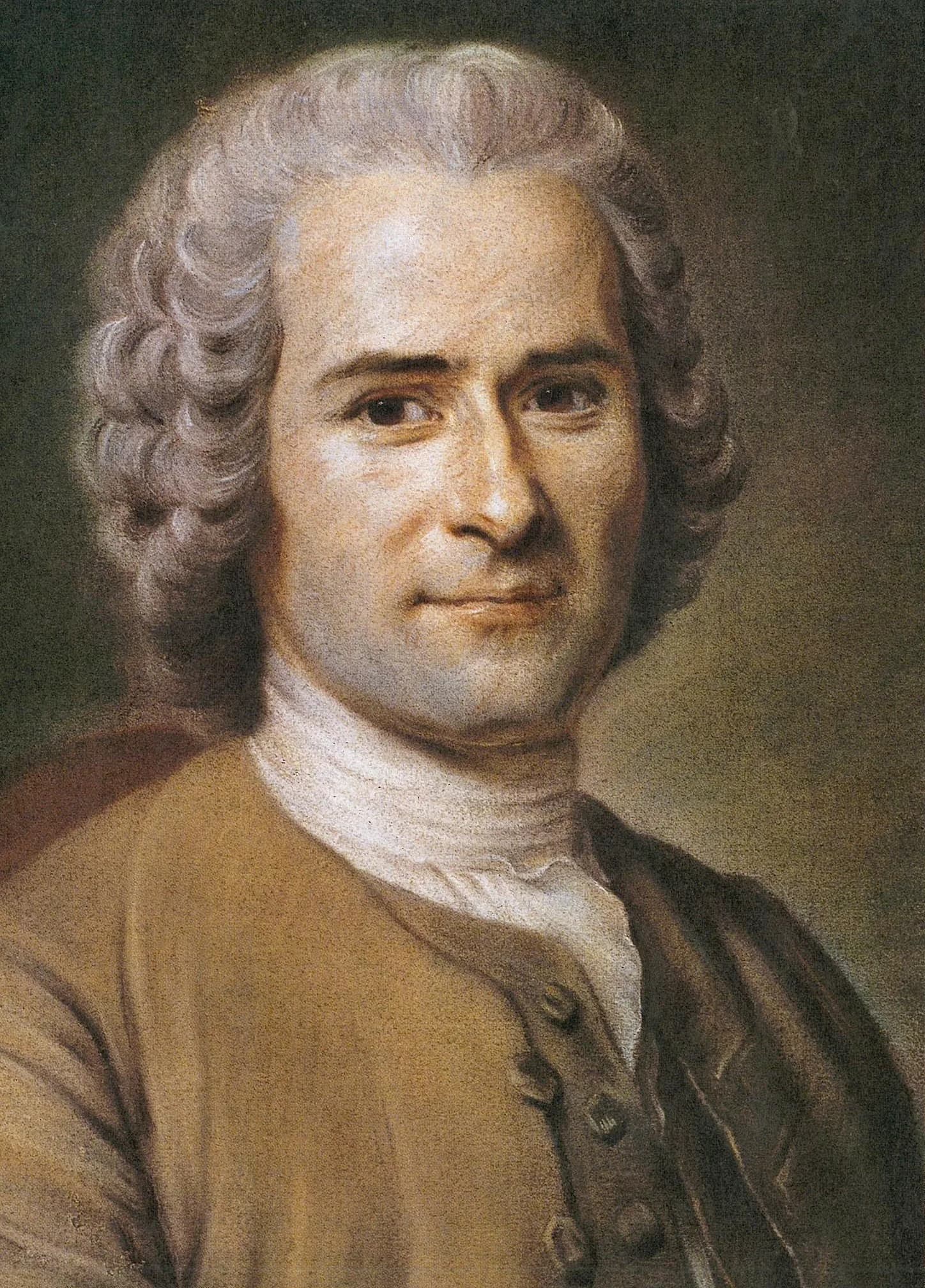
Jean-Jacques Rousseau (June 28, 1712 – July 2, 1778) was a Genevan philosopher, writer, and composer. His political philosophy significantly influenced the Age of Enlightenment and the French Revolution. His ideas contributed to modern political, economic, and educational thought, leaving a lasting legacy.
Pennod
Penodau bywyd
Pennod 1 · 1712· Pennod 1 o 7
Early Life and Origins
Jean-Jacques Rousseau's journey began on June 28, 1712, in Geneva, Switzerland, a prominent city-state recognized for its robust Calvinist traditions and fervent republican ideals. This unique cultural and political environment of Geneva significantly influenced his formative years, deeply embedding within him a perspective that would later inform his intricate philosophical insights regarding government and individual liberty. While the provided details offer specific facts about his birthplace and dates, his own comprehensive autobiography, "Les Confessions," serves as an invaluable source, offering an intimate glimpse into the personal experiences that profoundly molded his character and intellectual framework during this crucial foundational period.
Rousseau's early intellectual development was largely characterized by extensive self-education, as he immersed himself in reading and personal observation rather than pursuing conventional schooling. This autodidactic approach fostered a fiercely independent critical spirit, which became a hallmark of his later philosophical inquiries into human nature and society. The formative experiences gleaned from his life in Geneva instilled in him a powerful sense of civic duty and a deep fascination with the fundamental principles of governance, themes that would subsequently become central to his most celebrated and impactful works, including "The social contract."
Pennod 2· Pennod 2 o 7
Career Beginnings
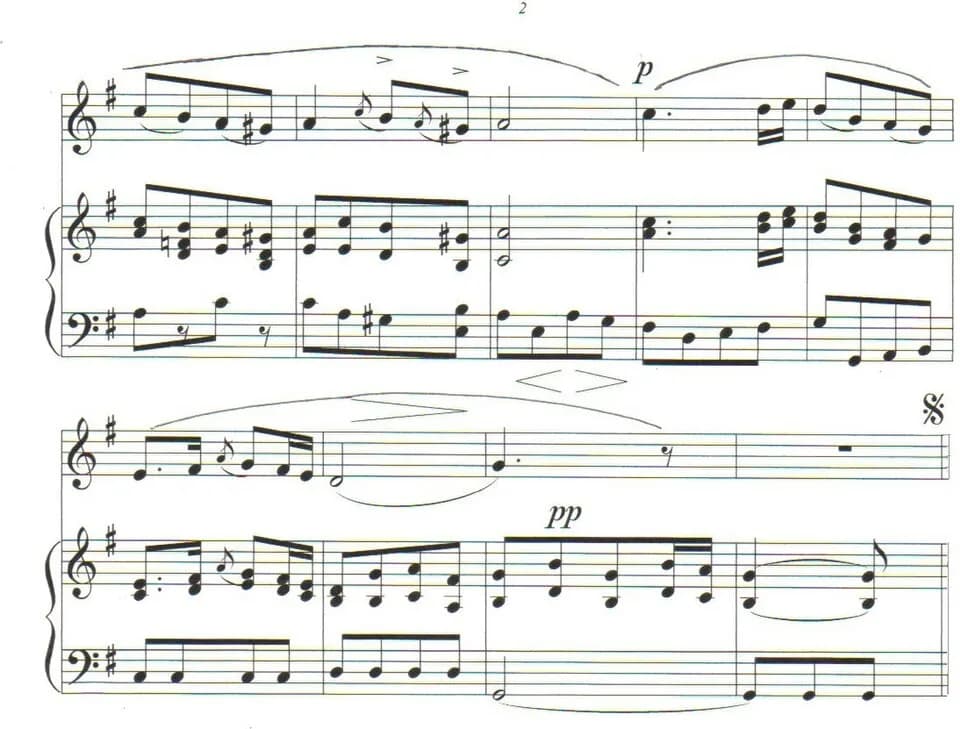
Rousseau’s professional trajectory was remarkably diverse, commencing not solely within the realm of philosophy but also extending into the vibrant world of music and literature. He diligently cultivated his skills as a composer, contributing original works that showcased his inherent musical talents and artistic sensibilities. A particularly notable early achievement in his musical career was the opera "Le Devin du Village," a piece that garnered considerable public recognition and effectively demonstrated his impressive capacity for eloquent artistic expression.
Beyond his significant musical endeavors, Rousseau concurrently established himself as a proficient author and playwright, skillfully utilizing these creative mediums to articulate his evolving philosophical ideas. His early writings and compositions provided him with essential platforms to engage with the prominent intellectual circles of his time, thereby laying crucial groundwork for the complex and revolutionary theories he would later formulate. This period of diverse creative exploration and interdisciplinary pursuit proved instrumental in shaping his distinctive holistic approach to understanding the intricacies of human nature and the complexities of societal structures.
Pennod 3· Pennod 3 o 7
Major Achievements and Career Highlights
Jean-Jacques Rousseau's towering influence permeated the distinct fields of philosophy, political science, and educational theory, firmly establishing him as a pivotal figure in European intellectual history. His political philosophy, in particular, exerted a profound and transformative effect on the intellectual progression of the Age of Enlightenment across the entire European continent. His conceptual frameworks offered entirely new perspectives for rigorously analyzing the nature of government, the legitimate authority of rulers, and the inherent rights of citizens, thereby challenging established norms.
Furthermore, the radical ideas articulated by Rousseau played an indisputable and significant role in inspiring various facets of the French Revolution, which erupted years after his passing, serving as a powerful testament to the enduring resonance and transformative power of his theories. He made substantial and far-reaching contributions to the evolution of modern political, economic, and educational thought, fundamentally altering the discourse in these crucial areas. His work courageously challenged prevailing societal norms and boldly proposed innovative paradigms for organizing society and educating individuals, leading to extensive academic discussion and widespread influence that continues to this day.
As a prolific composer, Rousseau enriched the classical music genre with a distinct collection of works that reflected his unique artistic voice. His discography includes notable recordings such as "Le Devin du Village" (recorded in 2000 and 2002 as part of "Gretry: Richard Cœur de Lion / Rousseau: Le Devin du village"), "A French Baroque Diva" (2014) which features his work, and "La boulangère a des écus / Air du Devin de village" (1928), showcasing his undeniable talent in this domain. His truly multifaceted career, encompassing roles as an author, naturalist, botanist, encyclopédiste, and music critic, further underscores his exceptionally wide-ranging interests and expertise across numerous disciplines.
Pennod 4· Pennod 4 o 7
Personal Life
Jean-Jacques Rousseau offered an unparalleled degree of insight into his personal experiences through his groundbreaking and comprehensive autobiography, "Les Confessions." This seminal work, often published under variations such as "Confessions" or "Las confesiones," provides a remarkably candid, introspective, and detailed account of his life's events, significant relationships, and innermost thoughts. It serves as an intimate window into the complex individual behind the profound philosopher, openly revealing his personal struggles, notable triumphs, and the intricate human complexities that unequivocally informed his distinctive worldview.
Through the revealing pages of "Les Confessions," readers gain invaluable insight into the intricate personal journey that deeply influenced his subsequent philosophical positions and impressive creative output. While specific details concerning his family or romantic relationships are not explicitly provided separately within the source material, the very existence and nature of his autobiography itself strongly affirm his deliberate willingness to share these private aspects of his life with the public. This extensive self-documentation remains a critically important resource for comprehensively understanding Rousseau far beyond his celebrated public persona and intellectual contributions.
Pennod 5· Pennod 5 o 7
Notable Works or Contributions
Among Jean-Jacques Rousseau’s most influential literary and philosophical contributions is "The social contract," famously known by its full French title, "Du Contrat Social, Ou Principes du Droit Politique." This foundational text meticulously explores the legitimacy of political authority and articulates the essential principles of a just and equitable society, boldly positing that all legitimate political authority must emanate from a social contract collectively agreed upon by all citizens. Its revolutionary ideas on popular sovereignty, the general will, and direct democracy were truly groundbreaking for their era and continue to be central tenets in contemporary political discourse and theory.
Another indisputable cornerstone of his intellectual output is "Emile Ou de l'éducation," a comprehensive treatise dedicated to exploring the nature of education and the inherent goodness of humankind. This profound book proposes a progressive educational philosophy fundamentally centered on the idea that children should be permitted to develop naturally, free from the potentially corrupting influences of conventional society. "Emile" effectively laid the conceptual groundwork for many modern pedagogical theories and emphatically underscored the paramount importance of learning through direct experience and exploration rather than through mere rote memorization or rigid instruction.
Rousseau also made substantial and insightful contributions to the fields of music theory and critical analysis, brilliantly exemplified by his influential "Lettre Sur la Musique Française." This work actively engaged in the spirited contemporary debates regarding the relative merits of French and Italian opera, vividly showcasing his acute analytical mind and his profound passion for music as an art form. Furthermore, his "Dissertation on the Origin and Foundation of the Inequality of Mankind" offered a trenchant critique, meticulously examining the historical development of social and political inequality and cogently arguing that the advent of private property and the progress of civilization fundamentally led to moral decline and human suffering.
His significant academic presence is further reflected in notable publications such as "Emilio, o, Dell'educazione," which has garnered 15 citations, and "Il contratto sociale" (published in 1950), which boasts 13 citations, unequivocally underscoring the enduring scholarly interest and rigorous academic engagement with his major works. Additional writings like "Account of Corsica" and "Considerations Sur le Gouvernementde Pologne" adeptly applied his overarching political theories to specific governmental challenges and constitutional issues, compellingly demonstrating his practical engagement with political science and statecraft. His expansive autobiographical masterpiece, "Les Confessions," remains an invaluable literary and historical document, offering an unparalleled and honest self-portrait of a complex and visionary individual.
Pennod 6· Pennod 6 o 7
Later Years
In his final decades, Jean-Jacques Rousseau maintained his remarkably prolific output, meticulously consolidating and thoughtfully expanding upon his earlier philosophical and autobiographical writings. The monumental completion of "Les Confessions" during this period provided the world with an extraordinarily intimate and meticulously detailed account of his life's intricate journey, cementing its status as a literary masterpiece and an unparalleled historical record. This work powerfully showcased his profound introspection and his unwavering dedication to comprehensively understanding the self in intricate relation to the broader fabric of society.
During these later years, he also actively engaged with pressing contemporary political issues through incisive works like "Considerations Sur le Gouvernementde Pologne" and "Account of Corsica." These particular writings powerfully demonstrated his ongoing and unwavering commitment to applying his overarching political philosophy to complex real-world situations, offering insightful guidance on constitution-making and the nuanced challenges of governance. His intellectual activity remained exceptionally vibrant and acutely relevant, even as his personal life navigated various significant challenges and public controversies.
Jean-Jacques Rousseau's extraordinary life concluded on July 2, 1778, in Ermenonville, France, leaving behind an immense and transformative body of work that would resonate and influence thought for many centuries to come. His passing marked the end of a life richly filled with relentless intellectual pursuit, profound artistic creation, and compelling social commentary, yet the far-reaching influence of his revolutionary ideas was only just beginning to fully unfold and reshape intellectual landscapes across Europe and far beyond its borders.
Pennod 7· Pennod 7 o 7
Legacy and Impact
Jean-Jacques Rousseau’s intellectual legacy is truly monumental, having irrevocably shaped and redefined political, economic, and educational thought across the entire European continent and, subsequently, the wider world. His seminal theories on the social contract, the concept of popular sovereignty, and the inherent principles of individual freedom became foundational pillars for modern democratic theory and republican governance. Enlightenment thinkers and successive generations of political activists and reformers drew heavily from his revolutionary ideas, which served as potent catalysts for widespread societal and governmental transformations.
His influential educational treatise, "Emile Ou de l'éducation," profoundly revolutionized pedagogical approaches by passionately advocating for child-centered learning and a natural, unforced developmental process. This seminal work continues to inspire and inform educational reformers and practitioners globally who strive to create more holistic, humane, and effective learning environments. Rousseau's powerful insistence on the paramount importance of direct experience and his incisive warnings about the potential corrupting dangers of conventional society provided a potent and enduring critique of traditional, rigid schooling methods.
As a distinguished Genevan philosopher, prolific writer, and accomplished composer, Rousseau's exceptionally diverse contributions ensure his perpetual and profound relevance in contemporary discourse. His music, while perhaps receiving less academic study today compared to his philosophy, nevertheless offers a fascinating glimpse into his artistic sensibility and the rich cultural context of his historical era. The extraordinary depth and expansive breadth of his writings, ranging from intricate political theory to candid autobiography, firmly establish him as an intellectual giant whose insights continue to stimulate vigorous debate and inspire new generations of thinkers and innovators worldwide. His collective work remains an indispensable resource for comprehensively understanding the complex origins of modern political philosophy, ethical theory, and progressive educational thought.
Bywyd mewn eiliadau
Yr eiliadau a luniodd fywyd

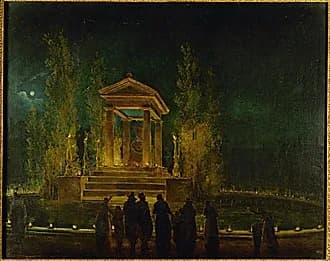
![Jean-Jacques Rousseau - Scan from Johann Christoph Brotze's book Sammlung verschiedner Liefländischer Monumente.
Rousseaus Denkmaal auf Drostenhof Anno 1791 [die Ansicht].](/_next/image?url=https%3A%2F%2Fcdn.whowasthisguy.com%2Fgallery_wikimedia_commons_1781726944385_2_cc0d5f984d.webp&w=1920&q=75)
Cwestiynau Cyffredin
Cwestiynau a ofynnir yn aml
Pryd y bu farw Jean-Jacques Rousseau?
Bu farw Jean-Jacques Rousseau ar 2 Gorffennaf 1778 yn Ermenonville, France yn 66 oed.
Ble cafodd Jean-Jacques Rousseau ei eni?
Cafodd Jean-Jacques Rousseau ei eni yn Geneva, Switzerland ar 28 Mehefin 1712.
Am beth y mae Jean-Jacques Rousseau fwyaf adnabyddus?
Mae Jean-Jacques Rousseau fwyaf adnabyddus am Genevan philosopher, writer, and composer.
Faint oedd oed Jean-Jacques Rousseau pan fu farw?
Roedd Jean-Jacques Rousseau yn 66 oed pan fu farw.
Pa genedligrwydd oedd Jean-Jacques Rousseau?
Roedd Jean-Jacques Rousseau o Switzerland.
Llinell amser
Bywyd ar olwg
Oriel luniau
Bywyd mewn lluniau
Cliciwch unrhyw polaroid i'w ehangu · 23 llun
Cod QR
Rhannu'r Cofiant Hwn
Argraffu a Rhannu
Sganio i ymweld â'r dudalen cofiant hon. Argraffu ar gyfer digwyddiadau, arddangosfeydd, neu ddeunyddiau addysgol.