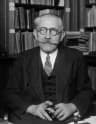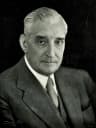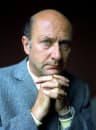
Ganwyd
May 18, 1872
Trellech, United Kingdom
Bu farw
February 2, 1970
Plas Penrhyn, United Kingdom
Yn adnabyddus am
British philosopher and logician
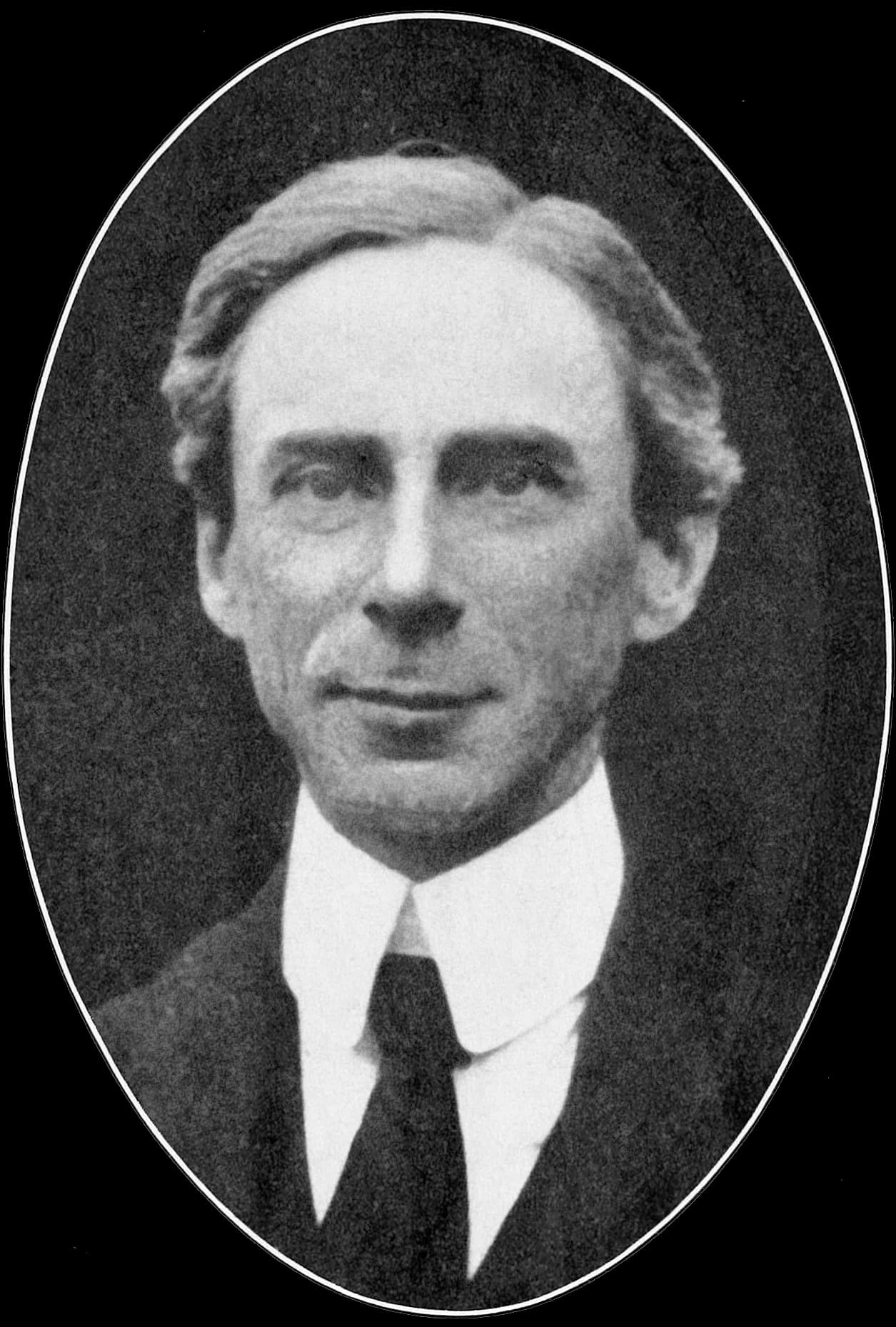
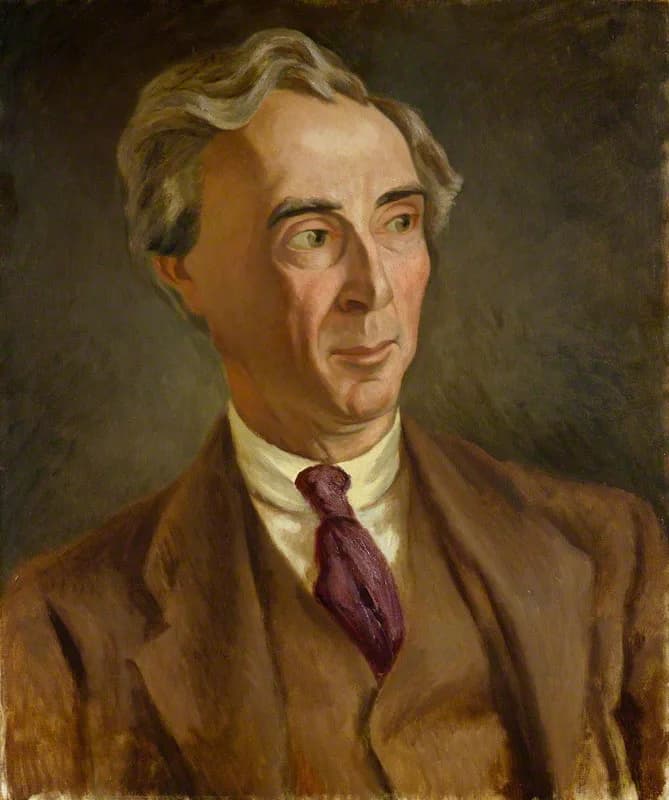
Bertrand Russell (1872–1970) was United Kingdom best known for British philosopher and logician.
Bertrand Arthur William Russell (May 18, 1872 – February 2, 1970) was a British philosopher, logician, and public intellectual. He profoundly influenced mathematics, set theory, and analytic philosophy. Awarded the Nobel Prize in Literature in 1950, Russell tirelessly championed humanitarian ideals and freedom of thought throughout his life.
Pennod
Penodau bywyd
Pennod 1 · 1872· Pennod 1 o 10
Opening Paragraph
Today, we come together to honor the extraordinary life and enduring legacy of Bertrand Arthur William Russell, 3rd Earl Russell, a truly singular intellect whose profound influence shaped the intellectual landscape of the 20th century in numerous, far-reaching ways. Born on May 18, 1872, in Trellech, United Kingdom, and departing from Plas Penrhyn, United Kingdom, on February 2, 1970, Russell was primarily recognized as a British philosopher and logician, yet his professional scope extended far beyond these foundational disciplines into an astonishing array of fields. As a distinguished public intellectual, he profoundly impacted mathematics, logic, set theory, and various areas within analytic philosophy, while also vigorously championing humanitarian ideals and the freedom of thought throughout his remarkable nearly ninety-eight years of dedicated inquiry and advocacy.
Pennod 2· Pennod 2 o 10
Early Life and Origins
Bertrand Russell began his life in Trellech, United Kingdom, emerging from an aristocratic and politically active family background that undoubtedly provided a rich intellectual environment for his formative years. While specific details of his early family life are not extensively provided, his trajectory toward becoming a distinguished university teacher and a prominent intellectual figure suggests a childhood steeped in rigorous learning and critical thinking. This early exposure to academic discipline and a world of complex ideas prepared him for a lifetime dedicated to relentless inquiry, public engagement, and the cultivation of the versatile mind that would later tackle some of the most profound philosophical and societal issues of his era.
Pennod 3· Pennod 3 o 10
Career Beginnings: Foundations in Logic and Mathematics
Russell's intellectual journey quickly positioned him at the forefront of several academic fields, particularly within the abstract yet foundational realms of logic and mathematics, which he sought to place on firmer philosophical ground. His initial contributions significantly influenced the development of modern mathematics, logic, and set theory, establishing new paradigms for these disciplines and reshaping their theoretical underpinnings early in his career through meticulous analysis and innovative conceptual frameworks. From these highly specialized pursuits, he expanded his professional identity to become a celebrated writer, a meticulous mathematician, and an insightful pedagogue, cultivating a broad array of expertise that would underpin his subsequent, wide-ranging professional roles and public engagements across decades.
Pennod 4 · 1950· Pennod 4 o 10
Major Achievements and Career Highlights: The Nobel Recognition
A shining testament to his literary and philosophical prowess, Bertrand Russell was justly honored with the Nobel Prize in Literature in 1950, a monumental and fitting recognition of his extensive and impactful life's work. The Swedish Academy specifically cited his "varied and significant writings in which he champions humanitarian ideals and freedom of thought," highlighting his profound moral conviction interwoven with his intellectual output. Throughout his lengthy career, he achieved numerous significant milestones, leaving an indelible mark on various areas of analytic philosophy through his rigorous logical analyses and groundbreaking conceptual frameworks, thereby shaping the intellectual direction of an entire generation of thinkers and influencing academic discourse for years to come.
Pennod 5· Pennod 5 o 10
The Multifaceted Professional Persona
Beyond his academic and literary accolades, Bertrand Russell embraced an exceptionally diverse array of professions, each contributing meaningfully to his expansive public intellectual persona and his ability to influence public opinion. He was not only a preeminent philosopher and logician but also a prolific essayist and a perceptive social critic, consistently using his eloquent writing to comment acutely on contemporary ethical, political, and social issues with characteristic clarity and incisiveness. His deeply held convictions also led him to prominent roles as a political activist and a tireless peace activist, demonstrating a steadfast personal commitment to influencing public policy and fostering global tranquility through direct engagement, impassioned advocacy, and moral leadership.
Pennod 6· Pennod 6 o 10
Intellectual Breadth: From Pedagogy to Metaphysics
Russell's intellectual curiosity knew virtually no bounds, leading him to explore and contribute meaningfully to fields often seen as distinct from one another, reflecting a truly universal scholarly spirit. He served as a distinguished university teacher, sharing his vast knowledge and shaping the minds of future generations, alongside his vital work as a journalist, where he skillfully translated complex ideas for a wider, engaged audience. His intellectual toolkit also included the precise analytical thinking of an epistemologist, exploring the fundamental nature of knowledge and belief, and the abstract reasoning of a metaphysician, examining fundamental questions about the ultimate nature of reality, showcasing the truly encyclopedic scope of his inquiring mind.
Pennod 7· Pennod 7 o 10
Notable Works: Pillars of Philosophy and Logic
Bertrand Russell's extensive bibliography reflects the astonishing breadth and profound depth of his intellectual inquiries, encompassing both foundational texts in logic and mathematics and highly accessible philosophical treatises for the general public. His monumental work, The principles of mathematics, published early in his career, remains a cornerstone of mathematical logic, seeking to demonstrate rigorously that mathematics could be derived from a few fundamental logical axioms, thereby providing a crucial step in establishing the philosophical underpinnings of modern mathematical thought and formal logic.
He also delved deeply into the intricate nature of knowledge and truth with An inquiry into meaning and truth, a significant contribution to epistemology that meticulously explored the complex relationship between language, thought, and the structure of reality itself. His incisive historical scholarship was further evident in A critical exposition of the philosophy of Leibniz, offering an insightful analysis and critique of a previous philosophical giant's systematic work. Russell’s collaborative effort on the foundational Tractatus logico-philosophicus with Ludwig Wittgenstein further illustrates his central, albeit complex, role in shaping the very trajectory of 20th-century analytic philosophy.
Russell’s collected essays, such as those found in Logic and knowledge, provided invaluable insights into his evolving philosophical positions across a wide range of topics, making his complex ideas accessible and engaging to a broader intellectual audience. Demonstrating his practical philosophical guidance and concern for human welfare, he penned The conquest of happiness, a widely read book offering thoughtful perspectives on achieving contentment and well-being, which was notably translated and embraced as 幸福論 in Japanese culture. This enduring appeal reflects his universal relevance and the practical applicability of his philosophical thought beyond merely academic circles.
His scientific curiosity and commitment to public education led him to write The A B C of atoms, a work designed to explain complex atomic theory to the layperson with clarity and precision, showcasing his remarkable ability to communicate intricate scientific concepts effectively. Russell's diverse literary talents even extended to concise historical overviews, as seen in History of the world in epitome, and other diverse works such as Qudrat. These numerous and varied works collectively highlight his prolific writing career, addressing an astonishing array of subjects from the highly abstract and theoretical to the immediately practical and widely engaging.
Pennod 8· Pennod 8 o 10
Later Years and Unwavering Activism
Even in his advanced later years, Bertrand Russell maintained an unwavering commitment to public discourse and fervent activism, never truly retreating from the intellectual and political arena but rather intensifying his engagement. He remained an influential social critic, consistently challenging injustices, speaking out against oppressive regimes, and advocating vigorously for ethical conduct in international affairs with the same passion he had displayed decades earlier. His role as a steadfast pacifist became particularly pronounced and influential during periods of global conflict and the Cold War, where he emerged as a leading voice against nuclear proliferation, military intervention, and the dangers of ideological extremism, tirelessly campaigning for peace and disarmament until the very end of his long and impactful life.
Pennod 9 · 1970· Pennod 9 o 10
Final Moments and Enduring Legacy
Bertrand Russell passed away peacefully on February 2, 1970, at Plas Penrhyn, United Kingdom, bringing to a close a life that had spanned momentous global changes, profound intellectual revolutions, and personal transformations. His almost ninety-eight years were consistently characterized by a relentless pursuit of truth, clarity, and social justice, qualities that defined both his academic rigor and his public persona. His unparalleled contributions to philosophy, logic, and mathematics alone irrevocably secure his place among the most significant thinkers in intellectual history, but his persistent advocacy for human rights, rational thought, and global peace further elevate his monumental and enduring legacy.
Pennod 10· Pennod 10 o 10
Legacy and Impact: Architect of Modern Thought
Bertrand Russell's impact on intellectual history is not merely significant but indisputable, having irrevocably altered the course of several academic fields and setting new standards for inquiry. His pioneering work fundamentally influenced the trajectory of mathematics, logic, and set theory, introducing revolutionary methods and conceptual tools that profoundly reshaped these disciplines and their relationship to philosophy. The rigorous standards he established for analytic philosophy continue to serve as essential benchmarks for clarity, precision, and logical coherence in contemporary philosophical inquiry, solidifying his status as a true architect of modern thought.
Beyond his seminal academic contributions, Russell's legacy is also deeply rooted in his role as a passionate humanitarian and an unwavering advocate for freedom of thought, themes consistently celebrated and meticulously argued for in his diverse writings. His Nobel Prize in Literature was a direct and powerful recognition of this crucial moral dimension of his work, highlighting his profound commitment to human flourishing and intellectual liberty as paramount values. As a relentless political activist, an insightful social critic, and a dedicated peace activist, he used his considerable intellectual and public platform to champion causes he believed in with fervent conviction, thereby demonstrating the potent power of intellect when applied to the most pressing global challenges.
His exceptionally diverse array of professions — encompassing roles from a prolific writer and incisive journalist to a meticulous epistemologist and a profound metaphysician — truly underscores a life devoted to comprehensive understanding and public education in its broadest sense. Russell's unwavering willingness to engage with the most complex scientific, ethical, and political questions through his prolific writing ensures that his ideas continue to inspire robust dialogue, rigorous critical examination, and ongoing intellectual exploration. His remarkable life serves as an enduring inspiration for all who seek to combine unparalleled intellectual rigor with a profound, lifelong commitment to human welfare and the tireless pursuit of truth in all its forms.
Bywyd mewn eiliadau
Yr eiliadau a luniodd fywyd
Cwestiynau Cyffredin
Cwestiynau a ofynnir yn aml
Pryd y bu farw Bertrand Russell?
Bu farw Bertrand Russell ar 2 Chwefror 1970 yn Plas Penrhyn, United Kingdom yn 97 oed.
Ble cafodd Bertrand Russell ei eni?
Cafodd Bertrand Russell ei eni yn Trellech, United Kingdom ar 18 Mai 1872.
Am beth y mae Bertrand Russell fwyaf adnabyddus?
Mae Bertrand Russell fwyaf adnabyddus am British philosopher and logician.
Faint oedd oed Bertrand Russell pan fu farw?
Roedd Bertrand Russell yn 97 oed pan fu farw.
Pa genedligrwydd oedd Bertrand Russell?
Roedd Bertrand Russell o United Kingdom.
Llinell amser
Bywyd ar olwg
Oriel luniau
Bywyd mewn lluniau
Cliciwch unrhyw polaroid i'w ehangu · 45 llun
Cod QR
Rhannu'r Cofiant Hwn
Argraffu a Rhannu
Sganio i ymweld â'r dudalen cofiant hon. Argraffu ar gyfer digwyddiadau, arddangosfeydd, neu ddeunyddiau addysgol.