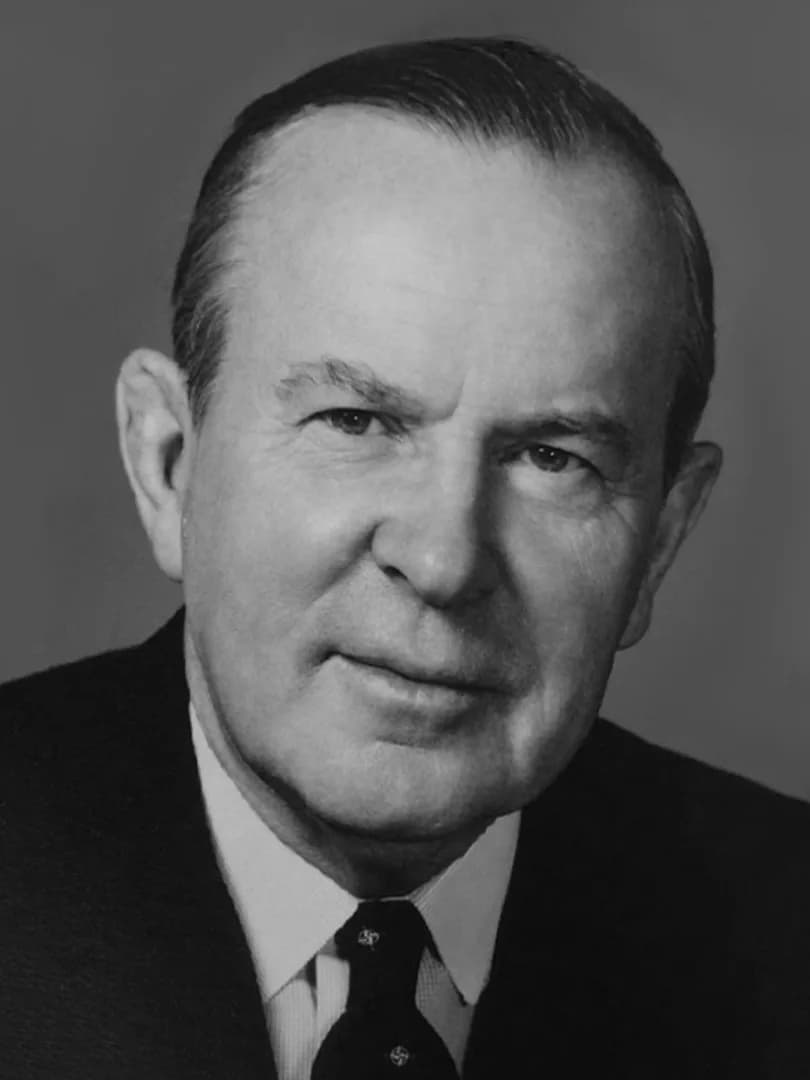
Nascut
April 23, 1897
Toronto, Canada
Mort
December 27, 1972
Ottawa, Canada
Conegut per
14th Prime Minister of Canada, from 1963 to 1968
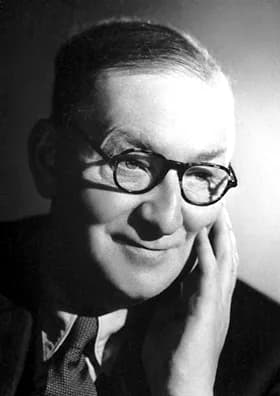
Lester B. Pearson (1897–1972) was Canada best known for 14th Prime Minister of Canada, from 1963 to 1968.
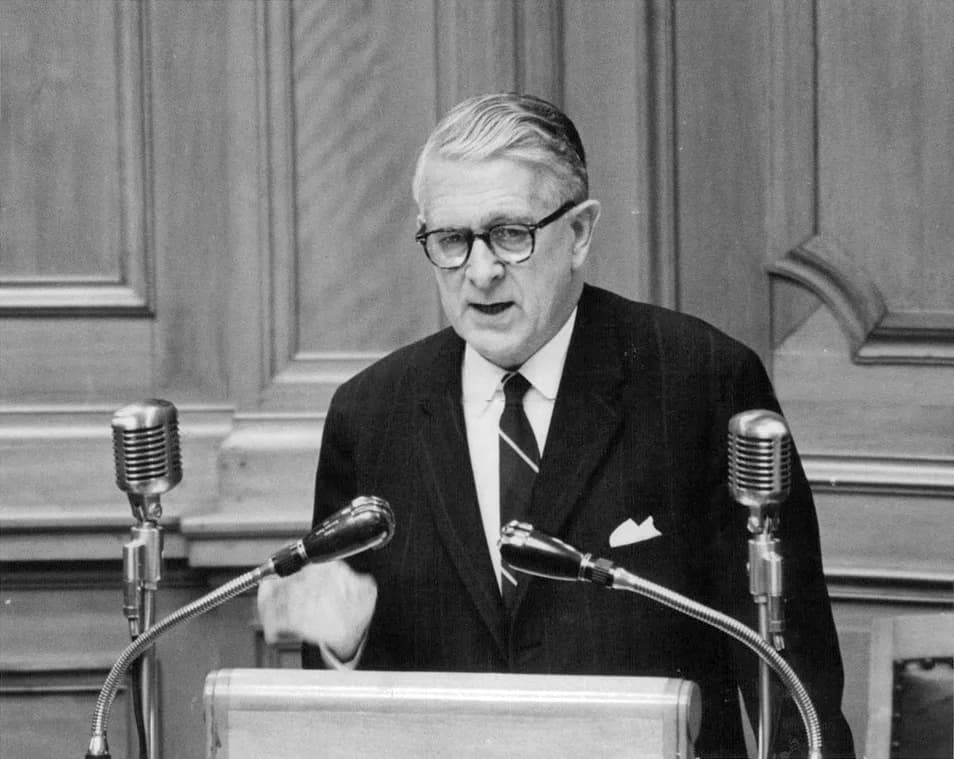
Lester Bowles Pearson (April 23, 1897 – December 27, 1972) was a Canadian politician, diplomat, and scholar from Toronto. He served as the 14th Prime Minister of Canada from 1963 to 1968, leading the Liberal Party. His legacy includes significant contributions to international relations and Canadian governance.
Una vida en moments
Els moments que van marcar una vida
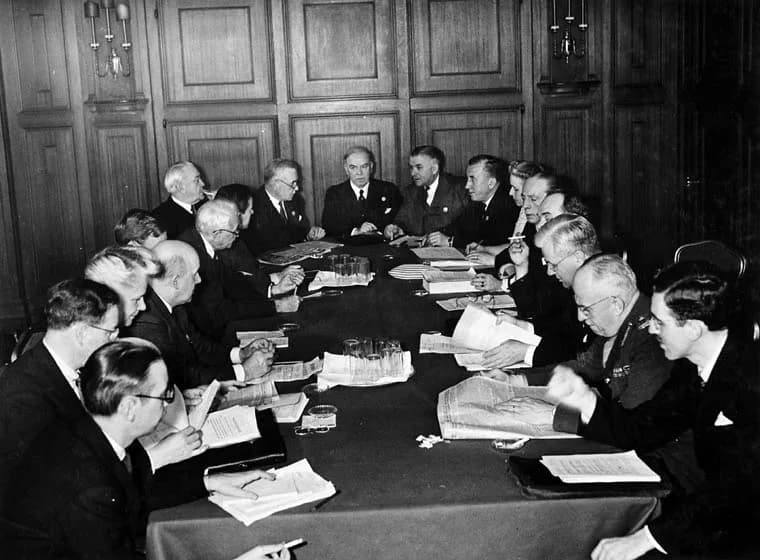
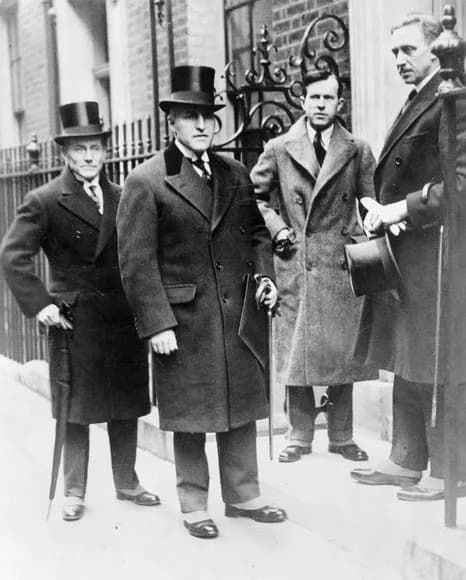
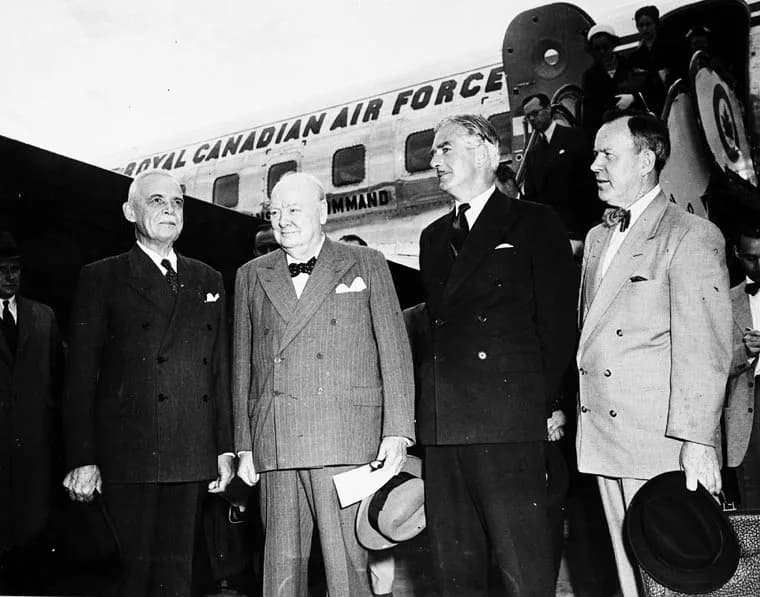
Capítol
Capítols de la vida
Capítol 1 · 1897· Capítol 1 de 7
Early Life and Origins
Born on April 23, 1897, in Toronto, Canada, Lester B. Pearson’s early life set the stage for a career devoted to public engagement. While specific details of his upbringing are not provided, his later roles as a scholar and university teacher suggest a strong foundation in education. His birthplace of Toronto remains a significant part of his Canadian identity.
Capítol 2· Capítol 2 de 7
Career Beginnings
Pearson's career journey began with a varied array of experiences that shaped his diplomatic and political acumen. He served as military personnel, gaining early exposure to global complexities. His professions also included that of a high civil servant, which provided him with crucial insight into government operations. These initial roles laid the groundwork for his eventual rise through the diplomatic ranks, preparing him for later ambassadorships and significant international responsibilities.
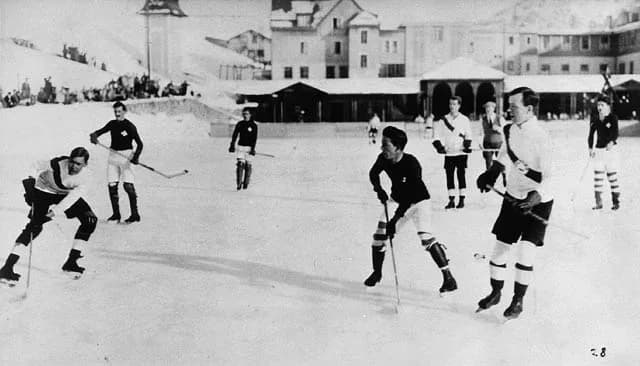
Beyond his formal roles, Pearson was also an ice hockey player, demonstrating an early engagement with Canadian culture and sport. This personal interest complements his early professional life, which further included work as a writer and historian. These diverse engagements reflect a broad intellectual curiosity and a commitment to public discourse.
Capítol 3 · 1958· Capítol 3 de 7
Major Achievements and Career Highlights
Lester B. Pearson's political career was marked by significant leadership and a profound influence on Canadian governance. He served as the leader of the Liberal Party from 1958 to 1968, guiding the party through a transformative decade. During this period, he also held the crucial position of Leader of the Official Opposition from 1958 until 1963, demonstrating his ability to lead both within and outside government.
His most notable achievement came with his tenure as the 14th Prime Minister of Canada, a role he occupied from 1963 to 1968. As Prime Minister, Pearson presided over a period of substantial social and political change in Canada. His leadership during these years solidified his place as a central figure in modern Canadian history.
Capítol 4· Capítol 4 de 7
Personal Life
While specific details about Lester B. Pearson’s personal relationships are not provided, his diverse interests are evident through his listed professions. He was known to have been an ice hockey player, indicating an active engagement with sports and community life. This aspect of his life highlights a connection to popular Canadian pastimes amidst his demanding public career.
Capítol 5· Capítol 5 de 7
Notable Works or Contributions
Lester B. Pearson was a prolific writer and scholar, contributing significantly to public discourse and international understanding. His bibliography includes a range of influential works that explore global politics, development, and democratic principles. Among these are titles such as Where do we go from here? and The free press: a reflection of democracy, which offered insights into the future direction of nations and the role of media.
He further explored international relations and history through works like Democracy in world politics, Restless Nations, and Canada en las Americas. His contributions also include the significant Memoirs 1948-1957 vol 2 The International Years, providing a personal perspective on a pivotal period in global diplomacy. Other notable publications include 피어슨보고서, Partners in Development, Mike, and Control of Proliferation, each reflecting his engagement with critical issues of his time and his ongoing efforts to shape international policy.
Capítol 6 · 1968· Capítol 6 de 7
Later Years
After concluding his time as Prime Minister in 1968, Lester B. Pearson continued to contribute to public life, leveraging his extensive experience as a diplomat and scholar. He passed away on December 27, 1972, in Ottawa, Canada, the nation's capital where much of his public service had taken place. His death marked the end of a long and impactful career dedicated to Canadian and international affairs.
Capítol 7· Capítol 7 de 7
Legacy and Impact
Lester B. Pearson's legacy is firmly rooted in his leadership as Canada's 14th Prime Minister and his extensive career as a diplomat. His time in office saw significant developments that shaped modern Canada, building upon his earlier work as an ambassador and high civil servant. He is remembered for his strategic thinking in international relations and his commitment to Canadian identity.
Beyond his political achievements, Pearson's contributions as a writer, historian, and university teacher continue to educate and inspire. His published works remain an important resource for understanding 20th-century diplomacy and political thought. Through his diverse professions and dedicated service, Pearson left an enduring mark on Canada and the world, influencing generations through his statesmanship and scholarship.
FAQ
Preguntes freqüents
Quan va morir Lester B. Pearson?
Lester B. Pearson va morir el 27 de desembre del 1972 a Ottawa, Canada, als 75 anys.
On va néixer Lester B. Pearson?
Lester B. Pearson va néixer a Toronto, Canada el 23 d’abril del 1897.
Per què és més conegut/da Lester B. Pearson?
Lester B. Pearson és conegut/da sobretot per 14th Prime Minister of Canada, from 1963 to 1968.
Quants anys tenia Lester B. Pearson quan va morir?
Lester B. Pearson tenia 75 anys en el moment de la seva mort.
Quina nacionalitat tenia Lester B. Pearson?
Lester B. Pearson era de Canada.
Cronologia
La vida en un cop d'ull
Galeria de fotos
Una vida en imatges
Feu clic a qualsevol polaroid per ampliar · 33 fotos
Codi QR
Comparteix aquesta biografia
Imprimeix i comparteix
Escaneja per visitar aquesta pàgina de biografia. Imprimeix per a esdeveniments, exposicions o materials educatius.