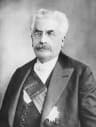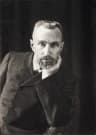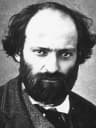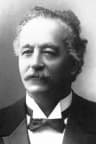
Rođen/a
March 16, 1859
Krasnoturyinsk, Russia
Umro/la
January 13, 1906
Saint Petersburg, Russia
Poznat/a po
Russian physicist
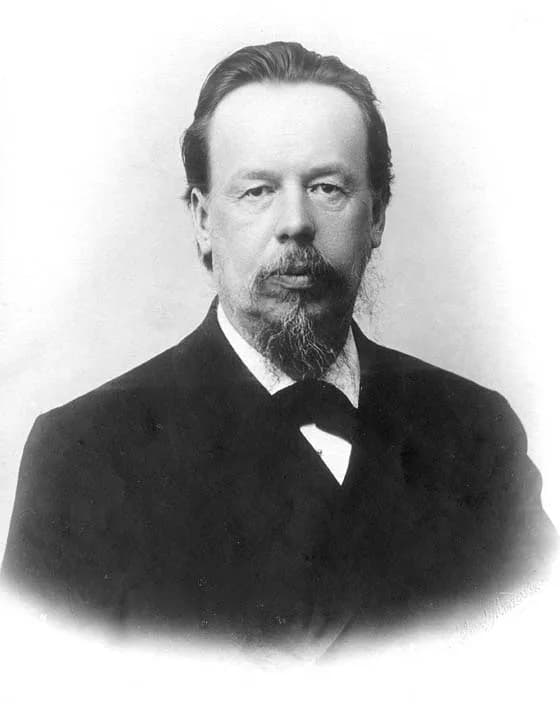
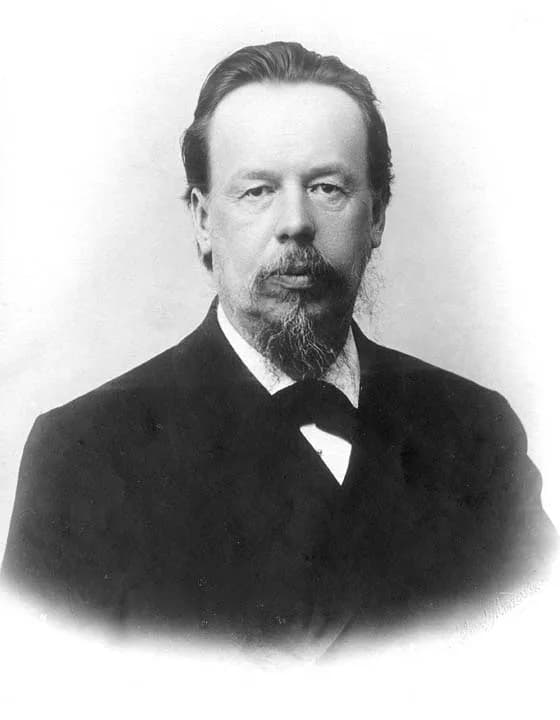
Alexander Stepanovich Popov (1859 – 1906) was a Russian physicist, engineer, and inventor. He was one of the first individuals to invent a radio receiving device, demonstrating its capability in 1895. His work laid crucial foundations for modern wireless communication, solidifying his legacy in electrical engineering.
Poglavlje
Životna poglavlja
Poglavlje 1 · 1859· Poglavlje 1 od 8
Remembering Alexander Stepanovich Popov
Alexander Stepanovich Popov (1859-1906) was a truly pioneering Russian physicist and engineer, whose profound contributions were instrumental in laying the groundwork for modern wireless communication. Born in the unique setting of Krasnoturyinsk, Russia, he dedicated his life to science as an inventor and pedagogue, profoundly influencing the fields of physics and engineering. His innovative spirit led him to become one of the very first individuals to conceive and build a working radio receiving device, a feat that marked a pivotal moment in technological history. Through his meticulous research and practical applications, Popov's legacy as a trailblazer in early radio technology remains celebrated.
Poglavlje 2 · 1859· Poglavlje 2 od 8
Early Life and Origins
Alexander Stepanovich Popov was born on March 16, 1859, into a clerical family in Krasnoturyinsk, a town situated within Russia's Ural Mountains. Growing up in this setting likely provided him with early access to education, fostering his natural intellectual curiosity from a young age. He displayed a clear and early aptitude for scientific inquiry and mathematical principles, which guided his academic path forward. This strong foundation in his formative years paved the way for his eventual enrollment in advanced educational institutions and a career dedicated to scientific exploration.
Poglavlje 3· Poglavlje 3 od 8
Career Beginnings
Popov's dedication to scientific exploration led him to Saint Petersburg, where he pursued higher education at Saint Petersburg University, excelling in the rigorous disciplines of physics and mathematics. Upon completing his studies, he transitioned into a professional career, first as an engineer and subsequently as a physicist, specializing intently in the nascent field of electromagnetism. His initial research was characterized by a deep dive into the complex properties of electrical oscillations and the behavior of electromagnetic waves, which were at the cutting edge of scientific understanding during that era. This foundational and focused work served as the indispensable prelude to his later, more widely recognized inventions in the realm of wireless communication.
Poglavlje 4 · 1895· Poglavlje 4 od 8
Major Achievements and Career Highlights
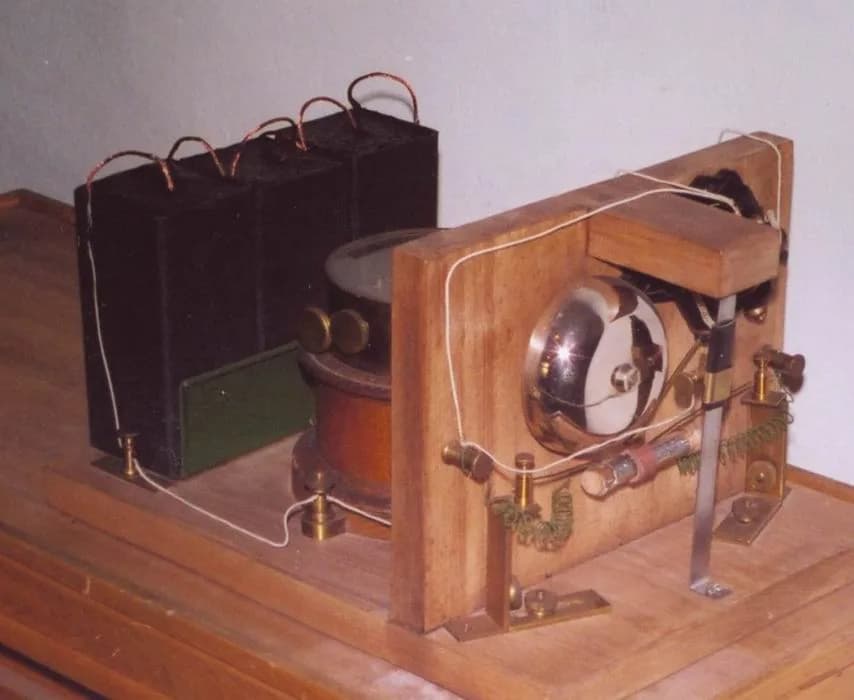
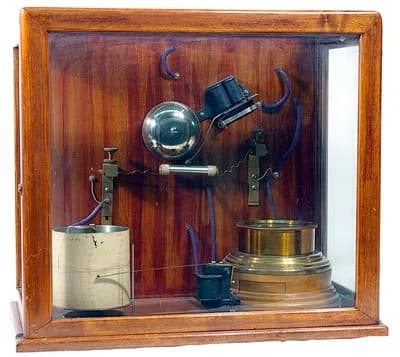
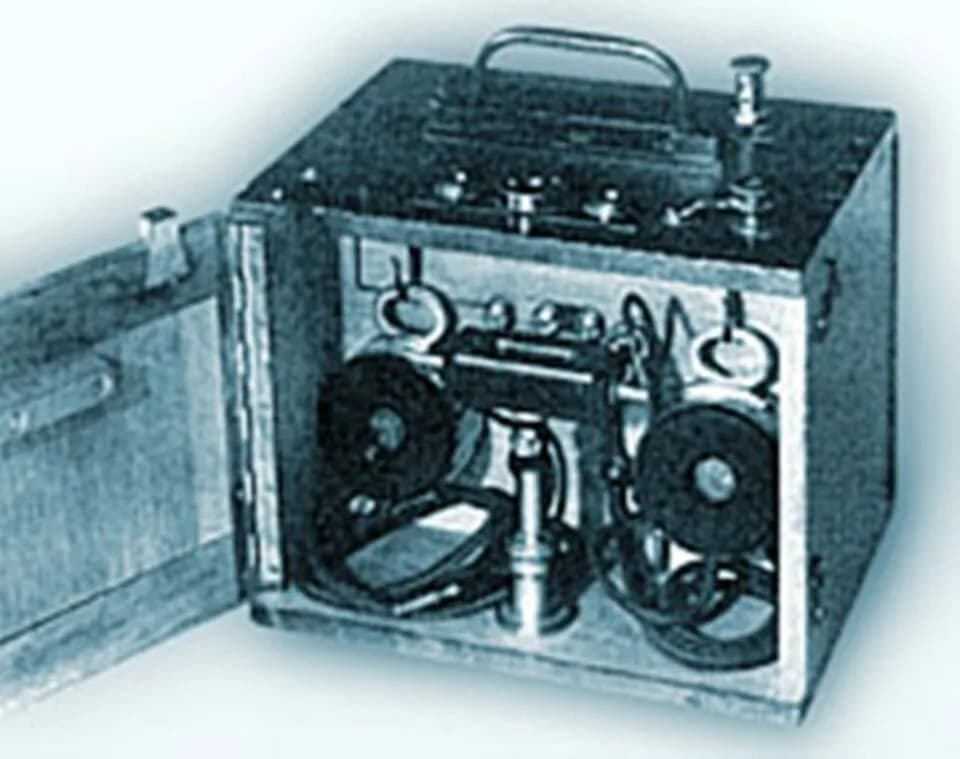
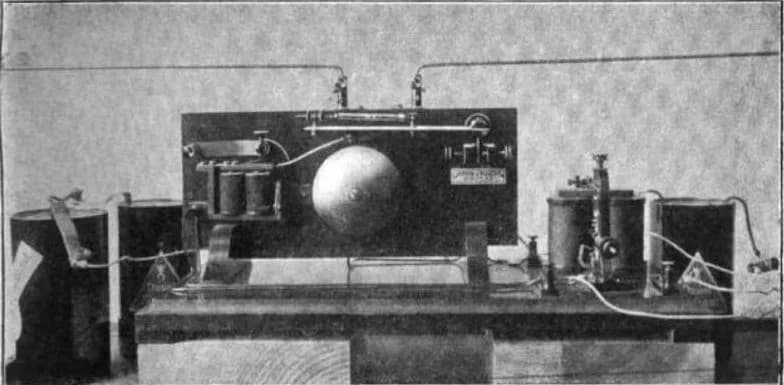
Among Alexander Popov's most enduring contributions was his instrumental role in developing one of the world's first practical radio receiving devices. A landmark moment in his career occurred in 1895, when he publicly demonstrated a device capable of detecting the electromagnetic disturbances caused by distant lightning strikes, effectively functioning as a natural radio receiver. This significant demonstration took place on May 7, 1895, before the esteemed Russian Physical and Chemical Society, solidifying his position as a pioneer in the burgeoning field of wireless technology. Following this breakthrough, he continued to meticulously refine his apparatus, enhancing its capabilities and developing a robust coherer-based receiver, pushing the boundaries of what was then possible in electrical engineering.
Poglavlje 5· Poglavlje 5 od 8
Personal Life
Beyond his extraordinary contributions to physics and invention, Alexander Stepanovich Popov was also deeply committed to education, holding the respected role of a pedagogue. He shared his expertise and passion for science by teaching at the Imperial Russian Navy's Torpedo School located in Kronstadt, thereby nurturing a new generation of engineers and officers. This commitment reflected his belief in the importance of disseminating scientific knowledge and fostering an environment of innovation within Russia's academic and military spheres. While extensive personal biographical details such as family relationships beyond his professional dedication are not provided, his impact on his students and the scientific community was clearly substantial.
Poglavlje 6· Poglavlje 6 od 8
Notable Works or Contributions
Popov's singular and most influential contribution lies in his pioneering efforts in the field of wireless telegraphy, fundamentally altering the course of communication technology. His ingenious invention, frequently referred to as a "lightning detector" in its early form, was essentially an advanced receiver specifically engineered to register and interpret electromagnetic waves. He was remarkably transparent about his discoveries, presenting detailed plans, technical schematics, and comprehensive descriptions of his apparatus to the scientific community. This openness, coupled with the device's undeniable ability to demonstrate the practical feasibility of transmitting and receiving electrical signals without the need for physical wires, marked a revolutionary advancement for the late 19th century.
Poglavlje 7 · 1906· Poglavlje 7 od 8
Later Years
In the final years of his productive career, Alexander Popov remained actively engaged in advancing radio technology, continuously seeking improvements for his inventions. He dedicated himself to refining his receiver designs, which led to notable enhancements in both its operational range and overall reliability for practical use. Furthermore, he tirelessly explored various practical applications for his groundbreaking inventions, with a particular emphasis on their potential utility for crucial maritime communication. Tragically, Alexander Stepanovich Popov's life was cut short at a relatively young age, as he passed away on January 13, 1906, in Saint Petersburg, Russia, leaving behind a significant contribution to innovation.
Poglavlje 8· Poglavlje 8 od 8
Legacy and Impact
Alexander Stepanovich Popov's enduring legacy as a distinguished Russian physicist and engineer is firmly established through his foundational contributions to radio science and technology. His innovative creation of one of the first effective radio receiving devices stands as a momentous milestone, directly paving the way for the vast expansion and subsequent development of modern global telecommunications. His meticulous and visionary work provided the indispensable scientific and engineering bedrock upon which countless future innovations in wireless communication would be built. Popov's dedicated efforts and deep understanding ensure his lasting recognition as an absolutely key figure in the transformative history of electrical engineering and applied physics.
Život u trenucima
Trenuci koji su oblikovali život

Česta pitanja
Često postavljana pitanja
Kada je umro/la Alexander Stepanovich Popov?
Alexander Stepanovich Popov je umro/la 13. januar 1906. u Saint Petersburg, Russia u 46. godini života.
Gdje je rođen(a) Alexander Stepanovich Popov?
Alexander Stepanovich Popov je rođen(a) u Krasnoturyinsk, Russia 16. mart 1859..
Po čemu je Alexander Stepanovich Popov najpoznatiji(a)?
Alexander Stepanovich Popov je najpoznatiji(a) po Russian physicist.
Koliko je Alexander Stepanovich Popov imao/la godina u trenutku smrti?
Alexander Stepanovich Popov je imao/la 46 godina u trenutku smrti.
Kojeg porijekla je bio/la Alexander Stepanovich Popov?
Alexander Stepanovich Popov je bio/la iz Russia.
Vremenska linija
Život u kratkom pregledu
Galerija fotografija
Život u slikama
Kliknite bilo koji polaroid za uvećanje · 22 fotografija
QR kod
Podijelite ovu biografiju
Štampaj i podijeli
Skenirajte za posjetu ovoj biografskoj stranici. Štampajte za događaje, izložbe ili obrazovne materijale.