Роден
October 25, 1881
Málaga, Spain
Починал
April 8, 1973
Mas Notre-Dame-de-Vie de Mougins, France
Известен с
Spanish painter and sculptor
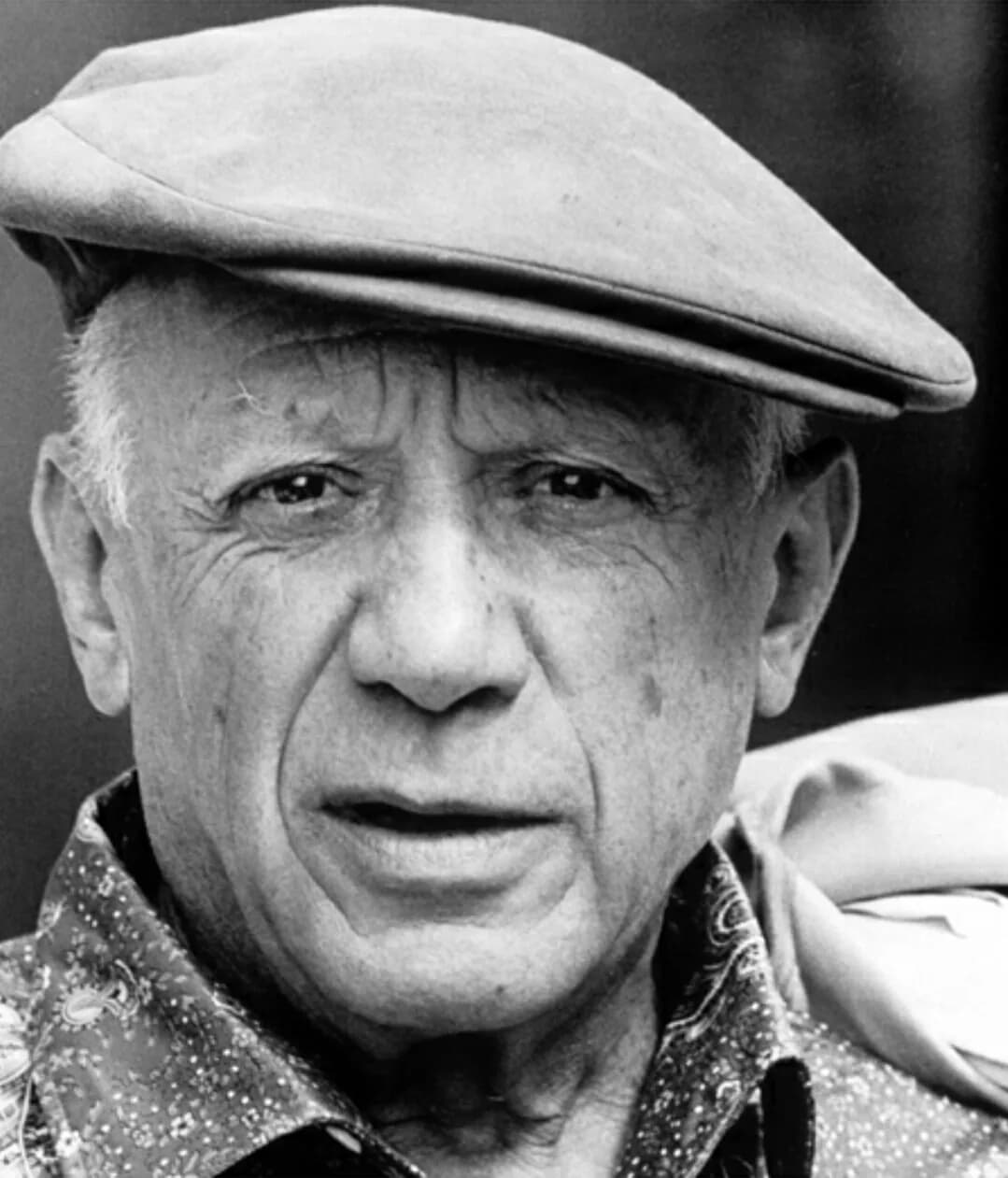
Pablo Picasso (1881–1973) was Spain best known for Spanish painter and sculptor.
Pablo Ruiz Picasso (1881 – 1973) was a Spanish painter, sculptor, and printmaker, celebrated as one of the 20th century's most influential artists. He co-founded the Cubist movement, invented constructed sculpture, and created iconic works like <i>Guernica</i>. His expansive career profoundly reshaped modern art.
Глава
Глави от живота
Глава 1 · 1881· Глава 1 от 6
Early Life and Origins
Pablo Picasso was born on October 25, 1881, in the vibrant city of Málaga, Spain, marking the auspicious beginning of a life entirely dedicated to profound artistic exploration and expression. His prodigious, innate talent for drawing and painting became remarkably evident from a remarkably young age, clearly suggesting a destiny intertwined with the demanding yet rewarding path of artistic innovation. The rich cultural environment, historic artistic traditions, and burgeoning modern movements present in his native Spain significantly influenced and shaped his early artistic development. This crucial initial period, spent in his homeland, established a foundational understanding of form and color that would later fuel the groundbreaking artistic revolutions he would boldly spearhead in the coming decades.
Глава 2· Глава 2 от 6
Career Beginnings
Picasso's early career was characterized by a rapid, almost breathless progression through and comprehensive mastery of various established artistic styles, before he truly began to forge his utterly unique and distinctive path. His formative years included the deeply emotionally resonant "Blue Period," marked by melancholic tones, followed by the more optimistic and warmly hued "Rose Period," both distinct stylistic phases thoroughly explored and documented in historical works such as "Pablo Picasso, [blue and rose periods]." These early, intensive explorations demonstrated a relentless artistic curiosity and an innate, powerful ability to transform deeply personal experiences and observations into compelling visual art. He swiftly moved beyond conventional artistic approaches, challenging traditional academic norms and thereby setting the indelible stage for the radical innovations that would soon completely redefine the very essence of modern art.
Глава 3· Глава 3 от 6
Major Achievements and Career Highlights
Picasso famously co-founded the Cubist movement, an artistic revolution that profoundly and irrevocably altered conventional perceptions of reality and representation by analytically fracturing subjects into geometric forms seen from multiple viewpoints simultaneously. Beyond the radical conceptual framework of Cubism, he is widely credited with the invention of constructed sculpture, pioneering entirely new methods of assembling diverse materials into three-dimensional art, and the co-invention of collage, ingeniously integrating real-world elements like newspaper clippings and wallpaper into two-dimensional compositions. His ceaseless innovative spirit further extended across an astonishing number of professional fields, as he engaged actively in roles ranging from a keen graphic artist, an evocative poster artist, and an imaginative costume designer to a skilled scenographer, a meticulous ceramicist, and a precise drypoint engraver. These multifaceted and genre-defying achievements solidified his enduring status as a singular, unparalleled creative force and unequivocally one of the most versatile artists of the entire 20th century.
Throughout his extensive and incredibly prolific career, Picasso consistently pushed the established boundaries of artistic expression and the inherent properties of various materials. He daringly explored artistic mediums as diverse as etching, illustration, photography, and even distinctive jewelry design, demonstrating an insatiable, restless creative drive that knew no bounds. His exceptional ability to not only master but also innovate across such a vast array of disciplines speaks volumes about his unparalleled artistic genius and profound influence on numerous creative spheres. These continuous and bold explorations further underscore his lasting legacy as an artist who was perpetually evolving, fearlessly challenging established norms, and always seeking new visual languages.
Глава 4 · 1907· Глава 4 от 6
Notable Works or Contributions
Among Picasso's most iconic and globally recognizable paintings are the proto-Cubist Les Demoiselles d'Avignon (1907), a seminal and confrontational work that dramatically shattered traditional depictions of the female nude and conventional spatial representation. Another monumental and universally acclaimed achievement is the powerful anti-war painting Guernica (1937), a dramatic and profoundly harrowing portrayal of the brutal bombing of Guernica by German and Italian air forces during the devastating Spanish Civil War. This compelling painting stands as a timeless and potent symbol of peace, protest, and the human cost of conflict, vividly reflecting his deep personal and artistic engagement with pressing global societal issues.
His immensely diverse artistic output is extensively preserved and celebrated in major museums worldwide, with prime examples such as Woman in a Chemise in an Armchair (Paris, late 1913–early 1914) and The Absinthe Glass (1914) at the esteemed Metropolitan Museum of Art, both showcasing his groundbreaking Cubist and innovative constructed sculpture phases. The Art Institute of Chicago proudly features several key works, including The Old Guitarist (late 1903–early 1904) from his poignant Blue Period, Daniel-Henry Kahnweiler (autumn 1910) exemplifying the intellectual rigor of Analytic Cubism, and the deeply moving Weeping Woman I (July 1, 1937), a piece intimately connected to the powerful themes of Guernica. His remarkable prolificacy also extended to extensive graphic works, brilliantly exemplified by collections like the Suite Vollard, a celebrated series of 100 intricate etchings created between 1930 and 1937, showcasing his mastery of printmaking.
Picasso's profound influence also extended beyond the traditional canvas, permeating other significant creative fields, as demonstrably seen in his active engagement as a vibrant stage painter, an imaginative costume designer, and a visionary scenographer, contributing dynamically to various theatre productions. He also made notable appearances in cinematic works, such as Jean Cocteau's avant-garde film Testament of Orpheus (1960), thereby demonstrating his artistic presence and collaborative spirit beyond the confines of the painting studio. These diverse and expansive contributions unequivocally confirm his broad creative reach and his unwavering desire to express his artistic vision through a multitude of artistic avenues, including his ventures into photography and poetry.
Глава 5 · 1973· Глава 5 от 6
Later Years
Picasso's exceptionally prolific career continued with undiminished vigor and innovation into his later years, spanning an incredible total of more than 76 years of active, groundbreaking creation until his death in 1973. He consistently pursued new forms and styles, stubbornly refusing to settle into a single artistic approach or repeat past successes, even as he aged gracefully. His later work, encompassing powerful pieces like Nude under a Pine Tree (January 20, 1959), maintained the profound vitality, audacious innovation, and daring spirit that characterized his earlier periods. He peacefully passed away at his cherished home, Mas Notre-Dame-de-Vie de Mougins, France, leaving behind an unparalleled and truly immense body of work that continues to fascinate, inspire, and deeply challenge the art world.
Глава 6· Глава 6 от 6
Legacy and Impact
Pablo Picasso's enduring impact on 20th-century art is nothing short of immeasurable, as he fundamentally and irrevocably reshaped the very direction of painting, sculpture, and the graphic arts. His radical and often provocative approaches to form, color, and perspective through the Cubist movement provided an entirely new visual language that influenced countless artists across multiple generations and artistic movements. He left behind a truly vast and extraordinarily varied body of work, encompassing painting, sculpture, printmaking, and ceramics, thereby ensuring his everlasting presence and central importance in art history. Picasso's relentless innovation, his boundless curiosity, and his unwavering commitment to fearless artistic exploration continue to inspire, challenge, and profoundly influence artists and art enthusiasts globally, cementing his unassailable status as a true titan of modern art.
Живот в моменти
Моментите, които оформиха един живот
Често задавани въпроси
Често задавани
Кога почина Pablo Picasso?
Pablo Picasso почина на 8 април 1973 г. в Mas Notre-Dame-de-Vie de Mougins, France на 91-годишна възраст.
Къде е роден(а) Pablo Picasso?
Pablo Picasso е роден(а) в Málaga, Spain на 25 октомври 1881 г..
С какво е най-известен(а) Pablo Picasso?
Pablo Picasso е най-известен(а) с Spanish painter and sculptor.
На колко години беше Pablo Picasso в момента на смъртта?
Pablo Picasso беше на 91 години в момента на смъртта.
Каква националност имаше Pablo Picasso?
Pablo Picasso беше от Spain.
Хронология
Животът накратко
Фотогалерия
Живот в снимки
Кликнете върху всеки полароид, за да го разширите · 49 снимки
QR код
Споделете тази биография
Принтирайте и споделете
Сканирайте, за да посетите тази биография. Принтирайте за събития, изложби или образователни материали.