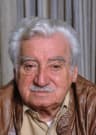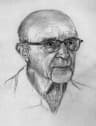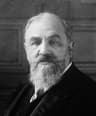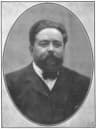
出生
May 29, 1922
Brăila, Kingdom of Romania
逝世
February 4, 2001
Paris, France
知名于
Greek-French composer, architect and engineer
Iannis Xenakis (1922–2001) was Kingdom of Romania best known for Greek-French composer, architect and engineer.
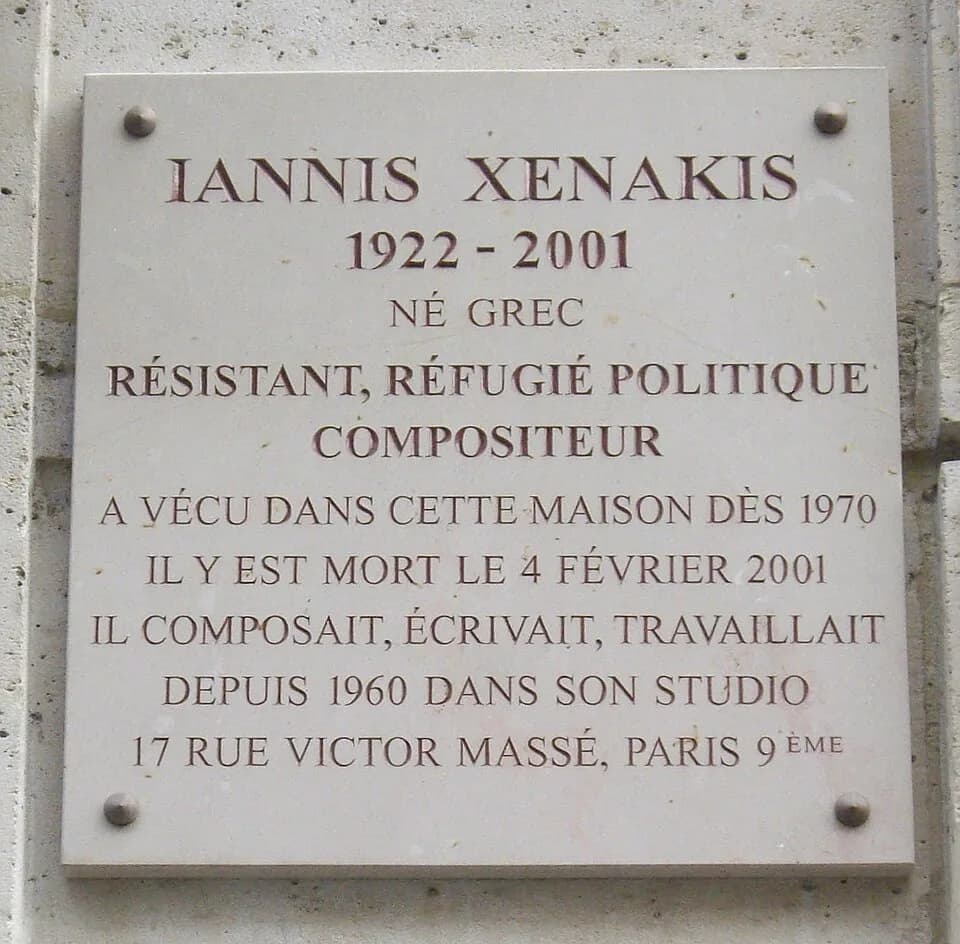
Iannis Xenakis (May 29, 1922 – February 4, 2001) was a Greek-French avant-garde composer, architect, and engineer. He pioneered stochastic music, integrating mathematical models and architectural principles into his compositions. His innovative approach significantly shaped contemporary classical and electroacoustic music, leaving a lasting impact on artistic and scientific disciplines.
第 0 章
人生章节
第 1 章· 第 1 章,共 7 章
Early Life and Origins
Iannis Xenakis was born in Brăila, located in the Kingdom of Romania. His early life was steeped in a rich cultural environment that would undoubtedly shape his future creative endeavors. Though born in Romania, Xenakis was of Greek descent, a heritage that would remain significant throughout his artistic journey and professional identity.
第 2 章 · 1958· 第 2 章,共 7 章
Career Beginnings
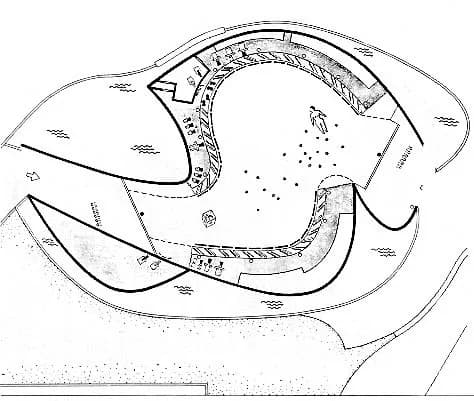
Xenakis began his career not solely in music, but also as an accomplished engineer and architect, professions he cultivated alongside his musical passions. His early architectural work included collaborations with the renowned architect Le Corbusier, contributing to projects such as the Philips Pavilion for the Brussels World's Fair in 1958, which featured his electronic music composition, "Concret PH." This early experience highlighted his keen interest in integrating spatial and structural concepts with sound, setting the stage for his distinct musical philosophy.
His foundational roles as an engineer and architect provided a rigorous, analytical framework that he would later apply to his musical compositions. This unique background allowed him to approach music with a perspective that transcended traditional melodic and harmonic structures, leading him toward more abstract and mathematically derived sonic forms. His initial explorations into sound, influenced by his structural and spatial understanding, marked the inception of his avant-garde musical journey.
第 3 章 · 1965· 第 3 章,共 7 章
Major Achievements and Career Highlights
Iannis Xenakis quickly rose to prominence as an avant-garde composer, renowned for his development of stochastic music, a style that employed mathematical probability theory in composition. His work "Metastasis" (1965), alongside "Pithoprakta" (also 1965), exemplifies his early mastery of this groundbreaking technique, translating architectural lines and mass into dynamic sonic events. These pieces demonstrated how mathematical precision could yield emotionally resonant and structurally complex soundscapes.
Throughout his career, Xenakis integrated his expertise as a poet, musician, and music educator with his primary roles. He was instrumental in defining contemporary classical and electroacoustic genres, creating works that pushed the boundaries of conventional instrumentation and sound generation. His contributions to music theory and performance direction further cemented his status as a comprehensive artistic and intellectual force.
第 4 章· 第 4 章,共 7 章
Personal Life
Based on the provided information, specific details regarding Iannis Xenakis's personal life, family, or relationships are not available. His public persona was largely defined by his immense professional output and his intellectual contributions across various disciplines.
第 5 章 · 1965· 第 5 章,共 7 章
Notable Works or Contributions
Xenakis's extensive discography showcases his continuous exploration and innovation across multiple musical genres, including classical, avant-garde, modern classical, and experimental music. Early recordings like "Metastasis / Pithoprakta / Eonta" (1965) captured his pioneering stochastic compositions. He further explored new sonic territories with "Syrmos / Polytope / Medea" (1969) and the seminal "Electro-Acoustic Music" (1970), which featured electronic sounds and textures.
His works often reflected his architectural and mathematical interests, evident in pieces like "Persephassa" (1971) and "Persepolis" (1972). Later compositions such as "Synaphai / Aroura / Antikhthon" (1976) and the diverse collection "ST/4 / Dikhthas / Ikhoor / Embellie / Kottos / Mikka / Mikka S" (1983) continued to expand his unique sonic vocabulary. The posthumously released "Musique Métaphysique" (2021) further illustrates the breadth and depth of his recorded output.
Beyond his musical compositions, Xenakis made significant academic contributions, reflected in his h-index of 9 and 75 published papers. His written works, such as "Keimena peri mousikēs kai architektonikēs," explored the theoretical underpinnings of his interdisciplinary approach. While specific details of his early writings like "Gravesaner blätter" are noted, his academic publications span a wide range of topics, including interviews like "Iannis Xenakis Interviewed by Maryvonne Kendergi (Montreal, July 1977)" and theoretical discussions on music and architecture.
第 6 章 · 2001· 第 6 章,共 7 章
Later Years
Iannis Xenakis remained actively involved in composing and teaching throughout his later years, continuously influencing new generations of musicians and thinkers. He continued to create complex and challenging works, maintaining his position at the forefront of experimental music. His dedication to his craft persisted until his passing in Paris, France, on February 4, 2001, leaving behind a completed body of work that continues to inspire and challenge.
第 7 章· 第 7 章,共 7 章
Legacy and Impact
Iannis Xenakis left an enduring mark on the worlds of music, architecture, and engineering through his fearless experimentation and intellectual rigor. He redefined the possibilities of musical composition by integrating mathematical logic, architectural forms, and pioneering electronic technologies. His development of stochastic music opened new avenues for algorithmic composition and sound synthesis, influencing generations of composers in the classical, avant-garde, and electroacoustic fields.
His unique ability to merge seemingly disparate disciplines demonstrated that art and science are not mutually exclusive but can enrich each other in profound ways. Xenakis's work continues to be studied and performed globally, serving as a testament to his inventive spirit and his lasting contribution to artistic thought. He is remembered as a true polymath, whose vision continues to resonate with those who seek to push the boundaries of human creativity.
瞬间中的人生
塑造一生的那些瞬间




FAQ
常见问题
Iannis Xenakis什么时候去世的?
Iannis Xenakis于2001年2月4日在Paris, France逝世,享年78岁。
Iannis Xenakis出生在哪里?
Iannis Xenakis于1922年5月29日出生于Brăila, Kingdom of Romania。
Iannis Xenakis最出名的是什么?
Iannis Xenakis最为人所知的是Greek-French composer, architect and engineer。
Iannis Xenakis去世时多大年纪?
Iannis Xenakis去世时78岁。
Iannis Xenakis是哪国人?
Iannis Xenakis来自Kingdom of Romania。
照片图库
影像中的人生
点击任意照片可放大 · 共 25 张
二维码
分享此生平
打印与分享
扫码访问此生平页面。可打印用于活动、展览或教学材料。