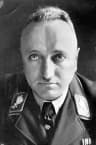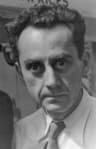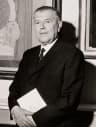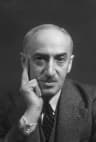
出生
December 21, 1890
New York City, United States
逝世
April 5, 1967
Indianapolis, United States
知名于
American biologist
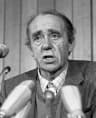
Hermann Joseph Muller (1890–1967) was United States best known for American biologist.
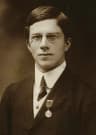
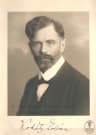
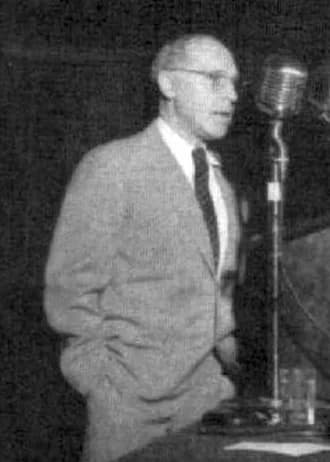
Hermann Joseph Muller (December 21, 1890 – April 5, 1967) was an American geneticist from New York City. He received the 1946 Nobel Prize for his discovery that X-rays cause genetic mutations. Muller also became a vocal advocate against the dangers of nuclear radiation.
第 0 章
人生章节
第 1 章 · 1926· 第 1 章,共 3 章
Uncovering the X-ray Effect
Muller's scientific career took him from Columbia to Rice University and later to the University of Texas, where he continued his meticulous work with Drosophila. His breakthrough in 1926, demonstrating that radiation could induce inheritable changes, was not just a scientific triumph; it launched him into a role he embraced as a public educator. He began to publicize the potential dangers of radiation exposure, even warning against common practices like doctors using X-ray equipment or shoe sellers radiating customers' feet.
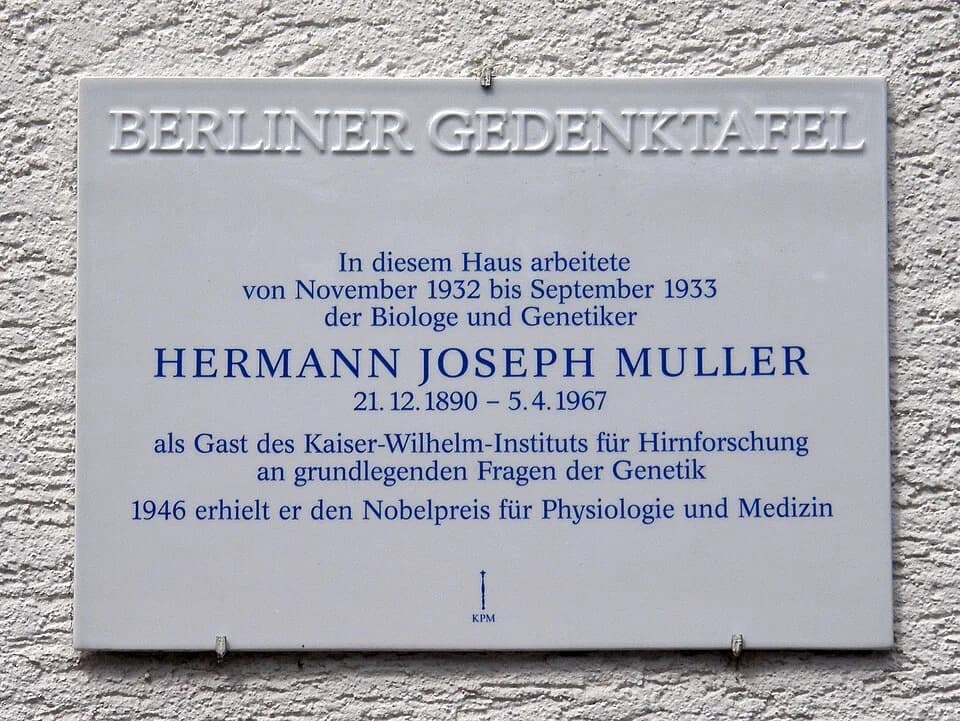
His laboratory grew rapidly after the X-ray discovery, though the Great Depression brought challenges. Muller, increasingly critical of capitalism, found himself drawn to socialist ideals. This conviction would lead him to the Soviet Union in 1933, where he sought a society organized for the common good. In Leningrad and Moscow, he led a productive genetics lab, further exploring genetics and radiation, and completed his eugenics book, Out of the Night.
第 2 章 · 1937· 第 2 章,共 3 章
Science, Society, and Stalin
However, the political climate in the Soviet Union soon turned hostile to scientific freedom. As Joseph Stalin’s repressive policies solidified and Trofim Lysenko’s Lamarckian theories gained official favor, Muller found himself on a collision course with the regime. He bravely opposed Lysenkoism, defending the principles of genetics against political dogma. This stand ultimately forced him to leave the USSR in 1937, after Stalin himself expressed displeasure with Muller’s scientific views.
After brief stays in Madrid and Paris, Muller returned to the United States in 1940. He took a position at Amherst College and, despite political scrutiny due to his socialist activities, eventually became a professor of zoology at Indiana University.
第 3 章 · 1946· 第 3 章,共 3 章
A Voice Against the Bomb
In 1946, Muller was awarded the Nobel Prize in Physiology or Medicine for his discovery of X-ray mutagenesis. Coming on the heels of the atomic bombings of Hiroshima and Nagasaki, the Nobel Prize focused immense public attention on the very dangers Muller had been warning about for two decades. In his Nobel lecture, he argued powerfully that even small doses of radiation could cause mutations, laying the foundation for the linear no-threshold model of radiation risk.
As nuclear testing became a global concern in the 1950s, Muller intensified his advocacy. He became a leading voice in the scientific community against radioactive fallout. He was a signatory of the 1955 Russell–Einstein Manifesto, which addressed the control of nuclear weapons, and later joined other scientists in a 1958 petition to the United Nations, urging an end to nuclear weapons testing. He never wavered in his belief that science carried a social responsibility. He continued to advocate for the health of the human genome until his death in Indianapolis on April 5, 1967.
瞬间中的人生
塑造一生的那些瞬间

FAQ
常见问题
Hermann Joseph Muller什么时候去世的?
Hermann Joseph Muller于1967年4月5日在Indianapolis, United States逝世,享年76岁。
Hermann Joseph Muller出生在哪里?
Hermann Joseph Muller于1890年12月21日出生于New York City, United States。
Hermann Joseph Muller最出名的是什么?
Hermann Joseph Muller最为人所知的是American biologist。
Hermann Joseph Muller去世时多大年纪?
Hermann Joseph Muller去世时76岁。
Hermann Joseph Muller是哪国人?
Hermann Joseph Muller来自United States。
照片图库
影像中的人生
点击任意照片可放大 · 共 15 张
二维码
分享此生平
打印与分享
扫码访问此生平页面。可打印用于活动、展览或教学材料。