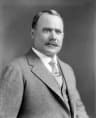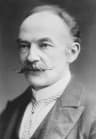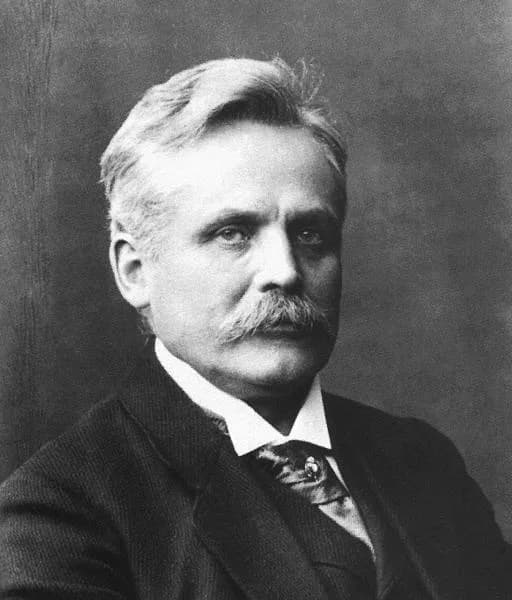
Sinh
January 13, 1864
Parusnoye, Russia
Mất
August 30, 1928
Munich, Germany
Được biết đến với
German physicist
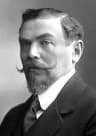
Wilhelm Wien (1864–1928) was Russia best known for German physicist.
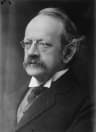
Wilhelm Wien (January 13, 1864 – August 30, 1928) was a German physicist from Russia. He was awarded the Nobel Prize in Physics in 1911 for his discoveries regarding the laws governing the radiation of heat, including Wien's displacement law. His work significantly contributed to understanding blackbody radiation.
Chương
Các chương cuộc đời
Chương 1 · 1864· Chương 1 trên 6
Early Life and Origins
Wilhelm Wien's journey began in Parusnoye, Russia, where he was born on January 13, 1864. Although born in Russia, he would become known as a prominent German physicist, contributing significantly to the scientific community in Germany and beyond. His early life, steeped in an era of rapid scientific advancement, laid the groundwork for his future research in theoretical physics.
The intellectual climate of the late 19th century was characterized by intense inquiry into fundamental physical phenomena. This period saw the foundations of classical physics being challenged and expanded, particularly in areas like thermodynamics and electromagnetism, fields that would become central to Wien's own investigations. Such an atmosphere undoubtedly influenced his development into a rigorous physicist and thoughtful university teacher.
Chương 2· Chương 2 trên 6
Career Beginnings
As Wilhelm Wien embarked on his professional path, he established himself as both a physicist and a theoretical physicist, roles that often overlapped in the academic institutions of his time. His career also involved significant contributions as a university teacher, a profession that allowed him to disseminate knowledge and inspire future generations of scientists. This early stage of his career likely involved deep engagement with the prevailing theories of heat and light, which were subjects of intense scientific debate.
The period during which Wien began his work was marked by a scientific push to understand the intricate relationship between energy, matter, and radiation. Physicists were grappling with phenomena that classical theories struggled to explain fully, creating opportunities for new theoretical frameworks. It was within this dynamic intellectual environment that Wien would begin to formulate the ideas that would later lead to his most famous discoveries.
Chương 3· Chương 3 trên 6
Major Achievements and Career Highlights
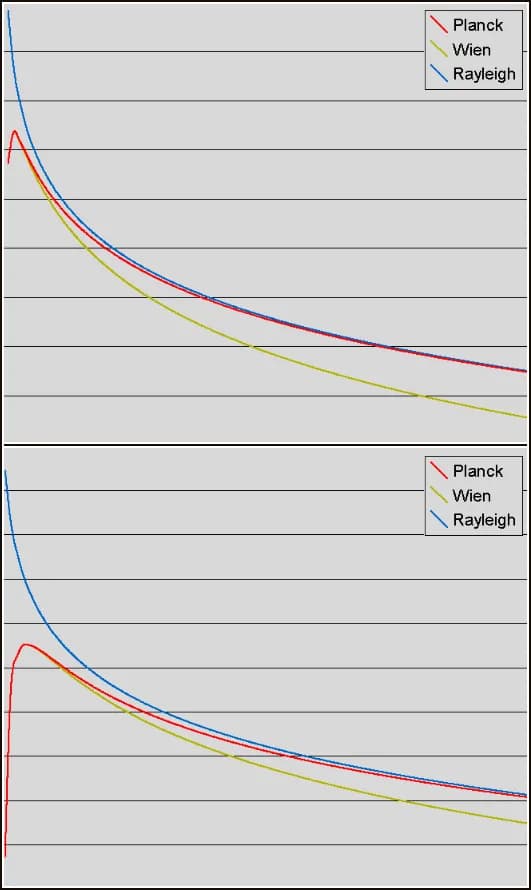
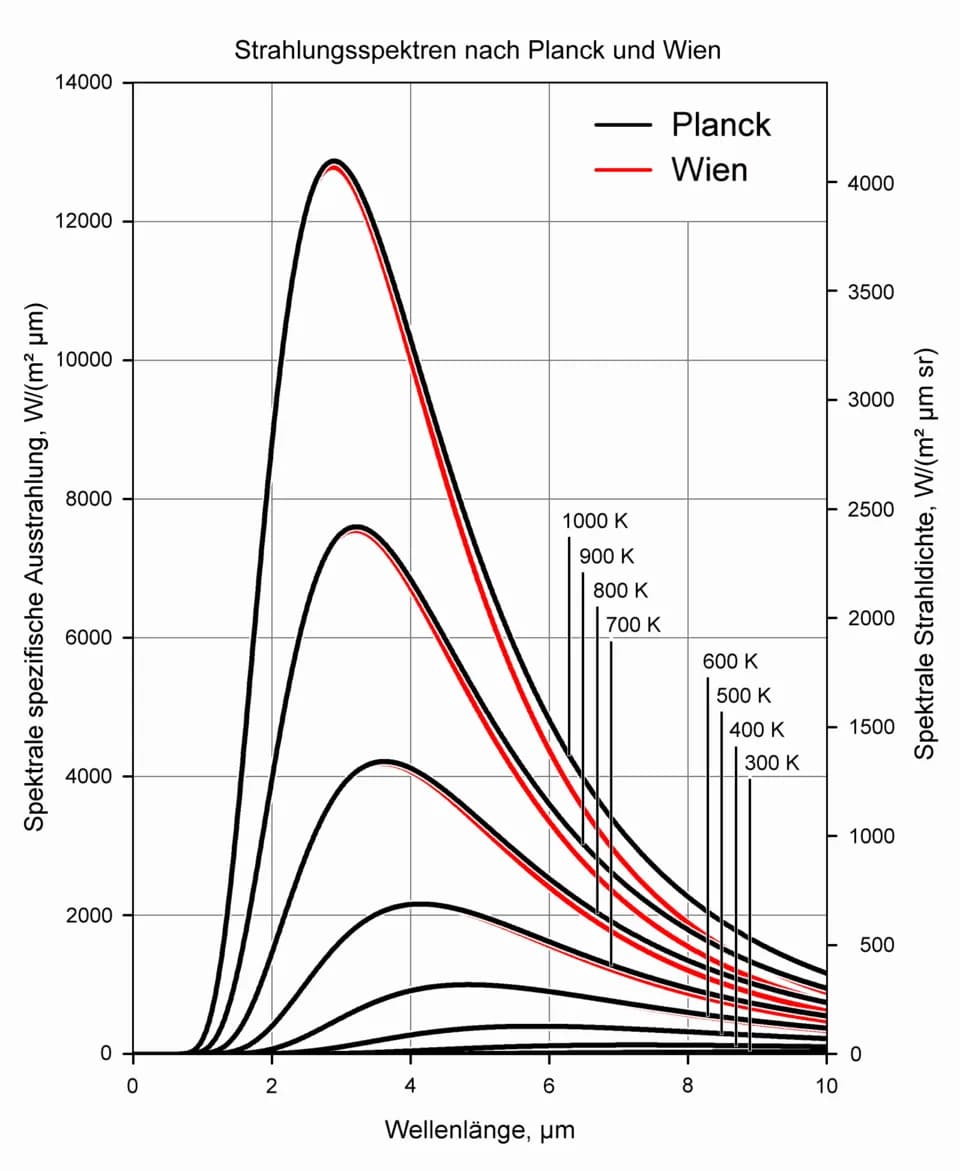
Wilhelm Wien's most celebrated achievement is undoubtedly his deduction of Wien's displacement law, a fundamental principle in physics. This law, derived from theories about heat and electromagnetism, provided a crucial method for understanding blackbody radiation. Specifically, it enables the calculation of the emission of a blackbody at any given temperature, provided its emission at a single reference temperature is known.
The profound importance of Wien's displacement law was officially recognized with the Nobel Prize in Physics, awarded to him in 1911. The Swedish Academy cited his 'discoveries regarding the laws governing the radiation of heat' as the basis for this prestigious honor. This award underscored the significant impact of his theoretical work on the scientific community and its practical applications.
His formulation of this law represented a major step forward in the nascent field of quantum mechanics, even though his work predated the full development of quantum theory. By connecting the peak wavelength of emitted radiation to the temperature of the radiating body, Wien provided a critical empirical relationship. This relationship proved indispensable for further research into the nature of light and heat.
Chương 4· Chương 4 trên 6
Notable Works or Contributions
Throughout his distinguished career, Wilhelm Wien demonstrated a prolific academic output, marked by an h-index of 5 and a total of 17 published papers. Among his significant works, several titles stand out, reflecting the breadth and depth of his scientific interests. These publications contributed to the ongoing scientific discourse of his era.
One notable work is 'Lehrbuch der Hydrodynamik,' a textbook on hydrodynamics that garnered 8 citations, indicating its relevance within the field. Another key publication, 'Die Relativitätstheorie vom Standpunkte der Physik und Erkenntnislehre,' showcases his engagement with the then-emerging theories of relativity, receiving 5 citations. These works highlight his interest in both classical and modern physics.
Additionally, his paper titled 'Die Bedeutung Henri Poincaré's für die Physik,' with 2 citations, reveals his thoughtful consideration of the contributions of other prominent physicists to the field. These academic contributions collectively demonstrate Wien's role not just as a discoverer, but also as a scholar and interpreter of scientific advancements. His writings helped to disseminate and contextualize complex physical theories for his contemporaries.
Chương 5 · 1928· Chương 5 trên 6
Later Years
Wilhelm Wien continued his dedicated work as a theoretical physicist and university teacher throughout his life, enriching the academic landscape with his insights. His career culminated in Munich, Germany, where he passed away on August 30, 1928. Even in his later years, his reputation as a leading figure in physics remained undiminished, a testament to his enduring intellectual vigor.
His final years were spent in a city that was, and remains, a hub of scientific research and education. His passing marked the end of an era for many who had followed his work and contributions to physics. The legacy of his pioneering research continued to resonate, influencing new generations of scientists.
Chương 6· Chương 6 trên 6
Legacy and Impact
The lasting legacy of Wilhelm Wien is primarily anchored in his monumental Wien's displacement law, which continues to be a cornerstone of thermal physics. This law has broad applications, from understanding the radiation emitted by stars to designing infrared sensors. It remains a crucial tool for scientists and engineers in various disciplines.
As a Nobel laureate, Wien secured his place among the most influential scientists of the 20th century, contributing foundational knowledge to the field of quantum physics. His careful deduction from existing theories of heat and electromagnetism paved the way for deeper explorations into the nature of energy and matter. Wilhelm Wien’s work ensures his enduring remembrance as a pivotal figure in the history of science.
Một cuộc đời qua các khoảnh khắc
Những khoảnh khắc đã định hình một cuộc đời
Câu hỏi thường gặp
Câu hỏi thường gặp
Wilhelm Wien qua đời khi nào?
Wilhelm Wien qua đời vào ngày 30 tháng 8, 1928 tại Munich, Germany, ở tuổi 64.
Wilhelm Wien sinh ra ở đâu?
Wilhelm Wien sinh ra tại Parusnoye, Russia vào ngày 13 tháng 1, 1864.
Wilhelm Wien được biết đến nhiều nhất với điều gì?
Wilhelm Wien được biết đến nhiều nhất với German physicist.
Wilhelm Wien bao nhiêu tuổi khi qua đời?
Wilhelm Wien 64 tuổi khi qua đời.
Wilhelm Wien mang quốc tịch nào?
Wilhelm Wien đến từ Russia.
Dòng thời gian
Cuộc đời tóm tắt
Thư viện ảnh
Một cuộc đời qua những bức hình
Nhấp vào bất kỳ tấm polaroid nào để mở rộng · 30 ảnh
Mã QR
Chia sẻ tiểu sử này
In và chia sẻ
Quét để truy cập trang tiểu sử này. In cho các sự kiện, triển lãm hoặc tài liệu giáo dục.