Sinh
May 17, 1900
Khomein, Iran
Mất
March 3, 1989
Tehran, Iran
Được biết đến với
Supreme Leader of Iran from 1979 to 1989
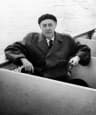
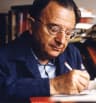
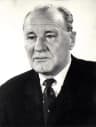
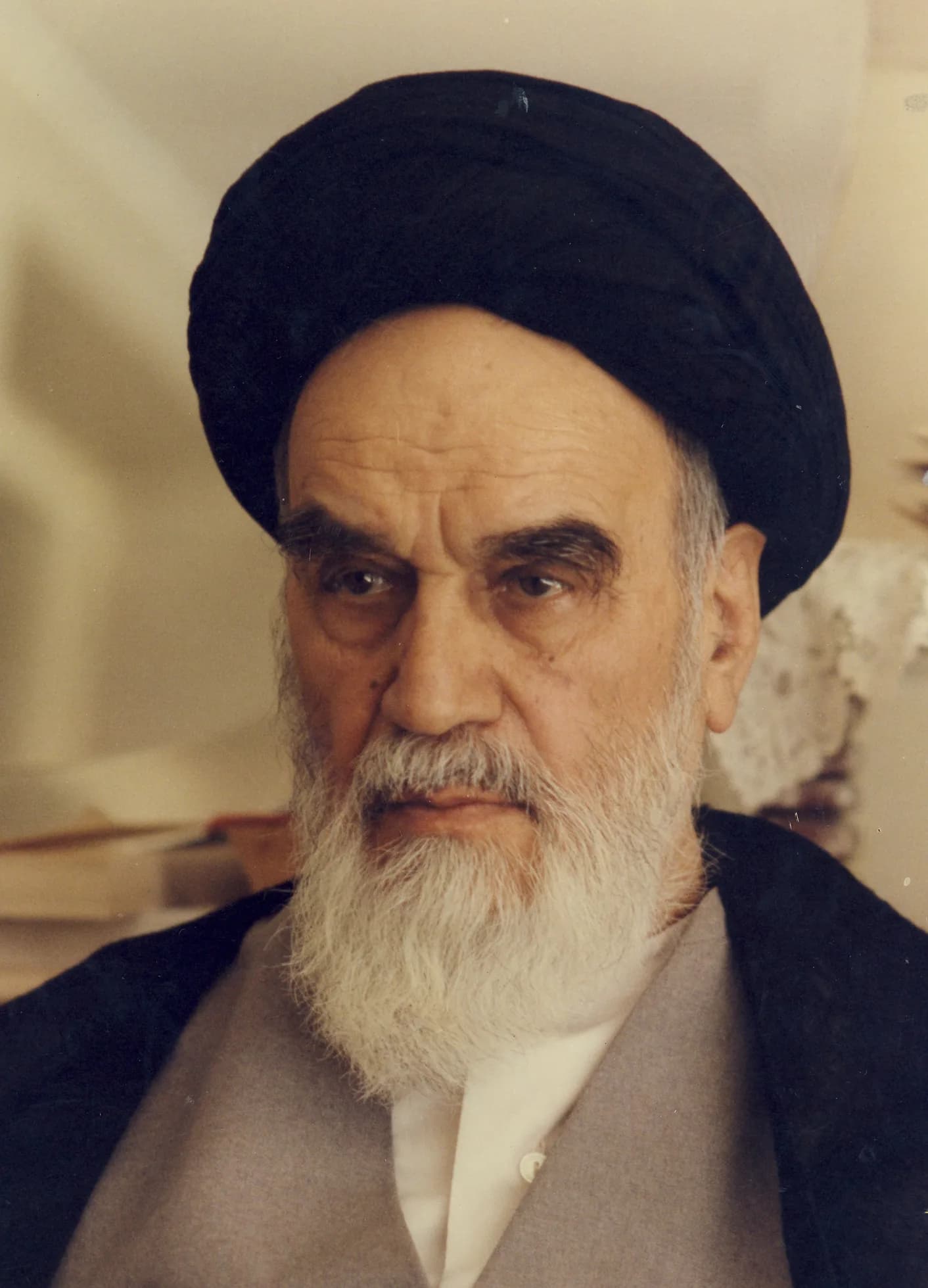
Ruhollah Khomeini (1900–1989) was Iran best known for Supreme Leader of Iran from 1979 to 1989.
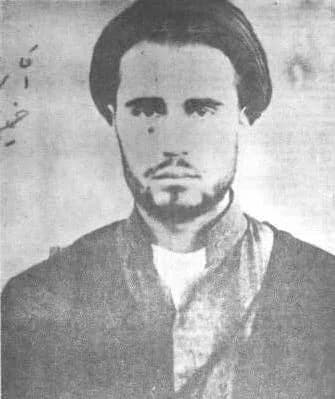
Ruhollah Mostafavi Musavi Khomeini (May 17, 1900 – March 3, 1989) was an Iranian political revolutionary and Shia cleric from Khomein, Iran. He led the Iranian Revolution, overthrew Mohammad Reza Pahlavi, and transformed Iran into an Islamic republic. He served as Iran's first Supreme Leader from 1979 to 1989.
Chương
Các chương cuộc đời
Chương 1 · 1900· Chương 1 trên 7
Early Life and Origins
Born on May 17, 1900, Ruhollah Mostafavi Musavi Khomeini's early years unfolded in Khomein, Iran, a town from which he later adopted his well-known surname. His upbringing occurred within a traditional Iranian setting, steeped in the rich cultural and religious heritage characteristic of the region. This environment played a crucial role in his formative development, nurturing his intellectual curiosity and spiritual discipline. The foundational experiences of his youth in Khomein set him on a path of rigorous Islamic scholarship and contemplation.
His education likely immersed him in classical Islamic studies, preparing him for a life dedicated to religious learning and guidance. While specific details of his early family life beyond his birthplace are not provided, the context of his era and location suggests a robust engagement with religious texts and community values. These early influences contributed to the deep understanding of Islamic law and philosophy that would later characterize his public and political life. The philosophical and jurisprudential traditions absorbed during his youth formed the bedrock of his later teachings and political ideology.
Chương 2· Chương 2 trên 7
Career Beginnings
As Ruhollah Khomeini matured, he steadily built a reputation within scholarly circles as an accomplished ulema and Islamic jurist. This recognition stemmed from his deep knowledge and interpretation of Islamic law and theology, which he shared through teaching and writing. His expertise positioned him as a respected authority on religious matters, attracting students and followers eager to learn from his insights. Through his dedication to scholarship, he became known as a significant contributor to religious discourse.
He eventually achieved the status of a marji', a highly esteemed position within Shia Islam where one is regarded as a source of emulation for religious guidance. This role entailed providing authoritative interpretations of Islamic law and offering spiritual direction to a wide community of believers. Additionally, his skills as a preacher allowed him to convey complex religious and ethical ideas to a broader audience, fostering a deeper understanding of Islamic principles. His eloquent communication style and profound knowledge enabled him to connect with people on both intellectual and spiritual levels, garnering a significant following. Furthermore, his work as a philosopher involved engaging with intricate questions of existence, ethics, and governance from an Islamic perspective, shaping his unique worldview and public positions.
As a poet, he explored themes of spirituality and mysticism, using verse as another medium to express his profound inner thoughts and reflections. This artistic dimension added another layer to his multifaceted persona, revealing a contemplative side alongside his scholarly and political pursuits. Over time, his intellectual and spiritual leadership began to converge with an increasing engagement in political commentary, gradually positioning him as a prominent politician. His growing influence as a scholar and a spiritual guide laid the essential groundwork for his eventual leadership in the Iranian Revolution, providing him with a broad base of support and respect within society.
Chương 3· Chương 3 trên 7
Major Achievements and Career Highlights
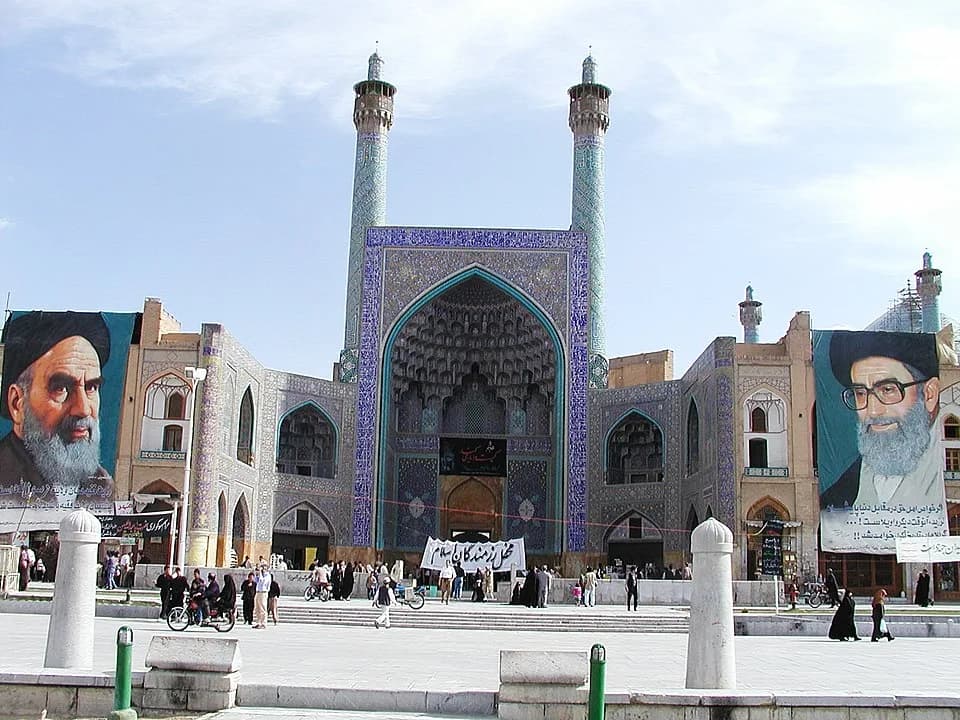
The defining chapter of Ruhollah Khomeini's life was his leadership of the Iranian Revolution, a transformative movement that fundamentally reshaped Iran. This revolution, guided by his strategic direction and ideological vision, successfully brought about the downfall of Mohammad Reza Pahlavi. The conclusion of this significant uprising marked the definitive end of the Pahlavi era, a period of monarchical rule that had governed Iran for decades, altering the nation's political trajectory irrevocably. Under his direct influence, the country transitioned from its historical monarchy to an Islamic republic, establishing a new governmental structure based on religious tenets.
Following this historic political transformation, Ruhollah Khomeini assumed the role of the first Supreme Leader of Iran in 1979. He served in this paramount position for ten years, until his death in 1989. During his tenure, he played a central role in establishing and consolidating the new Islamic Republic. His leadership was instrumental in shaping the emerging nation's domestic and international policies. The principles and practices he championed during this period came to be formally recognized as Khomeinism, a distinct ideology that influenced various aspects of Iranian society and governance. His guidance during these crucial years set the foundational policies and directional course for the newly formed republic.
Chương 4· Chương 4 trên 7
Personal Life
The biographical information provided primarily focuses on Ruhollah Khomeini's extensive public and professional life, detailing his roles as a spiritual leader, scholar, and political revolutionary. Specific details regarding his personal family life, intimate relationships, or individual interests beyond his widely documented professional and revolutionary activities are not extensively available. His public image and historical record are predominantly characterized by his profound intellectual contributions, his unwavering spiritual leadership, and his significant political actions. While insights into his private life might offer a more complete picture of the individual, the existing historical data emphasizes his monumental public impact and the enduring legacy of his work in shaping Iran.
Chương 5· Chương 5 trên 7
Notable Works or Contributions
Ruhollah Khomeini was a prolific author, leaving behind a rich collection of writings that comprehensively detail his theological, jurisprudential, and political thought. These works serve as a vital window into his intellectual framework and his vision for an Islamic society. Among his significant contributions is Ẓamīmah-i majmūʻah-ʾī az maktūbāt, sukhanrānīhā, payāmhā va fatvā-yi Imām Khumaynī, a compilation that brings together his various letters, speeches, important messages, and religious decrees. This collection provides invaluable insights into his direct communications and policy statements during critical periods.
His profound expertise as an Islamic jurist is evident in his jurisprudential writings, which include Risālah-ʾi taw ̤zīḥ al-mas ̄aʾil. This work offers detailed explanations of complex Islamic laws and their practical application, guiding adherents in their daily religious observances. Another significant text showcasing his scholarly depth is Miṣbāḥ al-sharīʻah fī sharḥ taḥrīr al-wasīlah, which further elaborates on jurisprudential principles and interpretations. These texts demonstrate his meticulous approach to religious law and his commitment to providing clear guidance.
Beyond law, his philosophical and spiritual insights are captured in works such as Misbāḥ al-hidāyah ilá al-khilāfah wa-al-wilāyah. This text delves into deeper spiritual and theoretical aspects of Islamic governance and leadership, reflecting his broader intellectual concerns. His revolutionary and political thought finds expression in works like al-Fikr al-qā'id lil-thawrah al-Īrānīyah, which likely outlines the ideological underpinnings and guiding principles of the Iranian Revolution. These writings reveal the intellectual scaffolding behind his political actions and vision for a transformed Iran.
Other significant contributions from his extensive bibliography include نىل الفضىلة, which adds to the body of his literary and philosophical works. Dalīl Taḥrīr al-wasīlah serves as another important reference within his jurisprudential canon. Additionally, al-Masjid fī fikr al-Imām al-Khumaynī explores the role and significance of the mosque within his thought, indicating his emphasis on community and spiritual centers. Risālah-ʾi najāt al-ʻibād and Guẕarī bar andīshah-ʾi siyāsī-i Imām Khumaynī further exemplify his diverse intellectual output, covering aspects of salvation and analyses of his political thought. Collectively, these numerous texts represent a comprehensive intellectual legacy, offering deep insight into his theological positions, legal interpretations, and his overarching vision for an Islamic society governed by principles he championed.
Chương 6 · 1979· Chương 6 trên 7
Later Years
Ruhollah Khomeini's later years were entirely dedicated to his role as the Supreme Leader of the Islamic Republic of Iran, a position he assumed after the success of the Iranian Revolution in 1979. For a decade, from 1979 until his death in 1989, he guided the nascent republic through its initial and often challenging phases. His leadership during this period was crucial for establishing the new political and social order based on the principles he espoused. He oversaw the implementation of policies that defined Khomeinism, setting the administrative and ideological direction for the country.
Throughout the 1980s, his leadership continued to be the central force in Iran's domestic affairs and its engagement with the international community. He remained a pivotal figure, influencing crucial decisions and maintaining the ideological consistency of the Islamic Republic. Ruhollah Khomeini passed away on March 3, 1989, in Tehran, Iran, the very capital of the republic he helped found and led. His death marked the conclusion of his influential tenure and brought to an end the life of a figure who had undeniably reshaped the political and religious landscape of Iran and beyond. His passing concluded an era of direct leadership and left behind a structured political system with a distinct ideological framework that he had meticulously crafted and implemented.
Chương 7· Chương 7 trên 7
Legacy and Impact
The legacy of Ruhollah Khomeini is primarily intertwined with his seminal role as the principal architect and guiding force of the Iranian Revolution. His leadership fundamentally and irrevocably transformed the political and social fabric of Iran. Through his efforts, a monarchy that had existed for centuries was replaced by a new state entity, the Islamic Republic of Iran, structured around distinct Islamic principles and jurisprudential governance. This was a profound shift that reverberated throughout the nation, affecting every aspect of public and private life.
The ideological framework he developed and implemented, known as Khomeinism, continues to be a defining characteristic of Iranian governance and societal norms. This distinct set of policies and principles dictates various facets of the nation's political, legal, and cultural landscape. His impact extended well beyond the borders of Iran, influencing political and religious thought across the broader Islamic world. His life and work reshaped regional dynamics and spurred discussions on Islamic identity and governance internationally. Ruhollah Khomeini remains a figure of immense historical and ideological importance, whose life, teachings, and revolutionary actions continue to be studied for their lasting consequences and intricate implications on contemporary Iran and global affairs.
Một cuộc đời qua các khoảnh khắc
Những khoảnh khắc đã định hình một cuộc đời
Câu hỏi thường gặp
Câu hỏi thường gặp
Ruhollah Khomeini qua đời khi nào?
Ruhollah Khomeini qua đời vào ngày 3 tháng 3, 1989 tại Tehran, Iran, ở tuổi 88.
Ruhollah Khomeini sinh ra ở đâu?
Ruhollah Khomeini sinh ra tại Khomein, Iran vào ngày 17 tháng 5, 1900.
Ruhollah Khomeini được biết đến nhiều nhất với điều gì?
Ruhollah Khomeini được biết đến nhiều nhất với Supreme Leader of Iran from 1979 to 1989.
Ruhollah Khomeini bao nhiêu tuổi khi qua đời?
Ruhollah Khomeini 88 tuổi khi qua đời.
Ruhollah Khomeini mang quốc tịch nào?
Ruhollah Khomeini đến từ Iran.
Dòng thời gian
Cuộc đời tóm tắt
Thư viện ảnh
Một cuộc đời qua những bức hình
Nhấp vào bất kỳ tấm polaroid nào để mở rộng · 48 ảnh
Mã QR
Chia sẻ tiểu sử này
In và chia sẻ
Quét để truy cập trang tiểu sử này. In cho các sự kiện, triển lãm hoặc tài liệu giáo dục.