Tug'ilgan
November 7, 971
Ghazni, Afghanistan
Vafot etgan
April 30, 1030
Ghazni, Afghanistan
Mashhur bo'lgan
Sultan of the Ghaznavid Empire from 998 to 1030
Mahmud of Ghazni (971–1030) was Afghanistan best known for Sultan of the Ghaznavid Empire from 998 to 1030.
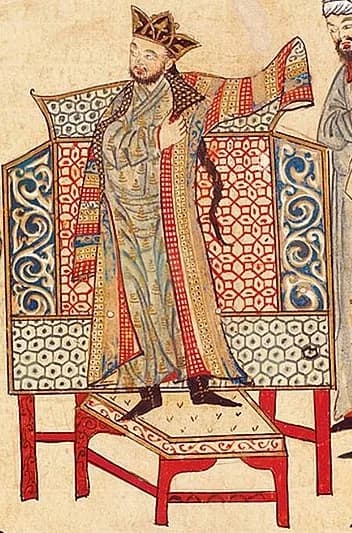
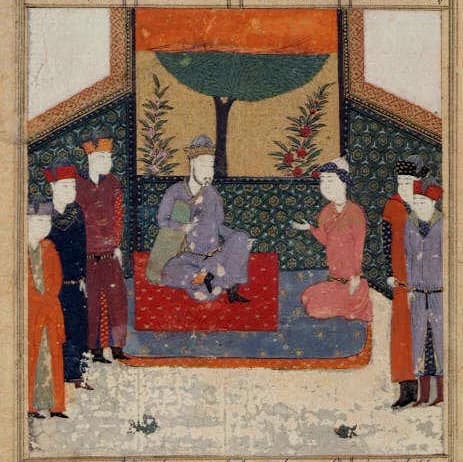
Mahmud of Ghazni (November 7, 971 – April 30, 1030) was a king from Ghazni, Afghanistan. He served as Sultan of the Ghaznavid Empire from 998 to 1030, transforming his kingdom into an extensive military empire. His reign established a lasting political and military legacy across significant parts of Asia.
Bob
Hayot bo'limlari
Bob 1· 7 bobdan 1-bobi
Early Life and Origins
Born on November 7, 971, in Ghazni, Afghanistan, Mahmud's origins were deeply rooted in the heart of what would become his empire. His father, Sabuktigin, was the founder of the Ghaznavid dynasty, setting the stage for Mahmud's eventual ascent to power. Growing up in Ghazni, Mahmud was undoubtedly immersed in the martial and administrative traditions that defined his family's rule, preparing him for future leadership.
While specific details about his childhood and early education are not extensively preserved, his background as a son of a reigning monarch provided him with unique opportunities. This upbringing within the ruling house of Ghazni would have exposed him to military strategies and governance principles from a young age. These early experiences likely played a crucial role in shaping the ambitious and effective leader he would become.
Bob 2· 7 bobdan 2-bobi
Career Beginnings
Mahmud's career officially began its most celebrated phase when he ascended to the throne as Sultan of the Ghaznavid Empire in 998. This transition marked the start of his long and influential rule, during which he consolidated and expanded the territories inherited from his predecessors. His initial years as Sultan were focused on establishing his authority and setting the course for his ambitious military endeavors.
Prior to becoming Sultan, it is reasonable to infer that Mahmud played a significant role in the administration and military affairs of the Ghaznavid state under his father. Such an apprenticeship would have provided him with the practical knowledge and strategic experience necessary to effectively command an empire. His rise to power in 998 signaled a new era for the Ghaznavids, characterized by aggressive expansion and military prowess.
Bob 3 · 1030· 7 bobdan 3-bobi
Major Achievements and Career Highlights
Mahmud of Ghazni is widely remembered for his remarkable military career, during which he was reputed to be undefeated. From 998 until his death in 1030, he systematically expanded the Ghaznavid Empire through a series of strategic campaigns. This sustained period of military success transformed his kingdom from a regional power into an extensive and formidable military empire.
His empire, at its peak, stretched across a vast geographical area, reaching from present-day northwestern Iran proper to the Punjab region in the Indian subcontinent. It also extended into Khwarazm in Transoxiana, demonstrating the immense scale of his conquests. This expansion was a testament to his tactical brilliance and the strength of his armed forces, solidifying his reputation as a master of military strategy.
Bob 4· 7 bobdan 4-bobi
Personal Life
While Mahmud of Ghazni's public life as a Sultan and military leader is well-documented through his historical impact, details regarding his personal life, family relationships, and individual interests are not extensively available in the provided historical summary. Historical accounts primarily focus on his political and military accomplishments.
The information available emphasizes his role as a ruler and conqueror, highlighting his strategic mind and leadership abilities. Specific anecdotes or insights into his private character beyond his public duties are not detailed in the given data, reflecting the historical focus on his reign's broader geopolitical consequences.
Bob 5· 7 bobdan 5-bobi
Notable Works or Contributions
Mahmud's primary contribution was the establishment and expansion of the Ghaznavid Empire itself, a feat that involved intricate military planning and effective governance over diverse regions. His designation by the honorific title Yamin al-Dawla, meaning 'Right Hand of the State', underscores his central and supportive role in the larger political structure of the time, even as he built his own independent power.
His reign was characterized by the creation of an administrative and military apparatus capable of governing and maintaining control over the extensive territories he acquired. The transformation of his kingdom into a far-reaching military empire stands as his most significant and enduring work, demonstrating his skill in state-building alongside his military might.
Bob 6 · 1030· 7 bobdan 6-bobi
Later Years
Mahmud of Ghazni continued his reign as Sultan until his passing on April 30, 1030. He died in Ghazni, Afghanistan, the very city of his birth, bringing his impressive 32-year rule to a close. His death marked the end of an era defined by continuous military expansion and the consolidation of Ghaznavid power.
During his later years, Mahmud maintained the extensive empire he had built, ensuring its stability and continued influence. His final years were spent ruling the vast domain he had forged, a kingdom that stretched across major parts of Asia. His passing in his homeland concluded a life dedicated to leadership and empire-building.
Bob 7· 7 bobdan 7-bobi
Legacy and Impact
The legacy of Mahmud of Ghazni is primarily that of an undefeated military leader who established an extensive and powerful empire. His strategic genius and persistent campaigns fundamentally altered the political and cultural geography of the regions he conquered. He is remembered for his ability to transform a regional power into a dominant force, influencing a vast territory.
The Ghaznavid Empire, under Mahmud's leadership, played a significant role in the history of Central and South Asia. His reign introduced new political structures and cultural interactions across northwestern Iran, the Punjab, and Khwarazm. His name remains associated with military prowess and the ambitious pursuit of imperial expansion.
Hayot lahzalarda
Hayotni shakllantirgan lahzalar
FAQ
Tez-tez beriladigan savollar
Mahmud of Ghazni qachon vafot etdi?
Mahmud of Ghazni 30-aprel, 1030 sanasida Ghazni, Afghanistanda, 58 yoshida vafot etdi.
Mahmud of Ghazni qayerda tug'ilgan?
Mahmud of Ghazni Ghazni, Afghanistanda 7-noyabr, 971 sanasida tug'ilgan.
Mahmud of Ghazni ko'proq nima bilan mashhur?
Mahmud of Ghazni ko'proq Sultan of the Ghaznavid Empire from 998 to 1030 bilan mashhur.
Mahmud of Ghazni vafot etganda necha yoshda edi?
Mahmud of Ghazni vafot etganda 58 yoshda edi.
Mahmud of Ghazni qaysi millat vakili edi?
Mahmud of Ghazni Afghanistandan edi.
Xronologiya
Hayotga bir nazar
Foto galereya
Rasmlardagi hayot
Kattalashtirish uchun istalgan suratni bosing · 24 ta rasm
QR kod
Ushbu tarjimai holni ulashish
Chop etish va ulashish
Ushbu tarjimai hol sahifasiga tashrif buyurish uchun skanerlang. Tadbirlar, ko'rgazmalar yoki ta'lim materiallari uchun chop eting.