Tug'ilgan
December 27, 1654
Basel, Switzerland
Vafot etgan
August 16, 1705
Basel, Switzerland
Mashhur bo'lgan
Swiss mathematician
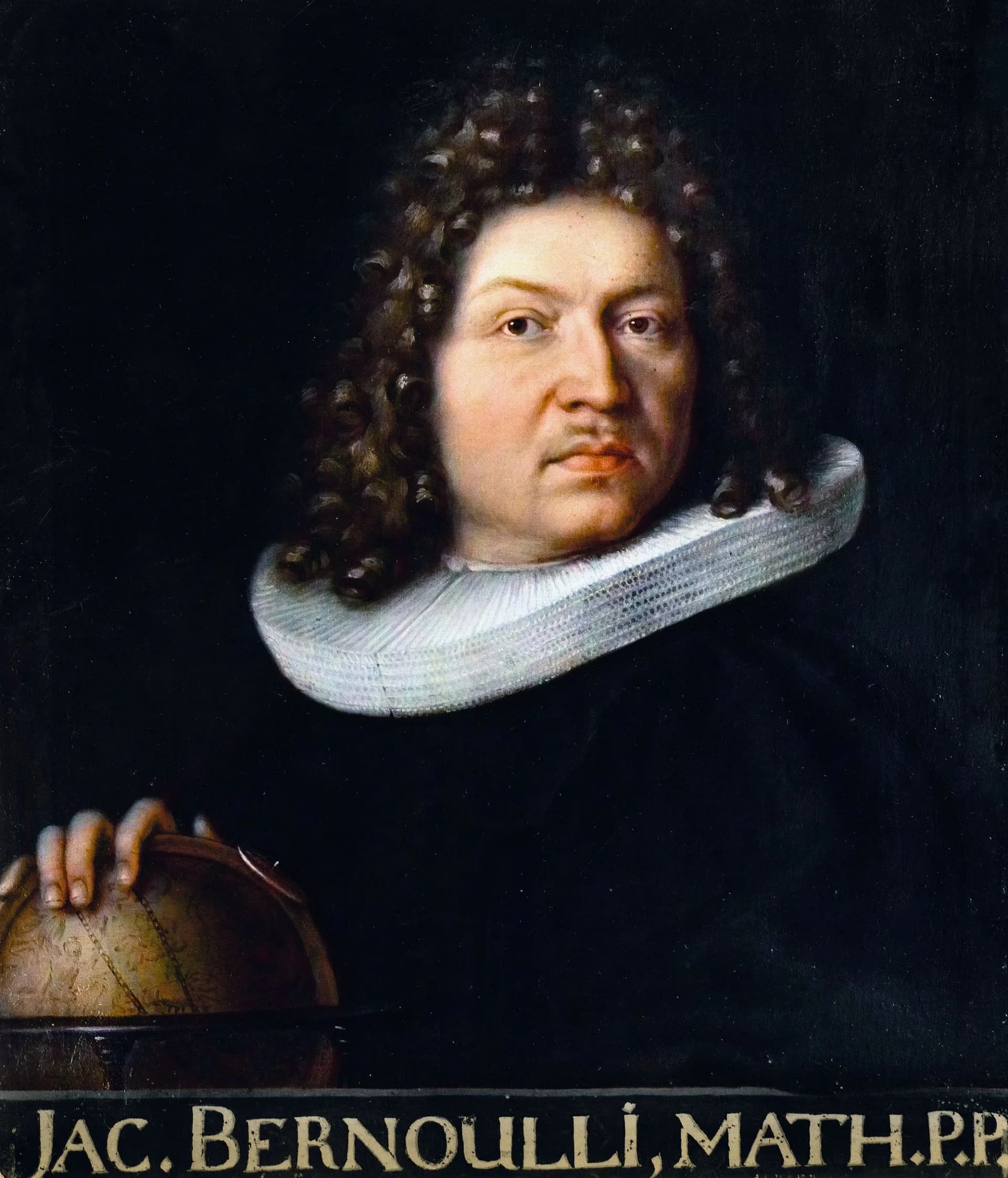
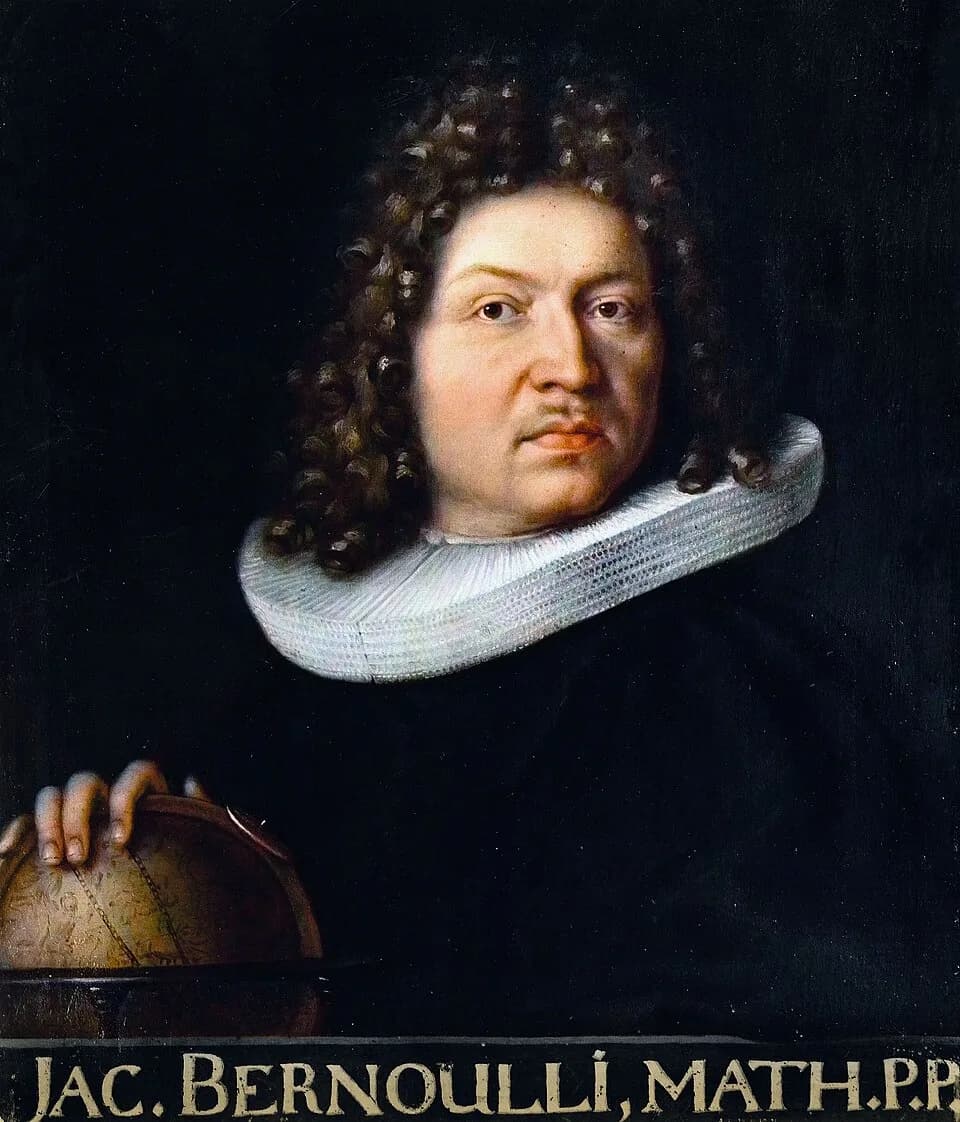
Jacob Bernoulli (1654-1705) was a Swiss mathematician from Basel who founded modern probability theory and co-developed calculus of variations with his brother Johann. He discovered the mathematical constant e and derived the first version of the law of large numbers in his masterwork "Ars Conjectandi."
Bob
Hayot bo'limlari
Bob 1 · 1654· 7 bobdan 1-bobi
Early Life and Origins
Jacob Bernoulli was born on December 27, 1654, in Basel, Switzerland, into what would become one of the most famous mathematical families in history. The Bernoulli family would eventually produce eight significant mathematicians over three generations. Growing up in Basel, a center of learning and commerce, Jacob was exposed to intellectual pursuits from an early age.
His education was broad and comprehensive, reflecting the scholarly traditions of his time. Jacob pursued studies not only in mathematics but also in physics and medicine, eventually earning credentials as a physician alongside his mathematical work. This diverse academic background would later inform his approach to mathematical problems, allowing him to see connections between different fields of study.
Bob 2· 7 bobdan 2-bobi
Career Beginnings
Jacob began his professional career as a university teacher, taking on the role of educator while simultaneously developing his research interests. His early academic work showed promise in multiple areas of mathematical inquiry. He quickly established himself within the scholarly community of Basel and began corresponding with other leading mathematicians of his era.
During the famous Leibniz-Newton calculus controversy, Jacob made a crucial decision that would define much of his career direction. He sided with Gottfried Wilhelm Leibniz, becoming an early and enthusiastic proponent of Leibnizian calculus. This choice positioned him at the forefront of mathematical development in continental Europe and opened doors for collaboration with other Leibniz supporters.
Bob 3· 7 bobdan 3-bobi
Major Achievements and Career Highlights
Jacob's contributions to Leibnizian calculus were both numerous and significant. Working alongside his brother Johann, he helped establish the calculus of variations as a distinct mathematical discipline. This field would prove essential for physics and engineering applications in later centuries. The brothers' collaborative work demonstrated the power of family intellectual partnerships in advancing mathematical knowledge.
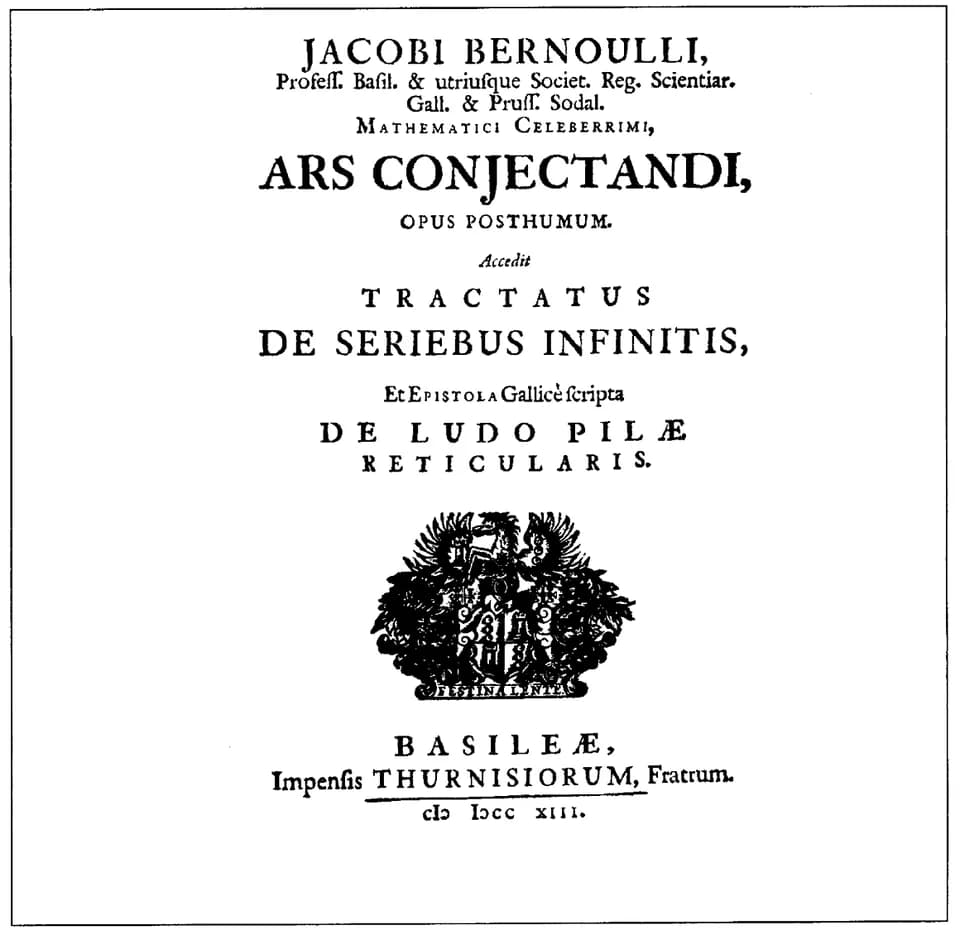
Perhaps his most celebrated discovery was the mathematical constant e, a fundamental number that appears throughout mathematics and natural sciences. This discovery alone would have secured his place in mathematical history. However, Jacob's most important contribution came in the field of probability theory, where he derived the first version of the law of large numbers in his masterwork "Ars Conjectandi."
The law of large numbers established a mathematical foundation for understanding how probability works in practice. It showed that as the number of trials increases, the observed results tend to converge toward the theoretical probability. This principle became central to statistics, insurance, and many other practical applications of mathematics.
Bob 4· 7 bobdan 4-bobi
Personal Life
Jacob lived his entire life in Basel, maintaining strong ties to his hometown and family throughout his career. His relationship with his brother Johann was both collaborative and competitive, driving both men to achieve greater mathematical heights. The Bernoulli family environment fostered intellectual discourse and mathematical exploration.
As a university teacher, Jacob influenced numerous students and helped establish mathematical traditions that would continue long after his death. His multiple roles as mathematician, physicist, physician, and educator reflected the Renaissance ideal of the universal scholar, someone who could contribute meaningfully across different domains of knowledge.
Bob 5· 7 bobdan 5-bobi
Notable Works and Contributions
"Ars Conjectandi" stands as Jacob's most significant published work, containing his development of probability theory and the law of large numbers. This treatise established probability as a legitimate mathematical field rather than merely a tool for gambling calculations. The work influenced generations of mathematicians and statisticians.
His contributions to the calculus of variations, developed in collaboration with Johann, appeared in various mathematical publications of the time. These works included "Abhandlungen ueber Variations=Rechnung" and various correspondence with other mathematicians like Pierre Varignon. His mathematical correspondence provides insight into the collaborative nature of 17th and 18th-century mathematical research.
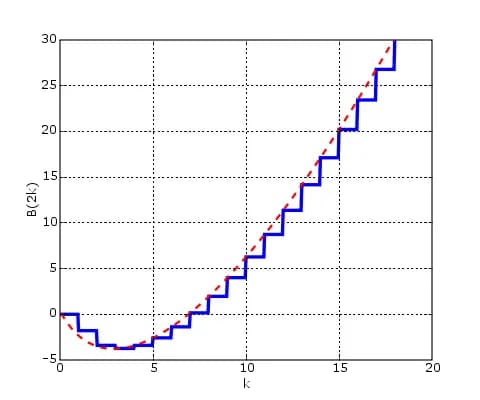
Jacob's work on mathematical series and infinite processes helped establish important analytical techniques. His investigation of mathematical constants and their properties contributed to the broader development of mathematical analysis during this crucial period in mathematical history.
Bob 6· 7 bobdan 6-bobi
Later Years
Jacob continued his mathematical research and teaching responsibilities throughout his life, remaining active in the Basel academic community until his death. His later work focused increasingly on probability theory and its applications, recognizing the practical importance of these mathematical tools.
He maintained correspondence with leading European mathematicians throughout his career, contributing to the international exchange of mathematical ideas. His position in Basel allowed him to serve as a bridge between different mathematical communities and traditions.
Bob 7· 7 bobdan 7-bobi
Legacy and Impact
Jacob Bernoulli's influence on mathematics extends far beyond his own discoveries. His work on probability theory created an entire field of mathematical inquiry that now underpins statistics, actuarial science, and much of modern data analysis. The law of large numbers remains a cornerstone principle taught in every introductory statistics course.
The mathematical constant e, which he discovered, appears throughout calculus, differential equations, and mathematical modeling. His contributions to calculus of variations helped establish techniques that would later prove essential for physics, engineering, and optimization problems.
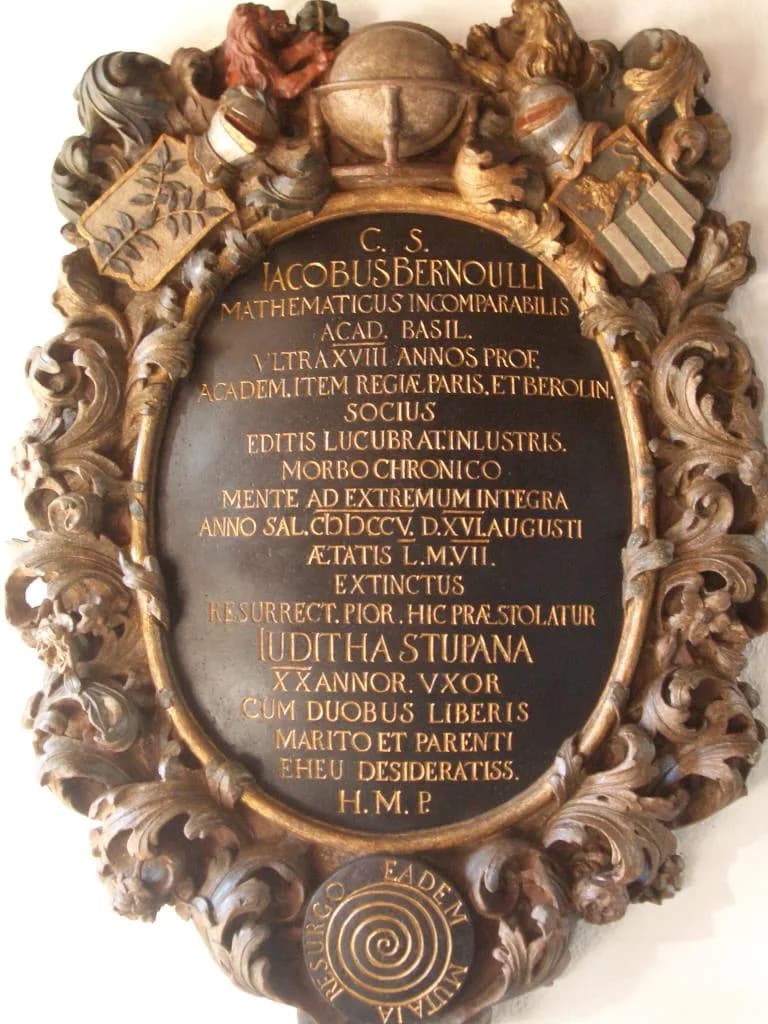
The Bernoulli family mathematical dynasty, which Jacob helped establish, continued producing significant mathematicians for generations. His example of rigorous mathematical research combined with effective teaching created a model that influenced mathematical education throughout Europe. Jacob died on August 16, 1705, in his beloved Basel, leaving behind a mathematical legacy that continues to shape how we understand probability, analysis, and mathematical reasoning itself.
Hayot lahzalarda
Hayotni shakllantirgan lahzalar


FAQ
Tez-tez beriladigan savollar
Jacob Bernoulli qachon vafot etdi?
Jacob Bernoulli 16-avgust, 1705 sanasida Basel, Switzerlandda, 50 yoshida vafot etdi.
Jacob Bernoulli qayerda tug'ilgan?
Jacob Bernoulli Basel, Switzerlandda 27-dekabr, 1654 sanasida tug'ilgan.
Jacob Bernoulli ko'proq nima bilan mashhur?
Jacob Bernoulli ko'proq Swiss mathematician bilan mashhur.
Jacob Bernoulli vafot etganda necha yoshda edi?
Jacob Bernoulli vafot etganda 50 yoshda edi.
Jacob Bernoulli qaysi millat vakili edi?
Jacob Bernoulli Switzerlanddan edi.
Xronologiya
Hayotga bir nazar
Foto galereya
Rasmlardagi hayot
Kattalashtirish uchun istalgan suratni bosing · 43 ta rasm
QR kod
Ushbu tarjimai holni ulashish
Chop etish va ulashish
Ushbu tarjimai hol sahifasiga tashrif buyurish uchun skanerlang. Tadbirlar, ko'rgazmalar yoki ta'lim materiallari uchun chop eting.