Tarjimai hol · Italian chemist

3 min read · 610 words

Giulio Natta

1903 · 1979

Yashagan yillar
76
Rasmlar
50
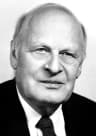
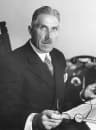
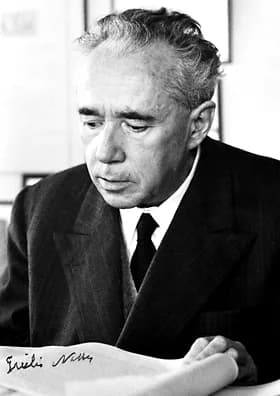
Giulio Natta portrait

Tug'ilgan

February 26, 1903

Porto Maurizio, Italy

Vafot etgan

May 2, 1979

Bergamo, Italy

Mashhur bo'lgan

Italian chemist

Giulio Natta (February 26, 1903 – May 2, 1979) was an Italian chemist and Nobel laureate. He developed the Ziegler–Natta catalyst, enabling the production of high-strength plastics through stereospecific polymerization. His work fundamentally revolutionized polymer science.

Hayot lahzalarda

Hayotni shakllantirgan lahzalar

English tilida yozilgan

Bob

Hayot bo'limlari

Bob 1 · 1903· 8 bobdan 1-bobi

Opening

Giulio Natta (1903–1979) was an Italian chemist whose profound contributions to polymer science earned him global acclaim. As an accomplished inventor, chemist, and university teacher, he spearheaded advancements that fundamentally transformed industrial processes. His innovative research, particularly in the creation of novel catalysts, allowed for the development of high-strength plastics, thereby revolutionizing material science.

Bob 2 · 1903· 8 bobdan 2-bobi

Early Life and Origins

Giulio Natta was born on February 26, 1903, in the picturesque Italian town of Porto Maurizio. His formative years in Italy provided the foundation for an extraordinary career dedicated to scientific inquiry and discovery. From an early age, he demonstrated an aptitude for complex chemical problems, which would later define his professional path. He pursued a rigorous academic training, ultimately specializing in chemical engineering, a field where he would leave an indelible mark.

Bob 3· 8 bobdan 3-bobi

Career Beginnings

Natta's professional journey was significantly shaped by his tenure at the esteemed Politecnico di Milano. It was within this vibrant academic environment that his groundbreaking research in polymer chemistry truly began to flourish. His initial investigations were deeply informed by, and aimed to improve upon, the pioneering work already established by the German chemist Karl Ziegler. This collaborative intellectual foundation proved critical for his subsequent breakthroughs.

Bob 4 · 1963· 8 bobdan 4-bobi

Major Achievements and Career Highlights

A crowning achievement in Giulio Natta's distinguished career was the successful development of the Ziegler–Natta catalyst. This revolutionary invention dramatically reshaped the landscape of industrial polymer production, offering unprecedented control over material properties. For these monumental discoveries in the field of the chemistry and technology of high polymers, Natta was jointly awarded the Nobel Prize in Chemistry in 1963 with Karl Ziegler. His exceptional contributions were further recognized with the prestigious Lomonosov Gold Medal in 1969, solidifying his international standing as a preeminent figure in chemistry.

Bob 5· 8 bobdan 5-bobi

Personal Life

While Giulio Natta's professional life was marked by unparalleled scientific achievement, detailed information regarding his personal life, family, and individual interests is not extensively documented in the available biographical summaries. His public persona was largely defined by his rigorous academic pursuits and his transformative contributions to the field of chemical engineering. He dedicated his life to scientific discovery, allowing his work to speak for itself.

Bob 6· 8 bobdan 6-bobi

Notable Works or Contributions

Giulio Natta's most significant scientific legacy lies in his innovative approach to polymer synthesis, specifically the development of catalysts that enabled low-pressure, stereospecific polymerization of olefins. This advanced technique allowed chemists to precisely control the spatial arrangement of molecular units during polymerization. Critically, this method was highly effective for propylene, transforming it into highly ordered, crystalline structures with superior physical properties. This scientific breakthrough unlocked the capability to produce high-strength plastics that were previously unobtainable, opening new avenues for material application and industrial innovation.

Bob 7 · 1963· 8 bobdan 7-bobi

Later Years

Even following the global recognition of his Nobel Prize in 1963, Giulio Natta continued to exert a profound influence on the scientific community. His later years were characterized by the ongoing and expanding impact of his foundational discoveries on industrial practices and academic research worldwide. He peacefully passed away on May 2, 1979, in Bergamo, Italy, leaving behind an enduring scientific legacy that continues to shape modern chemistry. His intellectual contributions provided a springboard for countless subsequent innovations.

Bob 8· 8 bobdan 8-bobi

Legacy and Impact

Giulio Natta's discoveries fundamentally revolutionized the entire field of polymer science and engineering. His pioneering work on stereospecific polymerization not only deepened our understanding of molecular structures but also provided practical methods for creating advanced materials. The Ziegler–Natta catalyst, a direct result of his ingenuity, remains a cornerstone of modern polymer chemistry, underpinning the manufacture of a vast array of everyday and specialized plastics. His contributions continue to foster innovation, standing as a lasting tribute to his intellectual brilliance and vision.

Foto galereya

Rasmlardagi hayot

Kattalashtirish uchun istalgan suratni bosing · 45 ta rasm

QR kod

Ushbu tarjimai holni ulashish

Chop etish va ulashish

Ushbu tarjimai hol sahifasiga tashrif buyurish uchun skanerlang. Tadbirlar, ko'rgazmalar yoki ta'lim materiallari uchun chop eting.

Giulio Natta kim edi? (1903-1979) | WhoWasThisGuy.com