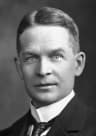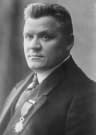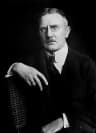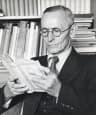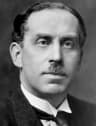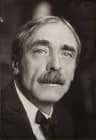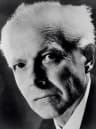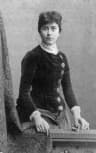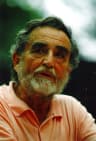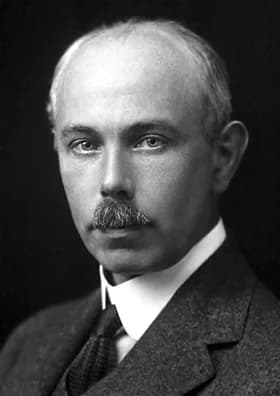
Tug'ilgan
September 1, 1877
Harborne, United Kingdom
Vafot etgan
November 20, 1945
Cambridge, United Kingdom
Mashhur bo'lgan
British chemist
Francis William Aston (1877–1945) was United Kingdom best known for British chemist.
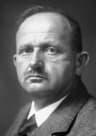
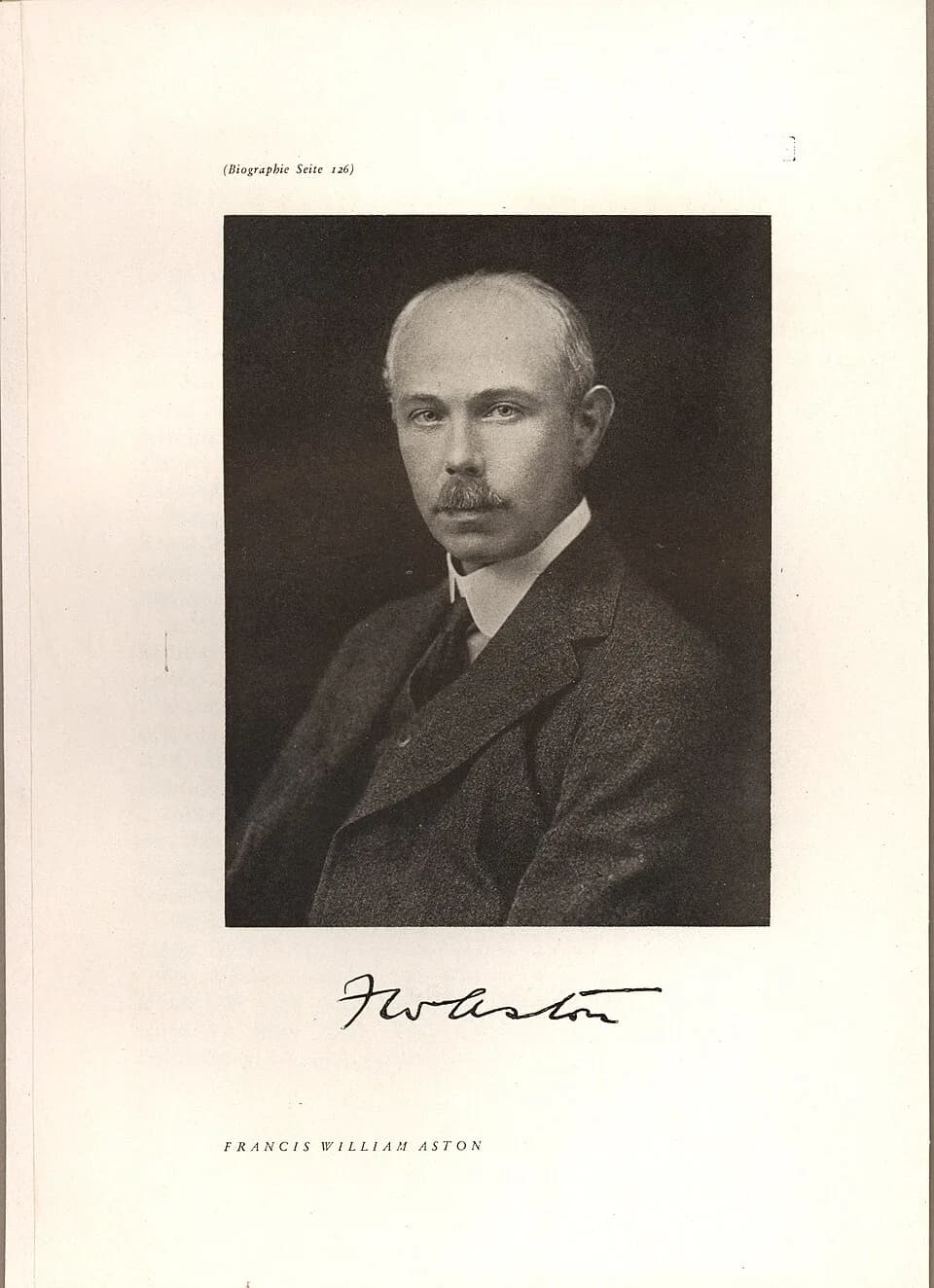
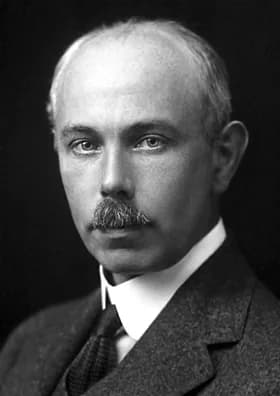
Francis William Aston (September 1, 1877 – November 20, 1945) was a British chemist and physicist from Harborne. He received the 1922 Nobel Prize in Chemistry for discovering isotopes in non-radioactive elements and enunciating the whole-number rule using his mass spectrograph. His work fundamentally shaped modern understanding of atomic structure.
Bob
Hayot bo'limlari
Bob 1 · 1877· 6 bobdan 1-bobi
Early Life and Origins
Born on September 1, 1877, in Harborne, United Kingdom, Francis William Aston began his journey into a world that would soon be transformed by his scientific insights. Harborne, a suburb of Birmingham, was his initial home. While specific details about his family and upbringing are not provided, his early environment likely fostered an inquisitive mind that would later explore the fundamental nature of matter.
Bob 2· 6 bobdan 2-bobi
Career Beginnings
Aston's career path saw him excel as both a physicist and a chemist, a blend of disciplines that proved crucial for his innovative research. His early work involved experiments with vacuum tubes and positive rays, which laid the groundwork for his most celebrated invention. These initial investigations were essential steps toward developing the sophisticated instrumentation he would later use to make his major discoveries.
Bob 3· 6 bobdan 3-bobi
Major Achievements and Career Highlights
A cornerstone of Francis William Aston's career was his invention of the mass spectrograph, a device that allowed for unprecedented precision in analyzing atomic masses. Using this instrument, he famously discovered isotopes in numerous non-radioactive elements. This discovery challenged previous assumptions and demonstrated that elements often exist in different forms with varying atomic weights.
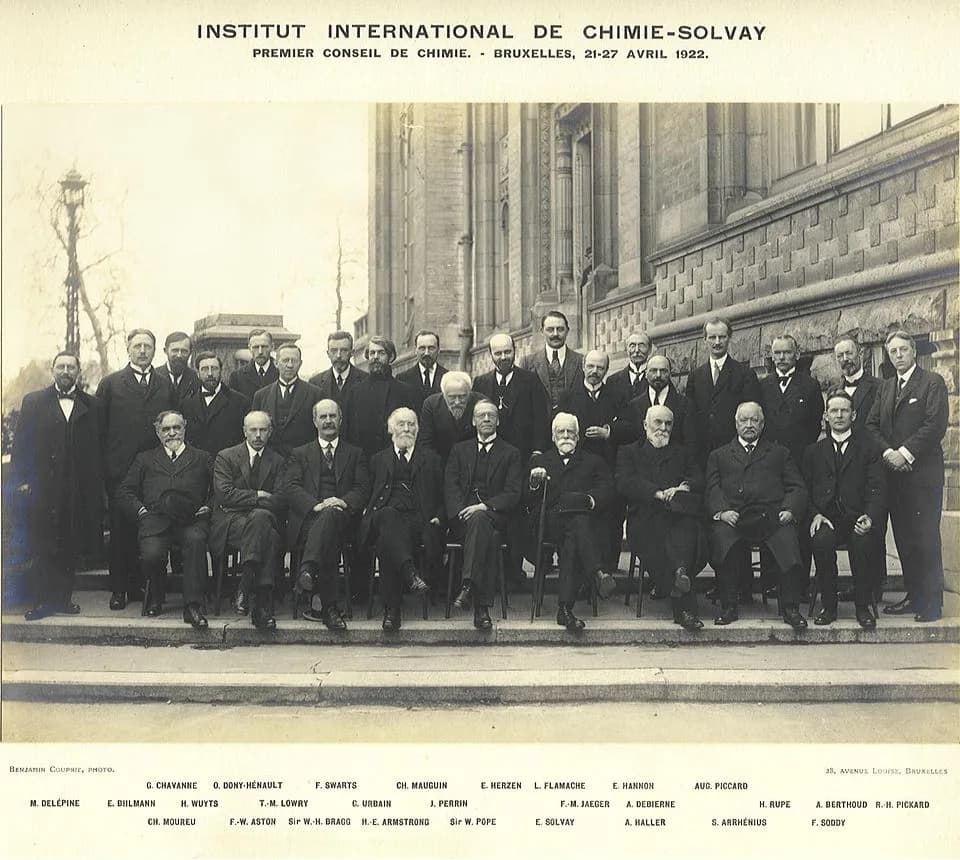
For these significant findings, Aston was awarded the 1922 Nobel Prize in Chemistry. The Nobel Committee specifically cited his "discovery, by means of his mass spectrograph, of isotopes, in a large number of non-radioactive elements, and for his enunciation of the whole-number rule." This rule, stating that the atomic weights of isotopes are very close to whole numbers, was another central contribution. His intellectual stature was further acknowledged through his fellowships at the Royal Society and Trinity College, Cambridge.
Bob 4 · 1942· 6 bobdan 4-bobi
Notable Works or Contributions
Francis William Aston was a prolific researcher, authoring 106 papers and achieving an h-index of 17. Among his most influential publications was "Mass-spectra and Isotopes," published in 1942, which remains a key reference with 151 citations. This work detailed his methods and findings, solidifying the principles of mass spectrometry and isotope analysis.
Other significant contributions include "The Constitution of Atmospheric Neon" (1968), which offered insights into the isotopic composition of elements found in the atmosphere. He also published "International Table of Stable Isotopes" (1942) and a tribute, "Sir J. J. Thomson, O.M., F.R.S." (1940), honoring his mentor and predecessor. His work on "Isotopic Constitution oj some Rare Earths" (2017) also reflects his enduring influence and the continued study of his research.
Bob 5 · 1942· 6 bobdan 5-bobi
Later Years
Francis William Aston remained active in his scientific pursuits throughout much of his life, continuing to publish important works such as "Mass-spectra and Isotopes" in 1942, just a few years before his passing. His dedication to scientific inquiry persisted, contributing valuable knowledge until his final years. He died in Cambridge, United Kingdom, on November 20, 1945, leaving behind a legacy of profound scientific advancement.
Bob 6· 6 bobdan 6-bobi
Legacy and Impact
The scientific contributions of Francis William Aston reshaped both chemistry and physics, laying foundational understanding for generations of scientists. His discovery of isotopes, alongside the development of the mass spectrograph, provided indispensable tools and concepts. This instrument became fundamental for diverse applications, from determining geological ages to forensic science.
His whole-number rule further solidified the atomic theory, providing a clearer picture of atomic weights. Aston's work continues to influence scientific research, affirming his place as a truly pioneering figure in the history of science. His rigorous approach and groundbreaking discoveries continue to be taught and applied worldwide.
Hayot lahzalarda
Hayotni shakllantirgan lahzalar
FAQ
Tez-tez beriladigan savollar
Francis William Aston qachon vafot etdi?
Francis William Aston 20-noyabr, 1945 sanasida Cambridge, United Kingdomda, 68 yoshida vafot etdi.
Francis William Aston qayerda tug'ilgan?
Francis William Aston Harborne, United Kingdomda 1-sentabr, 1877 sanasida tug'ilgan.
Francis William Aston ko'proq nima bilan mashhur?
Francis William Aston ko'proq British chemist bilan mashhur.
Francis William Aston vafot etganda necha yoshda edi?
Francis William Aston vafot etganda 68 yoshda edi.
Francis William Aston qaysi millat vakili edi?
Francis William Aston United Kingdomdan edi.
Xronologiya
Hayotga bir nazar
Foto galereya
Rasmlardagi hayot
Kattalashtirish uchun istalgan suratni bosing · 37 ta rasm
QR kod
Ushbu tarjimai holni ulashish
Chop etish va ulashish
Ushbu tarjimai hol sahifasiga tashrif buyurish uchun skanerlang. Tadbirlar, ko'rgazmalar yoki ta'lim materiallari uchun chop eting.