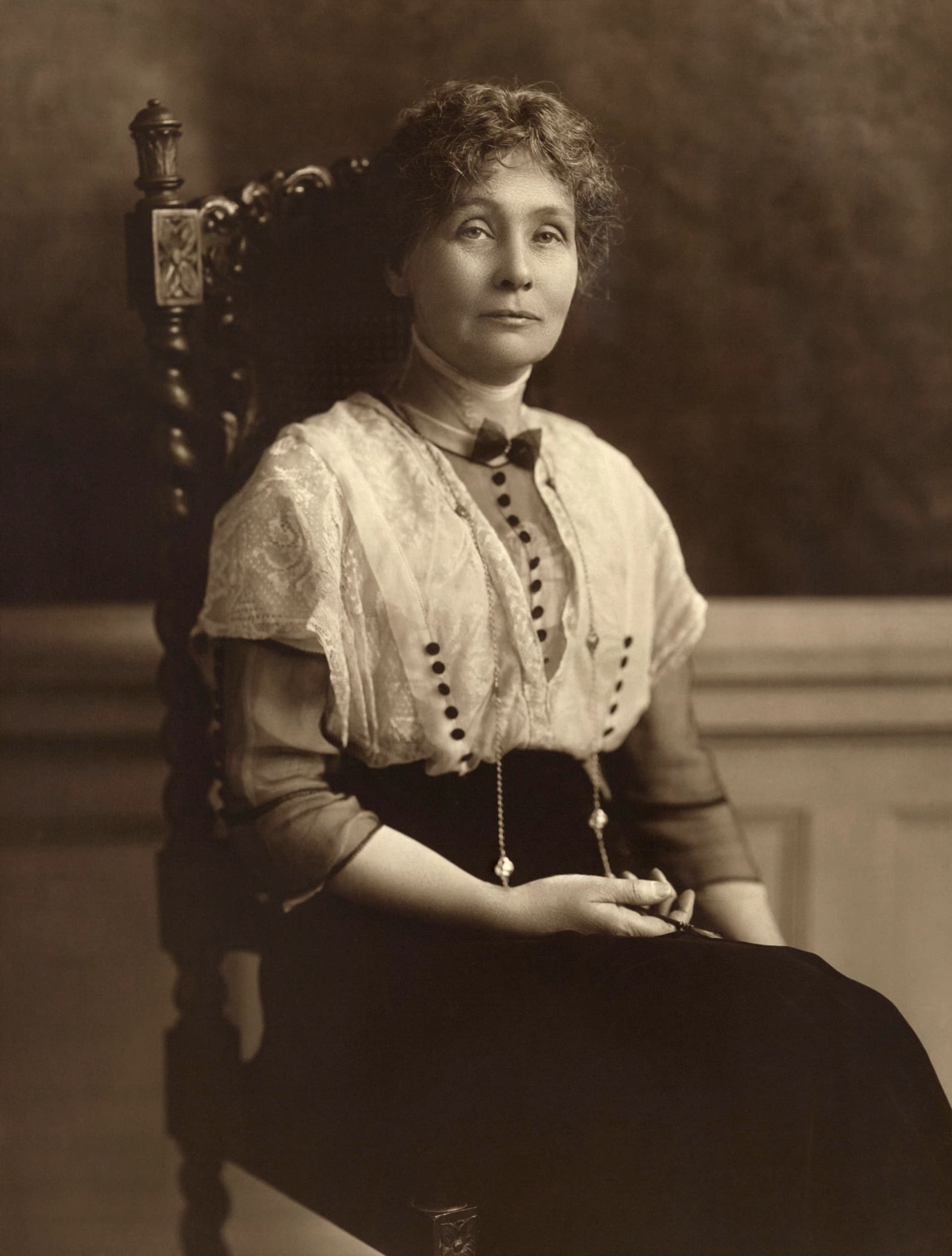
Tug'ilgan
July 15, 1858
Moss Side, United Kingdom
Vafot etgan
June 14, 1928
Hampstead, United Kingdom of Great Britain and Ireland
Mashhur bo'lgan
English suffragist
Emmeline Pankhurst (1858–1928) was United Kingdom best known for English suffragist.
Emmeline Pankhurst (July 15, 1858 – June 14, 1928) was an English suffragist and political activist from Moss Side, United Kingdom. She famously organized the British suffragette movement, playing a crucial role in helping women win the right to vote in 1918. Her work fundamentally reshaped society and continues to inspire human rights advocacy worldwide.
Bob
Hayot bo'limlari
Bob 1 · 1858· 6 bobdan 1-bobi
Early Life and Formative Influences
Born on July 15, 1858, in Moss Side, a vibrant district nestled within the expansive industrial heartland of the United Kingdom, Emmeline Pankhurst came into a world on the cusp of significant, albeit uneven, social change. This mid-19th century British landscape was characterized by rapid advancements in industrialization, which brought about immense societal shifts, alongside increasingly vocal calls for broader democratic representation. Yet, paradoxically, during this era of progress, women remained systematically and profoundly excluded from political life, stripped of basic voting rights and full civic participation. This striking societal reality, where half the population was denied fundamental political agency, undoubtedly ignited and significantly influenced her burgeoning awareness of deep-seated injustice from a very early age.
Her formative years thus unfolded within a context of glaring inequality, an environment that unmistakably cultivated her fierce commitment to social justice and gender parity. While specific details of her early family life are not extensively provided in historical records, it is clear that the prevailing political and social currents of her time profoundly shaped her convictions and worldview. These experiences instilled in her a unique blend of strategic intellect and unwavering determination, traits that would later define her as a leading feminist and an indefatigable human rights defender, steadfastly prepared to dismantle the deeply entrenched patriarchal structures of her era.
Bob 2· 6 bobdan 2-bobi
Organizing and Leading the Suffragette Movement
Emmeline Pankhurst’s journey as a political activist found its definitive and most impactful expression through her meticulous organization and inspirational leadership of the British suffragette movement. This monumental undertaking involved far more than mere advocacy; it encompassed the arduous and complex process of meticulously galvanizing widespread public opinion, strategically recruiting thousands of dedicated members from diverse backgrounds, and establishing a cohesive, robust organizational structure capable of exerting sustained and immense political pressure on the establishment. Her visionary leadership provided the nascent women’s suffrage movement with an unprecedented level of direction, strategic focus, and a clear, uncompromising mandate for achieving full enfranchisement.
She ingeniously transformed what were once scattered, often disparate, demands for women's enfranchisement into a unified, highly visible, and formidable political force, effectively acting as a principal architect of modern, direct-action activism. Her organizational acumen laid the essential groundwork for the Women’s Social and Political Union (WSPU), an organization that soon became famously synonymous with its unwavering resolve, its distinctive militant tactics, and its unyielding commitment to achieving women’s voting rights by any means necessary. Pankhurst’s early, tireless efforts unequivocally demonstrated an innate and strong ability to articulate complex political arguments with compelling clarity and to inspire mass participation, meticulously setting the stage for decades of determined, often confrontational, struggle for fundamental human dignity and equality.
Bob 3 · 1918· 6 bobdan 3-bobi
The Struggle for Suffrage: Tactics and Monumental Achievements
As the primary orchestrator and inspirational leader of the British suffragette movement, Emmeline Pankhurst engineered and implemented a campaign whose powerful reverberations were felt throughout British society and far beyond its borders. Her brilliant strategic vision was absolutely instrumental in elevating the profile of women’s suffrage from what was once considered a marginal or fringe concern to a central, unavoidable political issue that the government and public could no longer afford to ignore. This relentless, multifaceted pressure, meticulously applied over many years, eventually resulted in a truly monumental and long-sought legislative victory in 1918. It was in this year that women, after generations of struggle, finally secured the right to vote in Great Britain and Ireland, marking an epochal shift in democratic governance and fundamentally reshaping the social and political fabric of the nation.
Pankhurst’s widely known and often controversial methods, which famously embraced what were termed "militant tactics," became a subject of intense and often acrimonious public debate. These direct actions, deliberately designed to compel the government to address their demands and to dramatically heighten the visibility of the cause, frequently involved acts of civil disobedience and, at times, more confrontational forms of protest. These tactics were met with considerable criticism from established political figures, influential media outlets, and significant segments of the broader public, generating a contentious atmosphere around the movement. Historians continue to vigorously debate the precise efficacy and ethical implications of these militant approaches, offering varied perspectives on their ultimate contribution to the successful realization of universal suffrage.
Nevertheless, despite the contemporary criticisms and the ongoing robust historical discussions surrounding her chosen methodologies, Emmeline Pankhurst’s courageous and singularly persistent work is universally acknowledged as an essential and utterly indispensable element in the ultimate triumph of women’s suffrage. Her unwavering commitment to the enfranchisement of women, her willingness to challenge authority, and her strong ability to mobilize public support indisputably laid the groundwork for this transformative achievement. Her tireless efforts proved that a determined and organized movement could effectively challenge and ultimately overturn deeply ingrained societal prejudices and legislative injustices.
Bob 4· 6 bobdan 4-bobi
Eloquent Advocacy and Enduring Literary Contributions
Beyond her unparalleled organizational genius and her formidable political activism, Emmeline Pankhurst distinguished herself as a remarkably prolific writer and an exceptionally powerful orator, skillfully wielding both the written and spoken word to articulate and champion the compelling arguments for women’s equality. Her autobiography, evocatively titled “My Own Story,” stands as a significant literary contribution, offering an intimate, compelling, and utterly invaluable firsthand account of the monumental, often arduous, struggle for suffrage. This deeply personal narrative provides critical historical insight into the important motivations, the daunting challenges, and the immense personal sacrifices inherently involved in leading such an epoch-defining social movement. It reflects not only her singular personal journey but also provides a panoramic view of the broader, often hostile, political landscape she so courageously navigated throughout her career.
Pankhurst’s formidable rhetorical power and persuasive abilities are meticulously preserved in various published collections of her speeches, each piece serving as a powerful demonstration of her unwavering conviction and her strong capacity to inspire. Works such as “Suffrage speeches from the dock” powerfully exemplify her great courage and her unyielding resolve, as she ingeniously utilized formal legal proceedings, even when facing severe personal repercussions, as an opportune platform to articulate the pervasive injustices faced by women and the absolute necessity of significant political reform. Similarly, comprehensive documents like the “Verbatim report of Mrs. Pankhurst’s speech” meticulously capture the remarkable precision, intellectual rigor, and undeniable impact of her public addresses, distilling the very essence of her eloquent and passionate arguments for social and political equality.
Her influential reach and her global vision extended far beyond the confines of British borders, as powerfully evidenced by her critically acclaimed “Speech of Emmeline Pankhurst, Columbia Theatre, Washington, D.C., Sunday, November 23, 1913.” This momentous transatlantic address clearly showcases her great ability to effectively rally international support and to effectively disseminate her powerful message on a global scale. It successfully connected the British suffrage movement with broader, burgeoning international efforts for women’s enfranchisement, demonstrating her awareness of a universal struggle. Other very important contributions to political discourse and social commentary, including “The importance of the vote,” “The suffragettes,” and “The trial of the suffragette leaders,” served both as vital contemporary calls to decisive action and as invaluable, enduring historical records. These meticulously document the detailed intellectual and strategic dimensions of the prolonged and often fierce struggle for fundamental women’s rights, with each publication highlighting her multifaceted and indispensable role as an engaged activist, an acute social historian, and an immensely compelling advocate for justice.
Bob 5 · 1918· 6 bobdan 5-bobi
Later Years and Enduring Global Recognition
Having dedicated the entirety of her arduous adult life to the relentless cause of women’s political empowerment and full civic inclusion, Emmeline Pankhurst had the profound satisfaction of living to personally witness the momentous passage of the Representation of the People Act in 1918. This pivotal legislation, which finally granted voting rights to millions of British women, represented an incredible and hard-won victory, serving as a deeply personal testament to her lifelong dedication and an undeniable validation of her extraordinary efforts. This incredible legislative triumph, achieved after many decades of strenuous campaigning, personal sacrifices, and relentless public pressure, allowed her to see the tangible and transformative fruits of her unparalleled advocacy. She ultimately passed away on June 14, 1928, in Hampstead, within the United Kingdom of Great Britain and Ireland, just a single decade after this initial, momentous parliamentary triumph for which she had fought so fiercely and with such unyielding resolve.
Her final years, though coming after the main battle for suffrage had been won, saw the further consolidation of some of the fundamental freedoms for which she had so ardently championed, establishing her status as a revered and pioneering figure. Her visionary activism, as a fearless human rights defender, had irrevocably altered the course of democratic history and paved the way for future generations of women to participate fully in public life. Decades after her passing, her lasting influence continued to garner prestigious global recognition, a clear demonstration of the timeless relevance of her work. In 1999, Time magazine, a highly influential international publication, honored her by naming her as one of the "100 Most Important People of the 20th Century." This immensely significant accolade highlighted her lasting influence on human progress and her absolutely central role in shaping the political, social, and cultural consciousness of a new and evolving era, firmly affirming her place among history's most consequential leaders.
Bob 6 · 1999· 6 bobdan 6-bobi
Legacy and Lasting Societal Impact
Emmeline Pankhurst’s legacy is unequivocally defined by the substantial, altering, and utterly irreversible change she instigated, standing as a powerful demonstration of the sheer force of persistent advocacy and unwavering determination in the face of deep-seated societal resistance. Time magazine’s influential 1999 assessment powerfully articulated her enduring and far-reaching influence when it stated that she “shaped an idea of objects for our time” and, even more powerfully, that she “shook society into a new pattern from which there could be no going back.” This impactful statement eloquently captures the fundamental and irreversible shift she was instrumental in bringing about within the very fabric of democratic governance, deeply ingrained social expectations, and the established roles for women in public and private life.
Her courageous, pioneering leadership as a feminist, a relentless women’s rights activist, and a tireless human rights defender continues to serve as an immense source of inspiration for countless movements advocating for equality, justice, and human dignity across the globe. While her widely discussed militant tactics remain a rich and complex subject of ongoing historical analysis and vigorous academic debate, her unwavering and steadfast dedication to the fundamental principle of universal suffrage indisputably laid the essential groundwork for numerous advancements in gender equality that continue to resonate and inspire progress to this very day. Emmeline Pankhurst stands as a true revolutionary, a visionary whose indomitable spirit, strategic brilliance, and sheer resilience continue to echo across generations, powerfully showing that courage truly calls to courage everywhere. Her monumental work remains an absolutely foundational chapter in the ongoing, vital narrative of human liberation and the relentless fight for full, equitable, and dignified participation in society for all.
Hayot lahzalarda
Hayotni shakllantirgan lahzalar
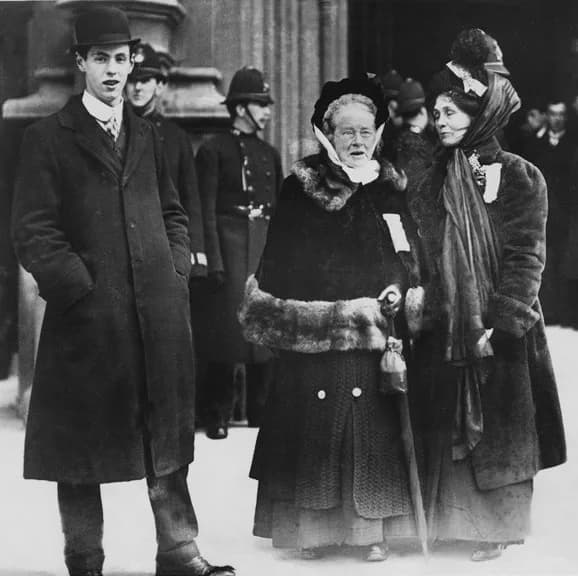
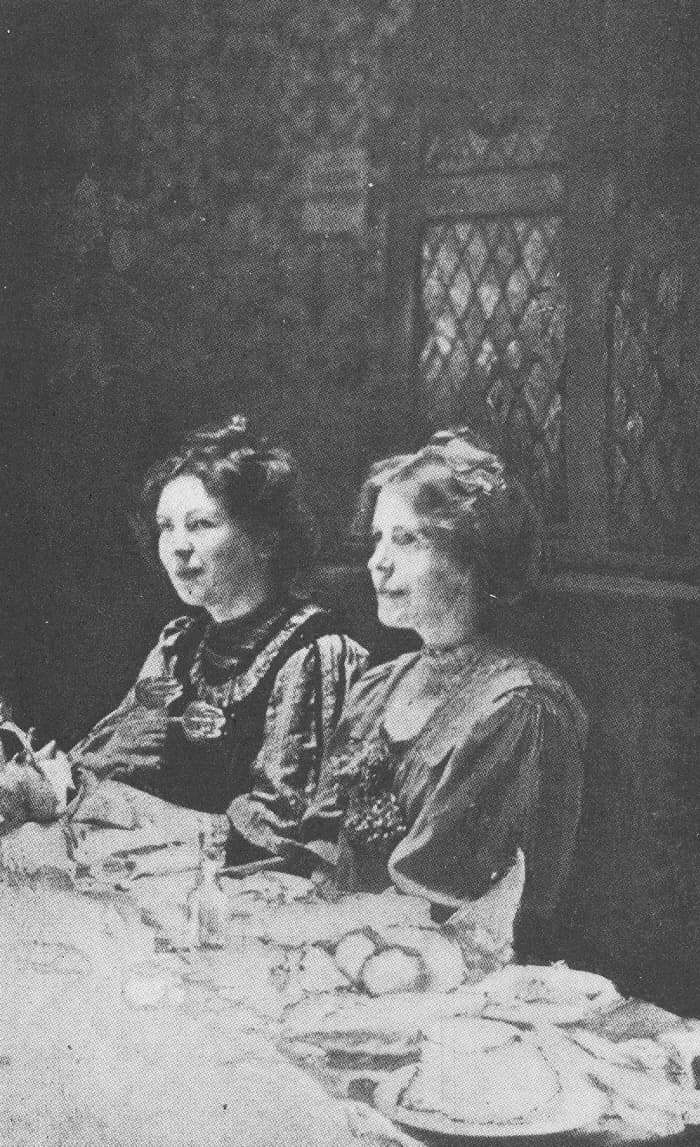
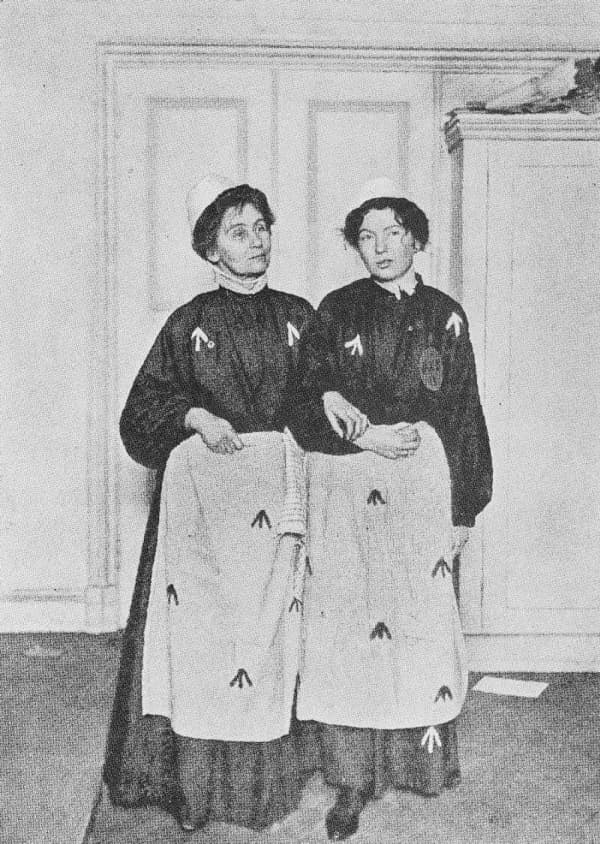
FAQ
Tez-tez beriladigan savollar
Emmeline Pankhurst qachon vafot etdi?
Emmeline Pankhurst 14-iyun, 1928 sanasida Hampstead, United Kingdom of Great Britain and Irelandda, 69 yoshida vafot etdi.
Emmeline Pankhurst qayerda tug'ilgan?
Emmeline Pankhurst Moss Side, United Kingdomda 15-iyul, 1858 sanasida tug'ilgan.
Emmeline Pankhurst ko'proq nima bilan mashhur?
Emmeline Pankhurst ko'proq English suffragist bilan mashhur.
Emmeline Pankhurst vafot etganda necha yoshda edi?
Emmeline Pankhurst vafot etganda 69 yoshda edi.
Emmeline Pankhurst qaysi millat vakili edi?
Emmeline Pankhurst United Kingdomdan edi.
Xronologiya
Hayotga bir nazar
Foto galereya
Rasmlardagi hayot
Kattalashtirish uchun istalgan suratni bosing · 44 ta rasm
QR kod
Ushbu tarjimai holni ulashish
Chop etish va ulashish
Ushbu tarjimai hol sahifasiga tashrif buyurish uchun skanerlang. Tadbirlar, ko'rgazmalar yoki ta'lim materiallari uchun chop eting.