سوانح عمری · Greek philosopher (c. 460–c. 370 BC)
11 min read · 2,188 words
Democritus Democritus
- تصاویر
- 50
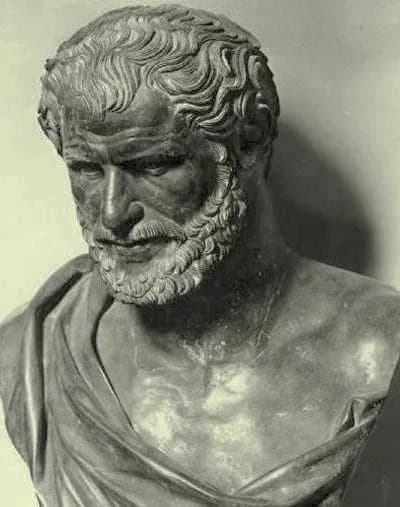
اس وجہ سے جانے جاتے ہیں
Greek philosopher (c. 460–c. 370 BC)
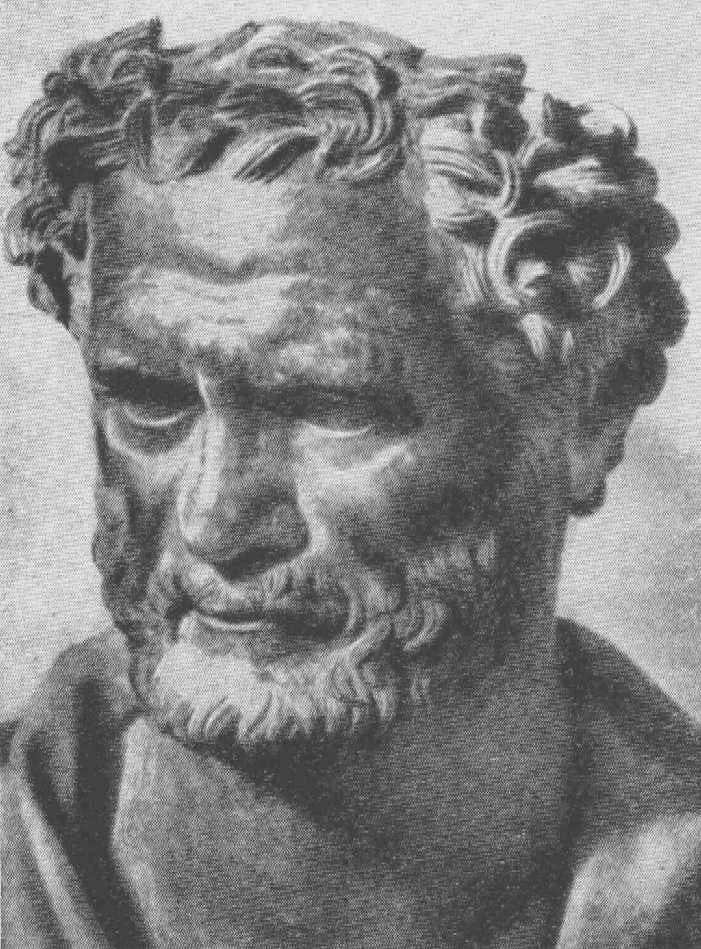
Democritus Democritus (c. 460–c. 370 BC) was a Greek philosopher from Ancient Abdera. He is primarily remembered for developing the atomic theory of the universe, proposing that all matter consists of indivisible particles. His ideas laid a conceptual basis for modern science, influencing thought for millennia.
لمحوں میں ایک زندگی
وہ لمحے جنہوں نے ایک زندگی کو تشکیل دیا

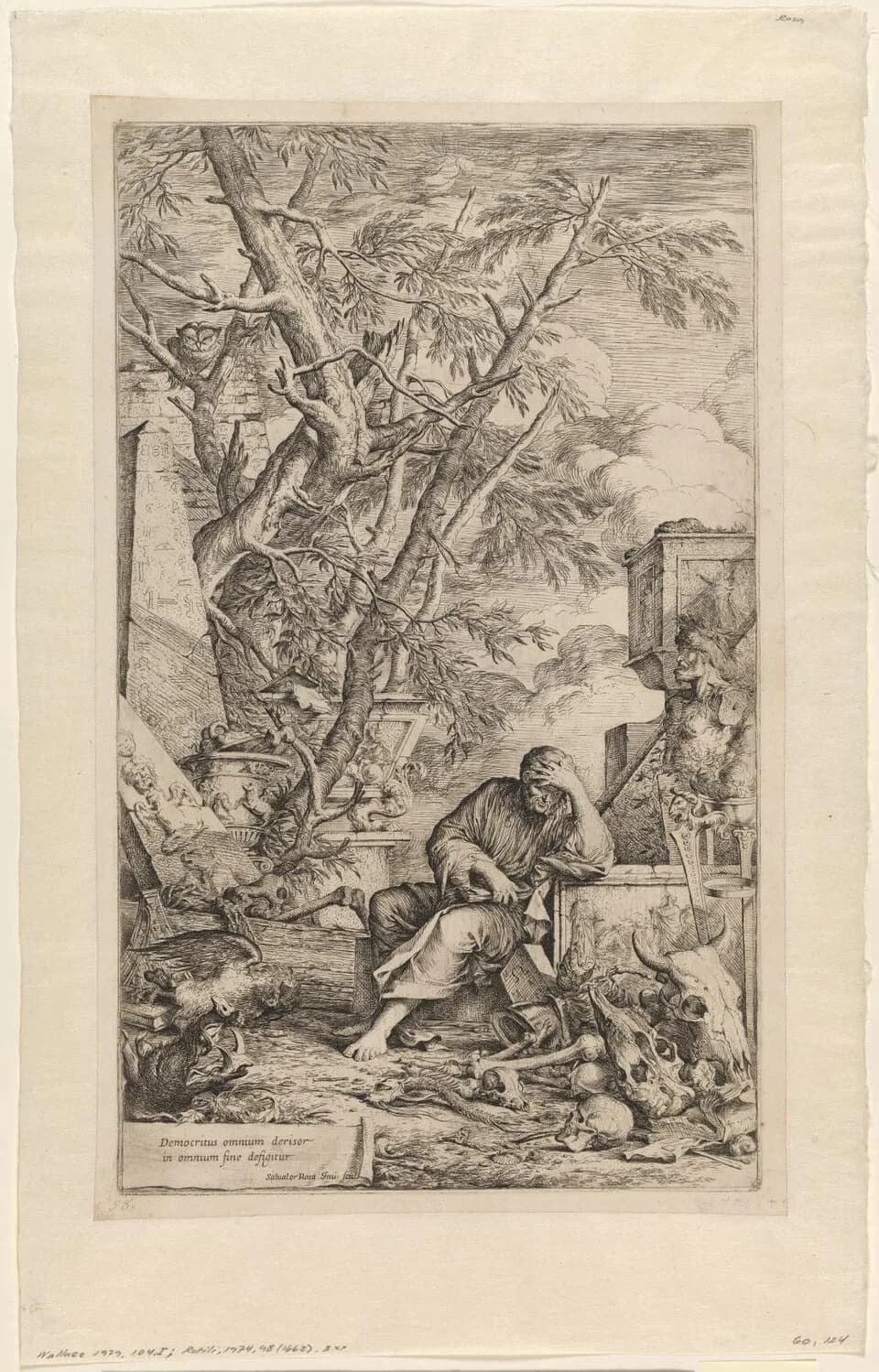
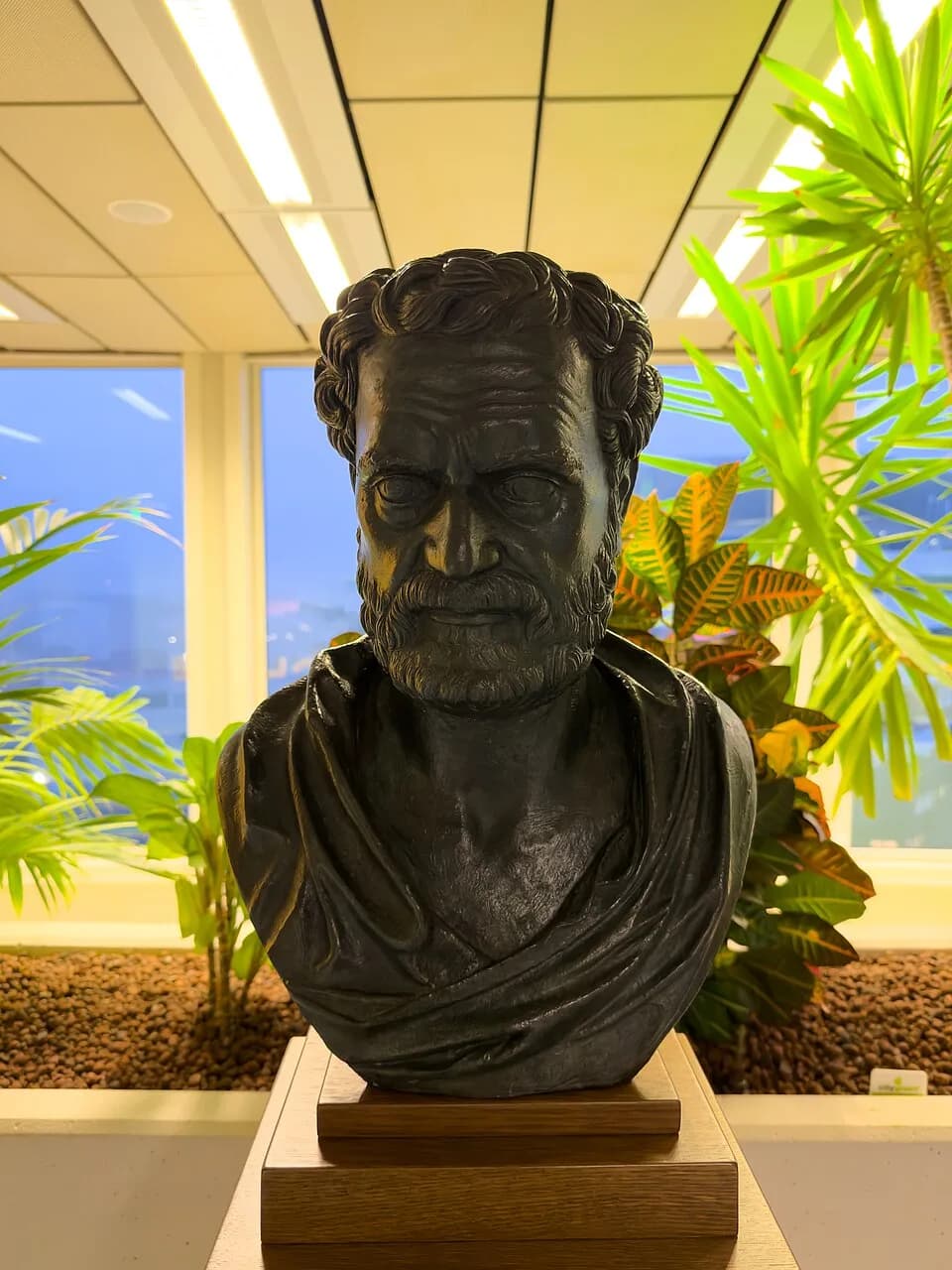
باب
زندگی کے ابواب
باب 1· 7 میں سے باب 1
Early Life and Origins
Born into the culturally rich and intellectually stimulating environment of Ancient Abdera, a prominent Greek city situated in Thrace, Democritus emerged during a period of intense philosophical ferment and exploration in the classical world. Abdera, rather than being a mere provincial outpost, was a recognized center where diverse intellectual currents converged, attracting thinkers and fostering lively philosophical discourse that undoubtedly shaped the young Democritus’s worldview. This unique and stimulating geographical and cultural setting provided an fertile ground for the cultivation of his expansive intellectual curiosity and would inevitably underpin his later, exceptionally comprehensive approach to knowledge, which transcended traditional disciplinary boundaries. While specific biographical details concerning his family lineage, personal upbringing, and early educational experiences remain largely shrouded in the mists of antiquity, the sheer scope and sophistication of his later intellectual output strongly suggest that he hailed from a background of considerable means and privilege. Such favorable circumstances would have afforded him the invaluable leisure, substantial financial resources, and access to the finest instruction necessary for extensive study, protracted periods of contemplation, and the widespread travels that were customary for aspiring scholars of his distinguished era, thus establishing the essential intellectual bedrock for his eventual and profoundly influential career as a pre-eminent thinker of his age. His initial exposure to the world would have been marked by a rigorous and classical education, likely encompassing the foundational liberal arts of the time, including sophisticated rhetoric, advanced mathematics, and the burgeoning field of natural philosophy, meticulously preparing him for the intellectual rigors and profound inquiries that would define his extraordinary life’s work.
باب 2· 7 میں سے باب 2
Career Beginnings
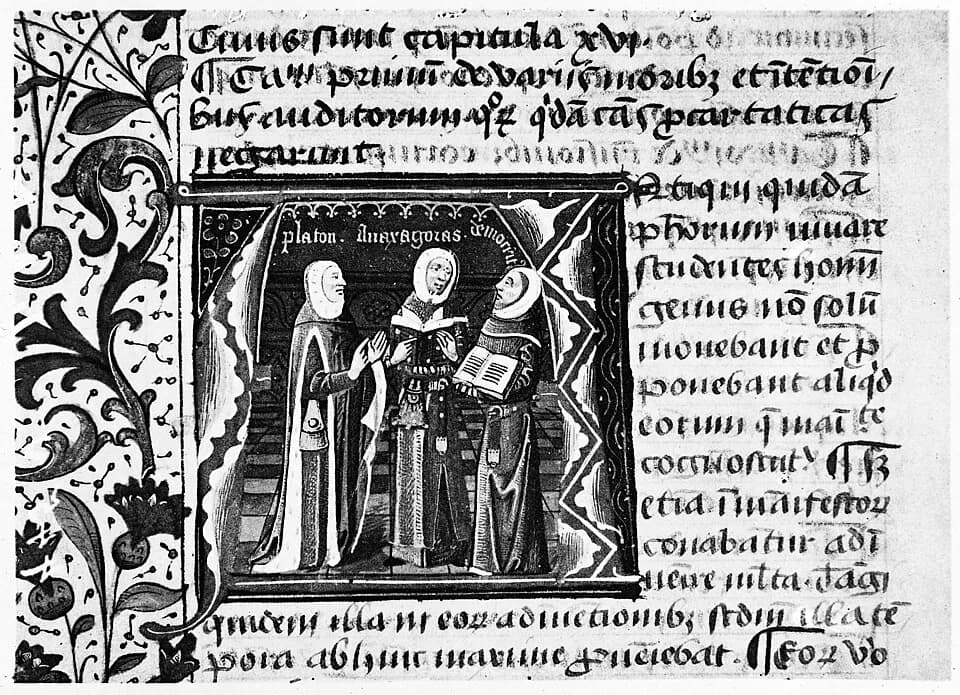
The early stages of Democritus's philosophical career were undoubtedly characterized by an intense period of rigorous study and a deep, critical engagement with the prevailing cosmological and metaphysical debates that animated the intellectual discourse of his classical Greek world. As a pre-Socratic thinker, his primary intellectual impulse was to move beyond the traditional mythological narratives and seek rational, observable principles to explain the fundamental nature of the cosmos and the origins of existence. It is widely posited, consistent with the practices of prominent scholars of his time, that he undertook extensive travels, voyaging across various lands to absorb knowledge, engage with diverse intellectual traditions, and study under different masters in the distinguished cultural and intellectual centers of the ancient world. This period of intellectual peregrination would have been utterly instrumental in the genesis and refinement of his utterly unique philosophical framework, allowing him to judiciously synthesize a multitude of ideas, critically evaluate existing theories, and ultimately forge his own distinct and highly influential path of inquiry. His recorded broad engagement with an exceptionally wide variety of topics, as detailed in later historical accounts of his extensive writings, speaks eloquently to an early and unwavering commitment to an interdisciplinary approach to thought, wherein he perceived different fields of knowledge not as isolated domains but as intrinsically interconnected elements contributing to a unified, coherent understanding of the world’s complex workings. This foundational period of exploration and synthesis was essential for developing the breadth and depth of thought that would later characterize his most significant contributions, particularly his atomic theory.
باب 3· 7 میں سے باب 3
Major Achievements and Career Highlights
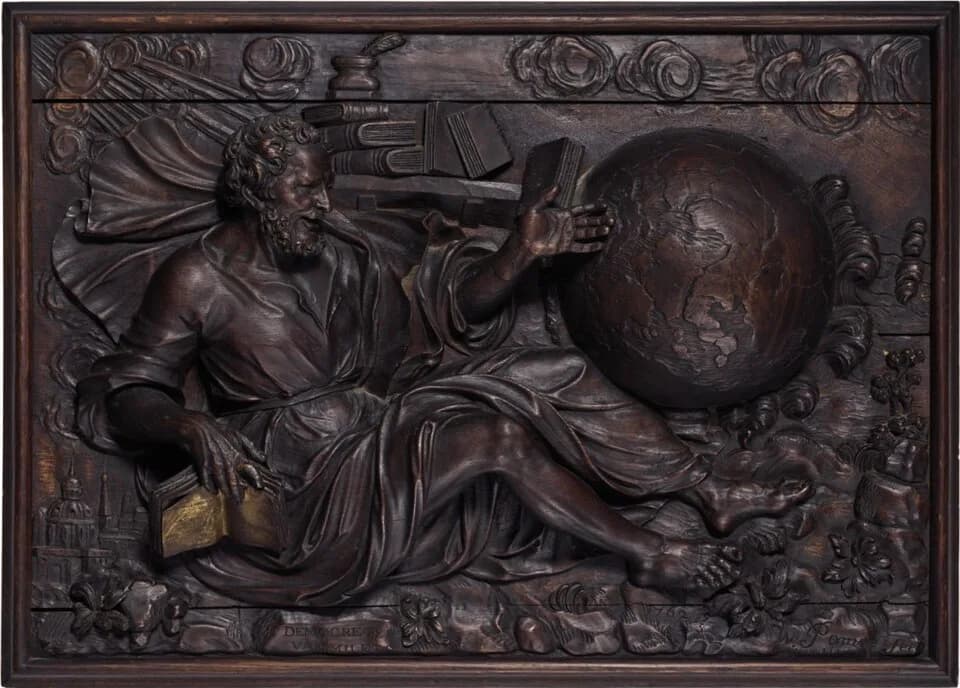
Democritus’s most celebrated and enduring achievement, for which his name continues to resonate through the centuries, is his profound articulation of an atomic theory of the universe, a conceptual feat he developed in close intellectual collaboration with his esteemed mentor, Leucippus. This remarkably innovative theory dared to propose that all discernible matter, from the grand celestial bodies to the minutest grains of sand, consists of an infinite number of imperceptibly small, indivisible, and indestructible particles, which he termed 'atoms,' constantly moving within an infinite, empty void. The theory further posited that the vast diversity of forms and phenomena observed in the world arises solely from the various combinations, arrangements, and motions of these fundamental atoms, a radical materialistic explanation that marked a profound conceptual departure from the more abstract or idealistic philosophies then dominating much of ancient Greek thought. Beyond his groundbreaking philosophical contributions to cosmology and physics, Democritus was also recognized as a skilled mathematician, demonstrating a keen aptitude for precise reasoning and abstract thought, capabilities which undoubtedly informed the rigorous, systematic nature of his atomic model. His multifaceted talents also extended to being an art historian, revealing an appreciation for human creativity, aesthetic principles, and the study of visual culture, thereby illustrating a truly exceptional breadth of intellectual curiosity even within an era renowned for its polymathic scholars. These remarkably diverse intellectual pursuits collectively paint a portrait of a philosopher whose intellectual dedication spanned both the rigorous investigation of the natural world and the nuanced exploration of human experience, all pursued through the unwavering lens of rational inquiry and empirical observation, long before such a scientific method was formally codified.
باب 4· 7 میں سے باب 4
Personal Life
Specific, intimate details concerning Democritus's personal life—such as the names of family members, records of marriages or children, or accounts of close personal friendships—are regrettably not extensively preserved within the fragmentary historical records that have survived from the remote antiquity in which he lived. This scarcity of anecdotal biographical information is a common characteristic when studying many of the pre-Socratic philosophers, where the predominant focus of subsequent historical and philosophical accounts consistently gravitated towards their monumental intellectual output, their revolutionary philosophical doctrines, and their enduring contributions to thought, rather than the mundane specifics of their private existences. Despite this lack of personal detail, it can be reasonably inferred that Democritus’s life was, by and large, an existence singularly dedicated to profound scholarship, relentless intellectual inquiry, and the unwavering pursuit of knowledge, a defining characteristic commonly observed among the most esteemed intellectuals and sages of the ancient Greek world. In his era, the arduous pursuit of wisdom and comprehensive understanding frequently necessitated a lifestyle profoundly devoted to intense contemplation, extensive writing, systematic study, and the demanding practice of teaching, all of which would have collectively structured and defined his daily routines and overarching purpose. While we may lack the vibrant, colorful narratives that illuminate his personal interactions or emotional experiences, his singularly profound and expansive intellectual legacy speaks with immense eloquence to an unparalleled and unwavering dedication to unraveling the fundamental mysteries of the universe and meticulously discerning humanity's intricate place within its grand schema, a devotion that transcended the temporal concerns of individual biography.
باب 5 · 2010· 7 میں سے باب 5
Notable Works or Contributions
Democritus stands as a profoundly prolific writer, whose extensive literary output engaged with an impressive and expansive array of subjects, each contributing to a holistic worldview that underscored his deep, inquisitive intellectual curiosity and his unyielding commitment to comprehending the entire spectrum of existence. While the vast majority of his original, voluminous corpus has, tragically, been lost to the relentless currents of time, the surviving fragments and numerous testimonies from later ancient authors nonetheless provide invaluable glimpses into the sheer breadth and insightful depth of his extraordinarily fertile thought. Among the most significant works explicitly attributed to him, or the meticulously compiled collections of his fragmented thought, is Die Seele, der Sitz des Schicksals (The Soul, the Seat of Destiny), a title that immediately suggests a deep and rigorous philosophical inquiry into the intrinsic nature of the human soul, its inherent properties, and its intricate relationship to the overarching forces of destiny and cosmic order, thereby reflecting his profound concerns about human agency, ethical responsibility, and the ultimate structure of the universe. The monumental collection Democriti Operum Fragmenta, Collegit, Recens. , Vertit F. G. A. Mullachius (Fragments of the Works of Democritus, Collected, Edited, Translated by F. G. A. Mullachius) stands as an enduring intellectual monument, a crucial testament to the sustained, comprehensive scholarly effort across centuries to painstakingly preserve, meticulously translate, and critically analyze the scattered, invaluable remnants of his wide-ranging philosophical and scientific writings. Furthermore, the significant contours of his ethical philosophy are clearly illuminated by titles such as Fragmente der Moral des Democritus (Fragments of the Morality of Democritus) and Die Ethika des Demokritos (The Ethics of Democritus), both of which compellingly indicate his deep and sustained engagement with fundamental questions of virtue, the principles of right conduct, and the ultimate pursuit of the good life, demonstrating that his intellectual inquiries extended far beyond mere cosmological theories into the very essence of human flourishing. Modern academic scholarship continues to rigorously engage with and critically re-evaluate his foundational ideas, a vitality powerfully evidenced by contemporary academic collections like The atomists : Leucippus and Democritus : fragments, a critical edition published in 2010 which has subsequently been cited by numerous other scholars, serving to reintroduce and make accessible his seminal ideas for rigorous contemporary study and ongoing intellectual discourse. These various attested works, whether original titles or modern compilations of his thought, collectively illustrate the dynamic workings of a truly polymathic mind that systematically sought to organize, categorize, and synthesize knowledge across the traditionally distinct domains of metaphysics, natural physics, epistemology, and practical ethics, leaving behind a rich, albeit fragmented, intellectual legacy.
باب 6· 7 میں سے باب 6
Later Years
Democritus was exceptionally fortunate to enjoy an extraordinarily long and intellectually productive life, particularly when viewed against the often-brief life expectancies prevalent in the ancient world, with historical accounts indicating he lived to the remarkable age of approximately ninety years. This extended lifespan, stretching from his birth around 460 BC to his passing around 370 BC, would have endowed him with ample and invaluable time to meticulously refine his sophisticated philosophical theories, to continue his prolific and extensive writing on an array of subjects, and quite possibly to engage in vigorous and intellectually stimulating debates with his many learned contemporaries. During the twilight of his illustrious career and throughout his later years, he would have been a direct witness to, and an intellectual participant in, the significant and often turbulent shifts occurring within the intellectual and philosophical landscape of Greece, including the emergence of influential new philosophical schools and the rise of intellectual giants such as Socrates, Plato, and Aristotle, whose ideas would subsequently and significantly reshape the entire course of Western philosophy for centuries to come. Despite these momentous intellectual transformations and the often-intense philosophical competition, his pioneering atomic theory, though occasionally marginalized or critically re-evaluated by the dominant Platonic and Aristotelian philosophical currents, continued to maintain a quiet yet persistent resonance within certain discerning intellectual circles, preserving its unique conceptual validity. His final years were likely spent in Greece, continuing his unwavering intellectual pursuits with the same fervent dedication that marked his youth, meticulously adding to his vast store of knowledge and insight, thereby leaving behind an intellectual legacy of immense depth and breadth that would, much later, be profoundly rediscovered, rigorously re-evaluated, and ultimately celebrated for its astonishing foresight by the burgeoning scientific minds of the Enlightenment and beyond. The sheer persistence of his philosophical inquiry, sustained with unwavering intensity throughout his long and intellectually rich life, stands as an enduring testament to his unyielding dedication to uncovering fundamental truths and his insatiable quest for comprehensive knowledge, qualities that define the truly great thinkers of any epoch.
باب 7· 7 میں سے باب 7
Legacy and Impact
The enduring and indeed foundational legacy of Democritus rests primarily and most prominently on his pioneering formulation of the atomic theory, an idea so extraordinarily advanced and conceptually sophisticated that its full revolutionary implications and scientific potential were not truly recognized, understood, or rigorously applied until the advent of the scientific revolution, many centuries after his own time. His bold and audacious assertion that the entire universe is fundamentally composed of an infinite multitude of indivisible, unchanging, and imperceptible particles – his 'atoms' – moving within an eternal void, inadvertently laid crucial conceptual basis for the rigorous principles of modern physics and chemistry, even if the dominant intellectual currents of the ancient world frequently favored more abstract, idealistic, or teleological cosmological models. By proposing a fundamentally materialistic and strictly mechanistic view of the universe, where phenomena arose from the interactions of matter and motion rather than divine will or inherent purpose, he courageously challenged the prevailing teleological explanations and, in doing so, powerfully encouraged a more rational and empirical search for natural causes to explain natural phenomena, thereby significantly influencing subsequent scientific and philosophical thought towards a more objective understanding of reality. As one of the most significant and influential pre-Socratic philosophers, he played an absolutely crucial role in firmly establishing the nascent tradition of systematic rational inquiry into the natural world, moving away from purely mythological explanations and instead fostering a rigorous, evidence-based approach that would inspire countless subsequent generations of thinkers to seek out and articulate fundamental, universal principles. His wide-ranging intellectual contributions, spanning his celebrated roles as a philosopher, a diligent mathematician, and a discerning art historian, collectively exemplify the highest ideal of comprehensive wisdom and intellectual versatility so highly prized in ancient Greece, thereby securing his undisputed place as an intellectual giant whose extraordinarily prescient ideas continue, even today, to provoke deep contemplation, stimulate rigorous scientific investigation, and inspire an enduring curiosity about the fundamental nature of existence itself. His atomism, once largely dismissed, stands today as a powerful reminder of the enduring power of speculative thought and its capacity to anticipate future scientific discoveries.
ٹائم لائن
ایک نظر میں زندگی
تصویری گیلری
تصاویر میں ایک زندگی
بڑا کرنے کے لیے کسی بھی پولیرائیڈ پر کلک کریں · 39 تصاویر
QR کوڈ
یہ سوانح عمری شیئر کریں
پرنٹ کریں اور شیئر کریں
اس سوانح عمری کے صفحے کو دیکھنے کے لیے اسکین کریں۔ تقریبات، نمائشوں، یا تعلیمی مواد کے لیے پرنٹ کریں۔