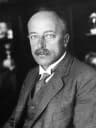
เกิด
April 26, 1879
Dewsbury, United Kingdom
จากไป
February 15, 1959
Alton, United Kingdom
เป็นที่รู้จักจาก
British physicist
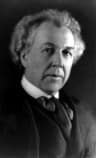
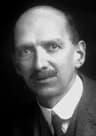
Owen Willans Richardson (1879–1959) was United Kingdom best known for British physicist.
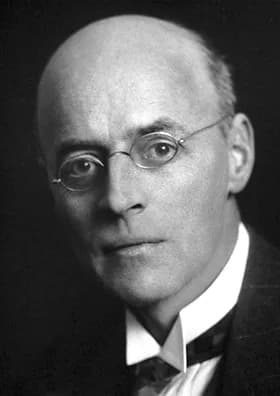
Owen Willans Richardson (April 26, 1879 – February 15, 1959) was a British physicist from Dewsbury, United Kingdom. He received the 1928 Nobel Prize in Physics for his foundational work on thermionic emission and the discovery of Richardson's law, profoundly influencing the field of electronics. His contributions remain essential to physics.
บทที่
บทแห่งชีวิต
บทที่ 1 · 1879· บทที่ 1 จาก 8
Opening Paragraph
Owen Willans Richardson (1879–1959) was a distinguished British physicist whose fundamental research forever changed our understanding of how electricity behaves. A dedicated university teacher and theoretical physicist, Richardson's most celebrated achievement was his groundbreaking work on thermionic emission, which earned him the prestigious Nobel Prize in Physics in 1928. His contributions laid essential groundwork for much of modern electronics.
บทที่ 2 · 1879· บทที่ 2 จาก 8
Early Life and Origins
Born on April 26, 1879, in Dewsbury, United Kingdom, Owen Willans Richardson began his life in a period of significant scientific advancement. While specific details about his family and early upbringing are not provided in available records, his path clearly led him toward an extraordinary career in the physical sciences. His early environment in the United Kingdom undoubtedly contributed to his intellectual formation and pursuit of knowledge.
บทที่ 3· บทที่ 3 จาก 8
Career Beginnings
Before achieving global recognition, Owen Willans Richardson established himself as a dedicated physicist and university teacher. His early career as a theoretical physicist involved meticulous research, setting the stage for his most significant discoveries. This foundational period allowed him to explore the properties of matter and energy, ultimately leading to his focused study of electron behavior.
บทที่ 4 · 1928· บทที่ 4 จาก 8
Major Achievements and Career Highlights
Owen Willans Richardson's career was defined by his extraordinary contributions to physics, culminating in the 1928 Nobel Prize in Physics. This esteemed award recognized his profound work on the thermionic phenomenon, particularly for the discovery of the law named after him: Richardson's law. This law describes the emission of electrons from hot metals, a process central to the operation of vacuum tubes and early electronic devices.
His careful experiments and theoretical insights allowed him to explain why heated materials emit electrons, a crucial concept in the development of radio, television, and computing. The Nobel Committee specifically highlighted his meticulous research and the enduring significance of his findings. Being knighted as Sir Owen Willans Richardson further acknowledged his considerable standing within the scientific community.
บทที่ 5· บทที่ 5 จาก 8
Personal Life
Details regarding Owen Willans Richardson's personal life, family, and specific interests beyond his scientific pursuits are not extensively documented in the provided information. His public record primarily focuses on his academic and research endeavors, which were indeed a central part of his existence. While much about his private world remains outside this account, his scientific legacy speaks volumes about his dedication.
บทที่ 6· บทที่ 6 จาก 8
Notable Works or Contributions
Owen Willans Richardson was a prolific academic, with an h-index of 18 and a total of 147 published papers, demonstrating a sustained commitment to research and scholarly communication. The h-index reflects both the productivity and citation impact of a scientist's publications, indicating that his work was frequently cited by other researchers.
Among his top works, "The Emission of Electricity from Hot Bodies" stands out, having been cited 355 times since its 2007 publication, indicating its enduring relevance as a foundational text. This work, alongside "Thermionic phenomena and the laws which govern them," published in 2018 with 23 citations, encapsulates his core research area. Other notable papers include "the Quantum Theory o f the Simple Zeeman Effect." (2017, 0 citations), "r. Thermionic Work-Functions and Photo-electric Thresholds of the A lkali Metals." (2017, 0 citations), and "Energy Losses of Electrons in Nitrogen." (2017, 0 citations). The more recent publication years for these papers suggest they are likely re-publications or collected works of his earlier, seminal research.
บทที่ 7 · 1959· บทที่ 7 จาก 8
Later Years
Sir Owen Willans Richardson concluded a life dedicated to scientific inquiry, passing away on February 15, 1959, in Alton, United Kingdom. His later years would have seen the fruits of his early research become integral to burgeoning fields of technology. His passing marked the end of an era for a physicist whose contributions had already shaped a new technological age.
บทที่ 8· บทที่ 8 จาก 8
Legacy and Impact
The legacy of Owen Willans Richardson is firmly cemented in the annals of physics and electrical engineering. His discovery of Richardson's law and his comprehensive work on thermionic emission provided the essential theoretical framework for understanding how electrons are emitted from heated surfaces. This understanding was indispensable for the development of vacuum tubes, which formed the backbone of early radio, television, and computing technologies.
His work continues to be a cornerstone in solid-state physics and materials science, influencing research into new electronic components and energy conversion devices. As a Nobel laureate, Sir Owen Willans Richardson's name remains synonymous with fundamental research that transcends academic boundaries, continuing to inspire physicists and engineers worldwide. His foundational insights continue to resonate, highlighting the enduring power of pure scientific discovery.
ชีวิตในแต่ละช่วงเวลา
ช่วงเวลาที่หล่อหลอมชีวิต
FAQ
คำถามที่พบบ่อย
Owen Willans Richardson เสียชีวิตเมื่อใด?
Owen Willans Richardson เสียชีวิตเมื่อวันที่ 15 กุมภาพันธ์ 2502 ที่ Alton, United Kingdom ขณะอายุ 79 ปี
Owen Willans Richardson เกิดที่ไหน?
Owen Willans Richardson เกิดที่ Dewsbury, United Kingdom เมื่อวันที่ 26 เมษายน 2422
Owen Willans Richardson เป็นที่รู้จักจากอะไรมากที่สุด?
Owen Willans Richardson เป็นที่รู้จักมากที่สุดจาก British physicist
Owen Willans Richardson อายุเท่าไหร่ตอนเสียชีวิต?
Owen Willans Richardson อายุ 79 ปี ตอนเสียชีวิต
Owen Willans Richardson เป็นชาวอะไร?
Owen Willans Richardson มาจาก United Kingdom
ไทม์ไลน์
ชีวิตโดยย่อ
แกลเลอรีภาพถ่าย
ชีวิตในภาพ
คลิกที่โพลารอยด์ใดก็ได้เพื่อขยาย · 45 ภาพ
QR โค้ด
แบ่งปันประวัตินี้
พิมพ์และแบ่งปัน
สแกนเพื่อเยี่ยมชมหน้าประวัตินี้ พิมพ์สำหรับงานกิจกรรม นิทรรศการ หรือสื่อการศึกษา