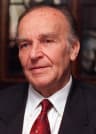
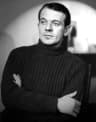
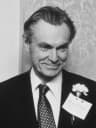
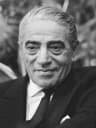
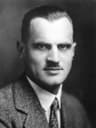
เกิด
October 31, 1925
Burnham-on-Sea, United Kingdom
จากไป
March 15, 2004
Chicago, United States
เป็นที่รู้จักจาก
Nobel prize winning British chemist
John Pople (1925–2004) was United Kingdom best known for Nobel prize winning British chemist.
Sir John Pople (October 31, 1925 – March 15, 2004) was a British theoretical chemist, physicist, and mathematician. He was awarded the Nobel Prize in Chemistry in 1998 for his development of computational methods in quantum chemistry, fundamentally changing how researchers study molecules.
บทที่
บทแห่งชีวิต
บทที่ 1 · 1925· บทที่ 1 จาก 6
Opening
Sir John Pople (October 31, 1925 – March 15, 2004) was a distinguished British theoretical chemist, physicist, and mathematician whose scientific contributions fundamentally reshaped the field of quantum chemistry. His pioneering work in developing computational methods allowed researchers to accurately model molecular structures and reactions, previously a challenge of immense complexity. This fundamental advancement earned him a share of the Nobel Prize in Chemistry in 1998, recognizing the lasting influence of his innovations on scientific inquiry and technological progress. His career as a university teacher also influenced generations of aspiring scientists, extending his legacy far beyond his direct research.
บทที่ 2 · 1925· บทที่ 2 จาก 6
Early Life and Foundations
John Anthony Pople was born on October 31, 1925, in Burnham-on-Sea, a coastal town in the United Kingdom. His early life in Britain laid the groundwork for a future devoted to understanding the intricate laws governing the physical world. While specific details of his upbringing remain private, his path clearly led him towards rigorous academic pursuits in physics, mathematics, and ultimately, chemistry. This interdisciplinary foundation would prove critical in his later scientific endeavors, allowing him to bridge theoretical concepts with practical computational applications.
บทที่ 3· บทที่ 3 จาก 6
Scientific Career and Early Contributions
Pople embarked on a distinguished academic career that saw him become a leading figure in theoretical chemistry. He applied his keen intellect as a physicist and mathematician to tackle some of chemistry's most challenging problems. Early in his career, he began to explore how quantum mechanics could be harnessed to predict and explain chemical phenomena. This pioneering vision set him on a trajectory to develop entirely new ways of approaching molecular science, moving beyond traditional experimental methods.
บทที่ 4 · 1998· บทที่ 4 จาก 6
The Nobel Recognition
The culmination of Pople’s extensive work was recognized globally in 1998 when he was awarded the Nobel Prize in Chemistry. He shared this prestigious honor with Walter Kohn, a testament to his individual contributions to scientific advancement. The Nobel Committee specifically cited his 'development of computational methods in quantum chemistry' as the reason for the award. This recognition underscored how his theoretical frameworks had transformed the understanding and practice of chemical research, enabling a deeper insight into molecular behavior.
บทที่ 5· บทที่ 5 จาก 6
Contributions to Computational Chemistry
As a British theoretical chemist, Pople's principal achievement centered on making quantum chemistry a practical tool for everyday research. His computational methods provided reliable algorithms that could be implemented on computers to calculate the properties of molecules. These calculations, which were once considered intractable, became accessible through the techniques he developed, significantly accelerating progress in various chemical disciplines. His work effectively brought quantum mechanics from the abstract theoretical domain into the computational laboratory, empowering chemists to design new materials and drugs with unprecedented precision.
His work blurred the lines between his diverse professions, demonstrating how physics and mathematics could serve as powerful engines for chemical discovery. The development of his computational approaches allowed scientists to simulate chemical reactions and predict molecular characteristics without always needing extensive experimental setups. This efficiency and predictive power established his methods as fundamental tools in modern chemistry, impacting everything from drug discovery to materials science.
บทที่ 6 · 2004· บทที่ 6 จาก 6
Later Life and Enduring Legacy
Sir John Pople’s later years continued to reflect a deep engagement with the scientific community, even after his monumental Nobel recognition. He passed away on March 15, 2004, in Chicago, United States, leaving behind a legacy of significant scientific innovation. His influence is clearly demonstrated by his impressive academic record, which includes an h-index of 137 derived from 608 published papers, signifying a career of prolific and highly cited research. His overall publication record speaks volumes about his long and impactful career.
Pople's legacy extends beyond individual accolades, residing in the everyday practice of modern chemistry. The computational methods he developed are now standard tools in university laboratories and industrial research facilities worldwide. He enabled a paradigm shift, allowing chemists to perform 'thought experiments' on computers, thereby accelerating discovery and innovation. His work continues to shape how scientists approach the study of the molecular world, ensuring his foundational contributions remain central to the advancement of chemistry and related fields for generations to come.
ชีวิตในแต่ละช่วงเวลา
ช่วงเวลาที่หล่อหลอมชีวิต


FAQ
คำถามที่พบบ่อย
John Pople เสียชีวิตเมื่อใด?
John Pople เสียชีวิตเมื่อวันที่ 15 มีนาคม 2547 ที่ Chicago, United States ขณะอายุ 78 ปี
John Pople เกิดที่ไหน?
John Pople เกิดที่ Burnham-on-Sea, United Kingdom เมื่อวันที่ 31 ตุลาคม 2468
John Pople เป็นที่รู้จักจากอะไรมากที่สุด?
John Pople เป็นที่รู้จักมากที่สุดจาก Nobel prize winning British chemist
John Pople อายุเท่าไหร่ตอนเสียชีวิต?
John Pople อายุ 78 ปี ตอนเสียชีวิต
John Pople เป็นชาวอะไร?
John Pople มาจาก United Kingdom
ไทม์ไลน์
ชีวิตโดยย่อ
แกลเลอรีภาพถ่าย
ชีวิตในภาพ
คลิกที่โพลารอยด์ใดก็ได้เพื่อขยาย · 14 ภาพ
QR โค้ด
แบ่งปันประวัตินี้
พิมพ์และแบ่งปัน
สแกนเพื่อเยี่ยมชมหน้าประวัตินี้ พิมพ์สำหรับงานกิจกรรม นิทรรศการ หรือสื่อการศึกษา