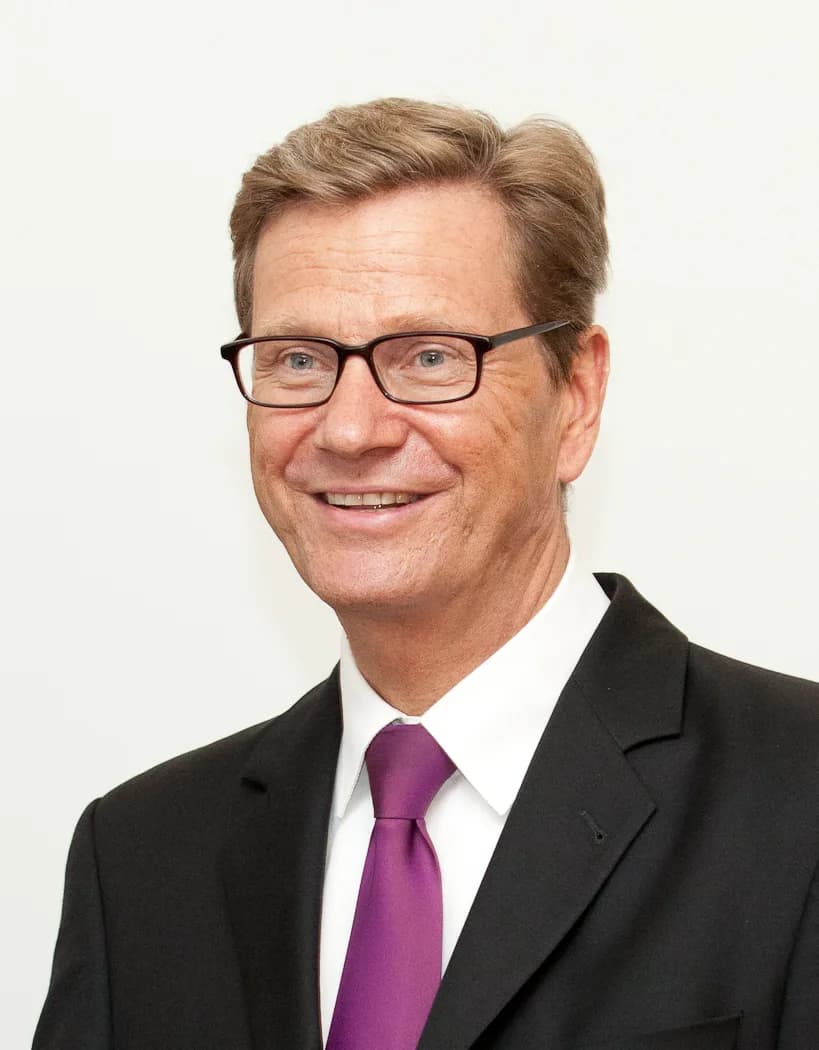
เกิด
December 27, 1961
Bad Honnef, Germany
จากไป
March 18, 2016
Cologne, Germany
เป็นที่รู้จักจาก
German politician (FDP), Foreign Minister of Germany
Guido Westerwelle (1961–2016) was Germany best known for German politician (FDP), Foreign Minister of Germany.
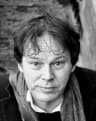
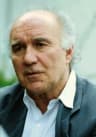
Guido Westerwelle (December 27, 1961 – March 18, 2016) was a German politician, lawyer, and writer from Bad Honnef, Germany. He served as Germany's Foreign Minister and Vice-Chancellor, becoming the first openly gay person to hold these significant offices. His leadership of the Free Democratic Party and his contributions to international diplomacy left a lasting mark on German politics.
บทที่
บทแห่งชีวิต
บทที่ 1 · 1961· บทที่ 1 จาก 7
Early Life and Origins
Guido Westerwelle was born on December 27, 1961, in Bad Honnef, Germany, a town nestled along the Rhine. From an early age, he was exposed to a politically aware environment, which likely influenced his future career path. He pursued higher education, qualifying as a lawyer, a profession that provided him with a strong foundation in legal and constitutional principles, which he later applied in his political work.
บทที่ 2 · 1996· บทที่ 2 จาก 7
Career Beginnings
Westerwelle's political career began with an active involvement in the Free Democratic Party (FDP), where he quickly distinguished himself. He was first elected as a member of the Bundestag, the German federal parliament, in 1996, a position he held continuously until 2013. This period in parliament allowed him to hone his political skills and deepen his understanding of national policy-making.
His leadership qualities became evident early on, leading to his election as the leader of the FDP in 2001. Under his guidance, the party aimed to rejuvenate its image and policy positions, appealing to a broader segment of the German electorate. He remained at the helm of the FDP for a decade, stepping down in 2011.
บทที่ 3 · 2009· บทที่ 3 จาก 7
Major Achievements and Career Highlights
Guido Westerwelle achieved some of the highest political offices in Germany, marking significant milestones in his career and for the country. From 2009 to 2011, he served as Vice-Chancellor of Germany, a crucial role in the federal government. Concurrently, he took on the demanding portfolio of Foreign Minister of Germany in the second cabinet of Chancellor Angela Merkel.
These appointments were particularly notable because Westerwelle was the first openly gay person to hold either of these high-ranking positions in Germany. This aspect of his public life was widely recognized and contributed to broader discussions about diversity and representation in politics. His tenure as Foreign Minister saw him travel extensively, representing Germany on the global stage and advocating for human rights and liberal values.
บทที่ 4· บทที่ 4 จาก 7
Personal Life
Guido Westerwelle's personal life intersected with his public service in a significant way. His openness about his sexual orientation marked a historic moment in German politics. As the first openly gay person to serve as both Vice-Chancellor and Foreign Minister, he broke barriers and became a symbol of progress for many in Germany and beyond. This aspect of his identity was a part of his public persona, demonstrating that sexual orientation was not an impediment to holding the highest offices.
บทที่ 5· บทที่ 5 จาก 7
Notable Works or Contributions
Beyond his political speeches and policy work, Guido Westerwelle also contributed to public discourse through his writings. His bibliography reflects his deep engagement with political and economic thought, offering insights into his liberal philosophy. Among his works are "Summa Summarum Von Politik und Wirtschaft," which he presented in cooperation with FDP Ludwigsburg, exploring the intersections of governance and the economy.
Other notable titles include "Von der Gefälligkeitspolitik zur Verantwortungsgesellschaft," advocating for a shift towards greater individual and societal responsibility. He also authored "Neuland" and "Neuland. Die Zukunft des deutschen Liberalismus.," which outlined his vision for the future direction of German liberalism. Further contributions include "Kultur und globale Entwicklung" and "Berlin zeichnet," showcasing his diverse intellectual interests.
บทที่ 6 · 2011· บทที่ 6 จาก 7
Later Years
After a decade leading the Free Democratic Party, Guido Westerwelle stepped down from the party chairmanship in 2011, making way for new leadership. He continued to serve as Foreign Minister until the end of the second Merkel cabinet in 2013. Following this, he concluded his long tenure as a member of the Bundestag, choosing not to seek re-election.
In the years after leaving active politics, Westerwelle remained engaged in public life through various initiatives, including his work with the Westerwelle Foundation for International Understanding. He passed away on March 18, 2016, in Cologne, Germany, after a battle with leukemia. His passing was mourned across the political spectrum, with many remembering his dedication and service to Germany.
บทที่ 7· บทที่ 7 จาก 7
Legacy and Impact
Guido Westerwelle's legacy is defined by his unwavering commitment to liberal principles and his pioneering role in German politics. As a leader of the FDP, he shaped the party's agenda for a decade and contributed to its participation in a coalition government. His tenure as Foreign Minister saw him navigate complex international relations, always with an eye toward promoting democracy and human rights.
Perhaps one of his most significant lasting impacts was his role as the first openly gay individual to hold the positions of Vice-Chancellor and Foreign Minister in Germany. This achievement helped normalize LGBTQ+ representation in high-level politics, fostering a more inclusive political environment. His life and career continue to inspire those who believe in the power of public service and the importance of personal integrity in leadership.
ชีวิตในแต่ละช่วงเวลา
ช่วงเวลาที่หล่อหลอมชีวิต
FAQ
คำถามที่พบบ่อย
Guido Westerwelle เสียชีวิตเมื่อใด?
Guido Westerwelle เสียชีวิตเมื่อวันที่ 18 มีนาคม 2559 ที่ Cologne, Germany ขณะอายุ 54 ปี
Guido Westerwelle เกิดที่ไหน?
Guido Westerwelle เกิดที่ Bad Honnef, Germany เมื่อวันที่ 27 ธันวาคม 2504
Guido Westerwelle เป็นที่รู้จักจากอะไรมากที่สุด?
Guido Westerwelle เป็นที่รู้จักมากที่สุดจาก German politician (FDP), Foreign Minister of Germany
Guido Westerwelle อายุเท่าไหร่ตอนเสียชีวิต?
Guido Westerwelle อายุ 54 ปี ตอนเสียชีวิต
Guido Westerwelle เป็นชาวอะไร?
Guido Westerwelle มาจาก Germany
ไทม์ไลน์
ชีวิตโดยย่อ
แกลเลอรีภาพถ่าย
ชีวิตในภาพ
คลิกที่โพลารอยด์ใดก็ได้เพื่อขยาย · 45 ภาพ
QR โค้ด
แบ่งปันประวัตินี้
พิมพ์และแบ่งปัน
สแกนเพื่อเยี่ยมชมหน้าประวัตินี้ พิมพ์สำหรับงานกิจกรรม นิทรรศการ หรือสื่อการศึกษา