జన్మించారు
May 29, 1929
Newcastle upon Tyne, United Kingdom
మరణించారు
April 8, 2024
Edinburgh, United Kingdom
దీని కోసం పేరు పొందారు
British physicist and Nobel Prize winner
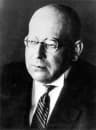
Peter Higgs (1929–2024) was United Kingdom best known for British physicist and Nobel Prize winner.
Peter Higgs (May 29, 1929 – April 8, 2024) was a British theoretical physicist. He was a Nobel laureate, known for his work on the origin of mass in subatomic particles, confirmed by experiments at CERN. His legacy profoundly shaped modern particle physics.
అధ్యాయం
జీవిత అధ్యాయాలు
అధ్యాయం 1 · 1929· 7లో అధ్యాయం 1
Opening
Peter Higgs (May 29, 1929 – April 8, 2024) was a distinguished British theoretical physicist and a revered university teacher. He was widely celebrated for his significant contributions to our understanding of fundamental physics, which culminated in a Nobel Prize. His pioneering work ultimately led to a crucial insight into how matter acquires mass, cementing his place in scientific history. Higgs’s enduring legacy is intertwined with one of the most important discoveries in modern particle physics, forever altering our view of the universe's most basic constituents.
అధ్యాయం 2 · 1929· 7లో అధ్యాయం 2
Early Life and Origins
Peter Higgs was born on May 29, 1929, in the vibrant city of Newcastle upon Tyne, located in the United Kingdom. His formative years in Britain laid the intellectual foundation for a future dedicated to rigorous scientific inquiry. The environment of his youth undoubtedly fostered a deep curiosity for the intricate workings of the natural world, setting him on a path of academic pursuit. This foundational period in Newcastle upon Tyne was crucial, shaping the early intellectual development of a scientist who would later redefine our understanding of the universe at its most fundamental level.
He pursued his education with a keen focus on physics, developing the analytical skills that would become the hallmark of his distinguished career. His early studies immersed him in the complex world of theoretical science, preparing him for the challenges of significant research. These foundational experiences instilled in him a meticulous approach to scientific problems, a trait that would prove invaluable in his future endeavors.
అధ్యాయం 3· 7లో అధ్యాయం 3
Career Beginnings
Higgs began his impactful career as a physicist, dedicating himself to the theoretical exploration of the universe's most fundamental principles. His academic journey eventually led him to the esteemed University of Edinburgh, where he distinguished himself as a professor. Throughout his long and illustrious academic life, he was known for his rigorous approach to complex problems, challenging existing paradigms and seeking deeper truths. His early work focused on various aspects of theoretical physics, gradually setting the stage for the revolutionary insights that would ultimately bear his name.
His tenure at the University of Edinburgh provided a fertile ground for intellectual exploration and collaboration. It was in this stimulating environment that he refined his ideas and developed the theoretical framework that would later bring him international acclaim. His commitment to teaching also meant he influenced generations of students, instilling in them a passion for scientific discovery. The early phases of his career were characterized by a relentless pursuit of knowledge and a dedication to advancing the frontiers of physics.
అధ్యాయం 4 · 2013· 7లో అధ్యాయం 4
Major Achievements and Career Highlights
Peter Higgs's most celebrated achievement centered on the theoretical discovery of a mechanism crucial to our understanding of the origin of mass in subatomic particles. This important theory, first proposed by Higgs and others in the mid-1960s, explained how fundamental particles acquire mass when they interact with a pervasive field. The significant implications of his work were globally recognized when he was awarded the Nobel Prize in Physics in 2013, honoring decades of intellectual foresight. The Nobel Committee specifically acknowledged him for this central theoretical insight, which transformed particle physics.
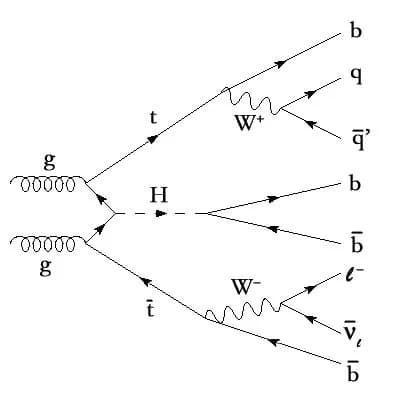
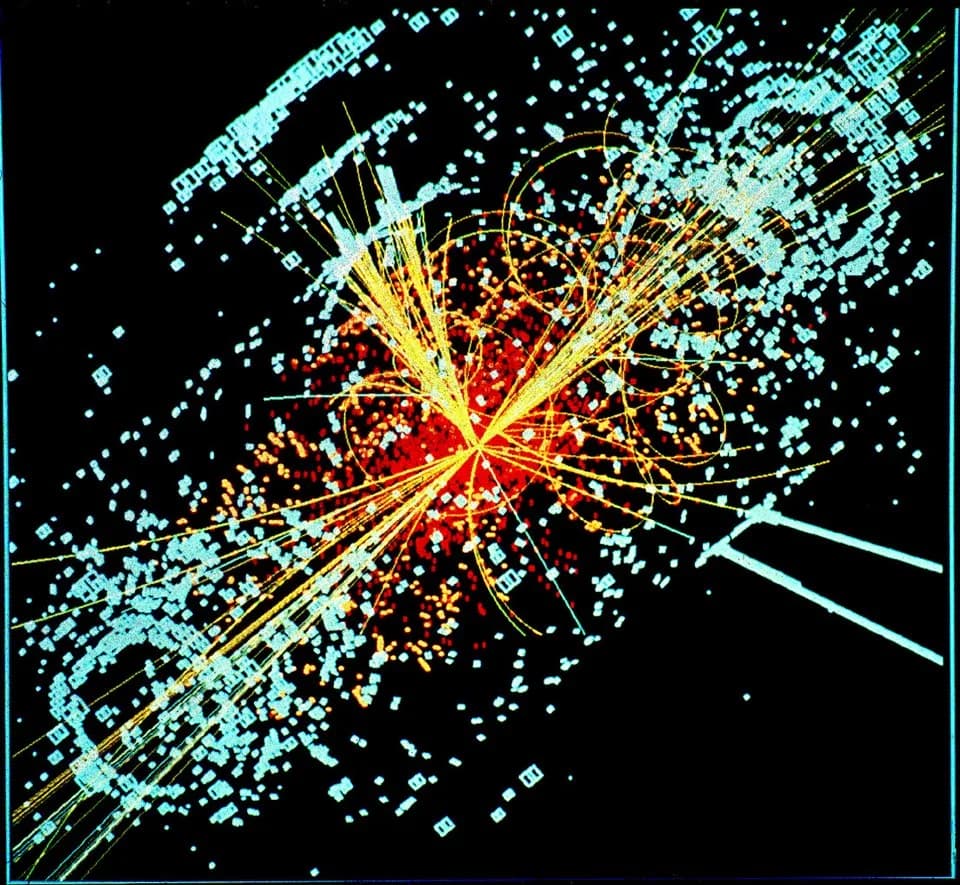
His theoretical work culminated in the prediction of a new fundamental particle, an essential component of the mass-generating mechanism. This elusive particle became one of the most sought-after discoveries in modern physics for nearly half a century. The monumental confirmation of its existence came through the ATLAS and CMS experiments, conducted with precision at CERN's Large Hadron Collider. The experimental evidence provided tangible, irrefutable proof of the mechanism Higgs had theorized, marking a triumph for both theory and experiment.
The discovery of the predicted fundamental particle, often colloquially referred to as the "Higgs boson," represented a monumental triumph for the Standard Model of particle physics. It provided the long-sought-after missing piece in our comprehension of how particles acquire mass, allowing for a consistent description of the fundamental forces. This momentous achievement not only validated Higgs's decades-old theory but also opened entirely new avenues for exploration in high-energy physics, prompting further investigations into the universe's deepest secrets. The 2013 Nobel Prize affirmed the immense and lasting significance of his intellectual contributions to science.
అధ్యాయం 5· 7లో అధ్యాయం 5
Notable Works or Contributions
Higgs's singular and most profound contribution was his theoretical discovery concerning the origin of mass for subatomic particles. This mechanism proposed a pervasive, invisible field, now universally known as the Higgs field, through which elementary particles acquire mass by interacting with it to varying degrees. His pioneering insights provided an elegant and robust theoretical framework that significantly influenced the direction of particle physics research for half a century, guiding experiments and shaping scientific thought. The existence of this mechanism and its associated particle was his most significant intellectual offering to the scientific community.
The theoretical framework developed by Peter Higgs offered a crucial solution to a fundamental problem within the Standard Model, addressing why elementary particles possess mass rather than being massless. Before his work, many theoretical models struggled to reconcile the observed masses of particles with fundamental symmetries. His proposition provided a consistent and verifiable explanation, ultimately laying the groundwork for the most ambitious experimental endeavors in physics. This theoretical proposition remains his definitive and lasting contribution to the collective understanding of the physical world.
అధ్యాయం 6 · 2024· 7లో అధ్యాయం 6
Later Years
Peter Higgs continued to be a respected and revered figure in the global scientific community throughout his later years. After decades of dedicated research and teaching, his theories had moved from abstract concepts to experimentally verified realities, bringing him well-deserved recognition. He passed away peacefully on April 8, 2024, in Edinburgh, United Kingdom, the very city where he had spent a significant portion of his illustrious academic career. His passing marked the end of an era for a physicist whose important ideas had reshaped our fundamental understanding of the universe.
Even in his later life, the considerable influence of his work continued to resonate across the scientific community, inspiring new generations of physicists. He witnessed the culmination of decades of research, seeing his theoretical predictions validated by international collaborations and monumental scientific instruments. Peter Higgs left behind a legacy that continues to inspire curiosity, rigorous inquiry, and the relentless pursuit of knowledge among scientists worldwide.
అధ్యాయం 7· 7లో అధ్యాయం 7
Legacy and Impact
The legacy of Peter Higgs is truly immense, fundamentally altering the field of theoretical and particle physics in important ways. His theoretical work provided a critical cornerstone for the Standard Model of particle physics, offering an essential explanation for the existence of mass throughout the universe. The subsequent experimental confirmation of his predicted fundamental particle solidified his status as one of the most influential physicists of the 20th and 21st centuries. His insights will continue to guide future generations of scientists in their quest to unravel the universe's deepest mysteries.
Higgs's contributions extended beyond academic theory, directly affecting experimental physics and necessitating the construction of massive research facilities like CERN's Large Hadron Collider. The global quest to find the "Higgs boson" enthralled the scientific world and the public alike, demonstrating the extraordinary power of theoretical prediction in driving monumental scientific progress. His work continues to shape our understanding of the fundamental constituents of reality, leaving an enduring and lasting mark on the scientific community and beyond. The mechanism he theorized remains central to modern physics and is a symbol of his intellectual genius.
క్షణాలలో ఒక జీవితం
ఒక జీవితాన్ని రూపొందించిన క్షణాలు


FAQ
తరచుగా అడిగేవి
Peter Higgs ఎప్పుడు మరణించారు?
Peter Higgs 8 ఏప్రిల్, 2024 న Edinburgh, United Kingdom లో మరణించారు, 94 ఏళ్ల వయసులో.
Peter Higgs ఎక్కడ జన్మించారు?
Peter Higgs Newcastle upon Tyne, United Kingdom లో 29 మే, 1929 న జన్మించారు.
Peter Higgs దేనికి ఎక్కువగా ప్రసిద్ధులు?
Peter Higgs British physicist and Nobel Prize winner కోసం ఎక్కువగా ప్రసిద్ధులు.
మరణించే సమయంలో Peter Higgs వయసు ఎంత?
మరణించే సమయంలో Peter Higgs వయసు 94 సంవత్సరాలు.
Peter Higgs జాతీయత ఏమిటి?
Peter Higgs United Kingdom నుండి వచ్చారు.
కాలక్రమం
ఒక చూపులో జీవితం
ఫోటో గ్యాలరీ
చిత్రాలలో ఒక జీవితం
విస్తరించడానికి ఏదైనా పోలరాయిడ్ను క్లిక్ చేయండి · 49 ఫోటోలు
QR కోడ్
ఈ జీవిత చరిత్రను పంచుకోండి
ముద్రించండి మరియు పంచుకోండి
ఈ జీవిత చరిత్ర పేజీని సందర్శించడానికి స్కాన్ చేయండి. ఈవెంట్లు, ప్రదర్శనలు లేదా విద్యా సామగ్రి కోసం ముద్రించండి.