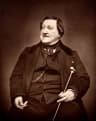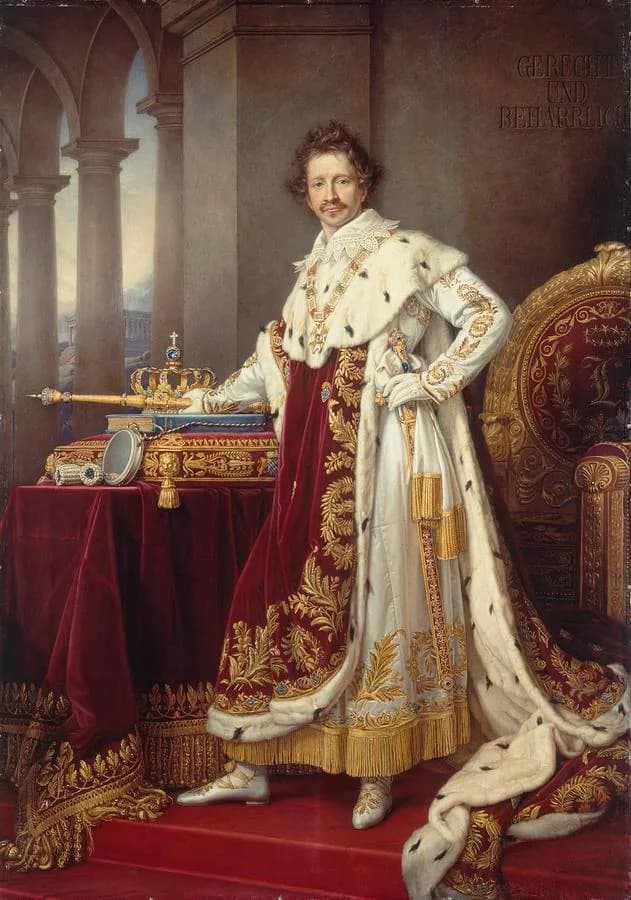
Lindur
August 25, 1786
Strasbourg, France
Vdekur
February 29, 1868
Nice, France
I njohur për
King of Bavaria
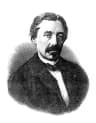
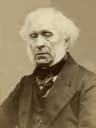
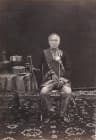
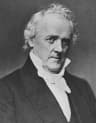
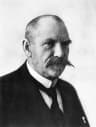
Ludwig I of Bavaria (1786–1868) was France best known for King of Bavaria.
Ludwig I of Bavaria (August 25, 1786 – February 29, 1868) was King of Bavaria and a poet. He encouraged industrialization, initiated the Ludwig Canal, and oversaw the first German railway. His reign fostered economic growth before concluding with his abdication during the 1848 revolutions.
Kapitulli
Kapitujt e jetës
Kapitulli 1 · 1786· Kapitulli 1 nga 7
Early Life and Origins
Ludwig I was born on August 25, 1786, in Strasbourg, France, a time when Europe was on the cusp of significant political upheaval. As a crown prince, he was immersed in the royal traditions and expectations of his lineage. His early years were undoubtedly influenced by the turbulent political climate that swept across the continent, preparing him for a future role that would require both statesmanship and adaptability.
Kapitulli 2· Kapitulli 2 nga 7
Career Beginnings
Before ascending to the throne, Crown Prince Ludwig was involved in the Napoleonic Wars, a conflict that redefined European power dynamics. This early exposure to military and political strife provided him with firsthand experience of large-scale international relations and their impact on sovereign states. Such involvement would likely have informed his perspective on governance and the importance of national strength as he prepared for his eventual kingship.
Kapitulli 3 · 1825· Kapitulli 3 nga 7
Major Achievements and Career Highlights
Upon becoming King of Bavaria in 1825, Ludwig I embarked on a concerted effort to modernize his kingdom. He actively encouraged Bavaria's industrialization, recognizing its potential to bolster the nation's economic standing and improve the lives of its citizens. This focus on economic development marked a significant direction for his reign and laid foundations for future growth.
Among his most tangible accomplishments was the initiation of the Ludwig Canal, a crucial waterway designed to connect the rivers Main and the Danube. This ambitious engineering project aimed to facilitate trade and transport across Bavaria and beyond, symbolizing his dedication to infrastructure improvements. The canal represented a forward-thinking approach to connecting vital commercial arteries within Central Europe.
His reign also saw the construction of the first German railway, which was inaugurated in 1835 between the cities of Fürth and Nuremberg within his domain. This pioneering railway line underscored Bavaria's commitment to embracing new technologies and modern transportation. The development of such infrastructure was essential for the movement of goods, people, and ideas, further driving industrial progress.
In a move to strengthen Bavaria's economic position within the wider German states, Ludwig I guided the kingdom into the Zollverein economic union in 1834. This entry fostered greater economic cooperation and established a common customs area, reducing internal trade barriers. Joining the Zollverein was a strategic decision that integrated Bavaria more deeply into the burgeoning German economic landscape.
Kapitulli 4· Kapitulli 4 nga 7
Personal Life
Beyond his duties as a monarch and his dedication to state development, Ludwig I also harbored a passion for the arts, specifically identifying as a poet. This interest reveals a dimension of his personality that extended beyond political and economic governance. His poetic pursuits suggest a cultivated mind and an appreciation for culture, balancing the practical demands of kingship with artistic expression.
Kapitulli 5· Kapitulli 5 nga 7
Notable Works or Contributions
Ludwig I's most significant contributions were arguably his strategic investments in infrastructure and economic integration. The Ludwig Canal between the Main and Danube rivers stands as a physical testament to his vision for improving internal communications and trade routes. This ambitious project aimed to create a robust network essential for commerce and cultural exchange across Bavaria.
The establishment of the first German railway in 1835, connecting Fürth and Nuremberg, represents a bold embrace of technological innovation under his rule. This railway not only facilitated efficient transport but also served as a model for future railway development throughout the German states. Furthermore, Bavaria's integration into the Zollverein in 1834 demonstrated a keen understanding of economic cooperation and its long-term benefits for the kingdom.
Initially, Ludwig I's policies reflected a liberal stance, encouraging progress and modernization. However, following the July Revolution of 1830 in France, a shift occurred in his political philosophy. His administration gradually adopted an increasingly repressive policy, altering the political atmosphere within Bavaria. This change reflected a broader conservative reaction to revolutionary fervor sweeping through Europe.
Kapitulli 6 · 1844· Kapitulli 6 nga 7
Later Years
The shift towards more repressive governance led to internal discontent within Bavaria. In 1844, Ludwig I was directly confronted during the Beer riots, a significant public demonstration of dissatisfaction with his policies. These riots signaled growing tensions between the monarch and his populace, foreshadowing later challenges to his authority.
The revolutions of 1848, which swept across the German states, brought these simmering tensions to a head. Ludwig I faced increasing protests and demonstrations, particularly from students and the middle classes, who demanded greater political freedoms and reforms. The widespread unrest across Bavaria put immense pressure on his reign, challenging the established order.
On March 20, 1848, amidst widespread public agitation and revolutionary pressures, Ludwig I made the significant decision to abdicate his throne. He stepped down in favor of his eldest son, Maximilian, bringing an end to his 23-year reign. This abdication marked a pivotal moment in Bavarian history, responding to the demands for change that characterized the era.
After his abdication, Ludwig I lived for another two decades, passing away on February 29, 1868, in Nice, France. His final years were spent away from the direct pressures of rule, allowing for a quiet conclusion to a life lived in the public eye. His death marked the end of an era defined by both progress and political transformation.
Kapitulli 7· Kapitulli 7 nga 7
Legacy and Impact
Ludwig I of Bavaria's legacy is complex, marked by both progressive industrialization and a later turn towards conservatism. His initiatives, such as the Ludwig Canal and the first German railway, significantly advanced Bavaria's economic infrastructure and positioned it as a leader in adopting modern technologies. His decision to join the Zollverein further solidified Bavaria's economic standing within the German confederation.
Despite his later political challenges and the circumstances surrounding his abdication in 1848, his contributions to Bavarian development remain noteworthy. He fostered a period of material advancement that improved trade, transportation, and industrial capacity. Ludwig I is remembered as a monarch who, while grappling with the political tides of his time, left a lasting imprint on the physical and economic landscape of his kingdom, alongside his identity as a poet.
Një jetë në momente
Momentet që formësuan një jetë
Pyetje të shpeshta
Pyetje të bëra shpesh
Kur vdiq Ludwig I of Bavaria?
Ludwig I of Bavaria vdiq më 29 shkurt 1868 në Nice, France, në moshën 81-vjeçare.
Ku lindi Ludwig I of Bavaria?
Ludwig I of Bavaria lindi në Strasbourg, France më 25 gusht 1786.
Për çfarë është më i/e njohur Ludwig I of Bavaria?
Ludwig I of Bavaria është më i/e njohur për King of Bavaria.
Sa vjeç ishte Ludwig I of Bavaria kur vdiq?
Ludwig I of Bavaria ishte 81 vjeç kur vdiq.
Çfarë kombësie kishte Ludwig I of Bavaria?
Ludwig I of Bavaria ishte nga France.
Linja kohore
Jeta në një vështrim
Galeri fotografike
Një jetë në fotografi
Klikoni çdo polaroid për ta zmadhuar · 25 foto
Kodi QR
Ndajeni Këtë Biografi
Printoni dhe Ndani
Skanoni për të vizituar këtë faqe biografie. Printojeni për ngjarje, ekspozita ose materiale edukative.