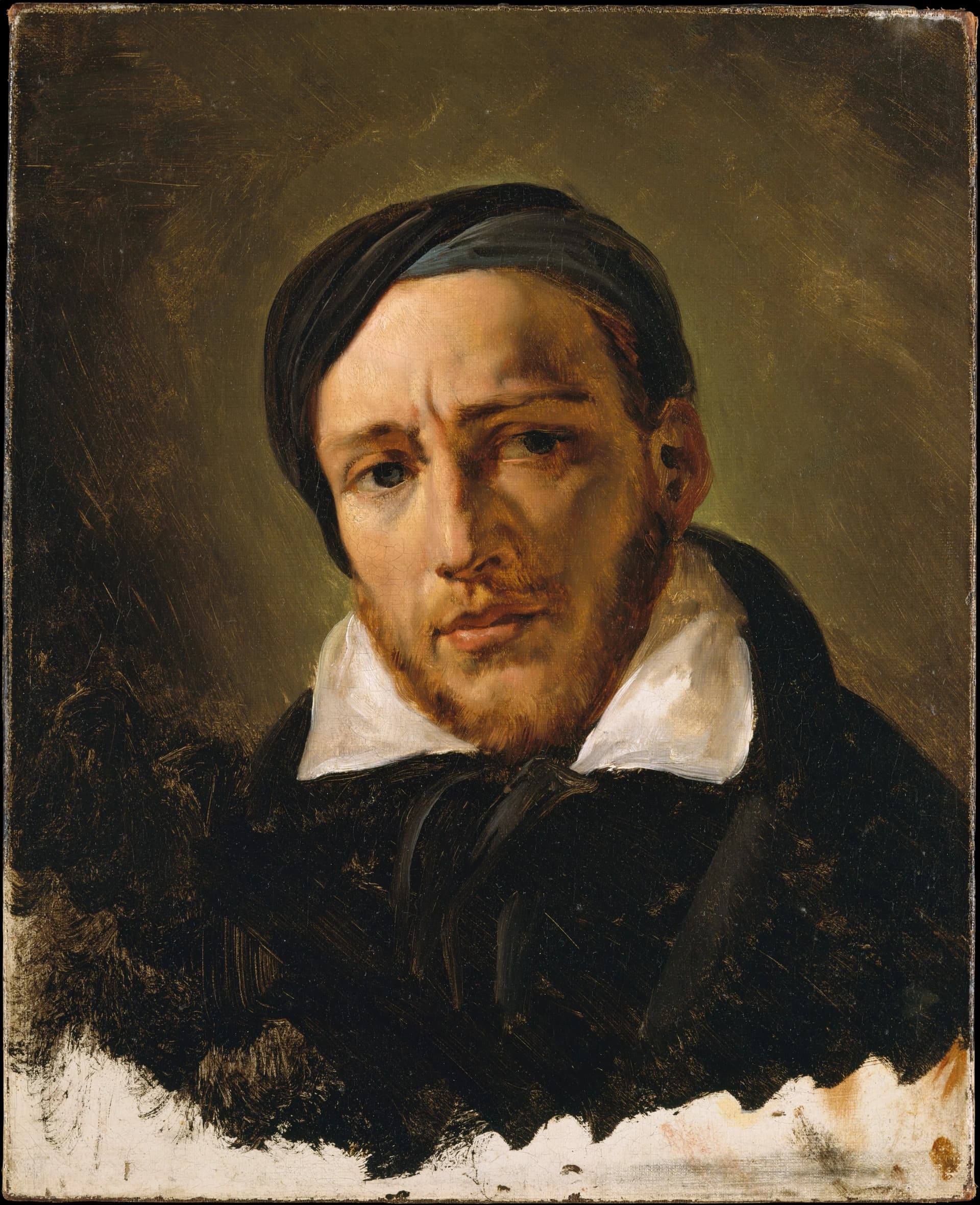
Rojen/a
September 26, 1791
Rouen, France
Umrl/a
January 26, 1824
Paris, France
Znan/a po
French painter
Théodore Géricault (1791–1824) was France best known for French painter.
Théodore Géricault (September 26, 1791 – January 26, 1824) was a French painter. He was a pioneer of the Romantic movement, renowned for works like "The Raft of the Medusa." Géricault's artistic vision left a lasting mark on art history.
Življenje v trenutkih
Trenutki, ki so oblikovali življenje
Poglavje
Življenjska poglavja
Poglavje 1 · 1791· Poglavje 1 od 7
Remembering Théodore Géricault: A Visionary Artist
Théodore Géricault, born Jean-Louis André Théodore Géricault, was a profound French painter whose brief but brilliant life spanned from September 26, 1791, to January 26, 1824. Recognized as a pivotal figure in the nascent Romantic movement, Géricault's work broke new ground, challenging conventional artistic norms and infusing his canvases with unprecedented emotional intensity and dramatic realism. His contributions as a visual artist, encompassing painting, lithography, and sculpture, cemented his place as an artist who profoundly shaped the trajectory of 19th-century art.
Despite his relatively short time, Géricault's artistic journey was marked by an unwavering commitment to portraying human experience in its rawest forms, from the heroism of individuals to the despair of tragedy. His technical prowess and innovative approach to composition allowed him to create artworks that resonated deeply with the spirit of his age. He remains an enduring symbol of the Romantic ideal, an artist who prioritized emotion, individualism, and the sublime in his powerful visual narratives.
Poglavje 2· Poglavje 2 od 7
Early Life and Origins
Théodore Géricault began his life in Rouen, France, a historic city that would serve as the backdrop for the early development of his artistic sensibility. Born into a prosperous family, his formative years in France provided him with the initial environment to cultivate his innate talents. The cultural richness of his birth country undoubtedly influenced his perspectives and artistic inclinations as he grew.
His education, though not explicitly detailed in publicly available records, would have laid the foundation for his later academic training. The bustling artistic scene of early 19th-century France offered fertile ground for a young, aspiring artist. It was in this setting that Géricault would begin to nurture the skills that would eventually define his celebrated career, preparing him for the rigorous demands of professional artistry.
Poglavje 3· Poglavje 3 od 7
Career Beginnings
Géricault's professional trajectory saw him engage with various artistic disciplines, demonstrating a wide range of talents and a curious, exploratory spirit. While primarily celebrated as a painter, his capabilities extended to include roles as a sculptor, a graphic artist, and a general visual artist. This breadth of skill allowed him to experiment with different mediums and expressions.
He was also proficient as an architectural draftsperson and a draftsperson, indicating a meticulous hand and an understanding of structure and form, skills that would undoubtedly inform his grand compositions in painting. Furthermore, Géricault distinguished himself as a lithographer, a relatively new printmaking technique at the time, which allowed for a more direct and expressive drawing style compared to traditional engraving. This versatility positioned him at the forefront of artistic innovation, eager to explore new ways of conveying his artistic vision.
Poglavje 4· Poglavje 4 od 7
Major Achievements and Career Highlights
Théodore Géricault's impact on art history is inseparably linked to his role as one of the pioneers of the Romantic movement in France. This artistic and intellectual movement emphasized emotion, individualism, and the glorification of all the past and nature, in contrast to the rigid classicism that preceded it. Géricault's work, with its dynamic compositions, heightened drama, and profound psychological depth, perfectly encapsulated these ideals.
His most renowned achievement, and indeed his best-known painting, is "The Raft of the Medusa." This monumental work, completed in 1819, depicted a contemporary tragedy with a raw, unflinching realism that shocked and captivated audiences. The painting's powerful narrative and emotional charge solidified Géricault's reputation as a master of dramatic storytelling and a fearless commentator on social and political events. Its sheer scale and the visceral depiction of human suffering marked a turning point in French art, heralding the arrival of a new, more expressive era.
The success and controversy surrounding "The Raft of the Medusa" not only propelled Géricault to international recognition but also cemented his status as a leading figure in Romanticism. The painting's departure from idealized forms and its focus on intense human experience became a defining characteristic of the movement. Through this masterpiece and other works, Géricault provided a visual language for the Romantic sensibility, influencing countless artists who followed.
Poglavje 5· Poglavje 5 od 7
Notable Works or Contributions
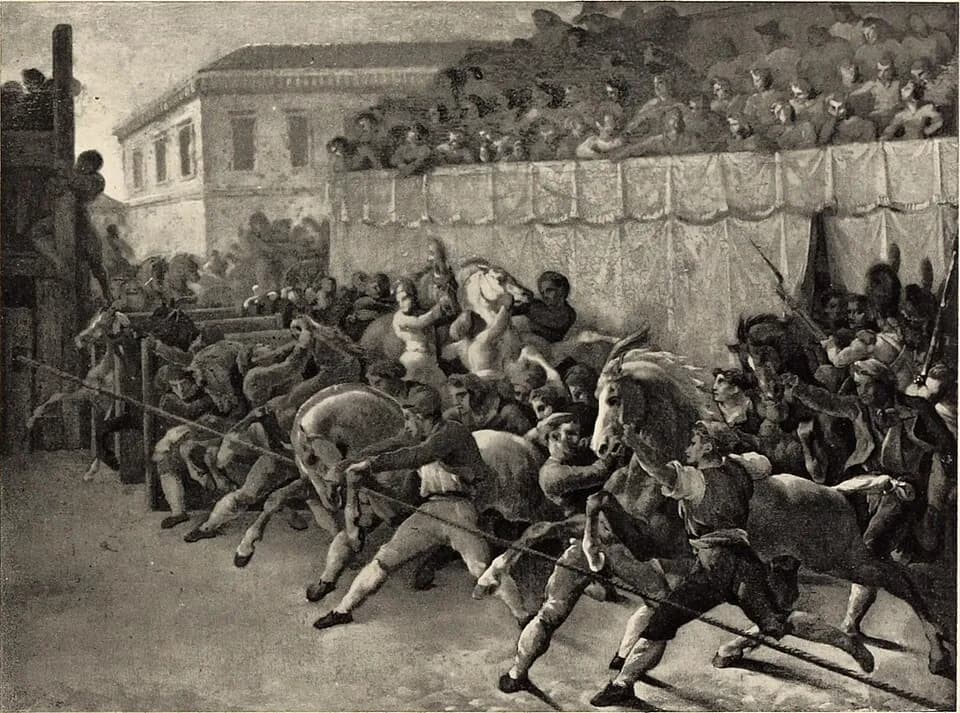
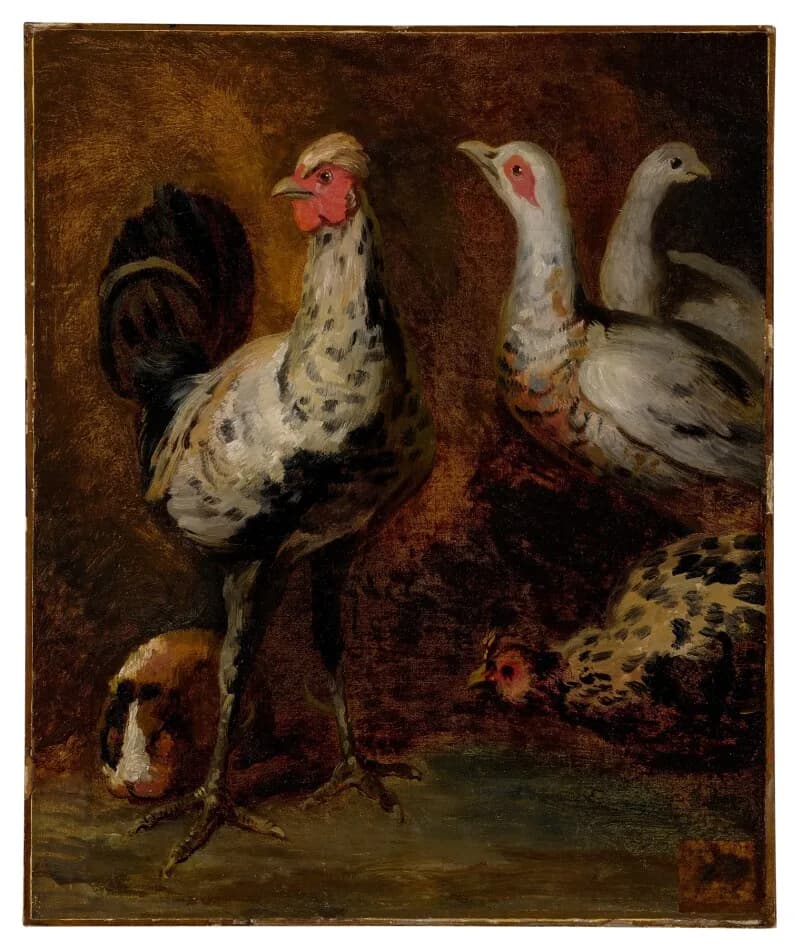
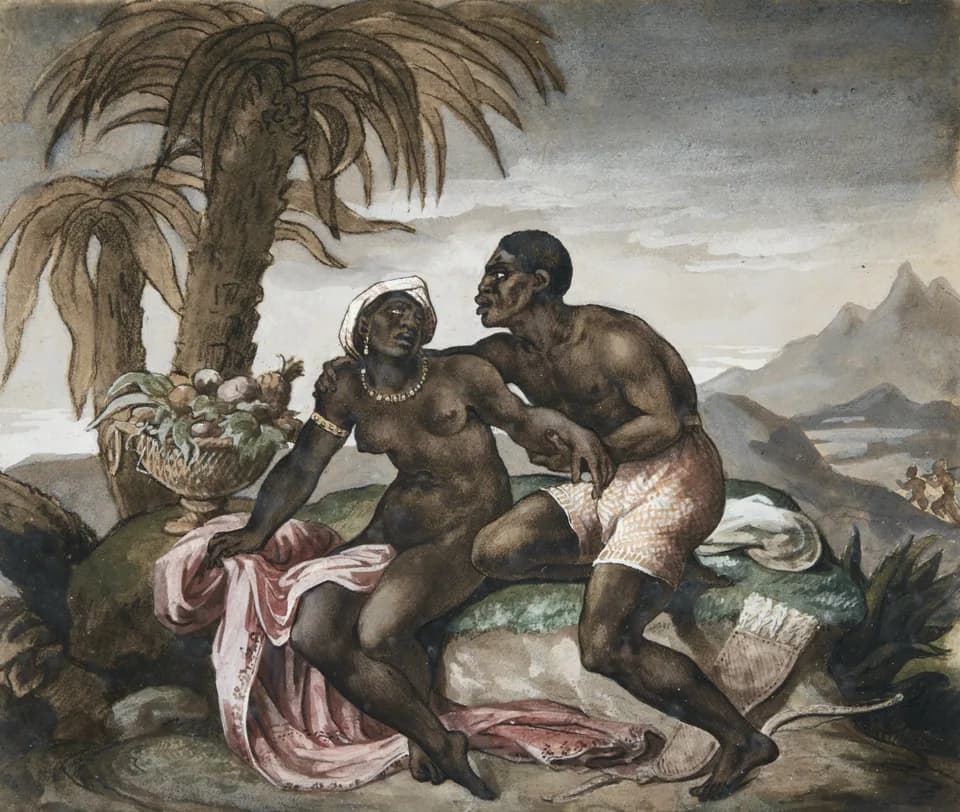
Théodore Géricault's artistic contributions extend far beyond his most famous work, showcasing a remarkable diversity in subject matter and a consistent emotional resonance. His skill in capturing both dramatic narratives and subtle human expressions is evident across his extensive portfolio. Many of his significant works are preserved in prestigious institutions, allowing their enduring power to be appreciated by new generations.
The Metropolitan Museum of Art in New York proudly houses several of Géricault's pieces. Among them is "Evening: Landscape with an Aqueduct," painted in 1818, which highlights his ability to craft serene yet evocative natural scenes, perhaps imbued with a classical grandeur typical of the era's appreciation for ancient engineering. His sensitive portraiture is exemplified by "Alfred Dedreux (1810–1860) as a Child," created around 1819–20, which captures the youthful innocence and character of the subject with remarkable tenderness. Géricault's profound fascination with horses, a recurring motif in his oeuvre, is powerfully displayed in "Horsewoman," dating from 1820 or later, showcasing dynamic movement and a mastery of equine anatomy that few artists could rival. Furthermore, "Lions in a Mountainous Landscape," circa 1818–20, demonstrates his attraction to exotic and wild subjects, depicting animals with a fierce vitality that resonated with Romantic themes of untamed nature. The collection also includes "General Letellier on His Deathbed," from approximately 1818–20, a somber and poignant portrayal of mortality that reflects Géricault's profound engagement with human suffering and the inevitable realities of life and death, reinforcing his deep emotional insight.
The Art Institute of Chicago also preserves a substantial collection of Géricault's works, further illustrating the scope of his thematic and technical virtuosity. "Head of a Guillotined Man," created between 1818 and 1819, is a stark and powerful example of his commitment to realism, unflinchingly depicting macabre subjects to explore the extremities of human existence and the grim realities of his time. "The Return from Russia," painted in 1818, likely portrays the harrowing aftermath of military campaigns, capturing the weariness and despair of soldiers with a profound empathy that characterized Géricault's humanist perspective. His "Turkish Cavalier in Combat," circa 1818, exemplifies a different facet of his work, perhaps indulging in the exotic and dynamic scenes of conflict, rendered with vigorous brushwork and dramatic flair that defined the burgeoning Romantic movement. These pieces collectively showcase Géricault's capacity to tackle a wide range of subjects, from the intensely personal to the broadly historical, consistently imbued with a distinctive emotional depth and artistic power.
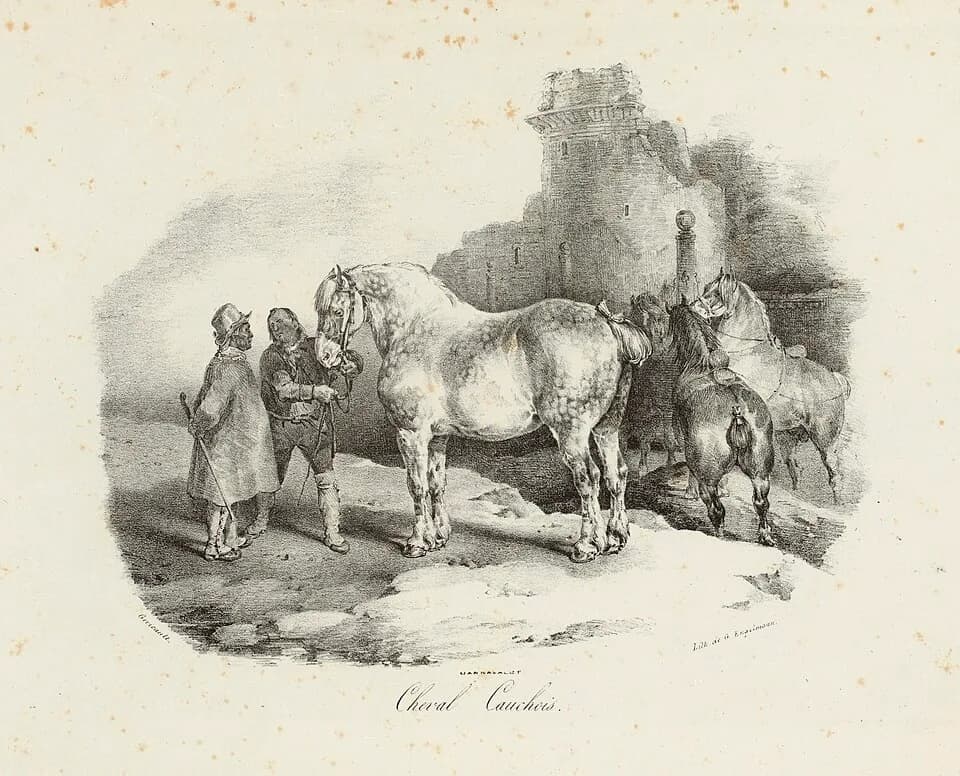
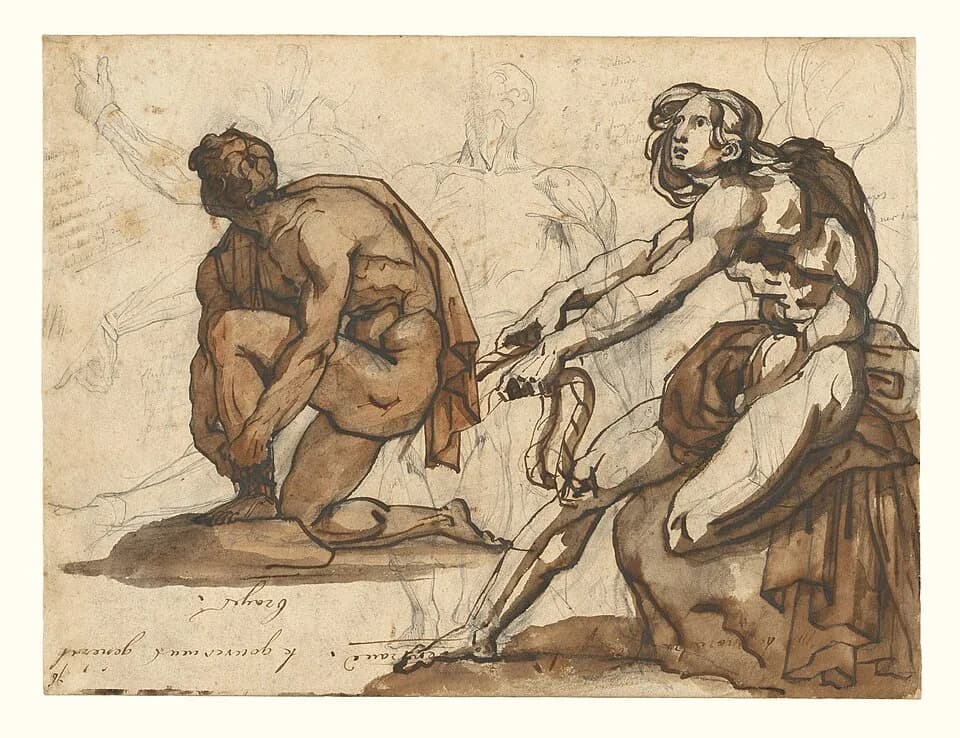
Géricault's innovative approach extended to the realm of printmaking, particularly lithography, a medium in which he also excelled as a graphic artist. His command of this technique is evident in works such as "Entrance to the Adelphi Wharf," plate 11 from "Various Subjects Drawn from Life on Stone," created in 1821, which demonstrates his keen eye for urban and industrial landscapes and his ability to capture atmospheric realism. From the same impactful series, "Pity the Sorrows of a Poor Old Man!... plate 2 from Various Subjects Drawn from Life and on Stone (The English Suite)" (February 1821) reveals his compassionate social commentary and his empathetic portrayal of the marginalized and vulnerable, reflecting a genuine concern for human condition. Similarly, "Horses Exercising," plate 6 from "Various Subjects Drawn from Life on Stone" (1821), further underscores his enduring fascination with horses, rendered with an observational precision and vitality that brought life to the equine form, showcasing his mastery of animal depiction.
Other significant contributions to Géricault's legacy include "The Rescue of the Survivors of the Raft of the Medusa," circa 1818, also held at the Art Institute of Chicago. This piece likely served as a crucial preparatory study or a related composition leading up to his iconic masterpiece, offering invaluable insights into the development of that monumental work and his deep engagement with its tragic subject matter. "Wagon Laden with Wounded Soldiers," painted in 1818, further emphasizes his compassionate portrayal of military hardship and the profound human cost of conflict, presenting a powerful image of vulnerability and endurance that speaks to universal experiences of suffering. Finally, "The Tempest," created between approximately 1821 and 1823, showcases his dramatic narrative capabilities, perhaps reflecting the raw power of nature or human struggle against overwhelming forces, rounding out a truly comprehensive and emotionally resonant artistic practice that consistently pushed boundaries.
Poglavje 6 · 1824· Poglavje 6 od 7
Later Years
Théodore Géricault's life, tragically brief, concluded in Paris, France, on January 26, 1824. His death at just 32 years old cut short a career that was already demonstrating immense artistic maturity and revolutionary potential. The Parisian art world, which had witnessed his rise as a radical and celebrated figure, mourned the loss of a talent that had just begun to fully blossom.
Despite his untimely passing, the foundation of his artistic legacy was firmly established. His final years, though challenging, saw him consolidate his position as an artist who dared to confront difficult subjects with unparalleled emotional honesty. His dedication to his craft and his readiness to break from tradition ensured that his influence would resonate for decades to come, far beyond his physical presence.
Poglavje 7· Poglavje 7 od 7
Legacy and Impact
Théodore Géricault's legacy is defined by his decisive role as a pioneer of the Romantic movement, an artistic shift that forever altered the course of European art. He injected art with a new spirit of dynamism, emotion, and realism, moving away from the measured classicism that had dominated previous generations. His work invited viewers to confront the raw power of human experience, from moments of extreme suffering to acts of heroic will.
"The Raft of the Medusa" stands as a towering testament to his vision, a work that continues to inspire awe and discussion for its dramatic composition and its powerful narrative. It became a symbol of the Romantic ideal, influencing contemporary artists and later generations alike, cementing his status as a master who combined artistic skill with a profound humanitarian perspective. His willingness to address contemporary social and political issues through his art also paved the way for future realist and socially conscious movements.
Even with his short life, Géricault's enduring influence can be seen in the subsequent development of French painting, particularly in the works of artists who followed in the Romantic tradition. His innovative use of color, light, and dramatic composition, coupled with his fearless exploration of intense subjects, left an unmistakable mark. He remains celebrated as an artist who, through his powerful imagery and emotional depth, broadened the scope of what art could achieve, ensuring his permanent place in the pantheon of art history.
Pogosta vprašanja
Pogosto vprašano
Kdaj je umrl(a) Théodore Géricault?
Théodore Géricault je umrl(a) 26. januar 1824 v Paris, France v starosti 32 let.
Kje je bil(a) rojen(a) Théodore Géricault?
Théodore Géricault je bil(a) rojen(a) v Rouen, France dne 26. september 1791.
Po čem je Théodore Géricault najbolj znan(a)?
Théodore Géricault je najbolj znan(a) po French painter.
Koliko je bil(a) Théodore Géricault star(a) ob smrti?
Théodore Géricault je bil(a) ob smrti star(a) 32 let.
Katere narodnosti je bil(a) Théodore Géricault?
Théodore Géricault je bil(a) iz France.
Časovnica
Življenje na hitro
Galerija fotografij
Življenje v slikah
Kliknite katero koli polaroidno fotografijo za povečavo · 50 fotografij
Koda QR
Deli to biografijo
Natisni in deli
Skenirajte za obisk te biografske strani. Natisnite za dogodke, razstave ali izobraževalna gradiva.