Rojen/a
September 26, 1932
Gah, Pakistan
Umrl/a
December 26, 2024
All India Institute of Medical Sciences, New Delhi, India
Znan/a po
Indian economist, bureaucrat, academician and politician
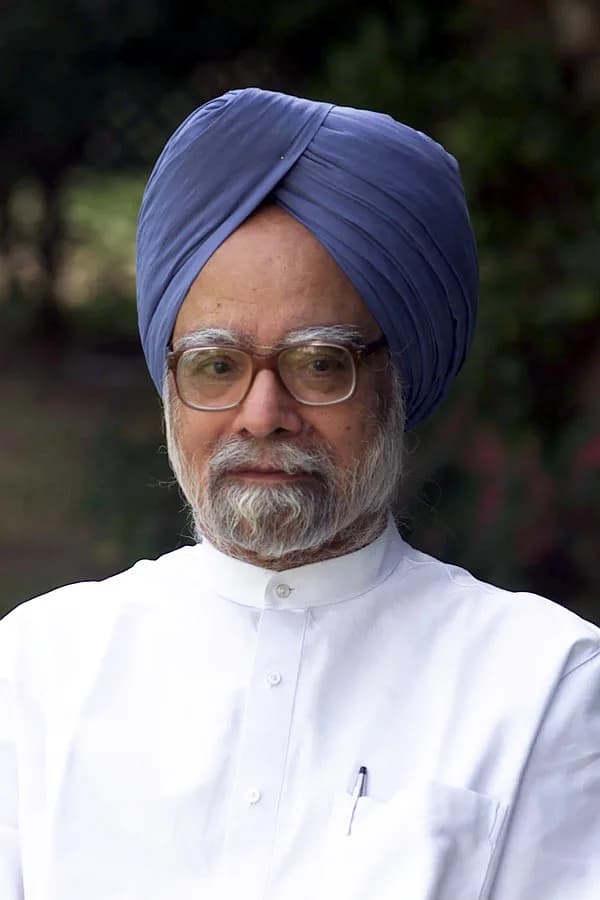
Manmohan Singh (1932–2024) was Pakistan best known for Indian economist, bureaucrat, academician and politician.
Manmohan Singh (September 26, 1932 – December 26, 2024) was an Indian economist, bureaucrat, academician, and politician. He served as Prime Minister of India from 2004 to 2014, overseeing a period of significant economic reforms. His legacy includes being the first Sikh Prime Minister and a key architect of modern India's economy.
Življenje v trenutkih
Trenutki, ki so oblikovali življenje

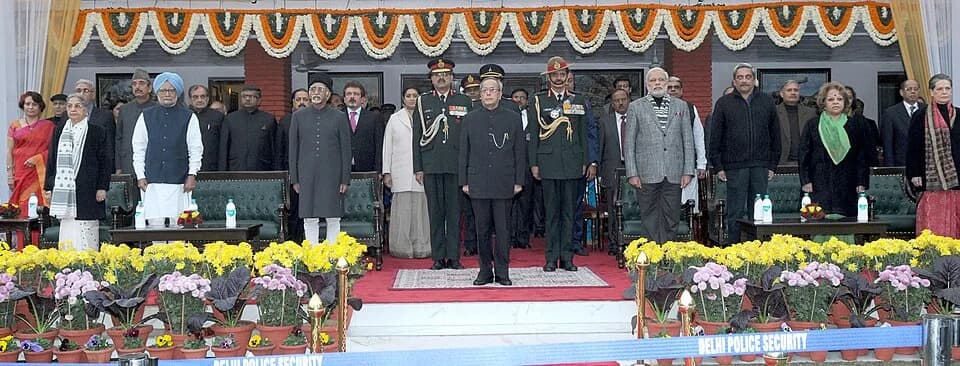
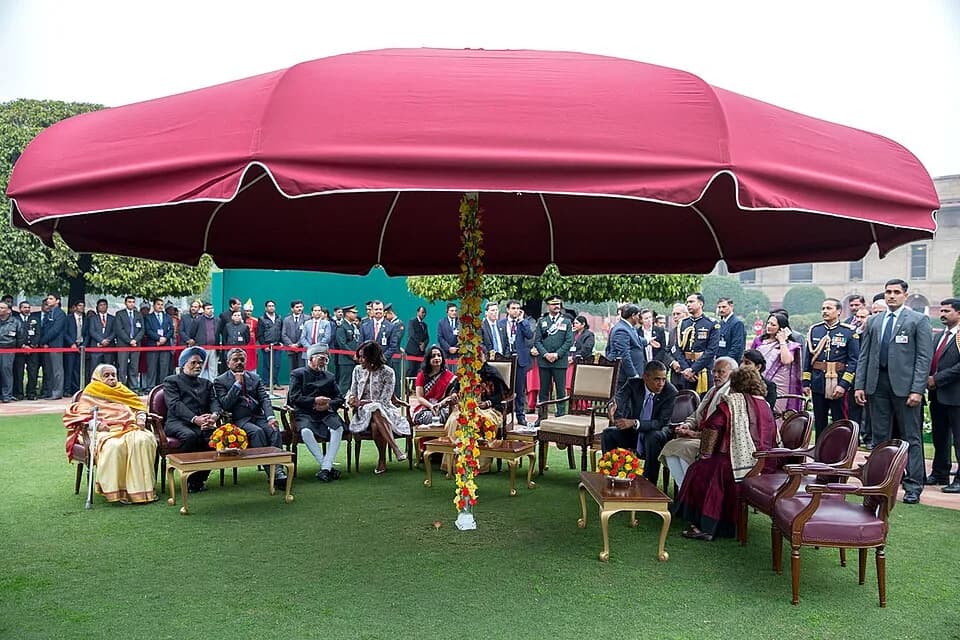
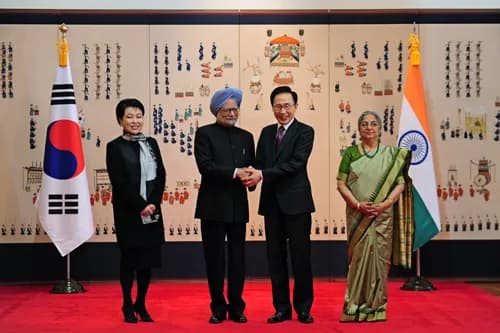
Poglavje
Življenjska poglavja
Poglavje 1 · 1932· Poglavje 1 od 7
Early Life and Origins
Manmohan Singh's journey began in Gah, a place situated in what is now Pakistan, where he was born on September 26, 1932. His early life experiences in this region shaped his outlook and grounded his future endeavors in public service. He embarked on a path of rigorous academic pursuit from a young age, demonstrating an early aptitude for economics and intellectual inquiry.
His foundational education provided a strong base for his subsequent studies and professional development. The cultural and historical context of his birthplace and upbringing undoubtedly contributed to the unique perspective he brought to his later roles. This early grounding was instrumental in preparing him for a career dedicated to national development and international diplomacy.
Poglavje 2· Poglavje 2 od 7
Career Beginnings
Manmohan Singh's professional life commenced with a distinguished career in academia, where he served as a university teacher, sharing his expertise in economics. He then transitioned into the civil service, applying his theoretical knowledge to practical governance and policy formulation. His skills as an economist quickly became evident in various governmental roles.
Before his elevation to the highest political office, Singh also gained valuable experience as a banker and a bureaucrat. These roles allowed him to develop a deep understanding of India's financial systems and administrative machinery. His early contributions established him as a highly capable and respected technocrat within the Indian government.
Poglavje 3 · 2004· Poglavje 3 od 7
Major Achievements and Career Highlights
Manmohan Singh's most defining period was his service as the Prime Minister of India, a position he held from 2004 to 2014. This tenure placed him among India's longest-serving leaders, securing the fourth position after historical figures like Jawaharlal Nehru, Indira Gandhi, and Narendra Modi. His leadership during this period was crucial in guiding India through significant economic and social changes.
A notable aspect of his political career is his identity as the first and, to date, only Sikh prime minister of India. This represented a significant moment of representation in the country's diverse political history. Furthermore, Singh achieved the distinction of being the first prime minister since Jawaharlal Nehru to be re-appointed after successfully completing a full five-year term, underscoring the trust and mandate he received from the electorate.
Poglavje 4· Poglavje 4 od 7
Personal Life
While specific details about Manmohan Singh's personal and family life are not extensively provided in the public information, his public persona was consistently characterized by a quiet dignity and unwavering commitment. He was widely known for his understated demeanor and his intellectual approach to politics. His life outside of public office was often seen as private, focusing on personal values and integrity.
Throughout his extensive career, Singh maintained a reputation for honesty and ethical conduct. His dedication to public service appeared to be a central guiding principle in his life. These personal attributes undoubtedly contributed to the widespread respect he commanded across the political spectrum.
Poglavje 5· Poglavje 5 od 7
Notable Works or Contributions
Manmohan Singh's contributions span both the academic and political spheres, making him a unique figure. As an economist, he was instrumental in shaping India's economic policies, particularly through his role in liberalizing the economy in the early 1990s. This period is widely regarded as a pivotal moment for India's economic reforms and integration into the global market.
Beyond his policy achievements, Singh also had a background as an academician with notable scholarly output. His academic contributions include an h-index of 51 across 167 papers, reflecting a significant body of research. Among his top works are "Functionalized lipid-like nanoparticles for in vivo mRNA delivery and base editing" (2020, 153 citations), "The Preparation and Physicochemical Characterization of Aluminum Hydroxide/TLR7a, a Novel Vaccine Adjuvant Comprising a Small Molecule Adsorbed to Aluminum Hydroxide" (2018, 10 citations), and "Stable Nanoemulsions for the Delivery of Small Molecule Immune Potentiators" (2018, 10 citations). Other significant papers include "Complementary Base Editing Approaches for the Treatment of Sickle Cell Disease and Beta Thalassemia" (2019, 5 citations) and "Impact of changes in climatic conditions on temperate fruit production of Himachal Pradesh" (2021, 2 citations). These works demonstrate his extensive engagement in diverse areas of scientific and economic research.
Poglavje 6 · 2014· Poglavje 6 od 7
Later Years
Following the conclusion of his second term as Prime Minister in 2014, Manmohan Singh continued to be a respected voice in Indian political discourse. He remained a senior leader within the Indian National Congress, offering guidance and insights derived from his extensive experience. Even after stepping down from the highest office, his perspectives on national and international affairs held considerable weight.
His final years were spent in a period of reflection and continued engagement with public life, though in a less direct capacity. Manmohan Singh passed away on December 26, 2024, at the All India Institute of Medical Sciences in New Delhi, India. His peaceful passing marked the end of an era for Indian politics and public service.
Poglavje 7· Poglavje 7 od 7
Legacy and Impact
Manmohan Singh's legacy is firmly etched in the annals of Indian history, particularly for his stewardship of the Indian economy. He is widely credited for driving economic reforms that propelled India onto a path of sustained growth and global prominence. His leadership was often characterized by a calm and composed approach, even during times of significant challenge.
His steady hand and intellectual rigor helped modernize India's economic framework, leaving a lasting impact on the nation's development trajectory. Singh's quiet statesmanship and dedication to democratic institutions solidified his standing as a revered leader. He will be remembered as a principal architect of India's contemporary economic success and a symbol of integrity in public life.
Pogosta vprašanja
Pogosto vprašano
Kdaj je umrl(a) Manmohan Singh?
Manmohan Singh je umrl(a) 26. december 2024 v All India Institute of Medical Sciences, New Delhi, India v starosti 92 let.
Kje je bil(a) rojen(a) Manmohan Singh?
Manmohan Singh je bil(a) rojen(a) v Gah, Pakistan dne 26. september 1932.
Po čem je Manmohan Singh najbolj znan(a)?
Manmohan Singh je najbolj znan(a) po Indian economist, bureaucrat, academician and politician.
Koliko je bil(a) Manmohan Singh star(a) ob smrti?
Manmohan Singh je bil(a) ob smrti star(a) 92 let.
Katere narodnosti je bil(a) Manmohan Singh?
Manmohan Singh je bil(a) iz Pakistan.
Časovnica
Življenje na hitro
Galerija fotografij
Življenje v slikah
Kliknite katero koli polaroidno fotografijo za povečavo · 47 fotografij
Koda QR
Deli to biografijo
Natisni in deli
Skenirajte za obisk te biografske strani. Natisnite za dogodke, razstave ali izobraževalna gradiva.