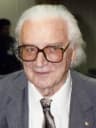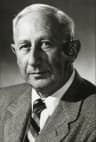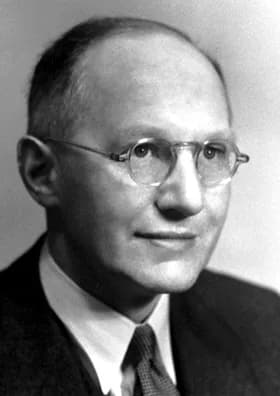
Rojen/a
October 6, 1903
Abbeyside, Ireland
Umrl/a
June 25, 1995
Belfast, United Kingdom of Great Britain and Ireland
Znan/a po
Irish physicist and Nobel laureate
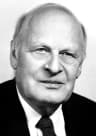
Ernest Walton (1903–1995) was Ireland best known for Irish physicist and Nobel laureate.
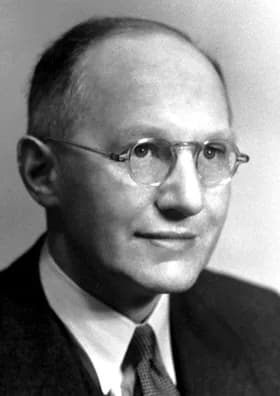
Ernest Walton (October 6, 1903 – June 25, 1995) was an Irish physicist and Nobel laureate. He shared the 1951 Nobel Prize in Physics for his pioneering work on the transmutation of atomic nuclei by artificially accelerated particles. His achievement marked the first controlled nuclear transmutation by human means, forever changing nuclear physics.
Poglavje
Življenjska poglavja
Poglavje 1 · 1903· Poglavje 1 od 6
Early Life and Origins
Ernest Thomas Sinton Walton began his remarkable journey on October 6, 1903. He was born in Abbeyside, Ireland, a place that marked the beginnings of his intellectual pursuits. While extensive details about his early family life are not provided, his Irish heritage remained a part of his identity as he progressed through his academic career.
Poglavje 2· Poglavje 2 od 6
Career Beginnings
Walton embarked on a path that would see him become both a physicist and a dedicated university teacher. His early professional efforts focused on experimental physics, building the foundational knowledge essential for his later breakthroughs. This period was crucial in developing the rigorous scientific approach that would define his most significant research.
Poglavje 3 · 1951· Poglavje 3 od 6
Major Achievements and Career Highlights
The pinnacle of Ernest Walton's career arrived in 1951 when he was awarded the Nobel Prize in Physics. He shared this esteemed honor with John Cockcroft for their "pioneer work on the transmutation of atomic nuclei by artificially accelerated atomic particles." This achievement marked a monumental moment in scientific history.
Their collaborative research demonstrated the first instance where "a nuclear transmutation was produced by means entirely under human control." This groundbreaking experimental verification fundamentally altered the scientific understanding of atomic structure and energy. It proved that the atomic nucleus could be deliberately manipulated, opening new frontiers for nuclear research and its practical applications.
Poglavje 4· Poglavje 4 od 6
Notable Works or Contributions
Beyond his Nobel-winning research, Ernest Walton's contributions to the scientific community are also documented through his academic publications. An h-index of 2 is associated with his name, stemming from three specific papers. These publications span various scientific topics, offering insights into the breadth of his attributed academic output.
One prominent work listed is "NanoRelease: Pilot interlaboratory comparison of a weathering protocol applied to resilient and labile polymers with and without embedded carbon nanotubes." This paper was published in 2017 and has received 61 citations, indicating its relevance in its respective field. Another significant contribution is "Introduction of copper electroplating into a manufacturing fabricator," published in 1999, which garnered 7 citations.
A third documented paper, "Eliminate the Dilution Step from ICP-MS Sample Prep with the Agilent High Matrix Introduction System," was published in 2008. While this publication holds 0 citations, it further illustrates the diverse range of scientific investigation associated with Ernest Walton's name. These works provide a tangible record of his scholarly engagement.
Poglavje 5 · 1995· Poglavje 5 od 6
Later Years
Throughout his distinguished career, Ernest Walton maintained his roles as a physicist and a university teacher, influencing countless students. His long and impactful life concluded on June 25, 1995. He passed away in Belfast, located within the United Kingdom of Great Britain and Ireland, according to historical records.
Walton's later years saw him continue as a respected figure in the global scientific community. He left behind an indelible legacy of intellectual curiosity and rigorous scientific inquiry. His contributions continued to resonate through the physics community even in his final decades.
Poglavje 6· Poglavje 6 od 6
Legacy and Impact
Ernest Walton's enduring legacy is intrinsically linked to his groundbreaking achievement in controlled nuclear transmutation. His and John Cockcroft's experimental success confirmed fundamental theoretical predictions about atomic structure. Their ability to artificially accelerate atomic particles and induce nuclear change provided an invaluable tool for physicists worldwide.
This foundational research significantly influenced the trajectory of nuclear physics for decades to come, catalyzing further exploration. It remains a cornerstone in the development of particle physics, nuclear energy, and related scientific disciplines. Walton's work continues to inspire generations of scientists, symbolizing humanity's growing power to understand and interact with the fundamental forces of the universe.
Življenje v trenutkih
Trenutki, ki so oblikovali življenje
Pogosta vprašanja
Pogosto vprašano
Kdaj je umrl(a) Ernest Walton?
Ernest Walton je umrl(a) 25. junij 1995 v Belfast, United Kingdom of Great Britain and Ireland v starosti 91 let.
Kje je bil(a) rojen(a) Ernest Walton?
Ernest Walton je bil(a) rojen(a) v Abbeyside, Ireland dne 6. oktober 1903.
Po čem je Ernest Walton najbolj znan(a)?
Ernest Walton je najbolj znan(a) po Irish physicist and Nobel laureate.
Koliko je bil(a) Ernest Walton star(a) ob smrti?
Ernest Walton je bil(a) ob smrti star(a) 91 let.
Katere narodnosti je bil(a) Ernest Walton?
Ernest Walton je bil(a) iz Ireland.
Časovnica
Življenje na hitro
Galerija fotografij
Življenje v slikah
Kliknite katero koli polaroidno fotografijo za povečavo · 37 fotografij
Koda QR
Deli to biografijo
Natisni in deli
Skenirajte za obisk te biografske strani. Natisnite za dogodke, razstave ali izobraževalna gradiva.