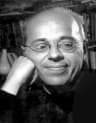
Rojen/a
May 5, 1921
Mount Vernon, United States
Umrl/a
April 28, 1999
Palo Alto, United States
Znan/a po
American physicist
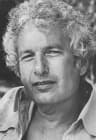
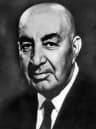
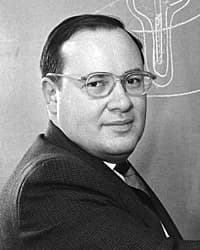
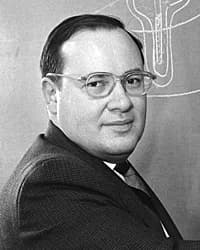
Arthur Leonard Schawlow (1921–1999) was United States best known for American physicist.
Arthur Leonard Schawlow (May 5, 1921 – April 28, 1999) was an American physicist and inventor. He co-developed the theoretical basis for laser science, notably using two mirrors as a resonant cavity. Schawlow shared the 1981 Nobel Prize in Physics for his precise work in laser spectroscopy, leaving a lasting impact on atomic physics.
Poglavje
Življenjska poglavja
Poglavje 1 · 1921· Poglavje 1 od 6
Introduction: A Visionary in Physics
Arthur Leonard Schawlow, born on May 5, 1921, and passing on April 28, 1999, was an eminent American physicist and inventor whose work profoundly shaped modern science. His pioneering efforts, particularly alongside Charles Townes, laid the fundamental theoretical groundwork for laser science. Schawlow's innovative insights, such as utilizing two mirrors to form a resonant cavity for maser action at visible wavelengths, marked a significant advancement in physics. His contributions were recognized with the 1981 Nobel Prize in Physics, an honor he shared for his highly precise laser spectroscopy.
Poglavje 2 · 1921· Poglavje 2 od 6
Early Life and Education
Arthur Leonard Schawlow entered the world in Mount Vernon, United States, on May 5, 1921. His formative years in the United States established the foundation for a life dedicated to scientific inquiry and discovery. While specific details of his early family life and upbringing are not provided, his eventual path clearly indicates a strong aptitude and passion for physics.
Schawlow pursued an academic career that would lead him to become a distinguished university teacher, sharing his knowledge and inspiring future generations. His education in the United States prepared him for a career at the forefront of physics research, eventually leading to some of the most significant discoveries of the 20th century.
Poglavje 3· Poglavje 3 od 6
Pioneering Contributions to Laser Science
Arthur Schawlow's scientific journey is most notably defined by his collaborative work with Charles Townes, where they together developed the theoretical basis for laser science. This critical work bridged the gap between microwave technology and visible light, enabling entirely new scientific possibilities. His central insight involved a clever application of optics, proposing the use of two mirrors to create a resonant cavity. This design allowed for the amplification of light, extending the principles of maser action from microwaves to visible wavelengths.
This theoretical framework was not just an academic exercise; it provided the blueprint for the creation of the first working lasers. Schawlow's contributions moved the scientific community closer to realizing devices that could generate coherent light, a technological leap with far-reaching implications for various fields. His conceptualization of the resonant cavity became a cornerstone of laser physics, proving essential for future developments.
Poglavje 4 · 1981· Poglavje 4 od 6
The Nobel Recognition
The significance of Arthur Leonard Schawlow's work received its highest acknowledgment with the 1981 Nobel Prize in Physics. He shared this prestigious award with Nicolaas Bloembergen and Kai Siegbahn. The Nobel Committee specifically cited their contributions to the development of laser spectroscopy, a field revolutionized by Schawlow's insights.
His work using lasers to determine atomic energy levels with great precision demonstrated the practical power of this new technology. This capability allowed scientists to probe the fundamental structure of atoms with unprecedented accuracy, advancing the understanding of quantum mechanics. The Nobel Prize underscored the global impact of his research and its lasting relevance to the scientific community.
Poglavje 5· Poglavje 5 od 6
Academic Output and Influence
Throughout his career, Arthur Leonard Schawlow was a prolific academic, contributing significantly to scientific literature. He maintained an impressive h-index of 46, reflecting the high impact and citation frequency of his 211 published papers. His commitment to sharing knowledge was evident in his extensive body of work, which served as a foundational resource for many researchers.
Among his top works is the influential publication "Lasers," which, even in its 2018 edition, boasts 1192 citations, indicating its enduring relevance as a classic text in the field. Other notable contributions include "Scientometric analysis of synchronous references in the Physics Nobel lectures, 1981-1985: A pilot study" (2004, 17 citations) and "DOPPLER-FREE SATURATED ABSORPTION SPECTROSCOPY : LASER SPECTROSCOPY" (2003, 11 citations). These publications, along with pieces like "From the archives: The future of lasers" (2015, 1 citation) and "The Playful Physicist" (2004, 1 citation), illustrate the breadth of his interests and his continuous engagement with the scientific discourse.
Poglavje 6 · 1999· Poglavje 6 od 6
Later Years and Enduring Legacy
Arthur Leonard Schawlow passed away on April 28, 1999, in Palo Alto, United States, leaving behind a remarkable scientific heritage. His final years were marked by the continued integration of laser technology into countless applications, many of which stemmed directly from his foundational theoretical work. The precise methods he developed for studying atomic energy levels paved the way for advancements in quantum optics, materials science, and medical diagnostics.
The impact of Arthur Schawlow's work extends far beyond the laboratory, influencing fields from telecommunications to industrial manufacturing. His genius in conceptualizing the laser's fundamental operation ensures his place as a towering figure in 20th-century physics. The devices and techniques that are now commonplace owe their existence, in large part, to the rigorous theoretical contributions of this American physicist and inventor.
Življenje v trenutkih
Trenutki, ki so oblikovali življenje

Pogosta vprašanja
Pogosto vprašano
Kdaj je umrl(a) Arthur Leonard Schawlow?
Arthur Leonard Schawlow je umrl(a) 28. april 1999 v Palo Alto, United States v starosti 77 let.
Kje je bil(a) rojen(a) Arthur Leonard Schawlow?
Arthur Leonard Schawlow je bil(a) rojen(a) v Mount Vernon, United States dne 5. maj 1921.
Po čem je Arthur Leonard Schawlow najbolj znan(a)?
Arthur Leonard Schawlow je najbolj znan(a) po American physicist.
Koliko je bil(a) Arthur Leonard Schawlow star(a) ob smrti?
Arthur Leonard Schawlow je bil(a) ob smrti star(a) 77 let.
Katere narodnosti je bil(a) Arthur Leonard Schawlow?
Arthur Leonard Schawlow je bil(a) iz United States.
Časovnica
Življenje na hitro
Galerija fotografij
Življenje v slikah
Kliknite katero koli polaroidno fotografijo za povečavo · 13 fotografij
Koda QR
Deli to biografijo
Natisni in deli
Skenirajte za obisk te biografske strani. Natisnite za dogodke, razstave ali izobraževalna gradiva.