Rojen/a
August 25, 1934
Nuq District, Iran
Umrl/a
January 8, 2017
Tehran, Iran
Znan/a po
Iranian politician
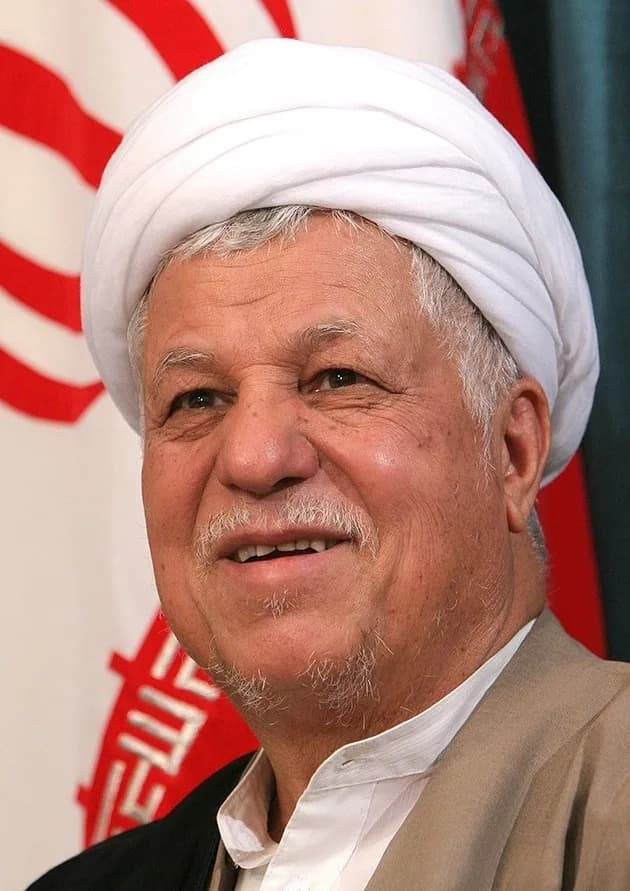
Ali Akbar Hashemi Bahramani Rafsanjani (August 25, 1934 – January 8, 2017) was an Iranian politician from Nuq District. He served as the fourth president of Iran and was a founding father of the Islamic Republic. His influence shaped the country's political structure and continued through various leadership roles.
Življenje v trenutkih
Trenutki, ki so oblikovali življenje
Poglavje
Življenjska poglavja
Poglavje 1 · 1934· Poglavje 1 od 8
Remembering Akbar Hashemi Rafsanjani
We remember Akbar Hashemi Rafsanjani (August 25, 1934 – January 8, 2017), a prominent Iranian politician and cleric whose extensive career shaped the modern history of Iran. Born Ali Akbar Hashemi Bahramani Rafsanjani, he served as the fourth president of Iran from 1989 to 1997, leaving an indelible mark on the nation's political and social fabric. His journey from a rural district to the highest echelons of power reflects a lifetime dedicated to public service and the political ideals of the Islamic Republic.
Rafsanjani was known for his significant roles within the Iranian establishment, participating in the founding of the Islamic Republic itself. His influence extended beyond his presidential term, as he continued to hold key leadership positions within important state bodies. Throughout his distinguished career, he navigated complex domestic and international challenges, always remaining a central figure in Iranian politics until his passing in 2017.
Poglavje 2 · 1934· Poglavje 2 od 8
Early Life and Origins
Akbar Hashemi Rafsanjani was born on August 25, 1934, in the Nuq District of Iran. His birthplace, a rural area, provided the initial backdrop for a life that would eventually lead him to the nation's capital and international prominence. From these humble beginnings, he embarked on a path that combined religious scholarship with a burgeoning interest in political activism.
His early professional life encompassed several distinct roles, reflecting a broad range of skills and intellectual pursuits. Rafsanjani was identified as an akhoond, indicating a background in Islamic religious education and scholarship. This foundation undoubtedly informed his political ideology and his contributions to the establishment of the Islamic Republic. He also engaged in entrepreneurship and was a writer, showcasing a diverse set of talents beyond his clerical and political activities.
Poglavje 3· Poglavje 3 od 8
Career Beginnings
Rafsanjani's political career began long before his presidency, deeply intertwined with the revolutionary movements that led to the creation of the Islamic Republic of Iran. He is specifically recognized as one of the founding fathers of the Islamic Republic, a title that underscores his pivotal role in its establishment. This foundational involvement placed him at the heart of the new political system from its very inception.
His early engagement involved navigating the complex political landscape of pre-revolutionary Iran and actively working towards the envisioned new order. His commitment to the ideals of the revolution and his close association with its leadership positioned him as a key figure in the nascent political structure. These early experiences laid the groundwork for his future leadership roles, preparing him for the significant responsibilities he would later undertake.
Poglavje 4 · 1989· Poglavje 4 od 8
Major Achievements and Career Highlights
Akbar Hashemi Rafsanjani's most prominent role was serving as the fourth president of Iran, a position he held for two consecutive terms from 1989 to 1997. During his presidency, he presided over a period of reconstruction following the Iran-Iraq War and initiated various economic and social reforms. His leadership at the head of the executive branch marked a significant chapter in the Islamic Republic's development.
Beyond the presidency, Rafsanjani continued to hold influential positions within the Iranian political system. He was the head of the Assembly of Experts from 2007 until 2011. This body is constitutionally tasked with appointing and overseeing the Supreme Leader, highlighting the immense trust and respect he commanded within the clerical establishment.
Additionally, he served as the chairman of the Expediency Discernment Council, another crucial institution in Iran's political structure. This council acts as an advisory body to the Supreme Leader and mediates disputes between the Parliament and the Guardian Council. His long tenure in such significant roles demonstrated his enduring influence and commitment to the governance of the Islamic Republic.
Poglavje 5· Poglavje 5 od 8
Personal Life
While the provided information highlights Akbar Hashemi Rafsanjani's extensive public and professional life, specific details about his personal life, family relationships, or private interests are not explicitly mentioned. His public persona was largely defined by his political and clerical duties, which were central to his identity.
His dedication to his various professions — as an akhoond, politician, writer, and entrepreneur — suggests a life driven by intellectual curiosity and civic engagement. These facets of his character likely shaped his personal pursuits and relationships, though the specifics remain a private aspect of his life.
Poglavje 6· Poglavje 6 od 8
Notable Works or Contributions
As a professional writer, Akbar Hashemi Rafsanjani contributed to intellectual discourse and documentation within Iran. While specific titles of his works are not provided in the summary, this designation as a writer points to his engagement with literature and thought beyond his political speeches and policy documents. His writings likely offered insights into his political philosophy, religious interpretations, or historical perspectives.
Beyond his literary contributions, his most significant works are evidenced in his political leadership and the institutions he helped shape. Being a founding father of the Islamic Republic, serving as its fourth president, and leading critical bodies like the Assembly of Experts and the Expediency Discernment Council are monumental contributions. These roles represent his dedication to the political framework and governance of Iran.
Poglavje 7 · 2007· Poglavje 7 od 8
Later Years
Even after concluding his presidential terms, Akbar Hashemi Rafsanjani remained a highly influential figure in Iranian politics. He continued his dedicated service as the head of the Assembly of Experts, a vital institution, from 2007 until 2011. In that year, he made the decision not to nominate himself for the post again, signaling a shift in his direct leadership role within that body.
He also continued to serve as the chairman of the Expediency Discernment Council, a position he held for an extended period. This role allowed him to continue playing a mediating and advisory role at the highest levels of Iranian government. His continued presence in these influential capacities demonstrated his lasting commitment to public service.
Akbar Hashemi Rafsanjani passed away on January 8, 2017, in Tehran, Iran, the capital city where he had spent much of his distinguished career. His death marked the end of an era for many who had witnessed his continuous involvement in the nation's political affairs. His passing was a significant moment for Iran, concluding the long and impactful journey of one of its most prominent political figures.
Poglavje 8· Poglavje 8 od 8
Legacy and Impact
Akbar Hashemi Rafsanjani leaves behind a substantial legacy as one of the founding fathers of the Islamic Republic of Iran. His early involvement in the revolution and his subsequent rise to the presidency firmly established his place in the nation's history. He was instrumental in shaping the political and institutional frameworks of the new government during its formative years.
His eight years as president, coupled with his leadership of the Assembly of Experts and the Expediency Discernment Council, solidified his reputation as a pragmatic and influential leader. Rafsanjani's career spanned decades of critical junctures for Iran, and his contributions continued to resonate through the various political bodies he helmed. His impact on Iran's political trajectory and governance remains a significant part of the country's modern narrative.
Časovnica
Življenje na hitro
Galerija fotografij
Življenje v slikah
Kliknite katero koli polaroidno fotografijo za povečavo · 50 fotografij
Koda QR
Deli to biografijo
Natisni in deli
Skenirajte za obisk te biografske strani. Natisnite za dogodke, razstave ali izobraževalna gradiva.