Biografija · Polish national poet, dramatist, essayist, publicist, translator, and political activist

3 min read · 603 words

Adam Mickiewicz

1798 · 1855

Doseženo število let
56
Fotografije
50
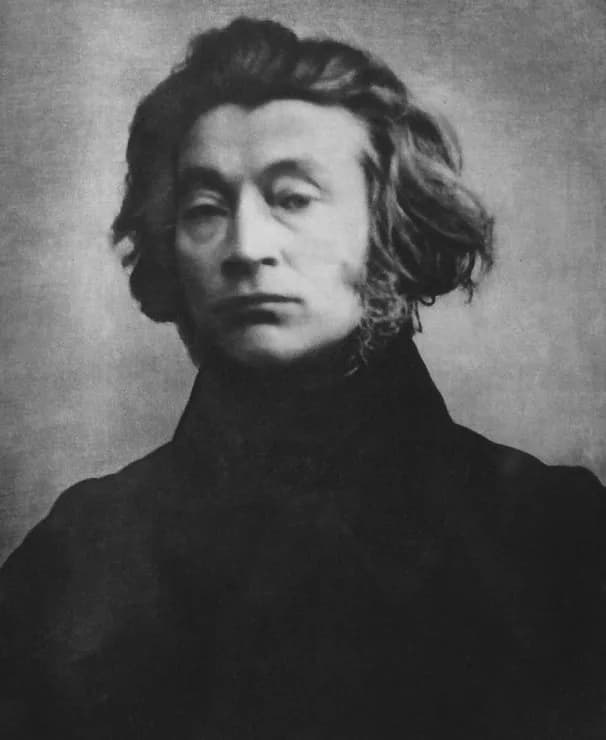
Adam Mickiewicz portrait

Rojen/a

December 24, 1798

Zavosse, Belarus

Umrl/a

November 26, 1855

Istanbul, Turkey

Znan/a po

Polish national poet, dramatist, essayist, publicist, translator, and political activist

Adam Bernard Mickiewicz (December 24, 1798 – November 26, 1855) was a Polish national poet, dramatist, and political activist. He is celebrated as one of Poland's "Three Bards" and is widely regarded as its greatest poet. Mickiewicz's profound influence extended across Polish, Lithuanian, Belarusian, Ukrainian, and Russian literatures.

Življenje v trenutkih

Trenutki, ki so oblikovali življenje

Napisano v jeziku English

Poglavje

Življenjska poglavja

Poglavje 1 · 1798· Poglavje 1 od 6

Early Life and Origins

Adam Mickiewicz was born on December 24, 1798, in Zavosse, Belarus, a region historically part of the Polish-Lithuanian Commonwealth. His upbringing in this culturally rich borderland undoubtedly contributed to his profound understanding of the complex identities and aspirations of the various peoples of Eastern Europe. This early environment nurtured a spirit that would later articulate the yearnings of a nation through his powerful poetic voice.

Poglavje 2· Poglavje 2 od 6

Rise to Prominence

Mickiewicz's early career saw him emerge as a leading voice during a tumultuous period for Poland, which was then partitioned among neighboring empires. His early poetic endeavors quickly established him as a principal figure in Polish Romanticism, a movement deeply intertwined with the struggle for national independence and identity. It was through his evocative verses that he began to articulate the soul of a nation, capturing its historical grandeur and its present sorrow.

Poglavje 3· Poglavje 3 od 6

Major Contributions and Literary Achievements

Adam Mickiewicz's literary achievements are monumental, positioning him as one of the greatest Slavic and European poets. He is revered as one of Poland's "Three Bards," a title denoting poets whose works are considered fundamental to the Polish national consciousness. His artistry earned him the honorary designation of a "Slavic bard," highlighting his universal appeal and the depth of his influence across cultural boundaries.

Mickiewicz championed the ideals of Romanticism, infusing his work with themes of patriotism, struggle for freedom, and a deep appreciation for folk traditions and the supernatural. His poetic style combined classical influences with innovative narrative techniques, creating a unique and compelling literary voice. This blend allowed him to resonate deeply with audiences, both intellectual and common, across generations.

Poglavje 4· Poglavje 4 od 6

A Selection of Notable Works

Among Mickiewicz's most celebrated works is Pan Tadeush, an epic poem that portrays the last Polish noble revolt against Russian occupation. This masterpiece is cherished for its vivid depiction of Lithuanian countryside life, its detailed characters, and its passionate defense of Polish culture and heritage. It remains a foundational text in Polish literature, read and admired for its historical and artistic value.

Another monumental achievement is Dziady, a poetic drama structured as a cycle of parts, exploring themes of national suffering, individual sacrifice, and spiritual redemption. Within Dziady, the "Wielka improwizacja" (Great Improvisation) from its third part, a trzeciej części Dziadów, stands out as a powerful monologue expressing the poet's fervent love for his nation and his spiritual anguish. Additionally, his collection of Sonety showcases his mastery of lyrical form, while works like Giaur, ułomki powiésci tureckiej and Pani Twardowska reveal his diverse narrative talents. His political writings, such as Trybuna ludów and Księgi narodu polskiego i pielgrzymstwa polskiego, further underscore his role as a dedicated political activist.

Poglavje 5 · 1855· Poglavje 5 od 6

Later Life and Political Engagement

Throughout his life, Mickiewicz remained a committed political activist, advocating for Polish independence and liberty. His later years were marked by continued engagement with political and social causes, often involving travel and exile due to his nationalist sentiments. He passed away on November 26, 1855, in Istanbul, Turkey, far from his homeland, but actively involved in efforts to organize Polish legions against Russian rule.

Poglavje 6· Poglavje 6 od 6

Enduring Legacy

Adam Mickiewicz's legacy is immense and enduring, extending far beyond the borders of Poland. He is rightfully considered the national poet not only in Poland but also in Lithuania and Belarus, underscoring his broad cultural impact. His literary innovations and patriotic spirit profoundly influenced Ukrainian literature and significantly affected Russian literature, cementing his status as a titan of European letters. Generations continue to find inspiration in his powerful narratives and his unwavering commitment to freedom and national identity, ensuring his place in the pantheon of world literature.

Galerija fotografij

Življenje v slikah

Kliknite katero koli polaroidno fotografijo za povečavo · 43 fotografij

Koda QR

Deli to biografijo

Natisni in deli

Skenirajte za obisk te biografske strani. Natisnite za dogodke, razstave ali izobraževalna gradiva.

Kdo je bil Adam Mickiewicz? (1798-1855) | WhoWasThisGuy.com